Chess rules understanding Grade 1 Chess Worksheets
4 filtered results
Difficulty Level
Grade
Age
-
From - To
Subject
Activity
Standards
Discover our engaging Grade 1 Chess Worksheets designed to help young learners grasp the fundamentals of chess rules. These worksheets provide a fun and interactive way for students to understand essential concepts, including piece movement and basic gameplay. Through a variety of activities and illustrations, children will develop critical thinking and problem-solving skills while becoming familiar with chess terminology. Perfect for classroom or home use, our resources support early education and foster a love for this strategic game. Encourage your first graders to dive into the world of chess with our comprehensive worksheets tailored to enhance their learning experience!
Favorites
With answer key
Interactive
Short Notation of Moves Worksheet
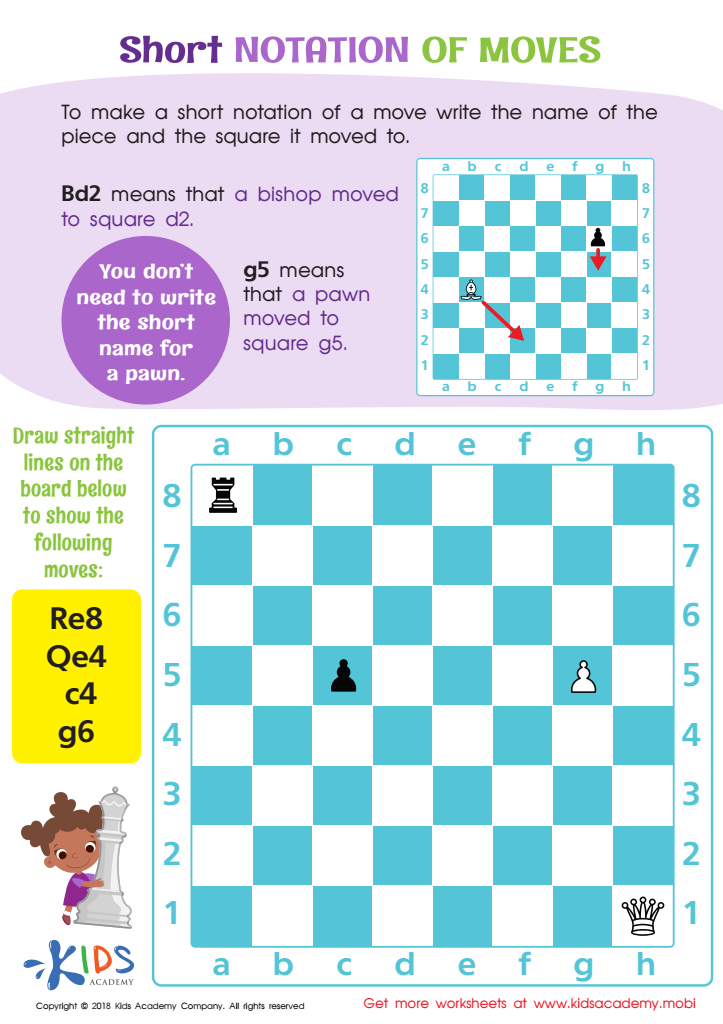
To master chess, you need more than just knowing the pieces and their moves - you need to be able to make notations of your moves. To make a short notation, write the piece name and square it moved to; for example, Bd2 for bishop on d2. Pawns don't need the piece name, just the square; e.g. g5. Show your kids how to draw lines to the board for the moves given.
 Assign to My Students
Short Notation of Moves Worksheet
Worksheet
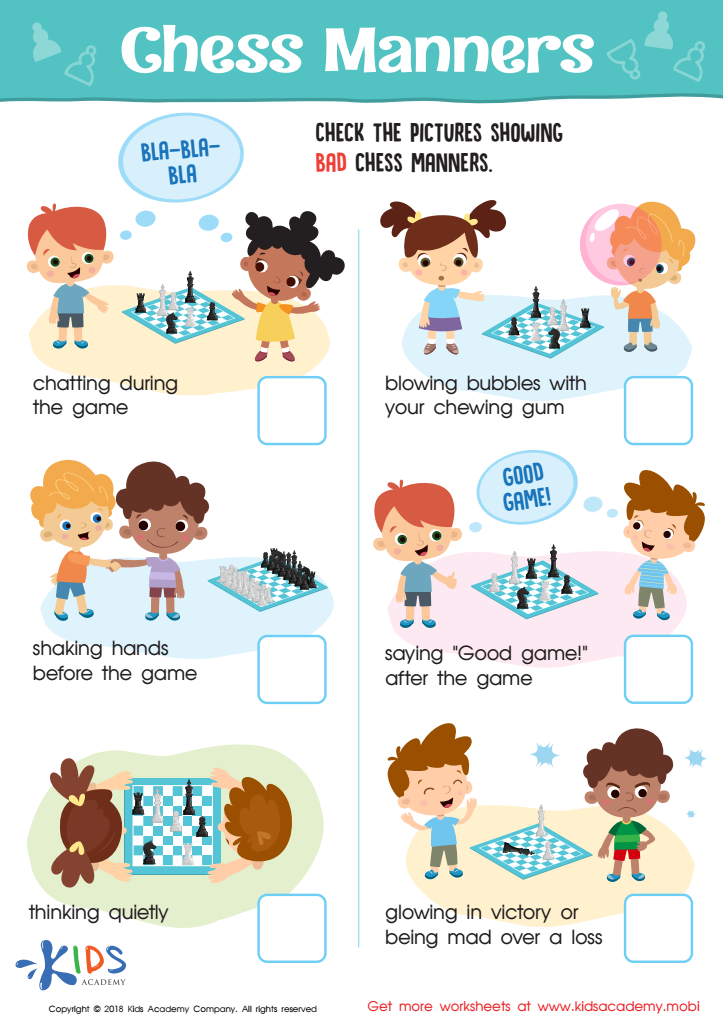
Chess Manners Worksheet
Teach your child chess manners in addition to table and social ones. Chess has clear rules and etiquette which must be followed for a proper game. Review this worksheet with your kid and discuss the pictures that show inappropriate behaviours. This will help them understand how to play the game correctly and with good manners.
Chess Manners Worksheet
Worksheet
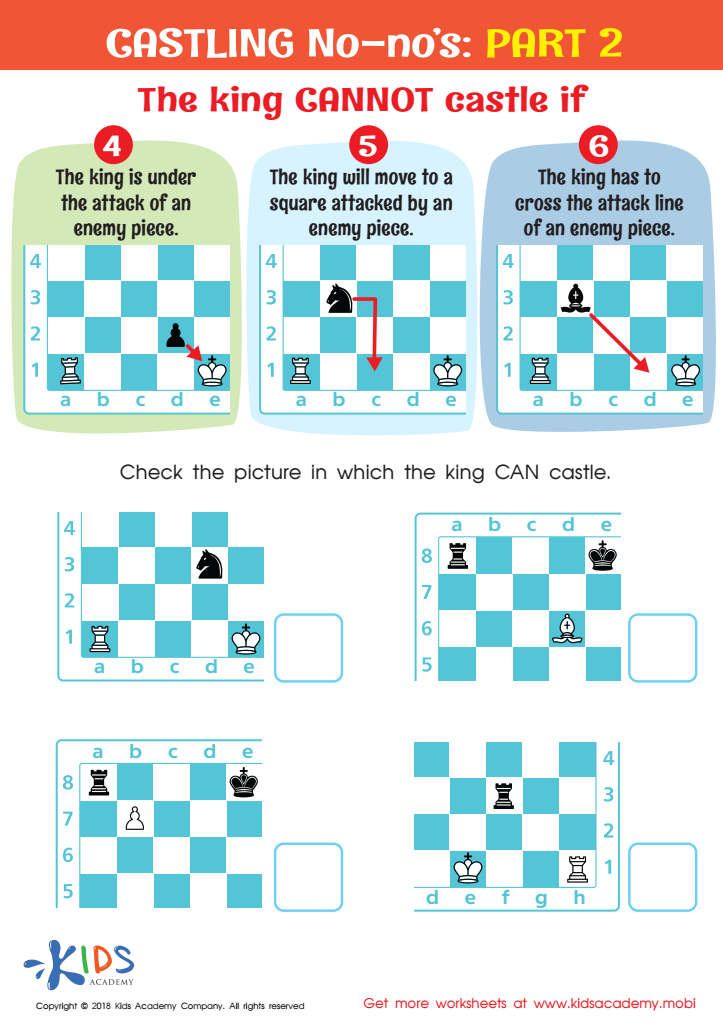
Castling No - no's: Part 2 Worksheet
Teach your child the rules of castling: no castling if the king is under attack or will move onto an attacked square, or cross an attack line. To prepare for a game of chess, help your child complete the exercise of identifying when the king can castle – check the pictures.
Castling No - no's: Part 2 Worksheet
Worksheet
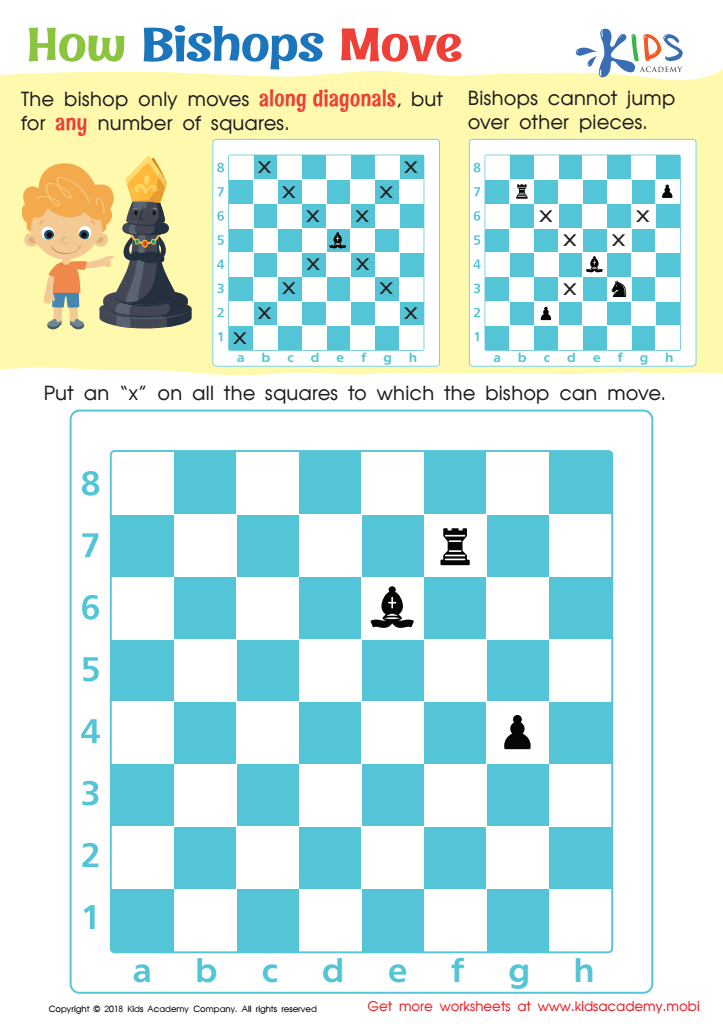
How Bishops Move Worksheet
There is no such thing as too much sharpening of skills. Encourage your child to learn more about chess technicalities with this simple worksheet. It shows them how a bishop moves: along diagonals any number of squares, but it can't jump over other pieces.
How Bishops Move Worksheet
Worksheet
Join Kids Academy for Free
Who is primarily going to use this learning content?






Understanding chess rules is essential for parents and teachers involved in Grade 1 chess education for several reasons. Firstly, chess promotes critical thinking and problem-solving skills, which are foundational for young learners. By grasping the rules of chess, children learn to strategize, analyze potential outcomes, and make decisions, fostering cognitive development.
Secondly, teaching children the rules instills a sense of discipline and respect for the game and its players. Chess has specific etiquette and rules that promote fairness, patience, and sportsmanship. By reinforcing these values, adults can help students develop character traits that extend beyond the chessboard.
Moreover, engaging in chess can enhance a child's social skills. When parents and teachers encourage an understanding of chess rules, children learn to communicate, collaborate, and compete healthily with peers. This interaction can improve their confidence and ability to handle wins and losses gracefully.
Lastly, caring about these rules ensures a more enriching learning environment. When children understand the basics of chess, they can partake in group games, lessons, or tournaments effectively, leading to a shared sense of achievement and belonging among young players. Overall, fostering rule comprehension in chess sets a strong educational foundation for children.