Cognitive Development Grade 1 Chess Worksheets
5 filtered results
-
From - To
Enhance your first grader's cognitive development with our engaging Chess Worksheets designed specifically for Grade 1 students. These worksheets provide a fun and interactive way to build essential skills such as critical thinking, problem-solving, and strategic planning. Our carefully crafted activities challenge young minds to analyze positions, anticipate moves, and develop logical reasoning, all while enjoying the game of chess. Perfect for both classroom use and at-home practice, these worksheets stimulate creativity and improve focus. Foster a love for chess and watch your child's cognitive abilities flourish with our expertly designed resources for young learners. Explore our collection today!
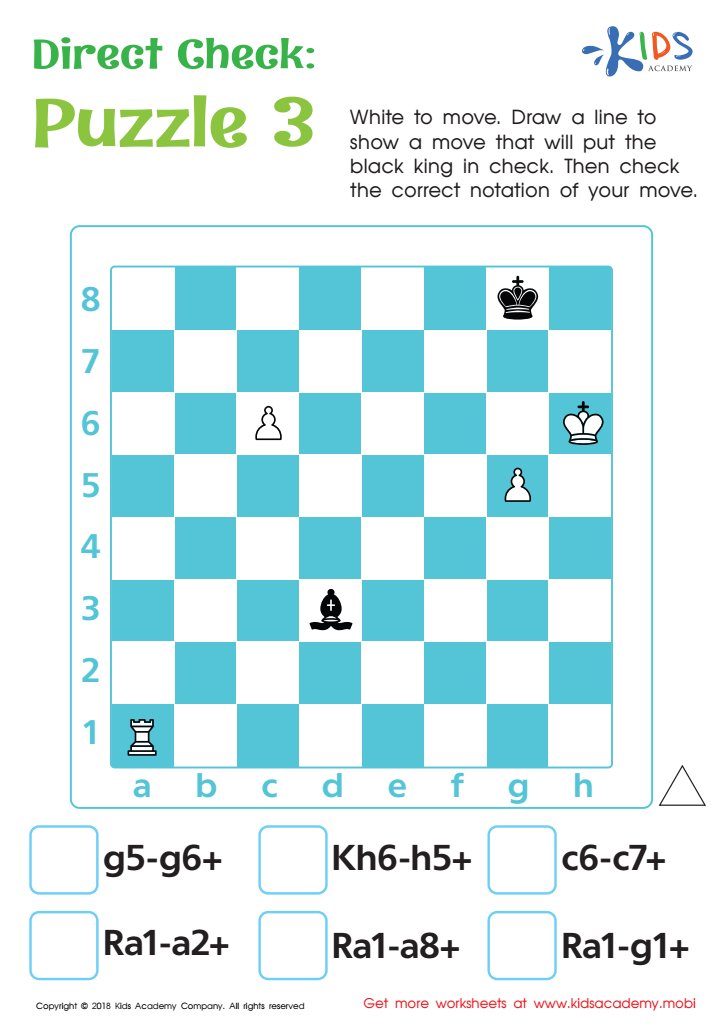
Direct Check: Puzzle 3 Worksheet
 Assign to My Students
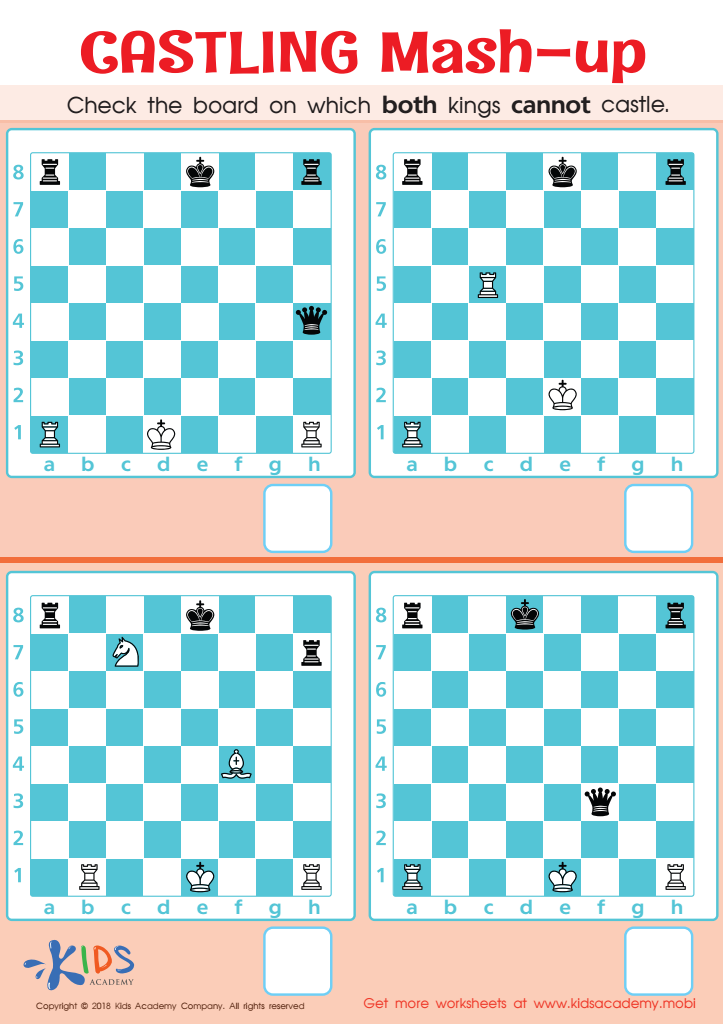
Castling Mash–up Worksheet
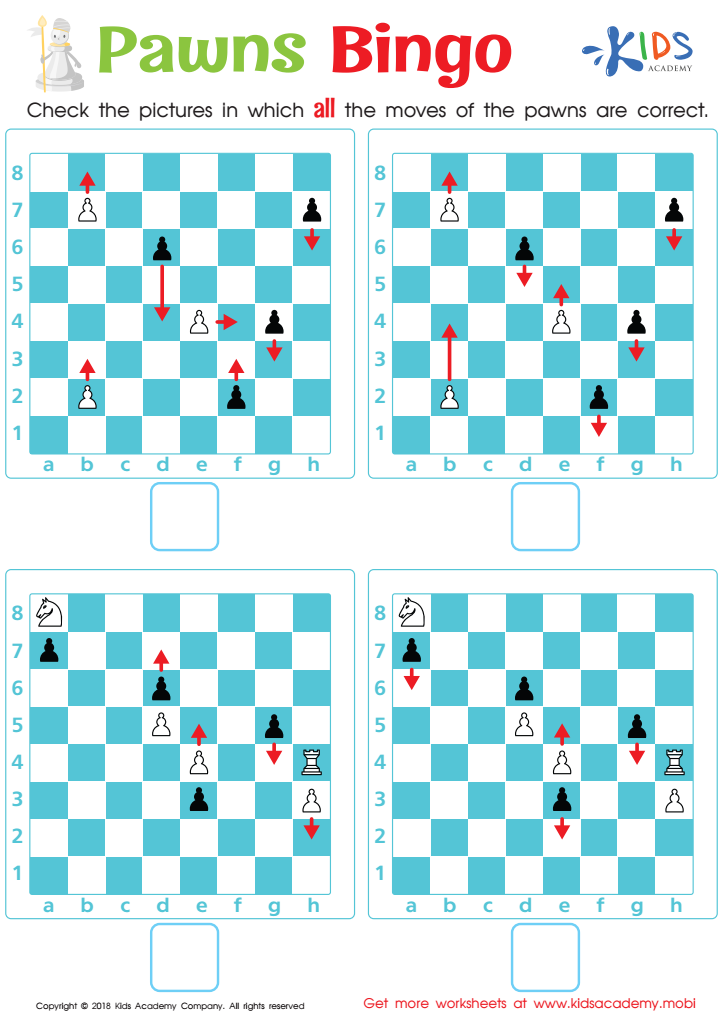
Pawns Bingo Worksheet
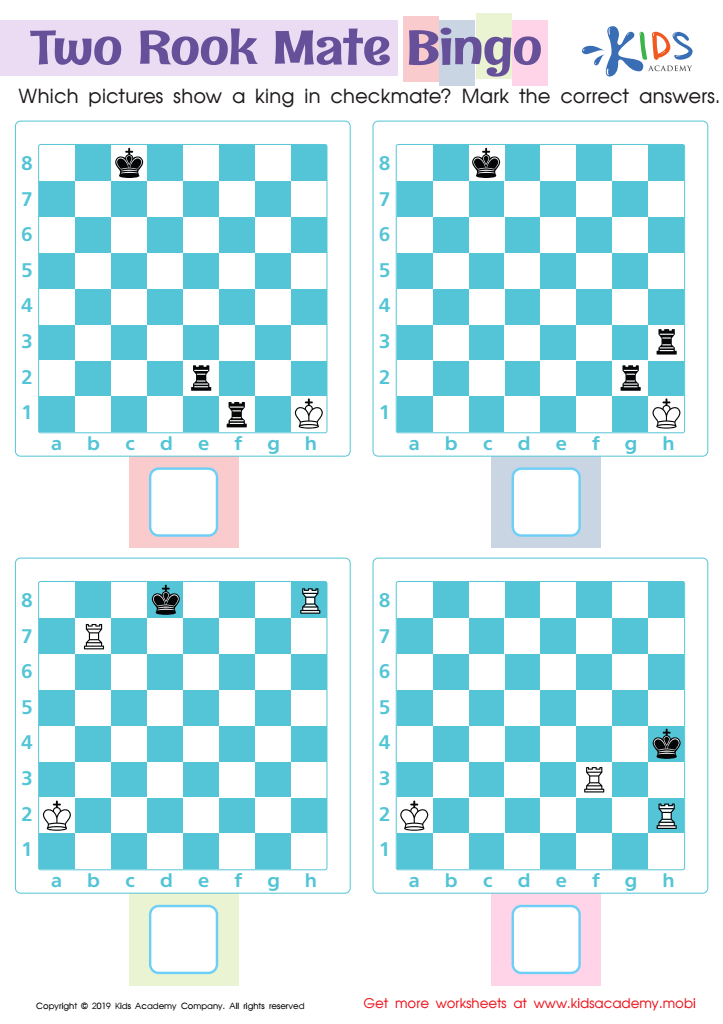
Two Rook Bingo Worksheet
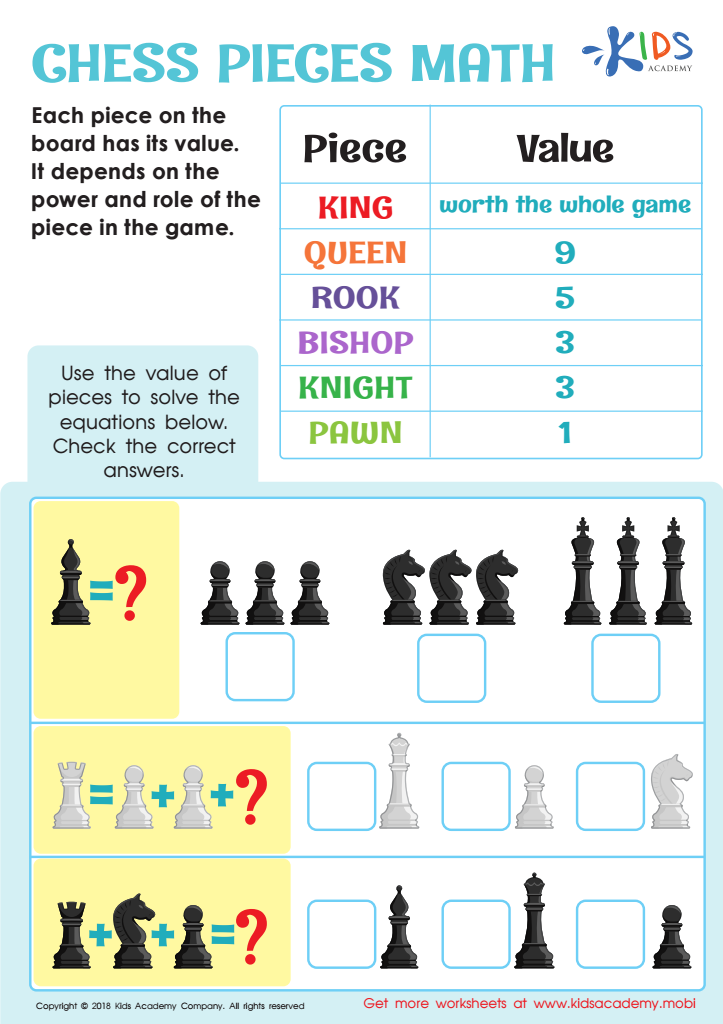
Chess Pieces Math Worksheet





Cognitive development is crucial in early childhood education, and integrating activities like chess in Grade 1 can significantly enhance this process. Chess fosters critical thinking, problem-solving, and decision-making skills at an early age. As children learn to plan their moves on the chessboard, they employ strategic thinking and improve their ability to assess situations, anticipate outcomes, and consider multiple perspectives. These skills are not only vital for academic success but are also essential for everyday life.
Moreover, chess encourages patience and resilience. When young learners face setbacks—like losing a piece or a game—they learn to handle frustration and develop perseverance. This emotional intelligence is important as it promotes a growth mindset, teaching children that challenges can be tackled with determination.
In addition to cognitive skills, chess enhances mathematical thinking by introducing concepts of spatial awareness, patterns, and logic. Teachers and parents should care about incorporating chess into the curriculum because it is an engaging way to strengthen cognitive abilities while promoting social interactions and cooperative learning. Overall, using chess as a developmental tool can enrich children’s learning experiences and lay a strong foundation for their future academic and life pursuits.