Logical thinking development Grade 1 Chess Worksheets
3 filtered results
Difficulty Level
Grade
Age
-
From - To
Subject
Activity
Standards
Unlock the power of logical thinking in your first grader with our engaging Chess Worksheets designed specifically for Grade 1! These educational resources combine fun with skill-building, helping young learners enhance their problem-solving abilities and critical thinking. Students will explore essential chess concepts through interactive exercises, puzzles, and games that nurture their analytical skills. Our worksheets not only promote cognitive development but also encourage creativity and strategic planning. Perfect for classroom or at-home learning, these activities will captivate your child's imagination while instilling the foundational skills necessary for academic success. Help your child master logical thinking with our expertly crafted chess worksheets today!
Favorites
With answer key
Interactive
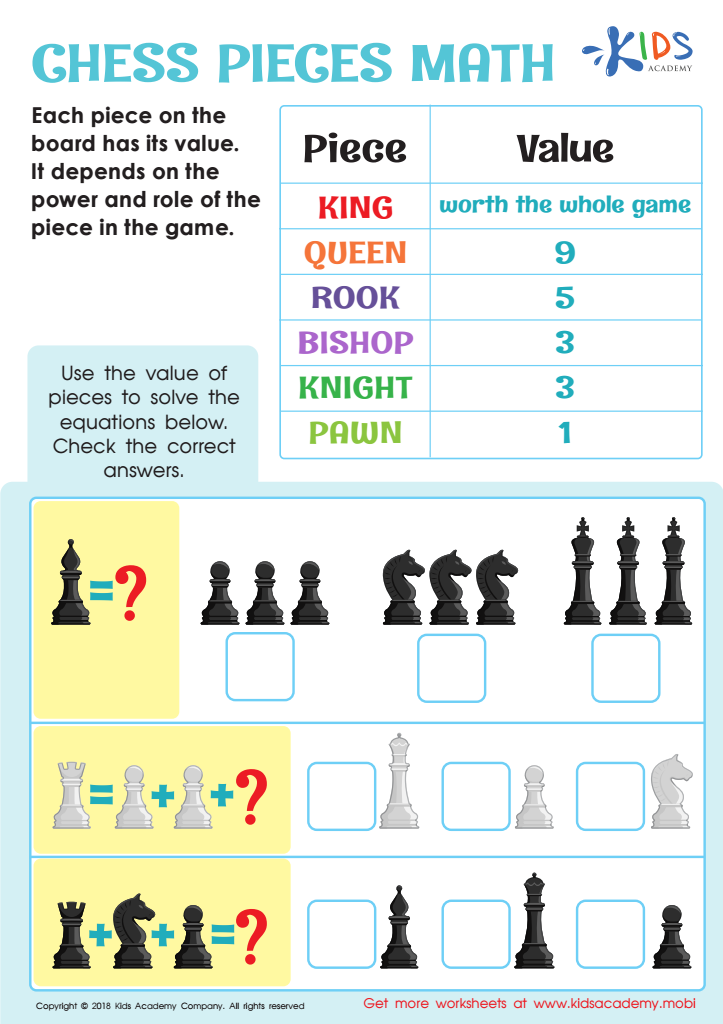
Chess Pieces Math Worksheet
Chess involves math! Each piece has its own value, from the king (worth the entire game) to the queen (9 points), varying according to their power and role. In the worksheet, your child must use these values to solve the equations at the bottom.
 Assign to My Students
Chess Pieces Math Worksheet
Worksheet
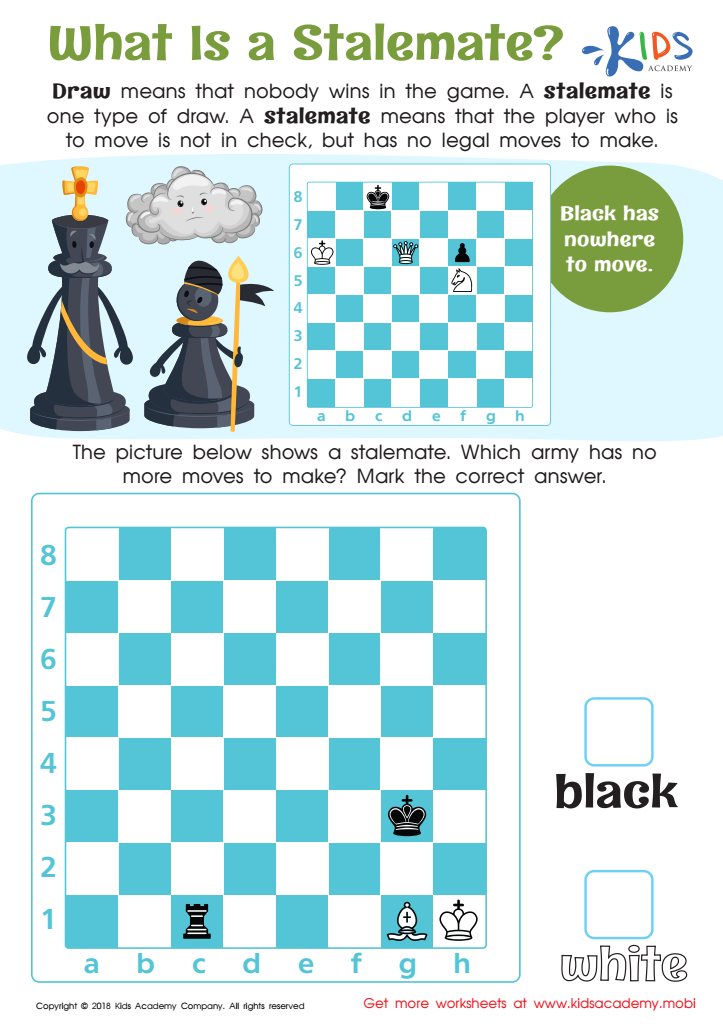
What Is a Stalemate? Worksheet
Chess is an ideal way to develop logic, strategizing, problem-solving and more! Even kids can learn it. With this worksheet, children can learn about draws and stalemates. Sample boards will help them decide which team, black or white, is at a stalemate.
What Is a Stalemate? Worksheet
Worksheet
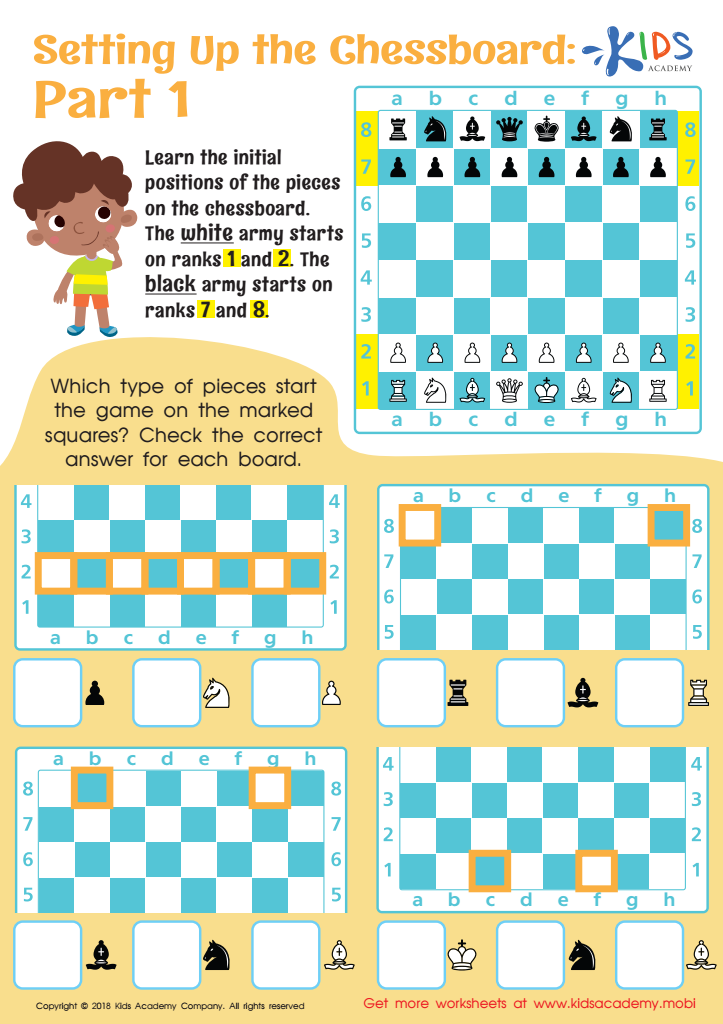
Setting up the Chessboard: Part 1 Worksheet
Teach your child the starting positions of the black and white armies on the chessboard. Black pieces are placed on ranks 7 and 8, and white pieces on ranks 1 and 2. Have them check the highlighted boxes on the chessboard to make sure they know the correct pieces to start with.
Setting up the Chessboard: Part 1 Worksheet
Worksheet
Join Kids Academy for Free
Who is primarily going to use this learning content?





Parents and teachers should prioritize the development of logical thinking in Grade 1 students through activities like chess because these foundational skills are crucial for cognitive growth. At this age, children are in a vital stage of brain development, where they begin refining their problem-solving abilities and critical thinking skills. Chess promotes logical reasoning as it requires players to analyze positions, strategize moves, and anticipate an opponent's responses.
Engaging in chess has multiple benefits. It enhances concentration and focus, as children must pay attention to their moves and the overall dynamics of the game. This improvement in focus can translate to better performance in academic subjects. Chess also encourages patience and perseverance, teaching children that success often requires thinking several steps ahead and learning from mistakes.
Furthermore, logical thinking is tied to success in various aspects of life, including academics and social interactions. By integrating chess into educational activities, parents and teachers foster an environment that stimulates curiosity and nurtures analytical skills. Overall, logical thinking development through chess equips Grade 1 students with valuable tools that not only aid their intellectual growth but also prepare them for future challenges.