Understanding graphs Grade 1 Worksheets
3 filtered results
-
From - To
Explore our "Understanding Graphs Grade 1 Worksheets" designed to introduce young learners to the fascinating world of data representation. These engaging worksheets help first graders develop essential skills in reading, interpreting, and creating simple graphs, such as bar charts and pictographs. Students will enjoy hands-on activities that encourage critical thinking and collaborative learning. Perfect for teachers and parents, our worksheets provide a fun yet educational way to strengthen graph literacy in everyday scenarios. With colorful visuals and age-appropriate tasks, these resources will make learning about graphs an enjoyable experience for your child, fostering a solid foundation for future math concepts.
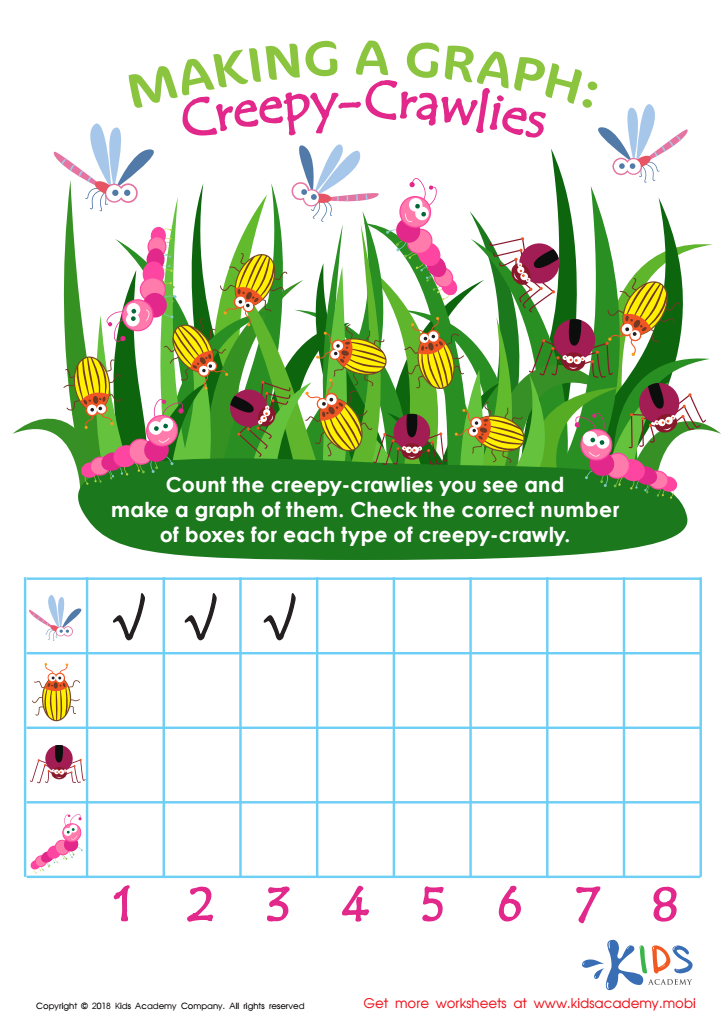
Making a Graph: Creepy Crawlies Worksheet
 Assign to My Students
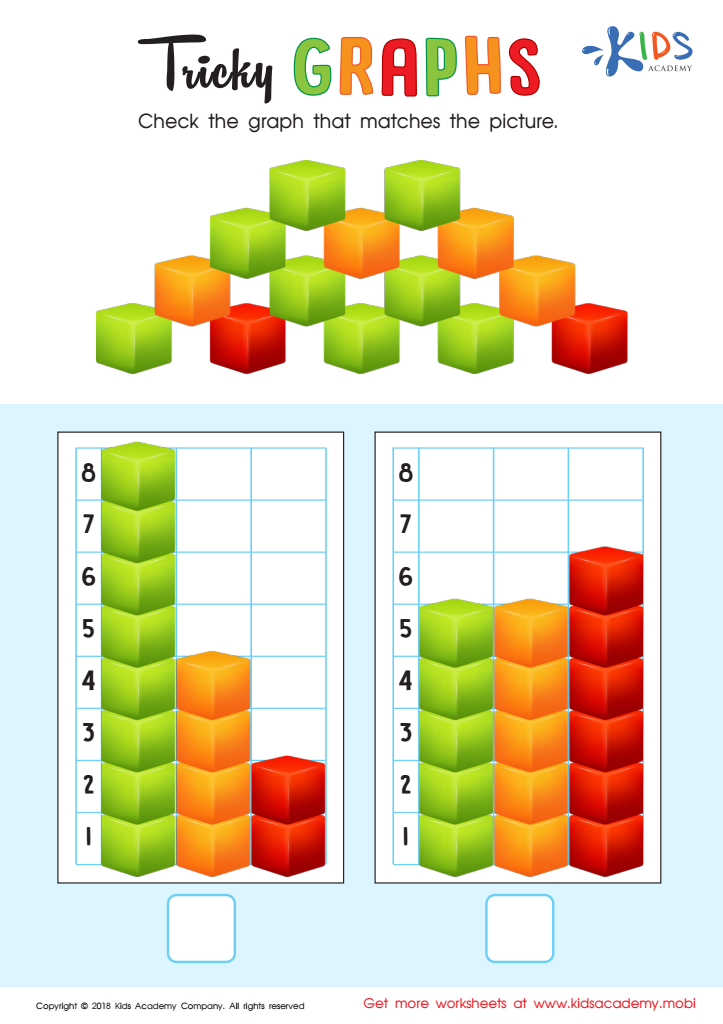
Tricky Graphs Worksheet
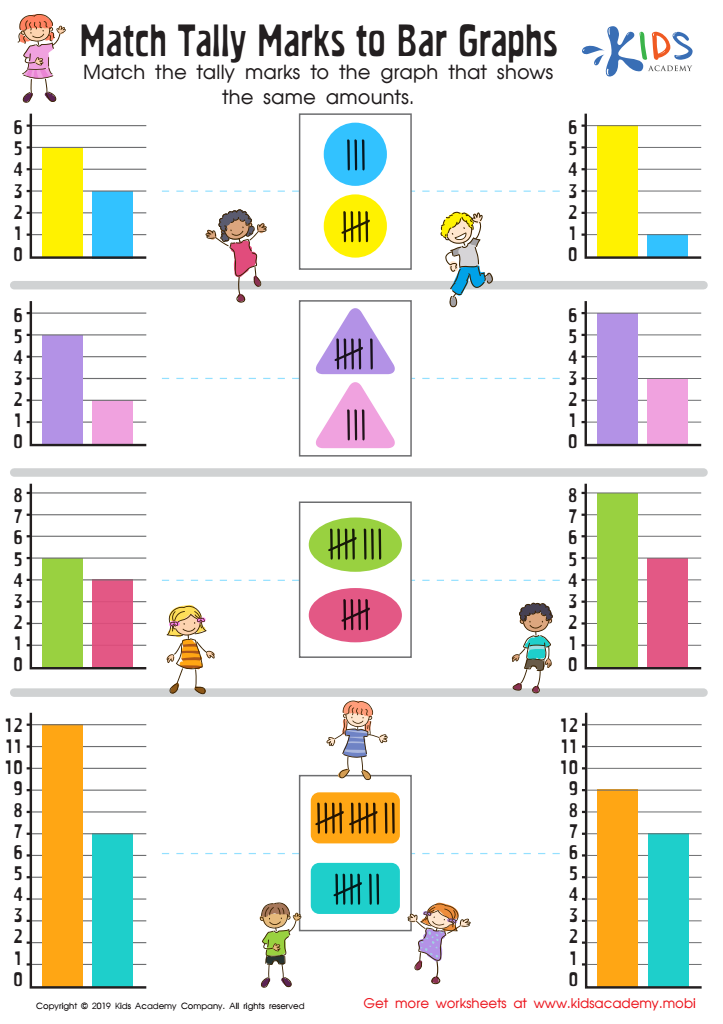
Match Tally Marks to Bar Graphs Worksheet





Understanding graphs in Grade 1 is essential for both parents and teachers as it lays the foundation for critical thinking and data literacy. At this early stage, children begin to make sense of the world around them by interpreting visual information. Graphs, whether they represent simple data like favorite colors, heights, or weather patterns, help young learners develop the ability to analyze and compare information effectively.
Teaching children how to read and create graphs enhances their mathematical skills and fosters a deeper understanding of concepts such as quantity, category, and order. It also encourages them to express their ideas and findings clearly through visuals, promoting communication skills.
Furthermore, engaging with graphs nurtures curiosity and inquiry. Kids learn to ask questions like why data appears in certain ways, stimulating their problem-solving abilities. For parents, supporting their child’s learning with graphs can create opportunities for meaningful discussions about numbers in everyday life. For teachers, integrating graphing activities into the curriculum makes learning interactive and enjoyable, reinforcing the relevance of mathematics in daily experiences.
Ultimately, understanding graphs empowers children with essential skills that will benefit them academically and in their future endeavors, making it a vital area of focus for both parents and educators.