Comparing Fractions Grade 1 Addition & Subtraction Worksheets
3 filtered results
-
From - To
Explore our engaging "Comparing Fractions Grade 1 Addition & Subtraction Worksheets" designed to help young learners master the concept of comparing fractions through fun and interactive activities. These worksheets provide a variety of problems that encourage students to develop their critical thinking and problem-solving skills. With clear instructions and vibrant visuals, kids will enjoy identifying which fractions are larger or smaller while honing their addition and subtraction abilities. Perfect for classroom use or at-home practice, these resources will boost confidence in math and foster a solid foundation for future mathematical concepts. Start comparing fractions today for a head start in learning!
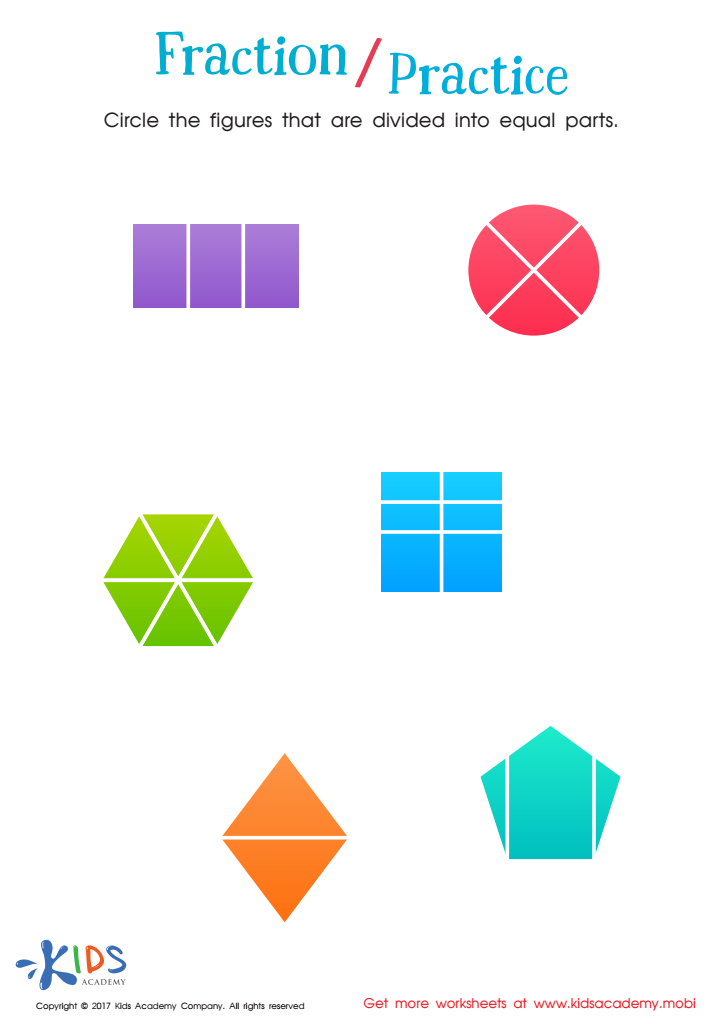
Fractions: Shapes Worksheet
 Assign to My Students
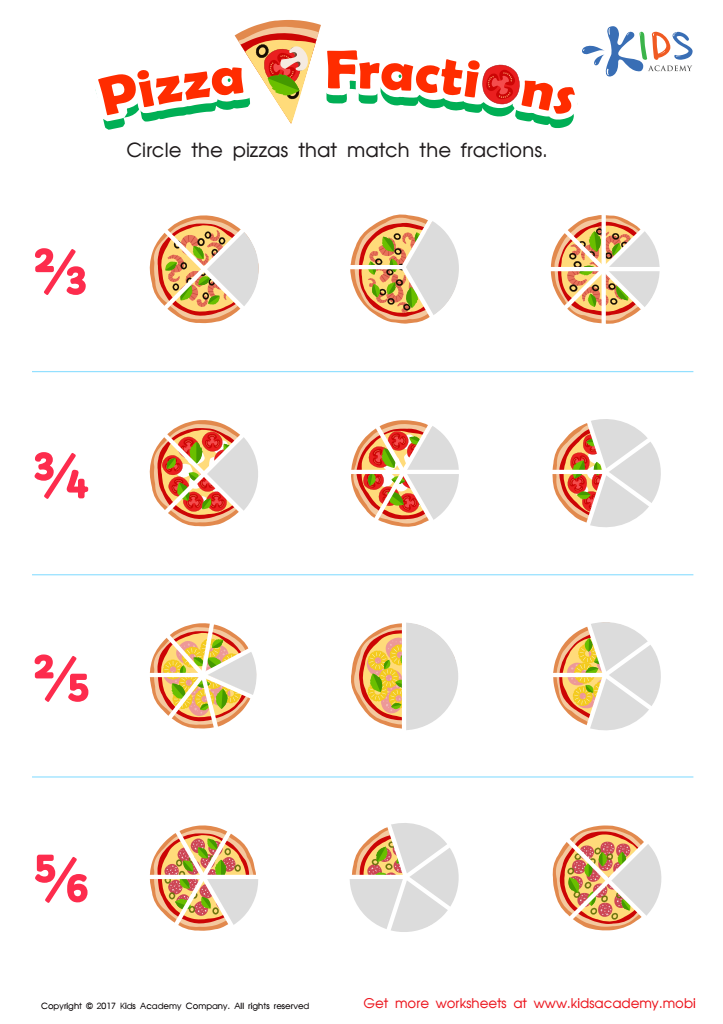
Fractions: Pizza Printable
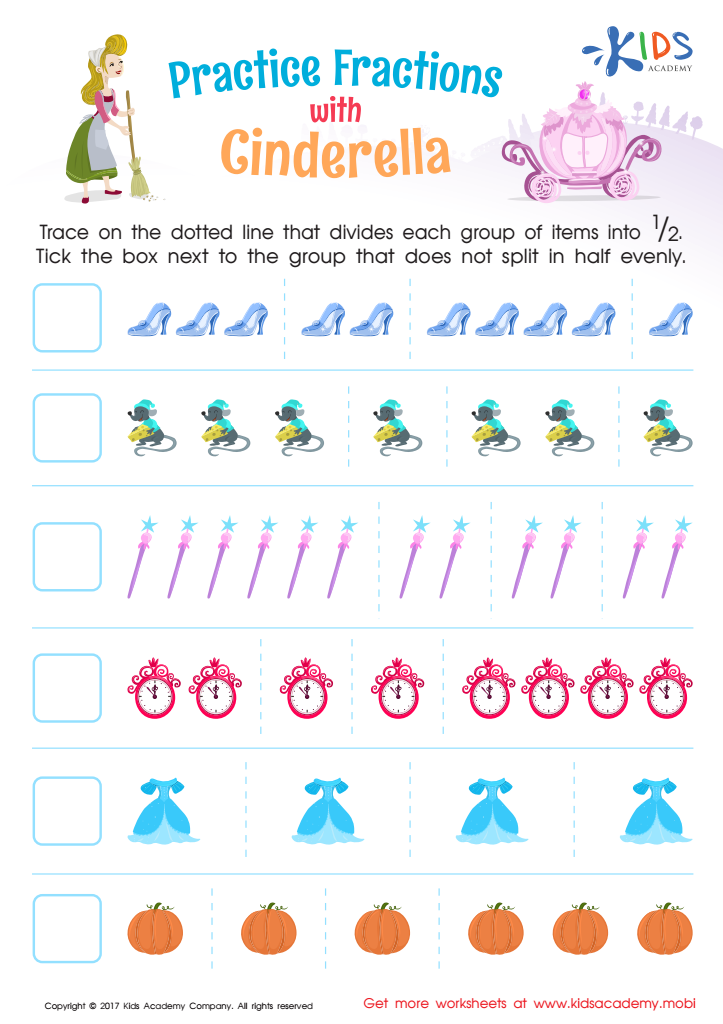
Fractions: Cinderella Printable








Comparing fractions is a fundamental concept in early math education, laying the groundwork for students’ future understanding of mathematics. For parents and teachers, fostering a solid grasp of this topic in Grade 1 is crucial. Firstly, comparing fractions helps children develop critical thinking skills as they learn to analyze and evaluate the relationships between different quantities. Understanding how to add and subtract fractions enhances their overall arithmetic skills, leading to greater confidence in tackling problems involving fractions later on.
In addition, mastering fraction comparison promotes numeracy and prepares young learners for more complex math concepts. As children progress in their education, they will encounter fractions in various contexts, such as measuring, cooking, and financial literacy. By focusing on comparing fractions in Grade 1, educators are ensuring that students have a strong foundation for these future applications.
Moreover, engaging parents in this process enriches the learning experience. When parents understand the importance of fraction comparison, they can better support their children at home through practical activities, games, or discussions that reinforce these mathematical concepts. Ultimately, prioritizing the comparison of fractions in early education cultivates not only skilled mathematicians but also thoughtful problem solvers.