Shape identification Grade 1 Geometry Worksheets
6 filtered results
Difficulty Level
Grade
Age
-
From - To
Subject
Activity
Standards
Welcome to our Shape Identification Grade 1 Geometry Worksheets, designed to support young learners in mastering basic geometric concepts! These engaging worksheets help first graders recognize, name, and differentiate between various shapes, including circles, squares, triangles, rectangles, and more. With fun activities and colorful illustrations, children will develop essential skills through interactive exercises that encourage exploration and creativity. Our thoughtfully crafted worksheets not only align with educational standards but also promote critical thinking and visual discrimination. Perfect for classroom or home use, these resources foster a foundational understanding of geometry—setting the stage for future math success! Download and inspire learning today!
Favorites
With answer key
Interactive
Geometry Worksheet
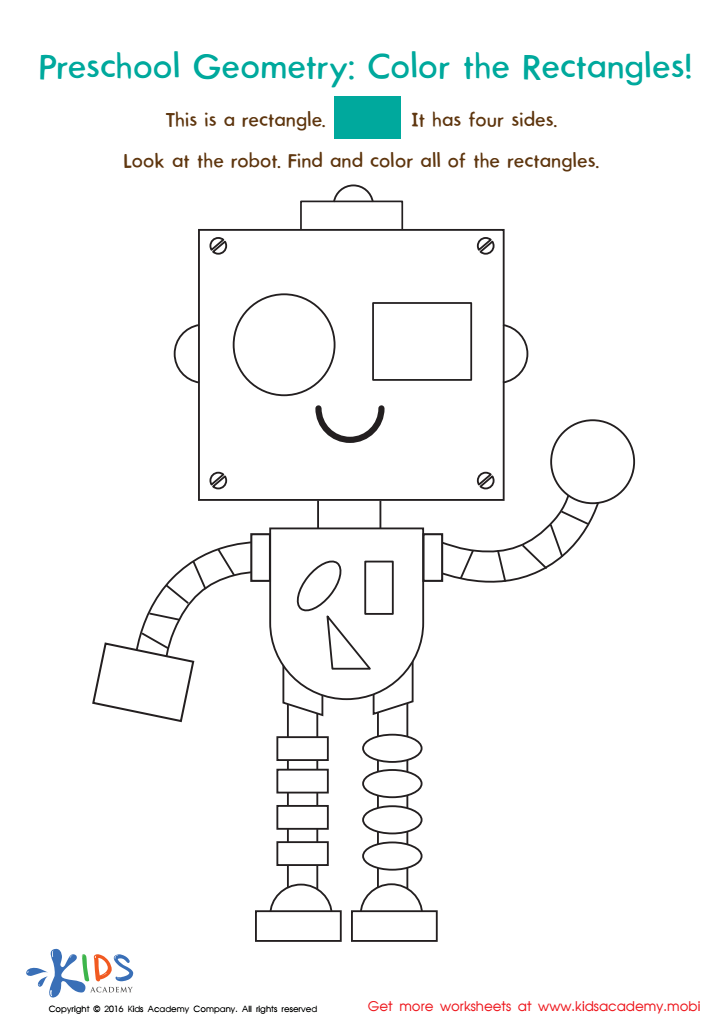
Geometry can be fun for kids! They explore shapes that create their favorite pics and objects. This preschool worksheet explains that rectangles have four sides, then kids color rectangles on a funny robot!
 Assign to My Students
Geometry Worksheet
Worksheet
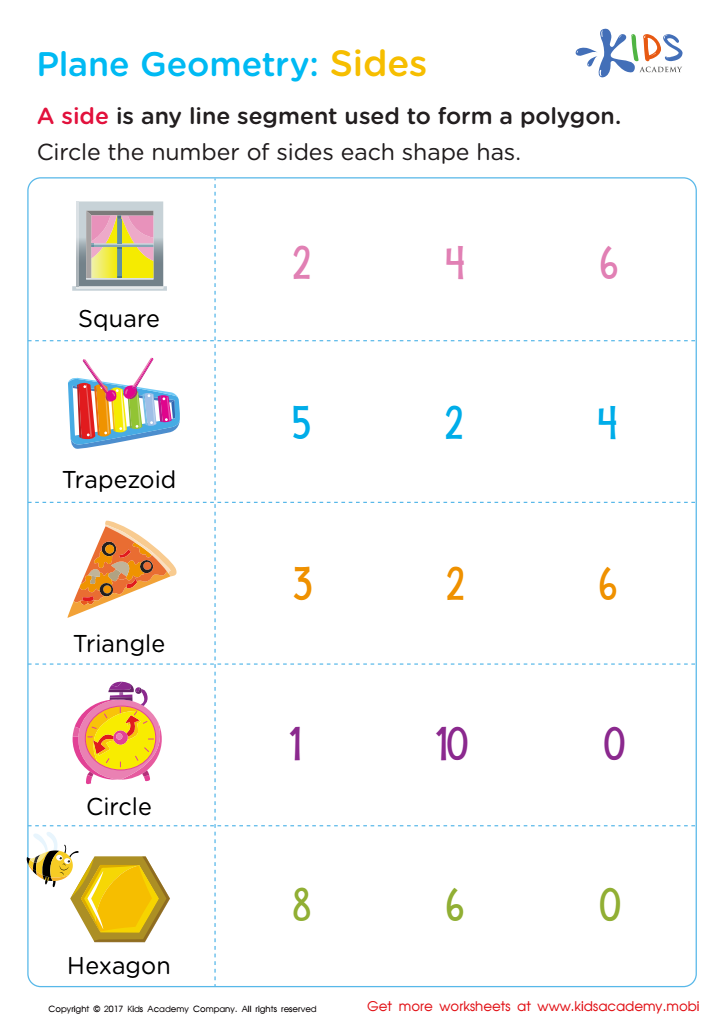
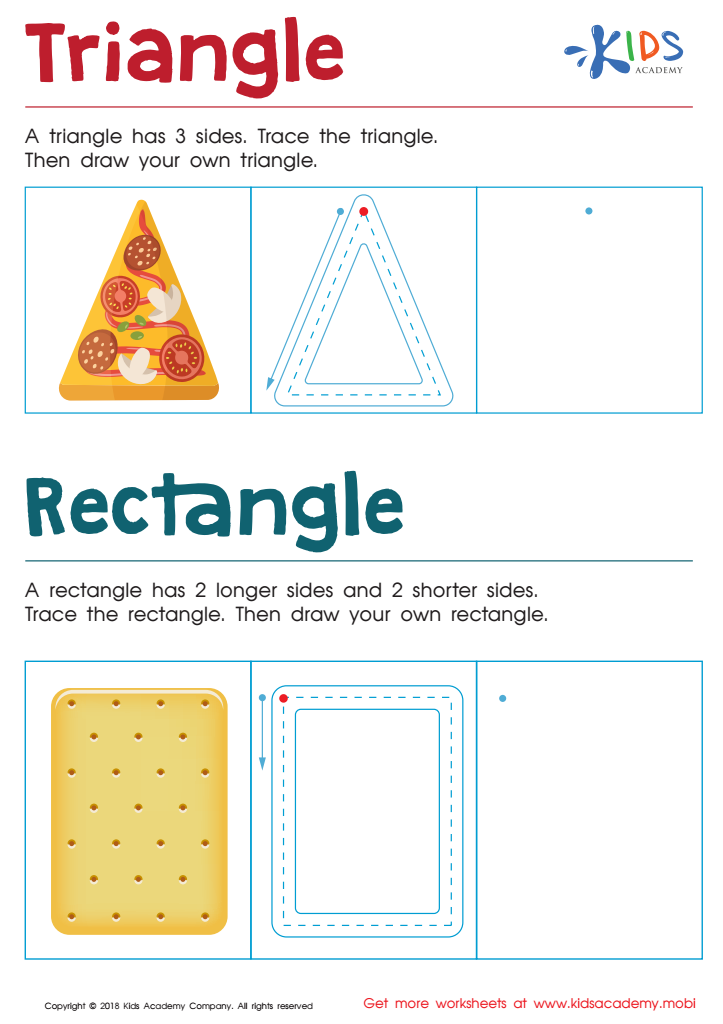
Triangle Rectangle Worksheet
This printable worksheet helps kids draw rectangles and triangles. Have your child trace the pizza and cracker shapes to become familiar, then try their own. Perfect for second graders! Coloring and creativity make this fun and educational.
Triangle Rectangle Worksheet
Worksheet
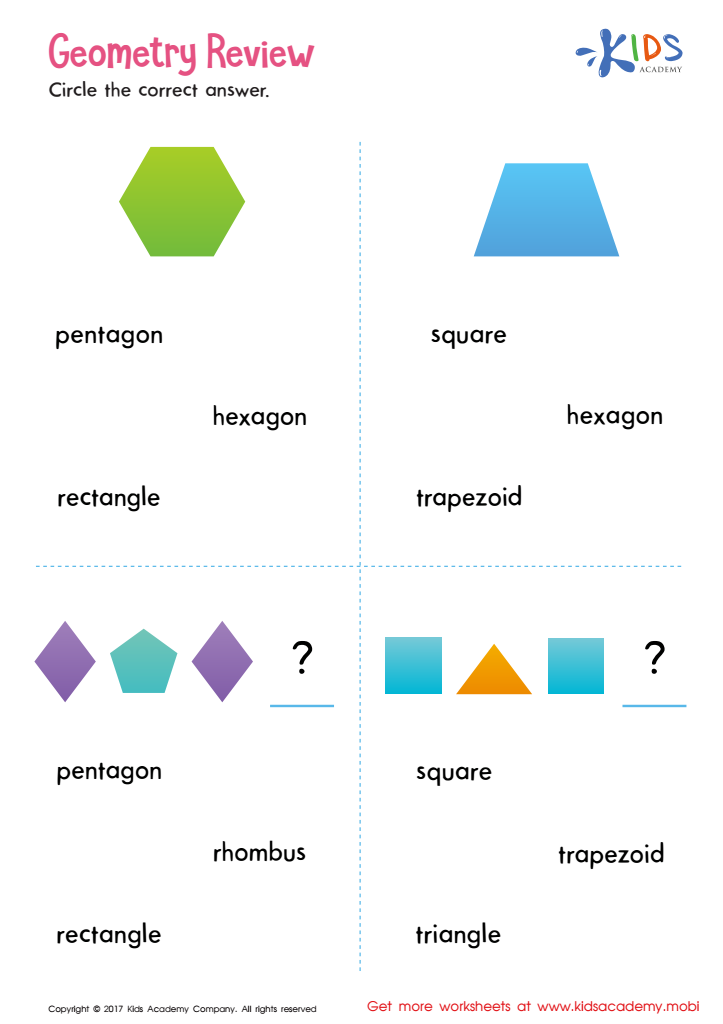
Geometry Review Printable
Repetition is key to success; give your child the practice they need with this geometry worksheet.
Geometry Review Printable
Worksheet
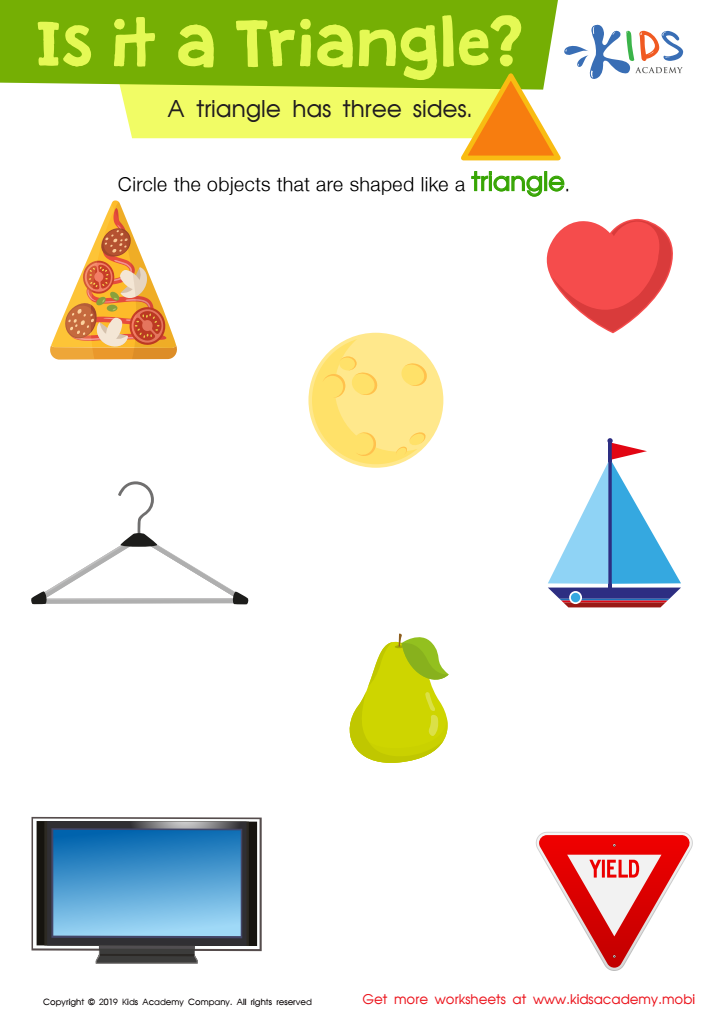
Is It a Triangle? Worksheet
Young kids need to learn to identify basic shapes for math. Show them what a triangle looks like with this fun worksheet. They can look around their environment for everyday objects shaped like a triangle and circle them on the sheet. Download now and start learning what a triangle is!
Is It a Triangle? Worksheet
Worksheet
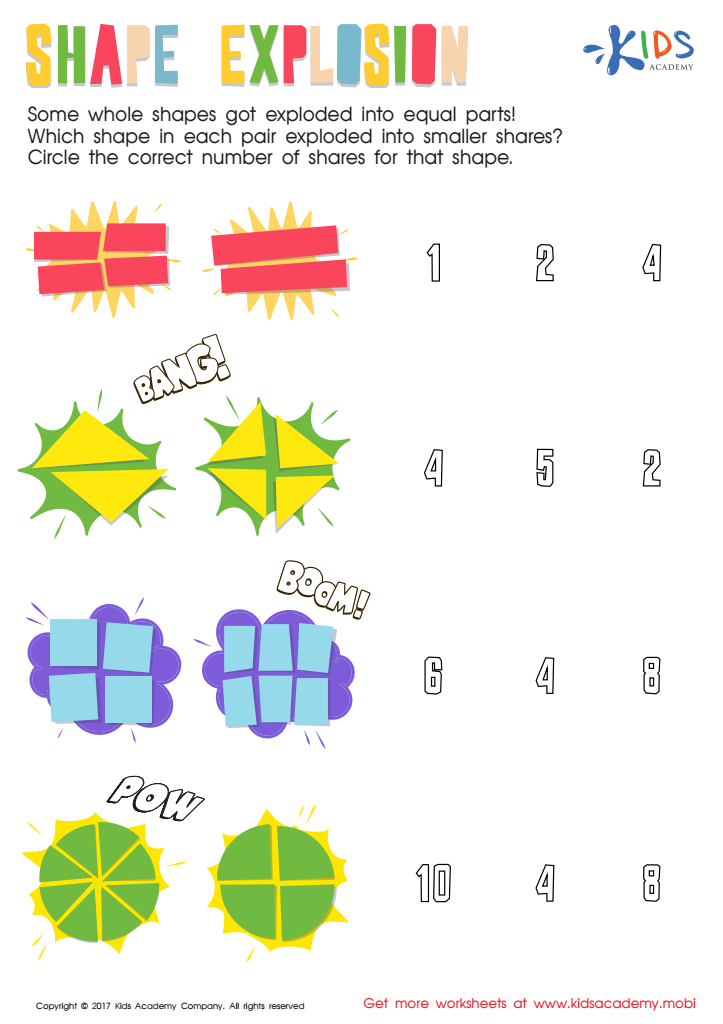
Shape Explosion Worksheet
This worksheet shows students how some shapes explode into two or more equal parts. On the left side are four shapes, each splitting into two or more parts. Ask your child to point out which shape has the smaller share, and help them circle the correct number of shares.
Shape Explosion Worksheet
Worksheet
Join Kids Academy for Free
Who is primarily going to use this learning content?








Shape identification is a fundamental skill in early childhood education, particularly in Grade 1 geometry, and it plays a crucial role in a child’s cognitive development. First, recognizing and naming shapes helps children develop visual perceptual skills, which are essential for later learning in areas like mathematics, art, and even reading. Additionally, understanding shapes supports spatial awareness—an important foundation for problem-solving and critical thinking.
Parents and teachers should prioritize shape identification because it fosters an appreciation for geometry in everyday life. By learning about shapes, children can relate geometric concepts to the world around them, recognizing that shapes are not just abstract concepts but features of objects they encounter every day.
Moreover, mastering shapes enhances fine motor skills through hands-on activities, such as cutting, drawing, and building, which are integral to early learning. This multimodal engagement enriches their educational experience, making learning interactive and fun.
Lastly, proficiency in shape identification sets the stage for more advanced mathematical concepts, such as measurement, classification, and patterns, ensuring children are adequately prepared for future academic challenges. In summary, parents and teachers should care about shape identification as it cultivates important skills, encourages creativity, and builds a strong foundation for future learning.