Comparing Fractions Grade 1 Math Worksheets
5 filtered results
-
From - To
Welcome to our "Comparing Fractions Grade 1 Math Worksheets" page! Designed specifically for young learners, these engaging worksheets help first graders develop a solid understanding of fractions. Through fun activities, students will compare fractions visually, identify which is larger or smaller, and practice basic concepts with real-world examples. Our colorful and interactive worksheets cater to different learning styles, ensuring that every child can grasp fraction comparison with confidence. Perfect for classroom use or home practice, these resources set a strong foundation for future math skills. Start exploring our worksheets today and make learning fractions enjoyable!
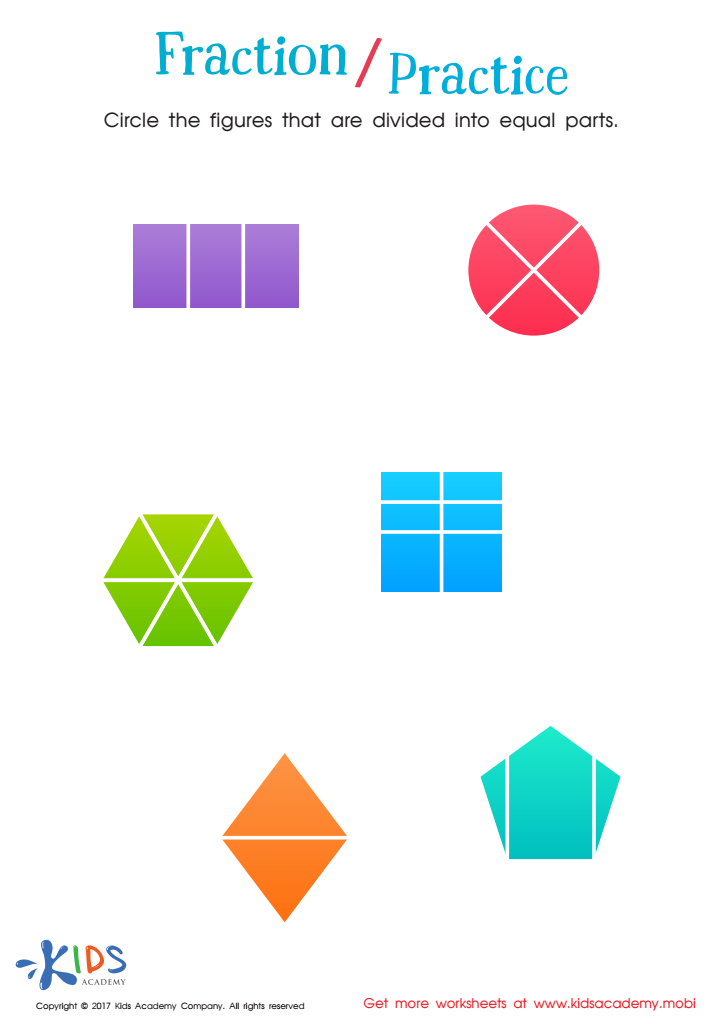
Fractions: Shapes Worksheet
 Assign to My Students
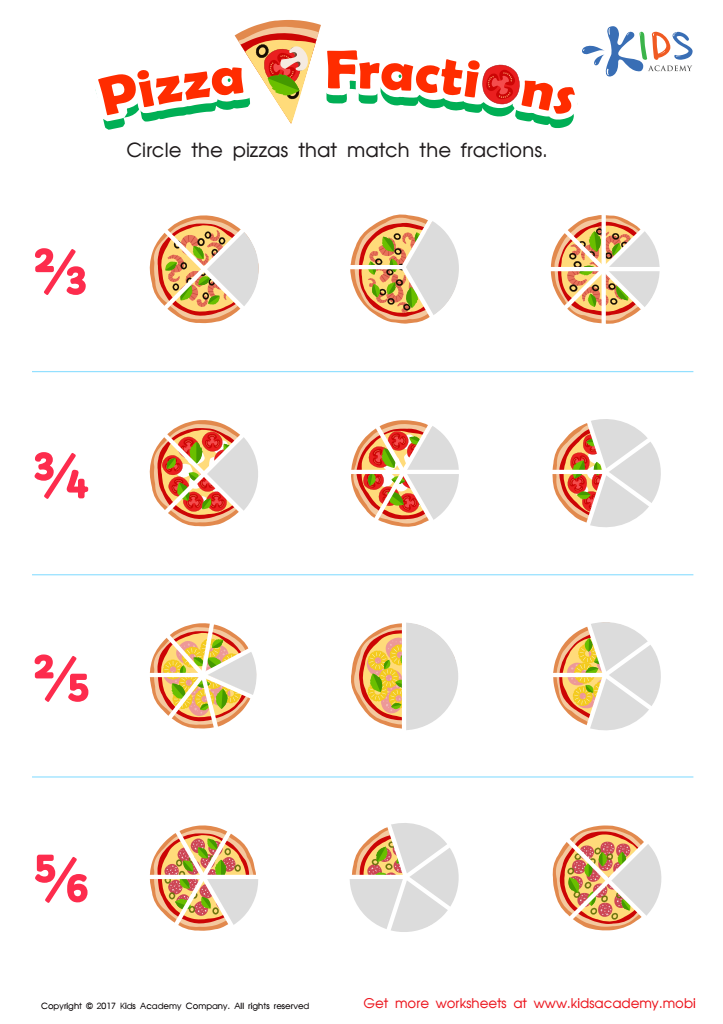
Fractions: Pizza Printable
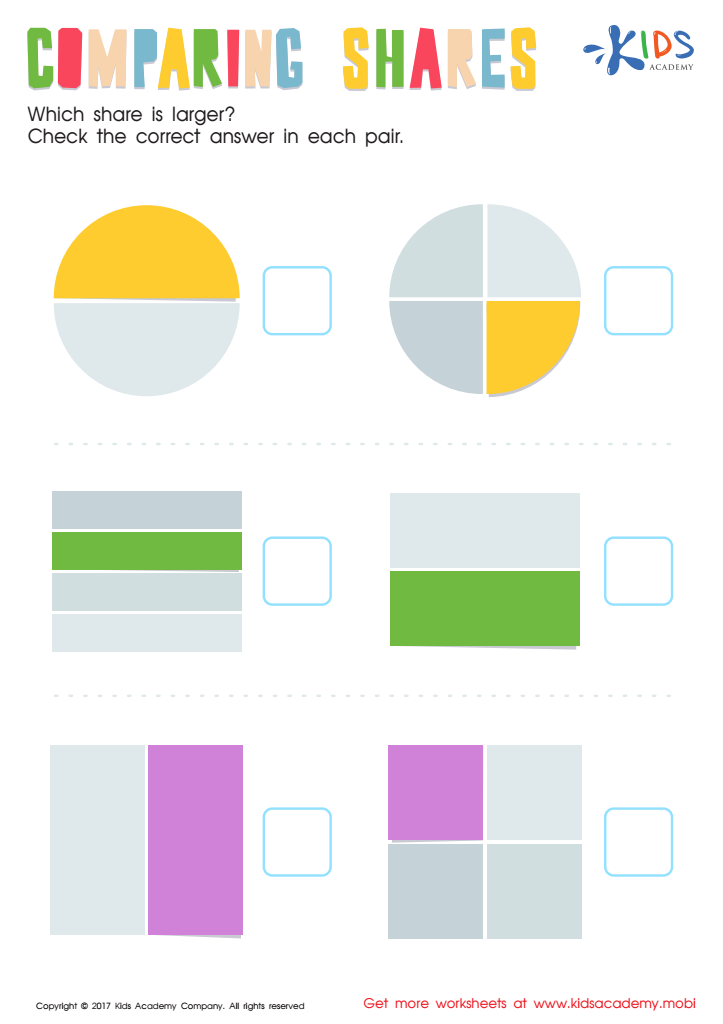
Comparing Shares Worksheet
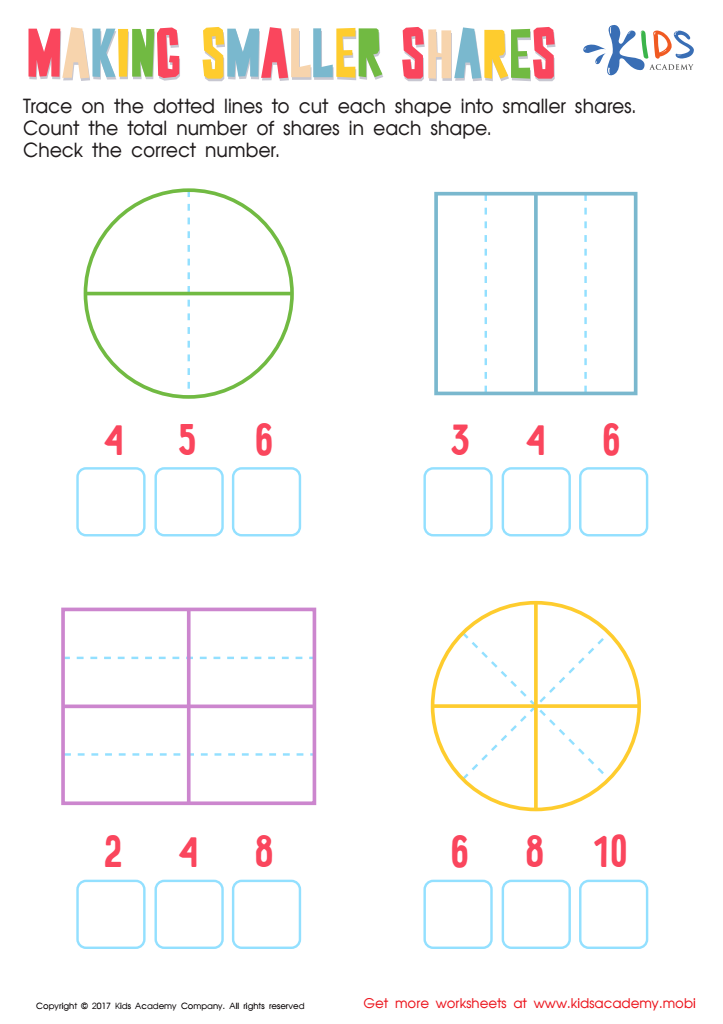
Making Smaller Shares Worksheet
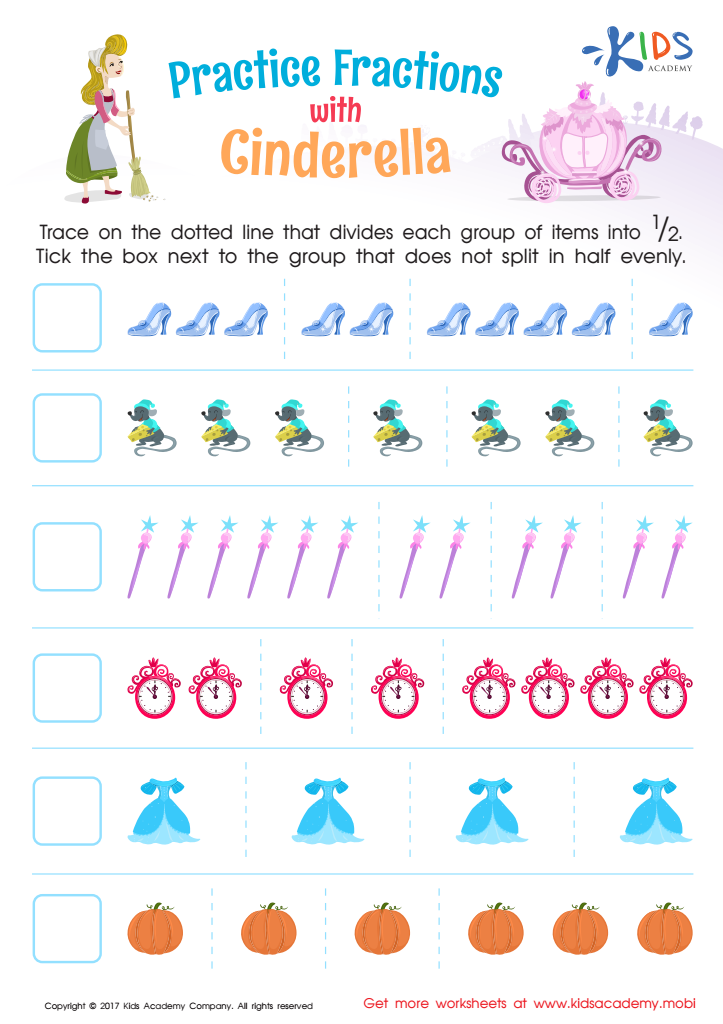
Fractions: Cinderella Printable







Comparing fractions is an essential foundational skill in mathematics, particularly for young learners in Grade 1. Parents and teachers should care about this concept for several reasons.
Firstly, comparing fractions helps children develop a deeper understanding of numbers and precise quantities. It encourages critical thinking and enhances their number sense, allowing students to grasp the idea of parts of a whole. This understanding is crucial not just for fractions, but for subsequent mathematical concepts they'll encounter in higher grades.
Secondly, it builds computational skills. As students learn to compare fractions, they also practice addition and subtraction involving fractions, which are foundational skills in operations. This, in turn, fosters confidence in their mathematical abilities.
Moreover, understanding fractions and their comparisons helps children relate math to real-world scenarios, like sharing pizza or dividing treats, making learning more engaging and practical. It cultivates mathematical language and promotes discussion about proportion and equality, supporting social interactions in group settings.
Ultimately, mastering fraction comparisons in Grade 1 sets the stage for more advanced math concepts, giving children the tools they need to succeed in their education and in everyday life. For parents and teachers, supporting this learning pivotal in cultivating a solid mathematical foundation.