Comparing sizes Grade 1 Math Worksheets
4 filtered results
-
From - To
Help first graders master essential math skills with our "Comparing Sizes Grade 1 Math Worksheets". Designed specifically for young learners, these practical and engaging worksheets will guide children to compare and contrast different objects by size. Using fun activities and colorful illustrations, kids will boost their observational skills, identify larger and smaller items, and develop a solid foundation in basic math concepts. Perfect for classroom use or home practice, these worksheets make learning both enjoyable and effective. Foster your child's early math development with our expertly crafted resources by Kids Academy—download now and watch their confidence grow!
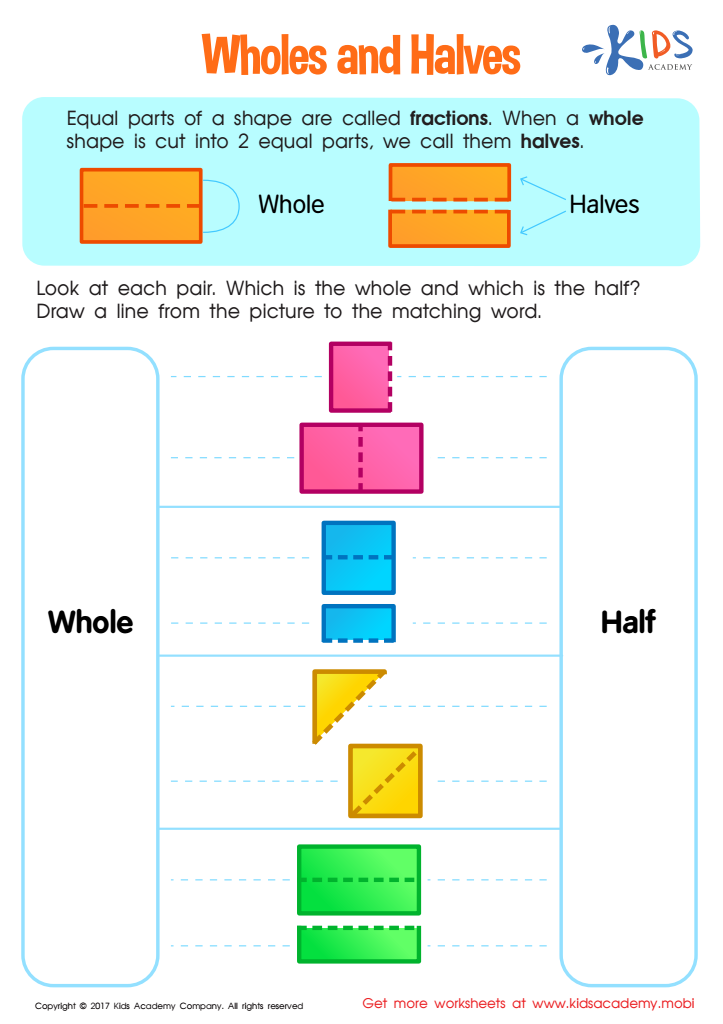
Wholes and Halves Worksheet
 Assign to My Students
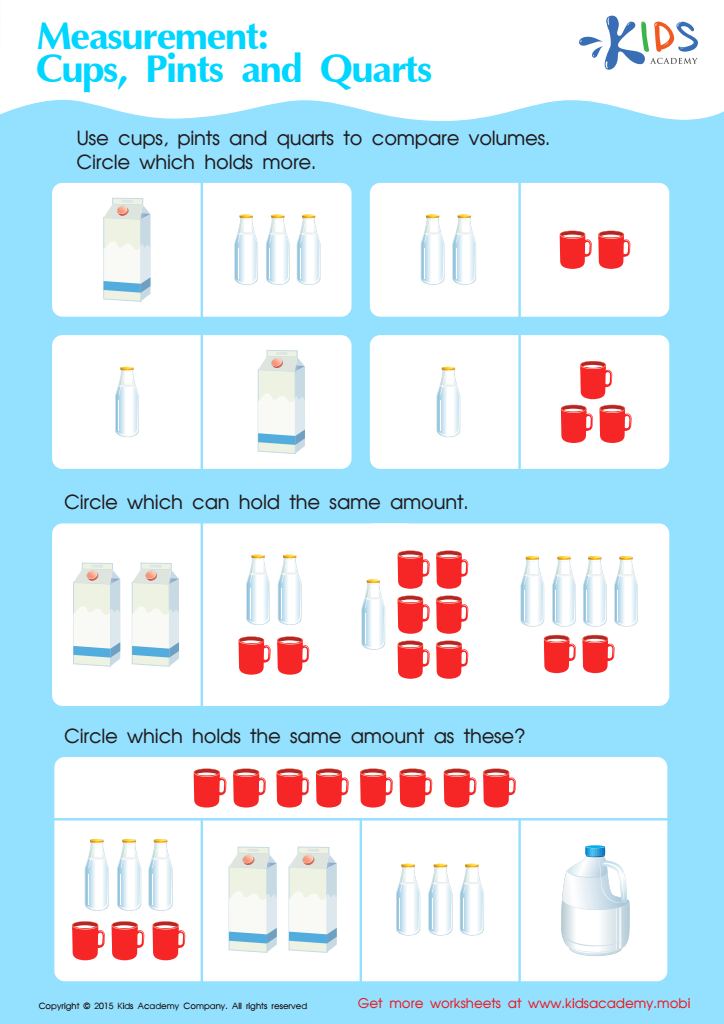
Measurement: Compare Volumes Worksheet
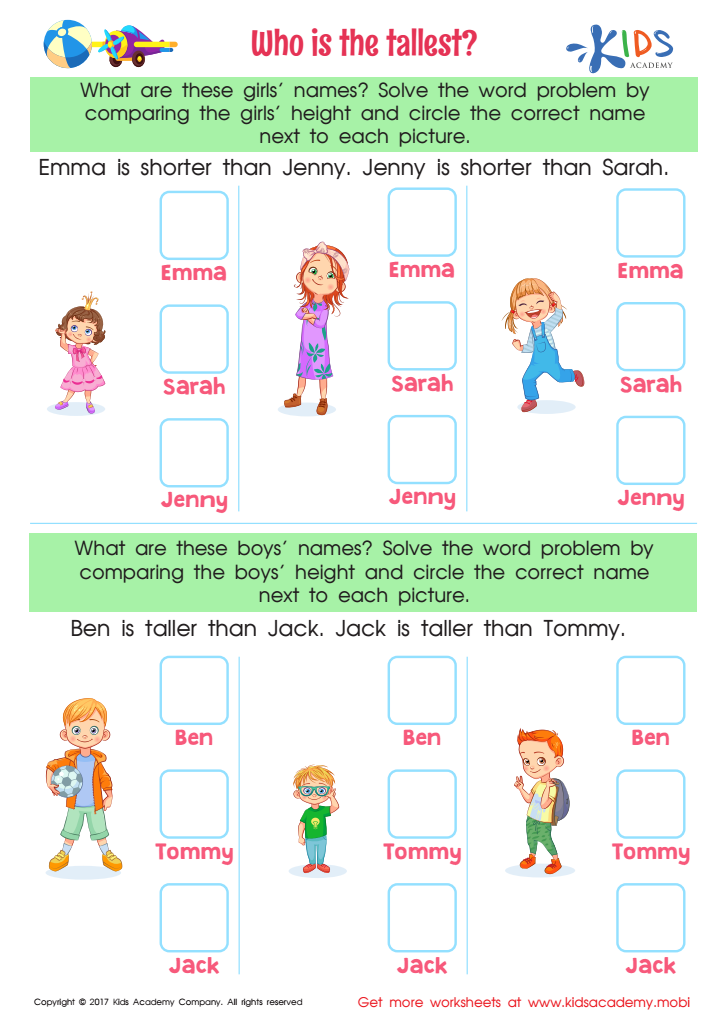
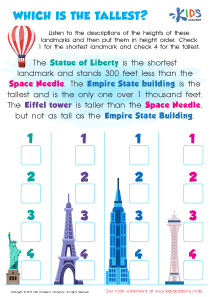
Who Tallest Printable
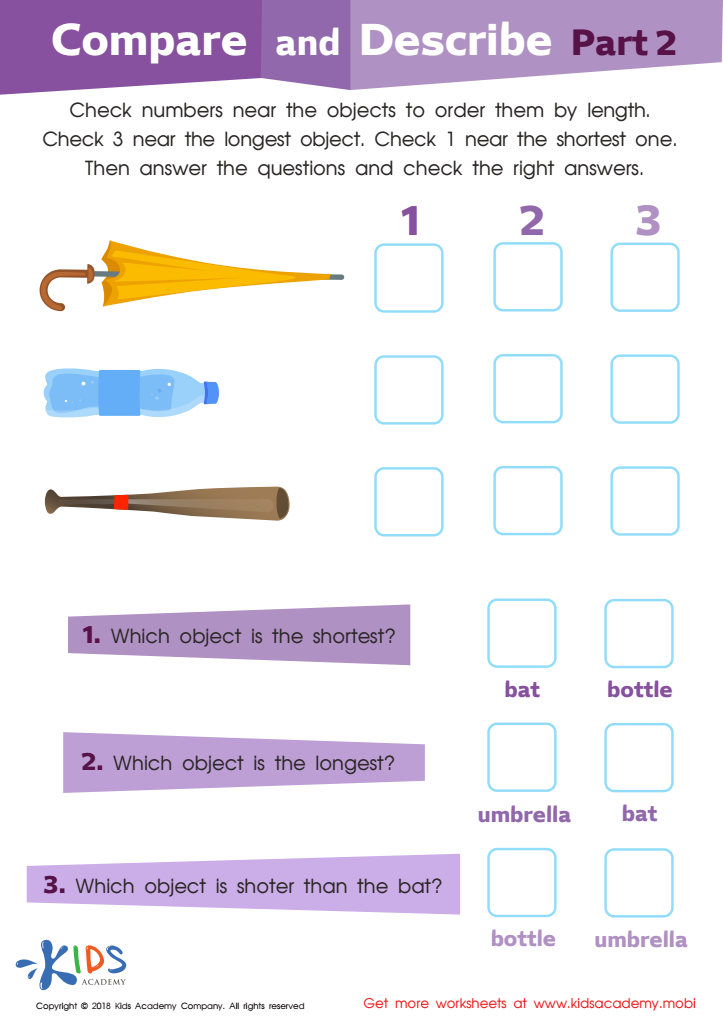
Compare and Describe: Part 2 Worksheet






In Grade 1 math, learning to compare sizes is a foundational skill crucial for a child's developmental understanding of the world. This skill helps children comprehend basic concepts of measurement, comparison, and spatial reasoning, all of which are essential for problem-solving and critical thinking. Parents and teachers should prioritize this aspect of math because it forms the basis for more complex mathematical concepts such as addition, subtraction, and geometry. Understanding size differences also enhances a child's ability to categorize and differentiate objects, sharpen their observational skills, and boost cognitive development.
By building strong size comparison skills early on, children can relate these abstract concepts to real-world situations. For example, they learn to understand that some objects are longer, shorter, taller, or smaller and can apply this knowledge in everyday life — whether organizing toys by size, understanding the concept of height when standing in a line, or even when grocery shopping with family. Moreover, these skills promote language development as children learn descriptive words like "bigger," "smaller," and "equal."
Ultimately, fostering this understanding in Grade 1 not only supports mathematics proficiency but also builds a confident, well-rounded learner ready to tackle more advanced topics with ease. Hence, both parents and teachers have a pivotal role in encouraging and nurturing these critical early math skills.