Counting practice Grade 1 Numbers up to 100 Worksheets
3 filtered results
-
From - To
Boost your first grader's math skills with our "Counting Practice Grade 1 Numbers up to 100 Worksheets"! These engaging activities help young learners count, recognize, and write numbers up to 100. Each worksheet is designed to reinforce counting sequences, enhance number sense, and build foundational math confidence. Perfect for classroom use or additional practice at home, our fun and educational exercises keep kids excited about numbers. Download our expertly crafted worksheets today to provide a strong numerical foundation, essential for future learning success. Make counting up to 100 an enjoyable adventure for your first grader!
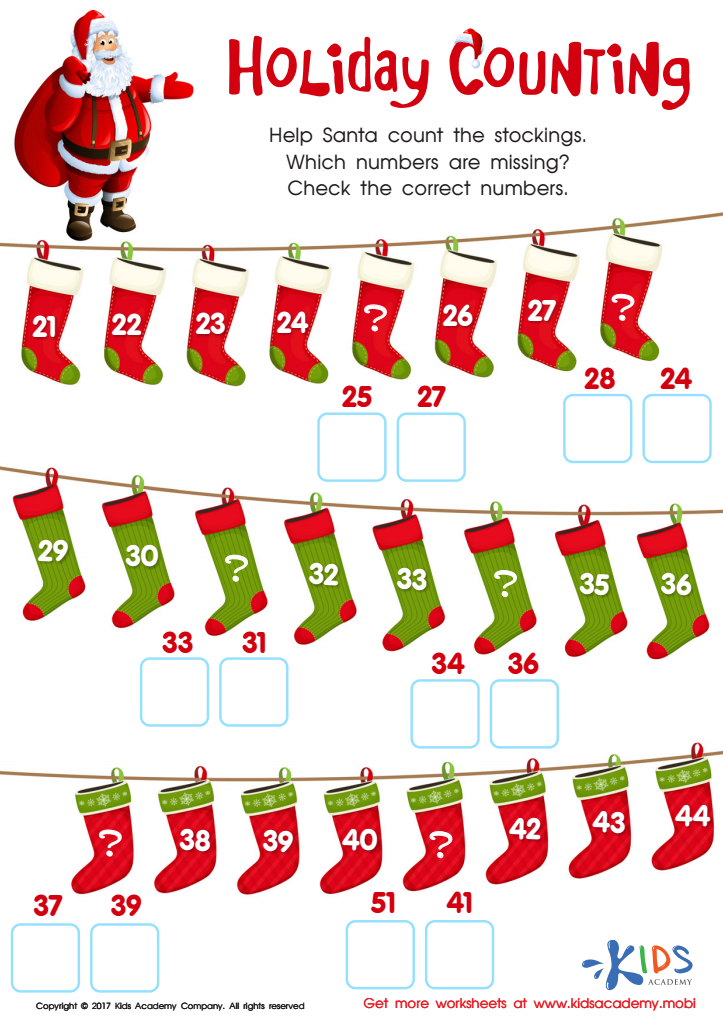
Holiday Counting Worksheet
 Assign to My Students
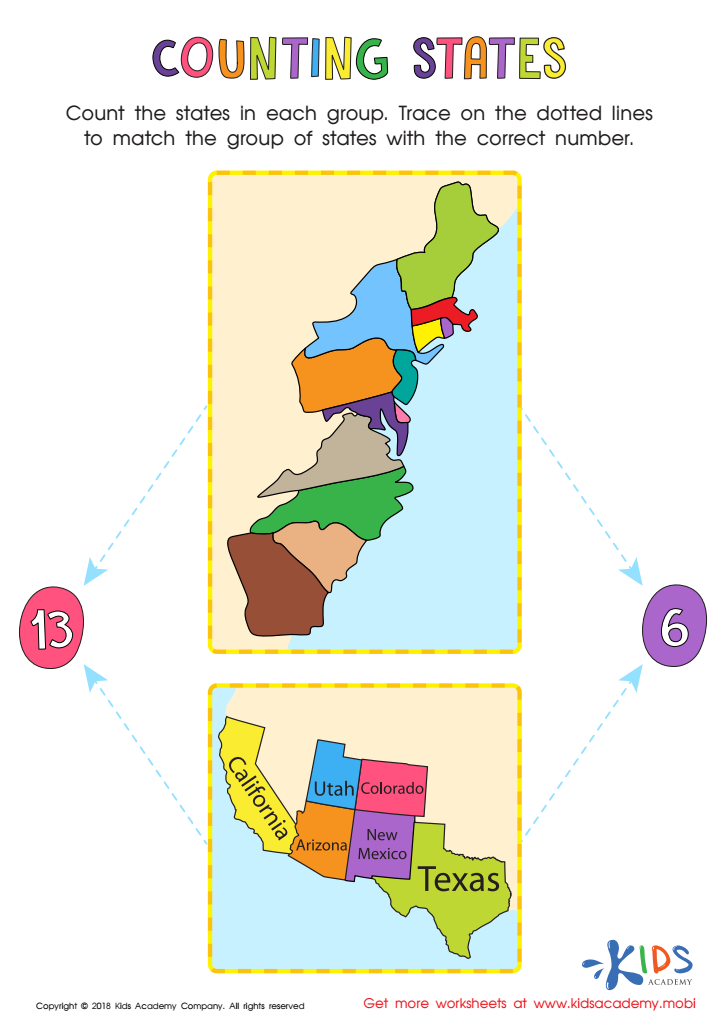
Counting States Worksheet

Counting on the City Skyline: Dot-to-Dot Worksheet







Counting practice for first graders with numbers up to 100 is a crucial building block for early mathematics and overall cognitive development. At this stage, children are establishing a foundational understanding of numbers that will support their learning throughout their academic journey.
First, counting helps develop number sense, which is the ability to understand, relate, and connect numbers. When children practice counting, they begin to grasp the concept of quantity and the relationship between numbers and value. This understanding is vital for more complex mathematical concepts like addition, subtraction, and place value.
Second, counting to 100 enhances problem-solving and logical thinking skills. As children sequence numbers correctly, they improve their ability to recognize patterns and sequence events, critical skills in both mathematics and everyday life.
Additionally, counting fluency is directly linked to higher achievement in all areas of math. Controlled, consistent practice builds confidence and proficiency, enabling students to tackle advanced topics with ease. Counting exercises can also be turned into engaging and fun activities that stimulate a child’s interest in learning.
Teachers and parents play pivotal roles by providing supportive and appropriate counting activities. Children who receive encouragement and consistent practice at school and home are more likely to develop strong numerical foundations, setting them up for future academic success.