Visual perception Grade 1 Numbers up to 100 Worksheets
3 filtered results
-
From - To
Explore our engaging Visual Perception Worksheets designed for Grade 1 students to enhance their understanding of numbers up to 100. These worksheets focus on developing essential visual skills that help children recognize, differentiate, and organize numbers through fun activities. With colorful visuals and interactive exercises, students will build confidence in identifying patterns, sequences, and numerical relationships. Ideal for classroom use or at-home learning, our worksheets offer a variety of problems that encourage critical thinking and problem-solving. Perfect for first graders, these resources make learning enjoyable while laying a strong foundation in mathematics. Access your worksheets today for an exciting math journey!
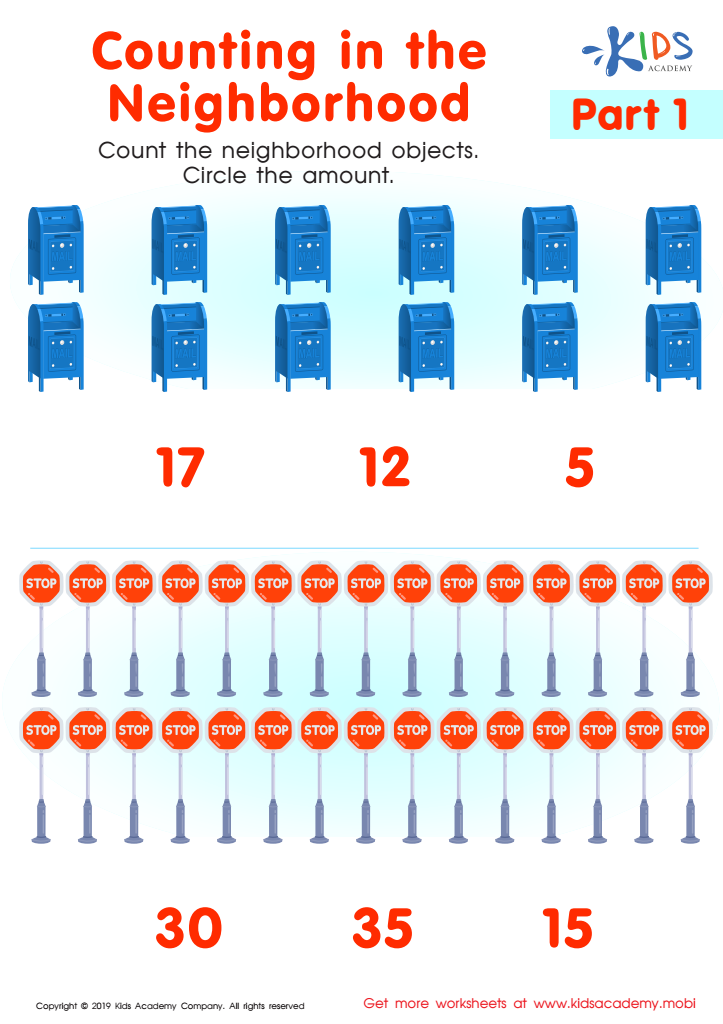
Counting in the Neighborhood Part1 Worksheet
 Assign to My Students
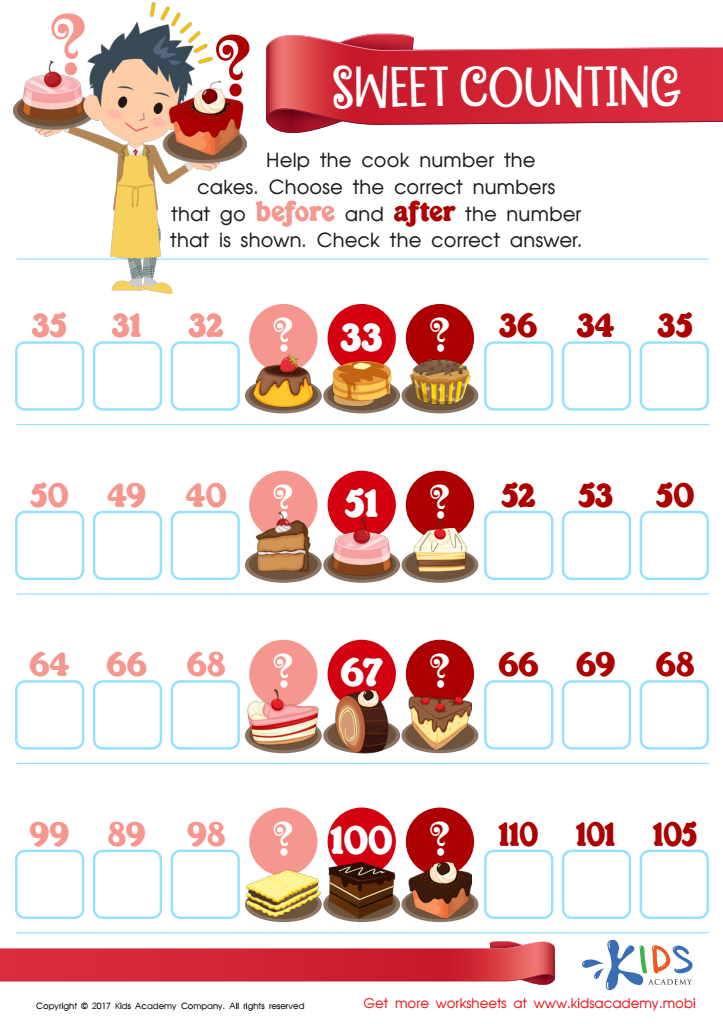
Sweet Counting - Part 1 Worksheet
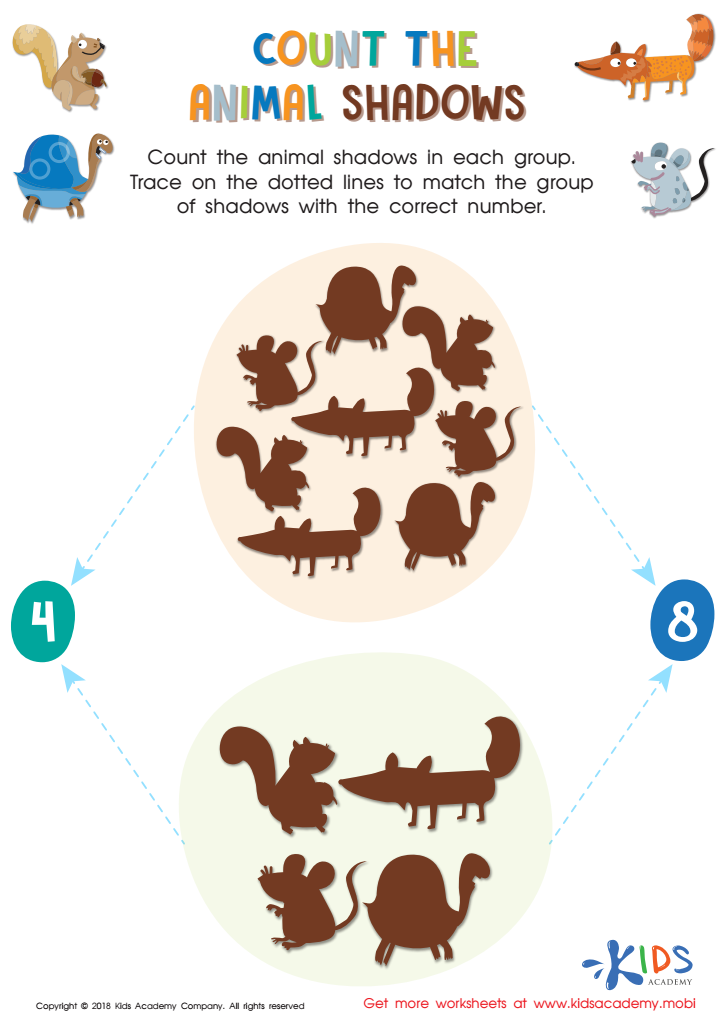
Count the Animal Shadows Worksheet





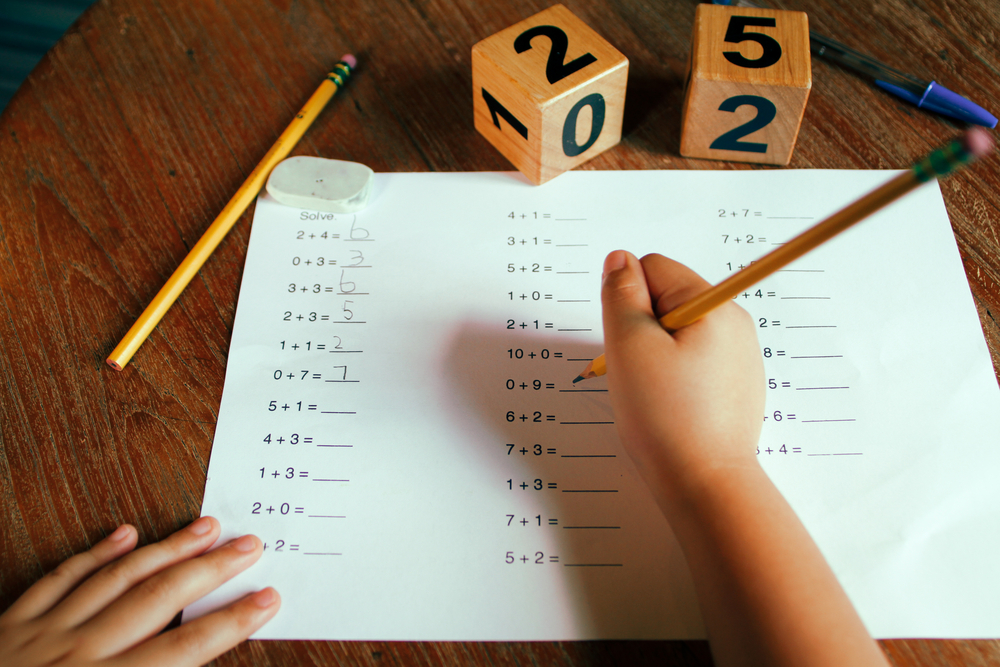

Visual perception is a crucial skill that significantly influences a child’s ability to understand and work with numbers, especially in Grade 1 where children learn to recognize, identify, and manipulate numbers up to 100. Parents and teachers should care about developing this skill because strong visual perception underpins a child’s mathematical success. It allows students to accurately perceive and interpret numerical information, leading to better comprehension of concepts such as counting, addition, and subtraction.
When children can visually discern patterns, shapes, and quantities, they become better equipped to solve mathematical problems and engage with their learning. Vision-related skills aid in tasks like grouping numbers, recognizing sequences, and differentiating between similar digits, which are foundational to grasping more complex math concepts as they progress.
Furthermore, early intervention in visual perception can prevent future difficulties in learning environments. By fostering these skills through engaging activities, both at home and within the classroom, parents and teachers can enhance children's confidence and independence in math. Establishing a strong foundation in visual perception also encourages critical thinking and analytical skills, essential for overall academic success. Ultimately, investing in developing these skills will benefit a child’s long-term education and personal growth.