Counting skills Grade 1 Reading Worksheets
10 filtered results
Difficulty Level
Grade
Age
-
From - To
Subject
Activity
Standards
Our "Counting Skills Grade 1 Reading Worksheets" enrich first graders' mathematical and literacy development by seamlessly integrating reading with counting exercises. Designed to foster a love for learning, these engaging activities help children practice number recognition, counting sequences, and basic addition. Each worksheet features vibrant illustrations and captivating themes to keep young learners motivated and entertained. With varying levels of difficulty, these worksheets provide excellent support on their journey toward numerical proficiency and reading fluency. Ideal for both classroom and at-home practice, our worksheets lay a strong foundation for future academic success. Download and print to begin unlocking your child’s potential today!
Favorites
With answer key
Interactive
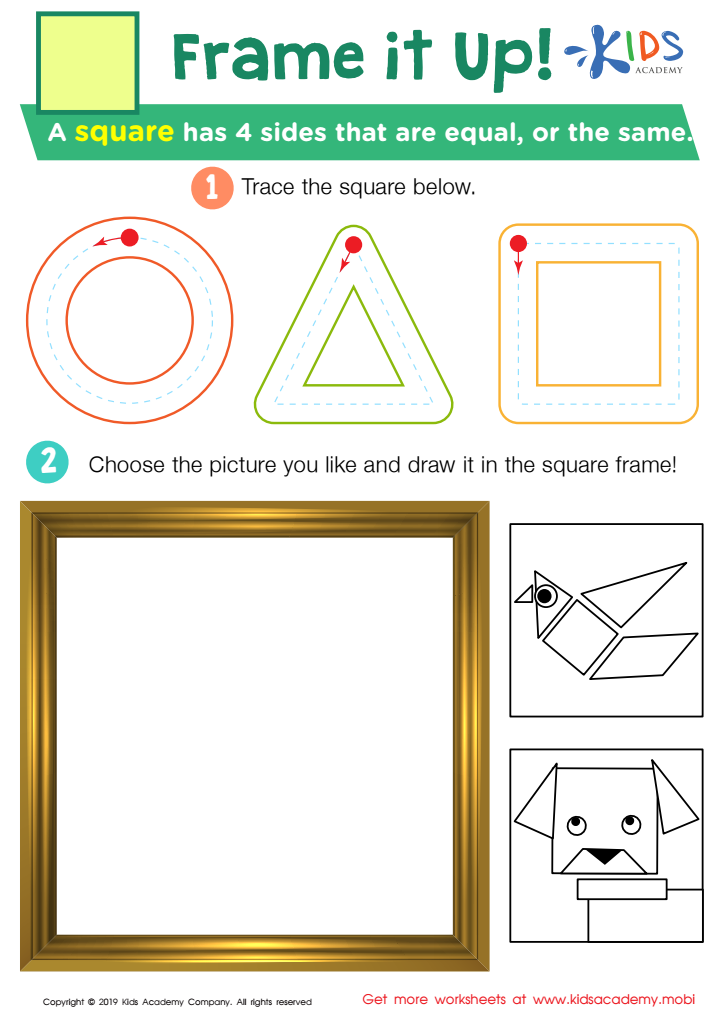
Frame it Up Worksheet
This worksheet helps kids learn the difference between squares and other shapes. It guides them to trace a square and draw a picture inside it. Examples of shapes-based drawings are included. Kids will have fun and clear up any confusion about squares.
 Assign to My Students
Frame it Up Worksheet
Worksheet
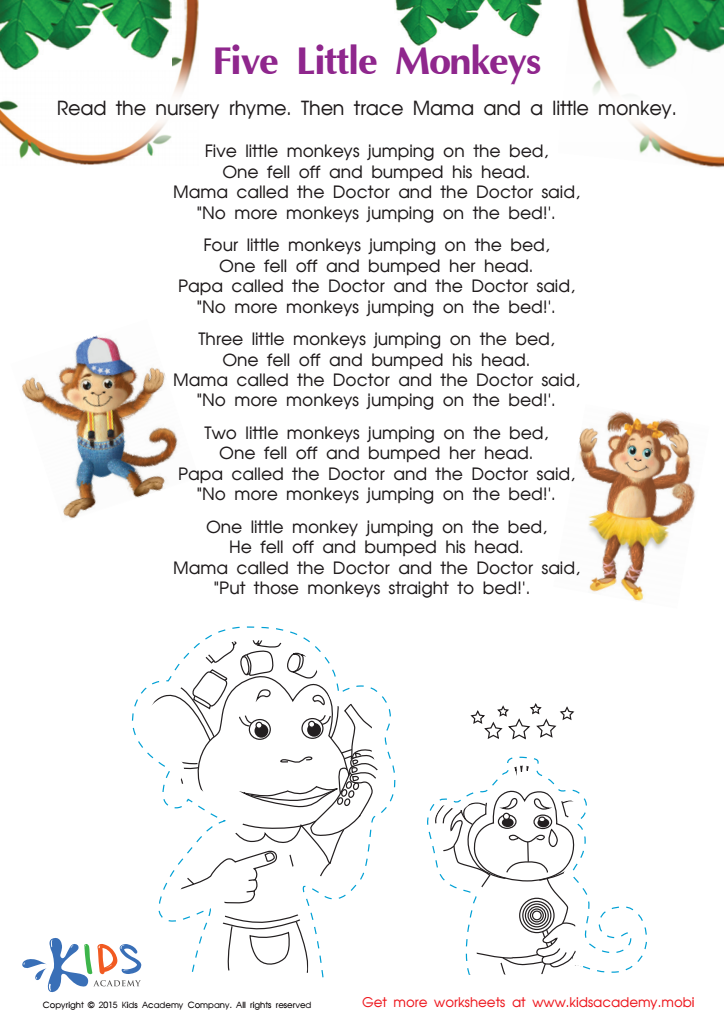
The Five Little Monkeys Nursery Rhyme Worksheet
Sing the beloved nursery rhyme "Five Little Monkeys" with your child, and add a finger play for extra fun! After a few times, encourage them to join in and fill the songs with laughter. Also, have fun coloring the worksheet featuring the monkeys and their Mama.
The Five Little Monkeys Nursery Rhyme Worksheet
Worksheet
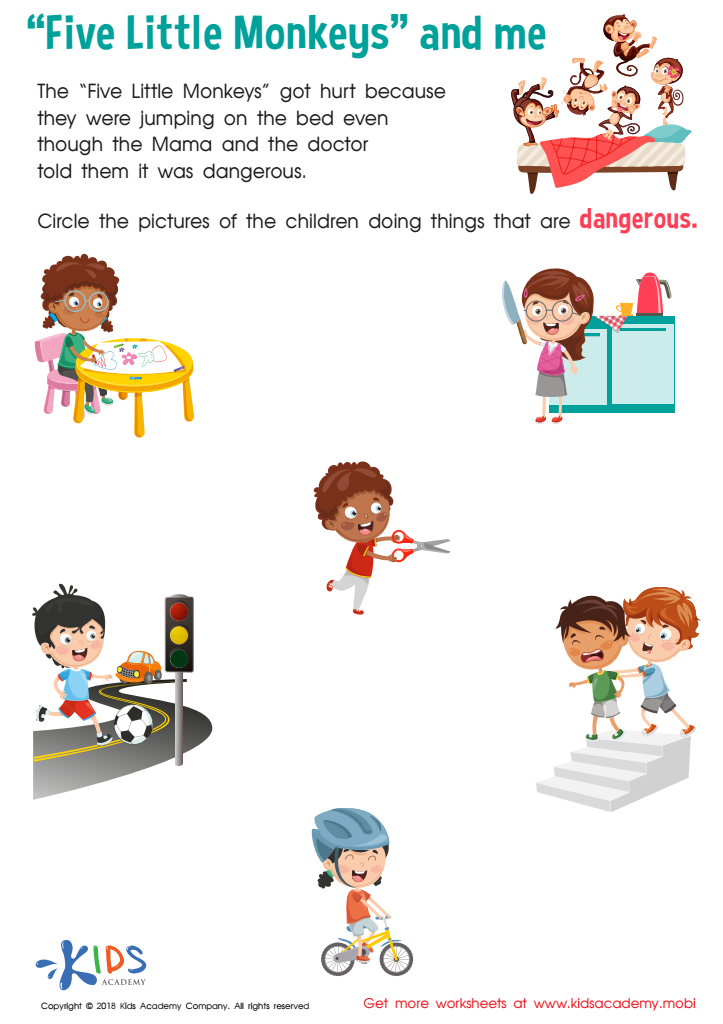
Five Little Monkeys and Me Worksheet
This free PDF worksheet provides preschoolers an understanding of danger and appropriate play. It allows them to recognize dangerous situations and why they can be risky, granting kids perspective from both parents and teachers. It's a fun, safe way to help them internalize what's dangerous and what's not.
Five Little Monkeys and Me Worksheet
Worksheet
Join Kids Academy for Free
Who is primarily going to use this learning content?







Counting skills are foundational for cognitive development and critical thinking, and their significance extends beyond just mathematics. For first graders, mastering counting is a gateway to understanding numbers, patterns, and relationships, and it sets the stage for more complex arithmetic concepts. Early proficiency in counting contributes to a child's overall sense of confidence and curiosity in learning.
Teachers and parents should value counting skills in combination with Grade 1 reading due to the interconnectedness of these subjects. Reading instructions, understanding word problems, and even grasping logical sequences in stories require a basic sense of numbers and counting. For example, a child needs to understand the ordinal position ("first," "second," "third") within a story or a sequence of instructions. This dual focus on counting and reading nurtures a more holistic development, promoting both literacy and numeracy, essential skills in navigating everyday tasks.
Furthermore, research indicates that early numerical skills are strong predictors of later academic success, including literacy achievement. When teachers and parents prioritize these skills in Grade 1, they provide children with critical tools for lifelong learning. Engaging in fun and interactive counting activities boosts memory, cognitive development, and literacy skills, creating a well-rounded, inquisitive learner prepared for future academic challenges.