Basic Math Skills Grade 1 Science Worksheets
4 filtered results
-
From - To
Nurture your child's mathematical abilities with our "Basic Math Skills Grade 1 Science Worksheets". Designed specifically for first graders, these engaging worksheets combine foundational math skills with captivating science concepts. Through fun activities and vivid illustrations, students will explore counting, addition, subtraction, and basic geometry while reinforcing essential scientific principles. Each worksheet is crafted to enhance problem-solving abilities and critical thinking, fostering a love for learning at an early age. Perfect for classroom use or homeschooling, these worksheets provide a seamless blend of education and enjoyment, ensuring your child’s academic growth in a balanced and enjoyable way.
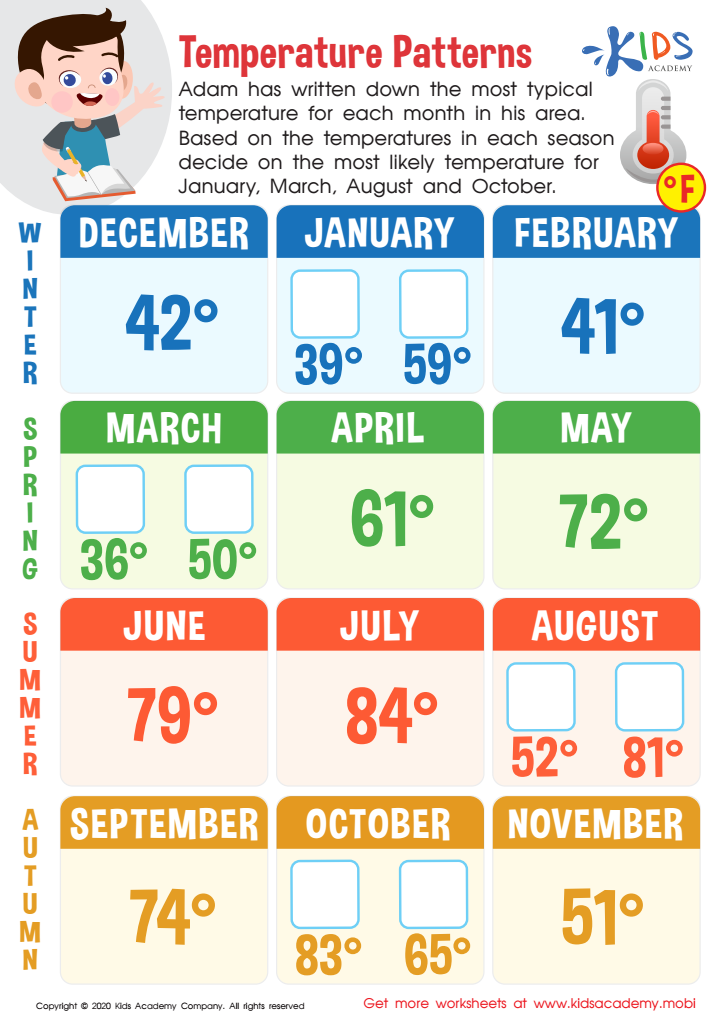
Temperature Patterns Worksheet
 Assign to My Students
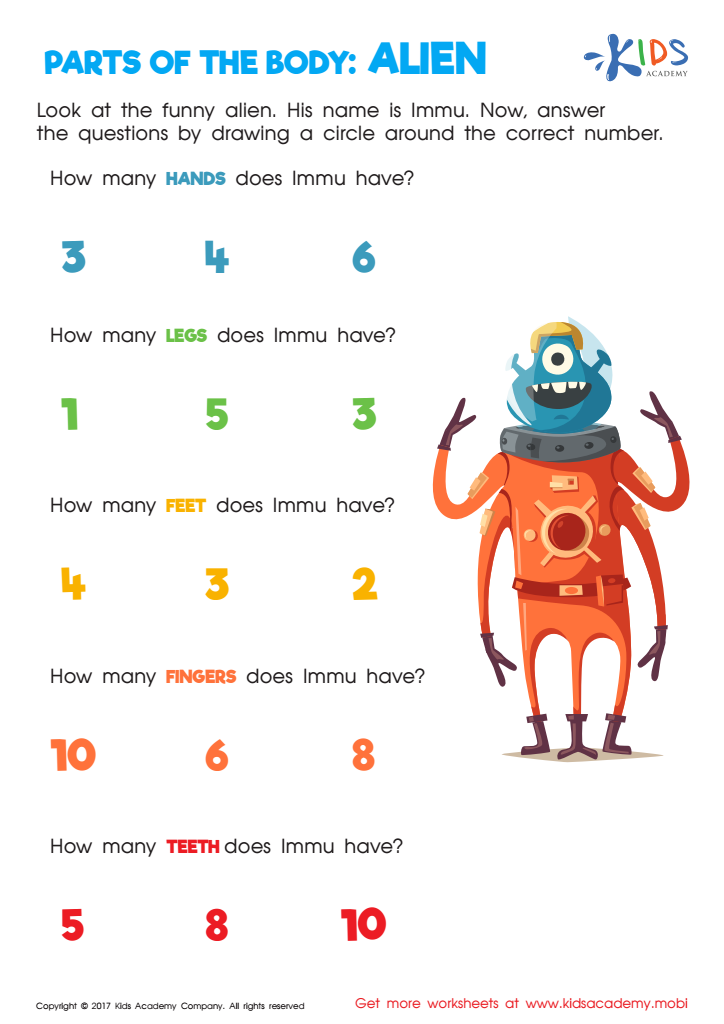
Alien Worksheet
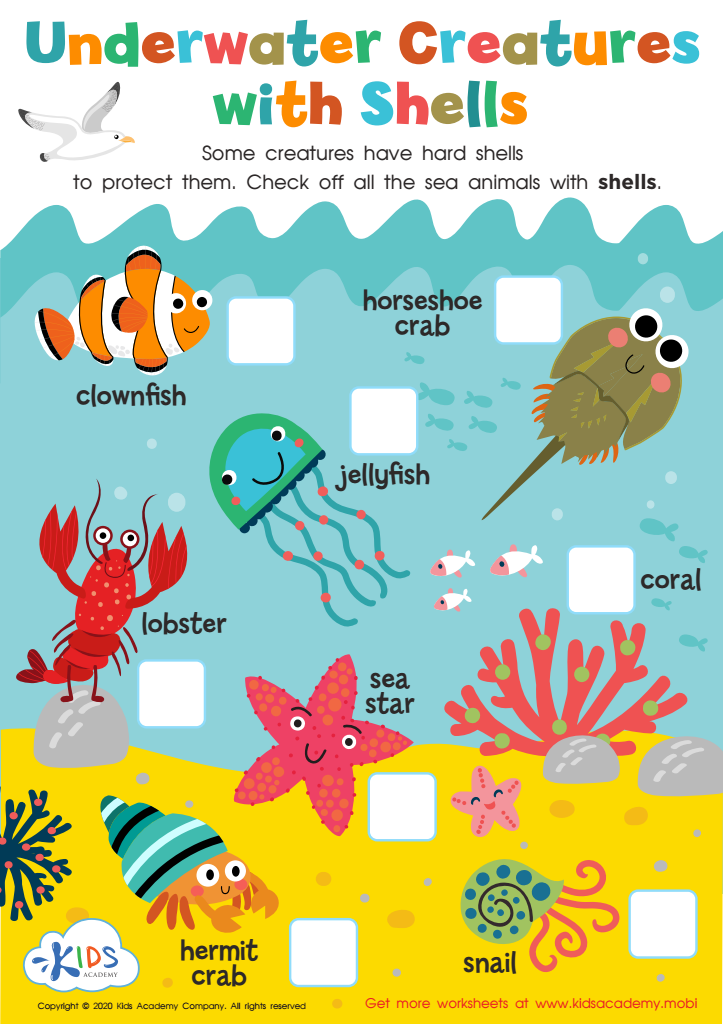
Underwater Creatures with Shells Worksheet
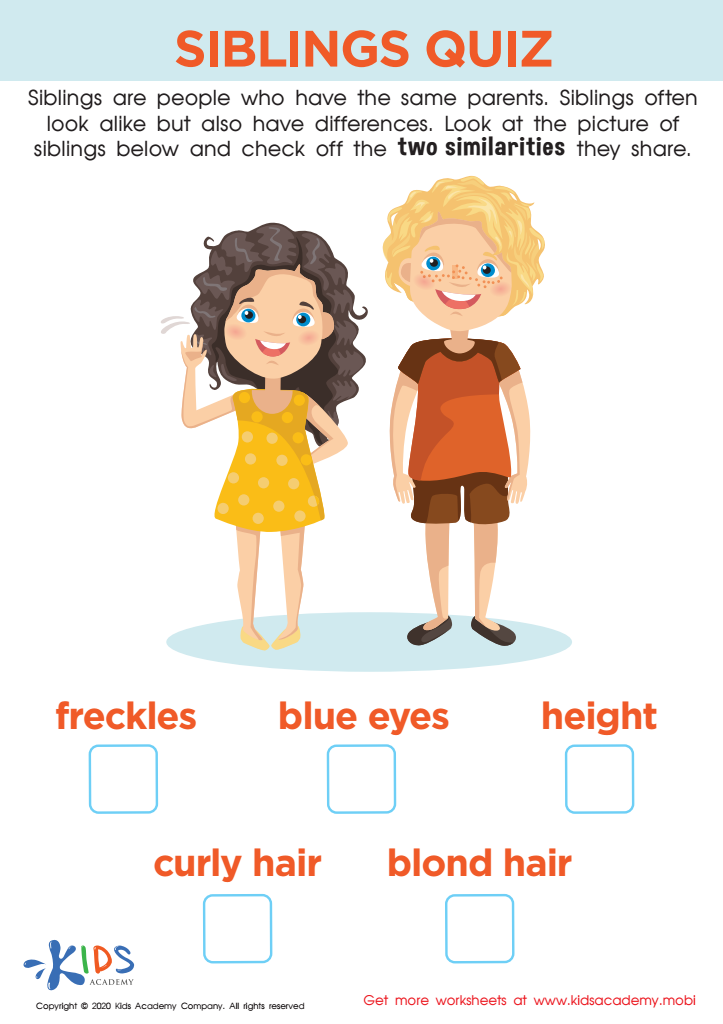
Siblings Quiz Worksheet






Parents and teachers should place a strong emphasis on basic math skills in Grade 1 science as these foundational abilities are critical for a child's overall intellectual development and understanding of the world around them. Math skills in early education focus on essential concepts like counting, addition, subtraction, and number sense, which are indispensable for not only solving mathematical problems but also for analyzing and interpreting scientific data.
Incorporating math in science lessons at an early age enables children to grasp basic scientific principles more robustly because science often involves measurement, pattern recognition, and data analysis. Moreover, these math-integrated science activities bolster logical thinking and problem-solving skills, fostering a curiosity-driven approach to learning.
Building a strong mathematical foundation early sets students up for success in more complex areas of math and science in later grades, ensuring they are well-prepared for 21st-century careers that increasingly demand strong STEM (Science, Technology, Engineering, and Mathematics) competencies. Furthermore, success in math can boost a child's confidence and motivation, cultivating a positive attitude toward learning.
By prioritizing basic math skills in Grade 1 science, parents and teachers can effectively support a well-rounded education that prepares children for future academic challenges and opportunities, ultimately shaping intelligent, analytical thinkers who are ready to explore and innovate.







