Comparing objects Extra Challenge Worksheets for Ages 3-4
3 filtered results
-
From - To
Discover our "Comparing Objects Extra Challenge Worksheets" designed specifically for children ages 3-4! These engaging printables encourage young learners to explore the concepts of comparison through fun activities tailored to spark curiosity and promote critical thinking skills. With colorful illustrations and easy-to-follow instructions, children will practice identifying similarities and differences between various objects, strengthening their observational and cognitive abilities. Ideal for home or classroom use, these worksheets enhance foundational skills in a playful and interactive manner. Foster a love for learning while your little ones thrive with our thoughtfully designed comparing objects challenges that make education joyful and exciting!
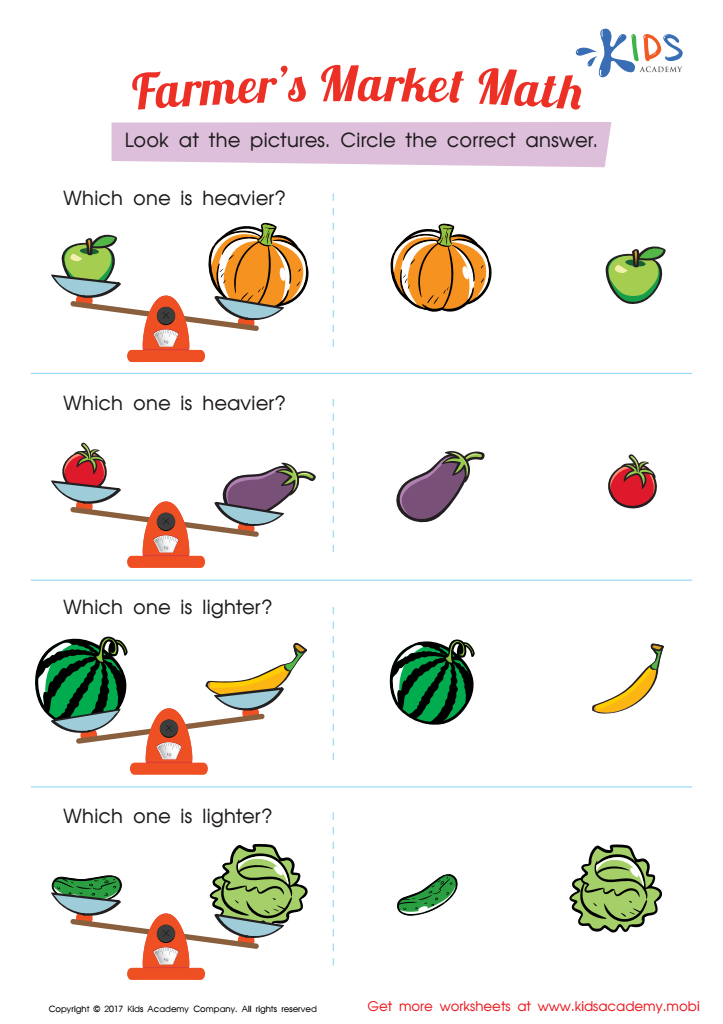
Which One Is Heavier Worksheet
 Assign to My Students
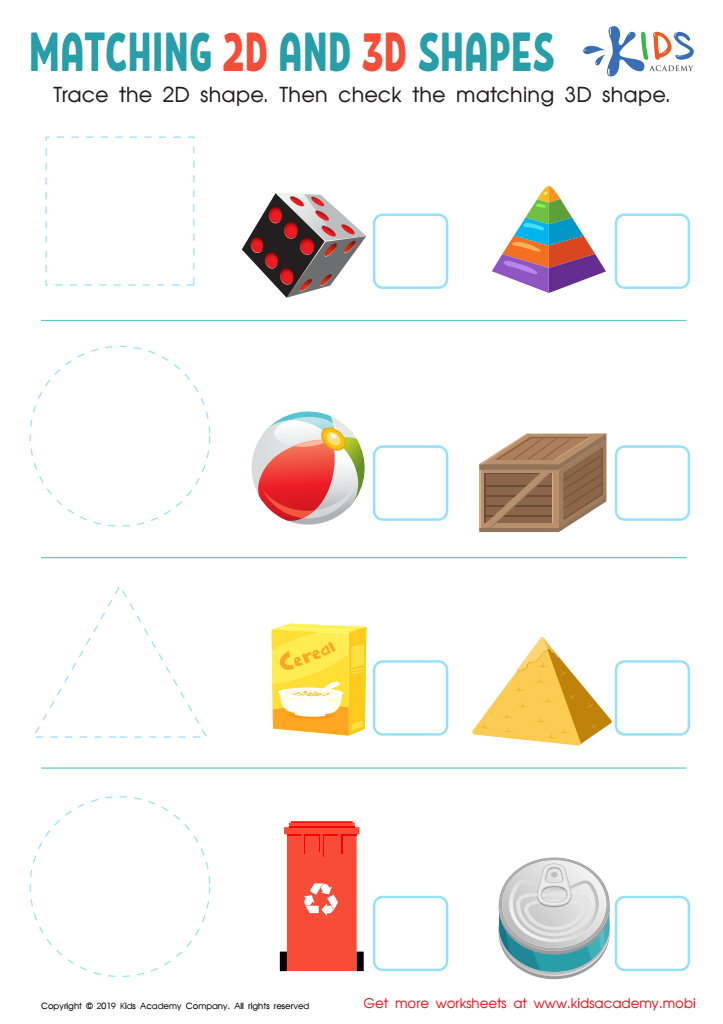
Matching 2D and 3D Shapes Worksheet
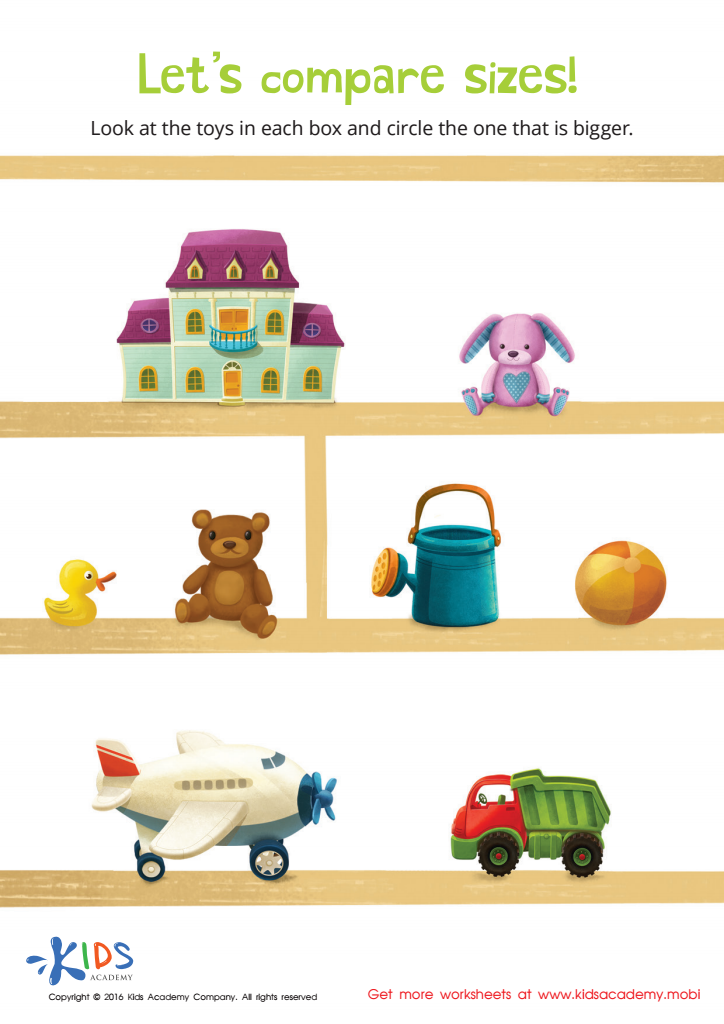
Classifying by Size Sorting Worksheet






Comparing objects is a foundational skill for young children, particularly for those ages 3-4. This skill lays the groundwork for critical thinking and problem-solving abilities that are crucial throughout their educational journey. Parents and teachers should care about this Early Learning Benchmark for several reasons.
Firstly, comparing objects helps young children develop their understanding of size, quantity, and other measurable attributes, fostering early mathematical skills. By learning to differentiate characteristics, children also enhance their observational skills, which are essential for scientific inquiry and everyday decision-making.
Secondly, this process promotes language development as children learn new vocabulary related to comparisons, such as "bigger," "smaller," "more," and "less." Engaging in discussion about the differences among objects allows children to practice language skills and express their thoughts more clearly.
Finally, comparing objects encourages social interaction, offering opportunities for cooperative play and communication with peers and adults. These interactions can build social skills and foster emotional intelligence.
In sum, prioritizing the teaching of comparing objects equips young children with essential cognitive, linguistic, and social skills needed for lifelong learning. As stakeholders in their education, parents and teachers play a vital role in nurturing these abilities, ensuring children are well-prepared for future academic challenges.








