Shape identification Extra Challenge Worksheets for Ages 3-5
3 filtered results
-
From - To
Boost your child's shape identification skills with our engaging Extra Challenge Worksheets designed for ages 3-5! These thoughtfully created activities encourage young learners to explore and recognize a variety of shapes, enhancing their cognitive development and fine motor skills. Each worksheet is packed with vibrant illustrations and interactive exercises that make learning fun and effective. Perfect for both home and classroom use, our worksheets help children differentiate between shapes while fostering creativity and critical thinking. Challenge your little ones today and watch them shine as they master shape identification in an enjoyable and stimulating way! Download now to get started!
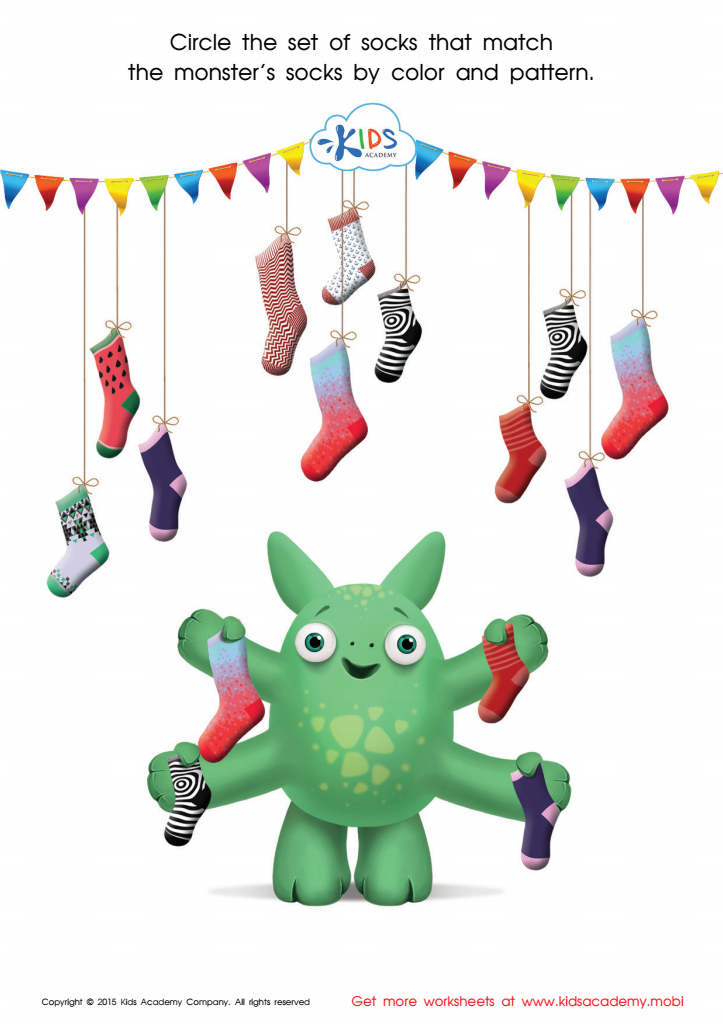
Sort the Monster's Socks Worksheet
 Assign to My Students
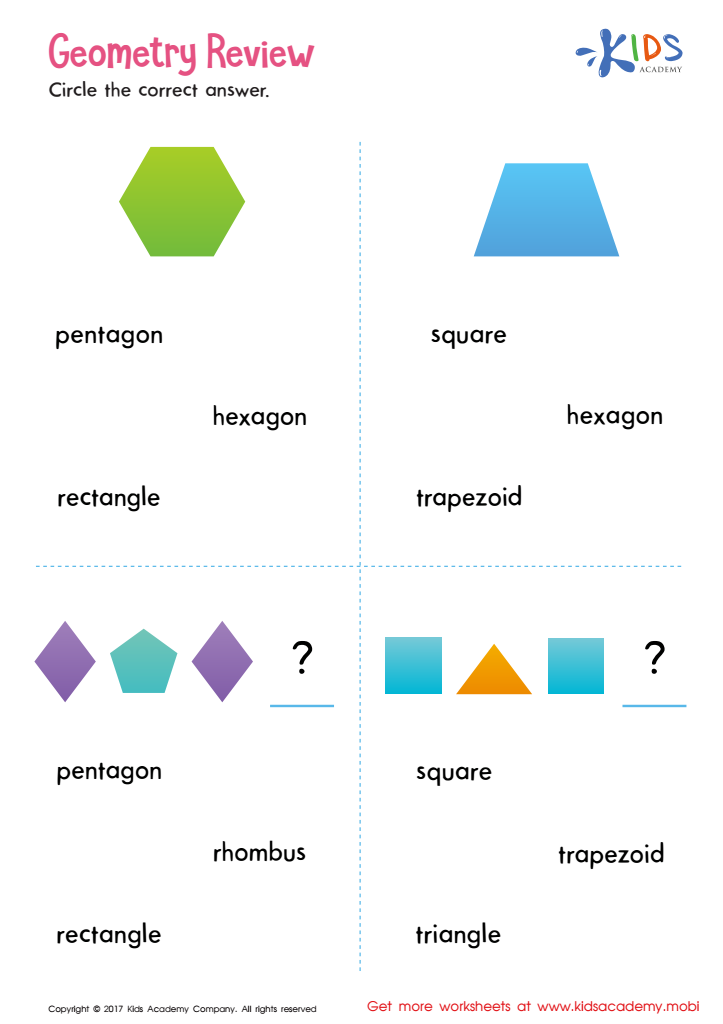
Geometry Review Printable
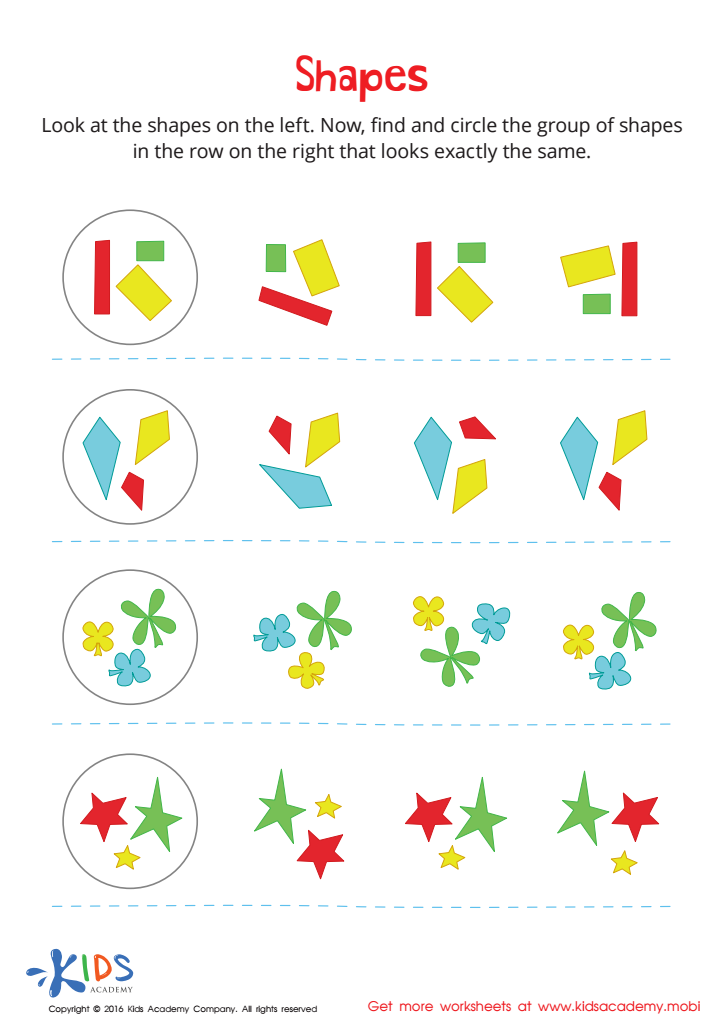
Shapes Worksheet







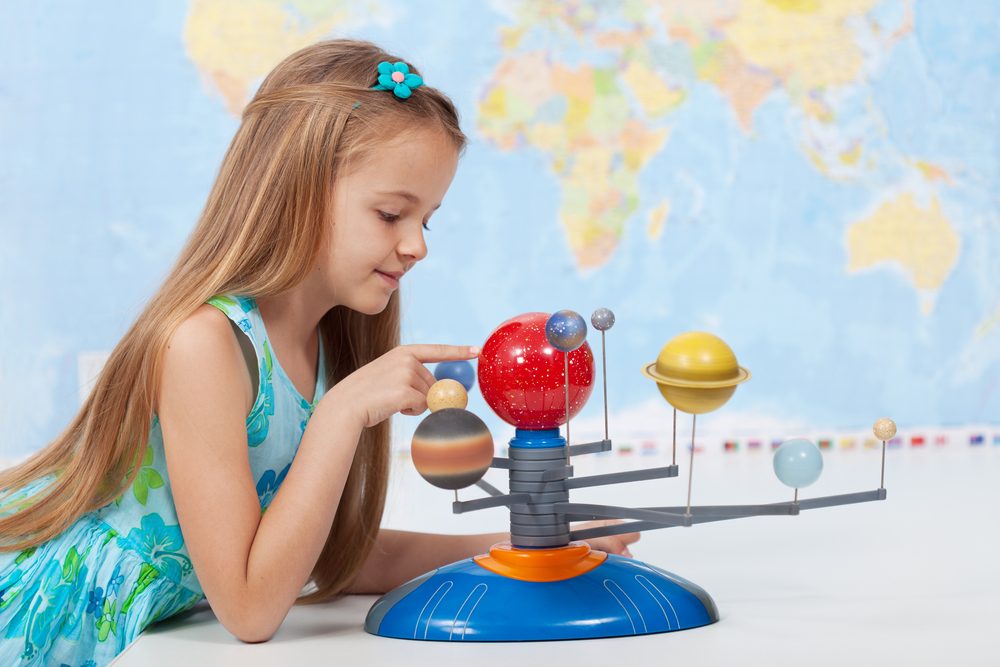
Shape identification is a foundational skill in early childhood education, and parents and teachers should prioritize its development, especially for children aged 3-5. Mastering shape recognition is crucial as it lays the groundwork for various cognitive skills, including problem-solving, spatial awareness, and critical thinking. Young children learn to categorize, compare, and analyze different shapes, prompting them to explore their environment more critically.
Engaging in shape identification challenges not only enhances a child's understanding of geometric concepts but also fuels creativity. Activities that involve identifying and manipulating shapes can encourage imaginative thinking and artistic expression through drawing, building, and crafting.
Additionally, shape identification fosters language development. When discussing shapes, children expand their vocabulary by learning terms related to geometry, such as "triangle," "rectangle," and more. This dialogue also strengthens communication skills.
Lastly, incorporating such challenges creates a joyful learning atmosphere where exploration is encouraged. Parents and teachers foster a love for learning by making activities engaging and interactive, helping children build confidence in their abilities. Overall, prioritizing shape identification enriches children’s early learning experiences and equips them with essential skills for their future education.








