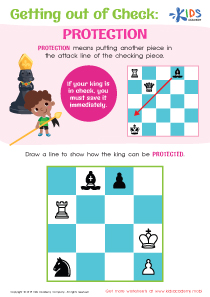
Strategic thinking development Extra Challenge Chess Worksheets for Ages 3-6
3 filtered results
Difficulty Level
Grade
Age
-
From - To
Subject
Activity
Standards
Unlock your child’s potential with our Strategic Thinking Development Extra Challenge Chess Worksheets, designed for ages 3-6. These engaging worksheets are tailored to cultivate early cognitive skills through fun and challenging chess-based puzzles. Each activity helps young minds develop strategic thinking, problem-solving, and concentration. Perfect for young beginners, our expertly crafted exercises enhance learning by making complex concepts accessible and enjoyable. Make the most of early learning years with a resource that transforms play into powerful educational experiences. Dive into chess challenges today and watch your child's strategic abilities flourish! Visit our website for more details.
Favorites
With answer key
Interactive
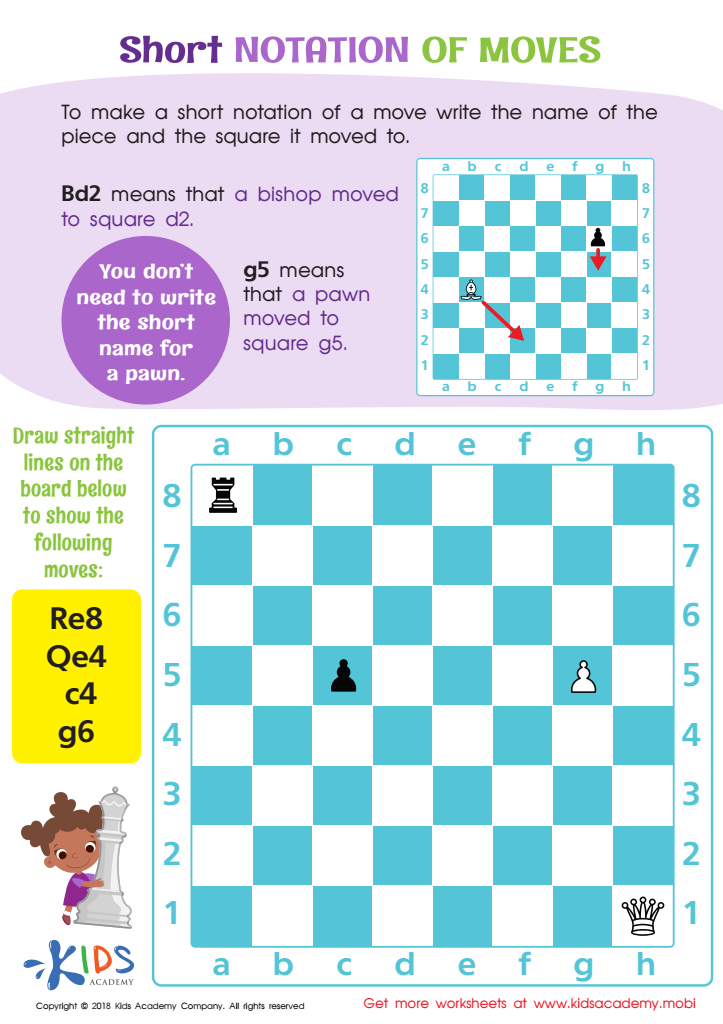
Short Notation of Moves Worksheet
To master chess, you need more than just knowing the pieces and their moves - you need to be able to make notations of your moves. To make a short notation, write the piece name and square it moved to; for example, Bd2 for bishop on d2. Pawns don't need the piece name, just the square; e.g. g5. Show your kids how to draw lines to the board for the moves given.
 Assign to My Students
Short Notation of Moves Worksheet
Worksheet
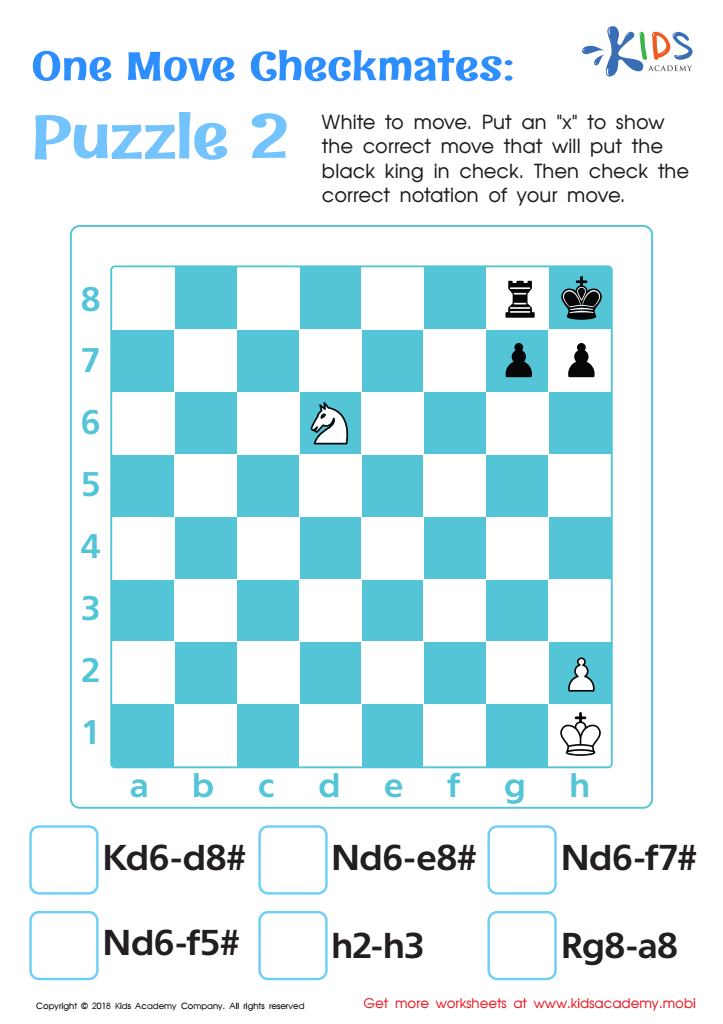
One Move Checkmates: Puzzle 2 Worksheet
Fine-tuning logic and critical thinking skills can be tricky but this free PDF offers a fun way for little logisticians to practice visual-spatial relationships and strategizing to checkmate the black king. It also boosts directional and reading skills which makes it a great brain-building puzzle.
One Move Checkmates: Puzzle 2 Worksheet
Worksheet
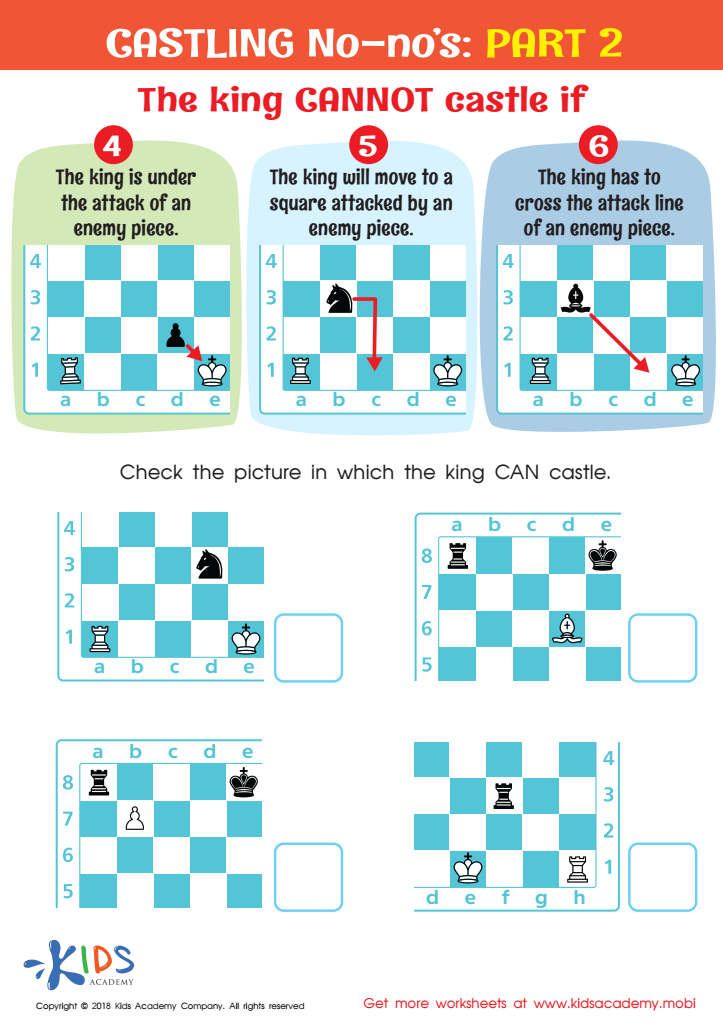
Castling No - no's: Part 2 Worksheet
Teach your child the rules of castling: no castling if the king is under attack or will move onto an attacked square, or cross an attack line. To prepare for a game of chess, help your child complete the exercise of identifying when the king can castle – check the pictures.
Castling No - no's: Part 2 Worksheet
Worksheet
Join Kids Academy for Free
Who is primarily going to use this learning content?






Strategic thinking development at an early age is crucial, and Extra Challenge Chess caters specifically to children aged 3-6, making it highly beneficial for several reasons. Firstly, engaging children in chess fosters cognitive growth by challenging them to think ahead, anticipate outcomes, and plan multi-step actions. This early exposure helps sharpen problem-solving skills and enhances both critical and analytical thinking, which are foundational for future academic and real-life scenarios.
In such a young age group, children's brains are highly plastic, meaning they can form new connections easily. Introducing strategic thinking through chess can significantly impact their mental flexibility and creativity. Parents and teachers who incorporate Extra Challenge Chess into the learning process provide rich, stimulating environments that can cater to a child's inquisitive mind, promoting perseverance and patience as they navigate the game's complexities.
Furthermore, chess encourages the development of concentration and discipline, as children must focus intently and adhere to rules to control the chessboard's dynamics. These skills are transferable to various areas of learning and social interaction, creating well-rounded individuals. Finally, playing chess early on can boost self-confidence as children learn to set goals and achieve them, helping to nurture a positive, resilient mentality.