Basic Counting Extra Challenge Worksheets for Ages 3-6
3 filtered results
-
From - To
Discover our "Basic Counting Extra Challenge Worksheets" designed for children ages 3-6 to enhance their counting skills in a fun and engaging way! These worksheets are perfect for young learners, providing extra challenges to help them master counting concepts. With colorful illustrations and varied activities, children will enjoy learning to count objects, numbers, and sizes, all while developing their critical thinking. Whether used at home or in a classroom, these worksheets foster essential early math skills and promote confidence in young learners. Give your child the boost they need in their numerical comprehension with our exciting counting extras!
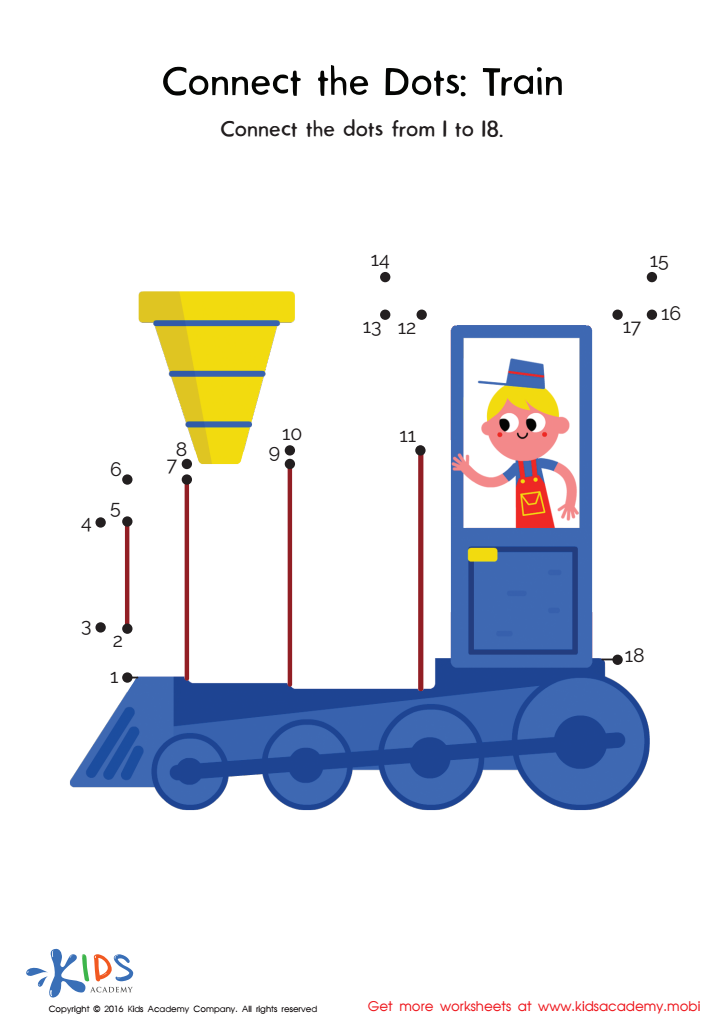
 Assign to My Students
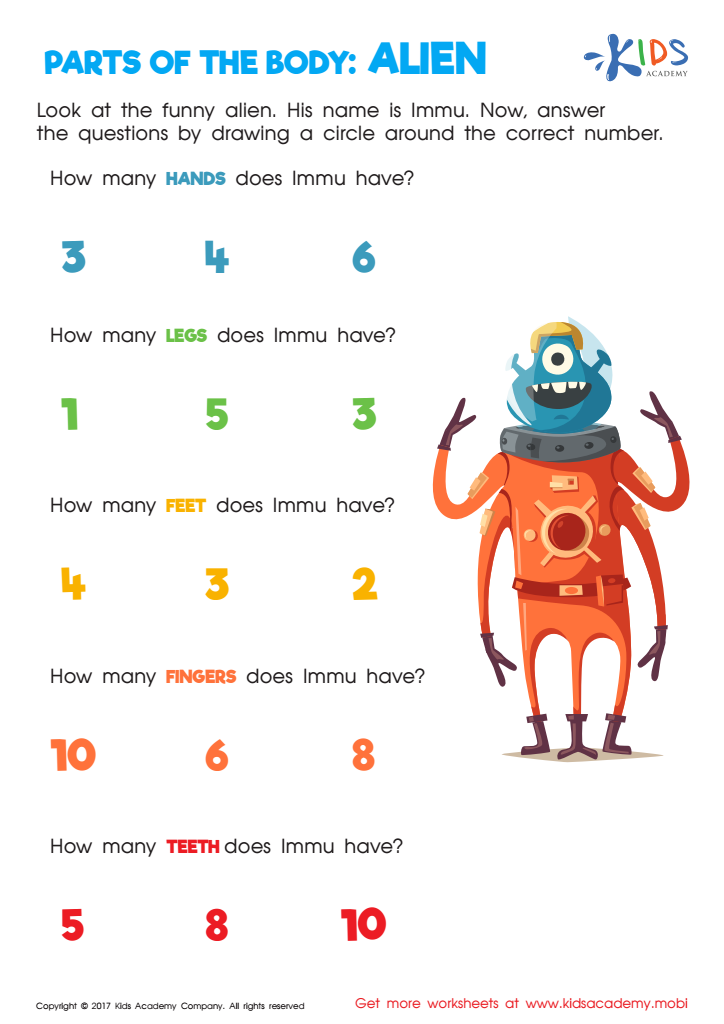
Alien Worksheet
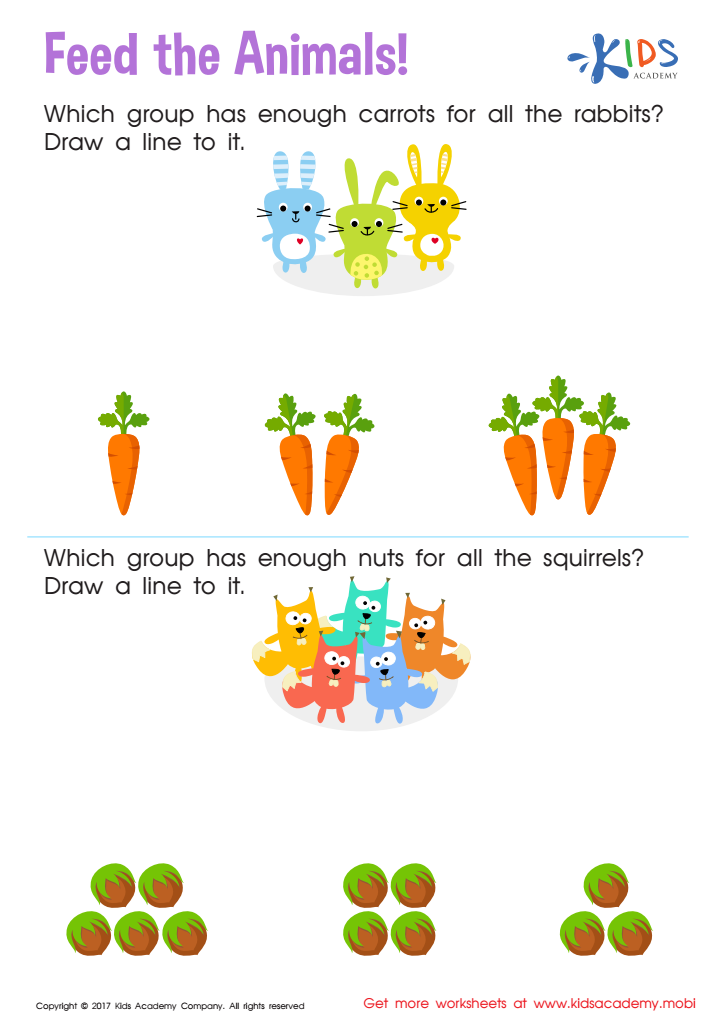
Count and Match: Feed the Animals Worksheet






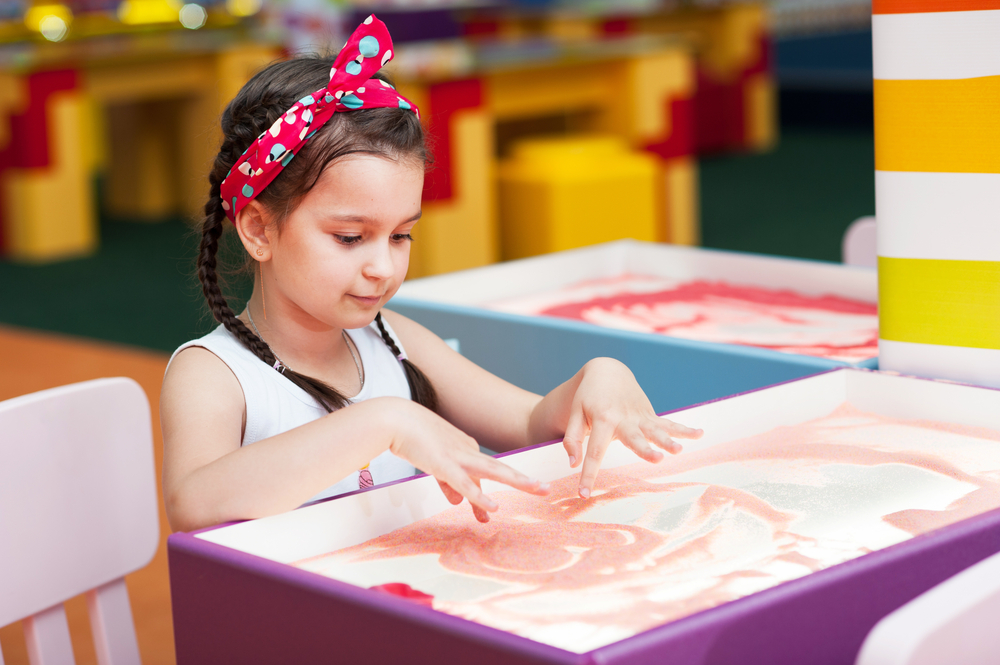

Parents and teachers should care about providing a Basic Counting Extra Challenge for ages 3-6 due to the critical role early math skills play in a child's overall development. During these formative years, children are like sponges, absorbing information and forming the foundational skills they’ll rely on throughout their lives.
Counting is not just about numbers; it's about developing logical thinking, problem-solving, and cognitive abilities. Engaging young learners with counting challenges stimulates their minds, promoting curiosity and exploration. Furthermore, these challenges can lead to improved fine motor skills, as children often engage in hands-on activities, like using counters or drawing shapes.
Basic counting activities can also foster social skills when conducted in group settings, as children learn to share, cooperate, and discuss their strategies with peers. Additionally, by incorporating fun and innovative counting challenges, children are more likely to develop a positive attitude towards math, setting them up for future success in more complex concepts.
Overall, emphasizing basic counting and offering extra challenges helps lay the groundwork for mathematical understanding, builds confidence, and makes learning an enjoyable experience, proving invaluable for the growth of both cognitive and social skills in young children.








