Mathematical reasoning Extra Challenge Worksheets for Ages 3-6
10 filtered results
-
From - To
Explore our engaging "Mathematical Reasoning Extra Challenge Worksheets" designed specifically for children aged 3-6! These worksheets provide fun and stimulating activities that enhance early math skills, including counting, pattern recognition, shape identification, and basic addition. Perfect for both classroom use and at-home learning, our extra challenges encourage critical thinking and problem-solving while making math enjoyable. Each worksheet features colorful illustrations and age-appropriate tasks that cater to diverse learning styles. Help your little ones build a strong foundation in mathematical reasoning and foster a love for learning with these interactive worksheets today! Download and watch their confidence soar.
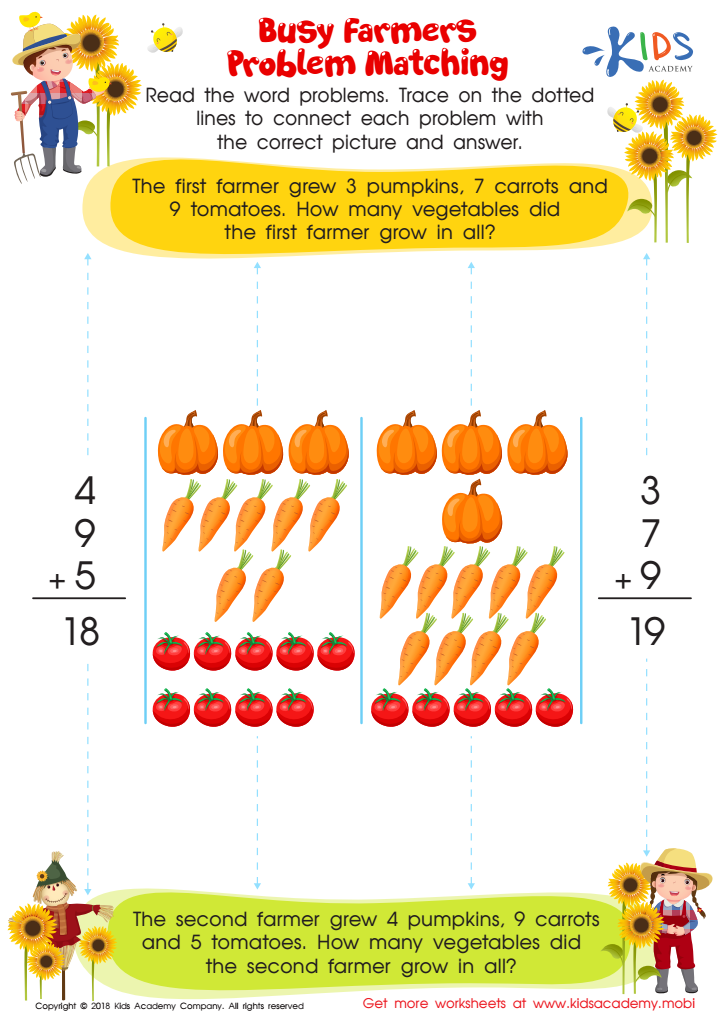
Busy Farmers: Problem Matching Worksheet
 Assign to My Students
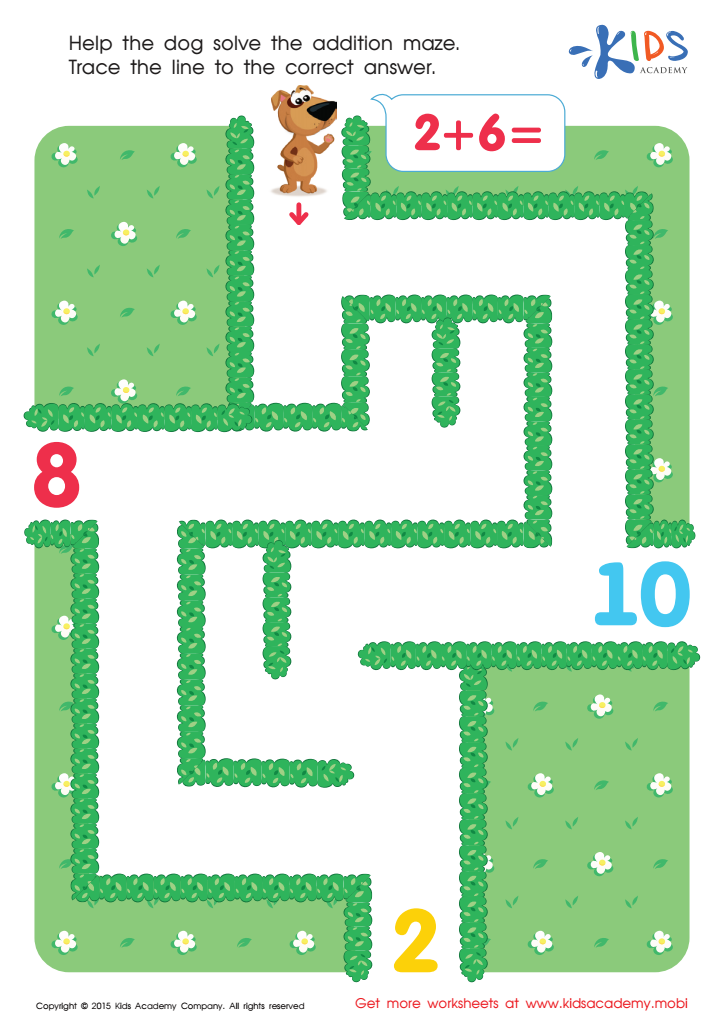
Two Plus Six Addition Worksheet
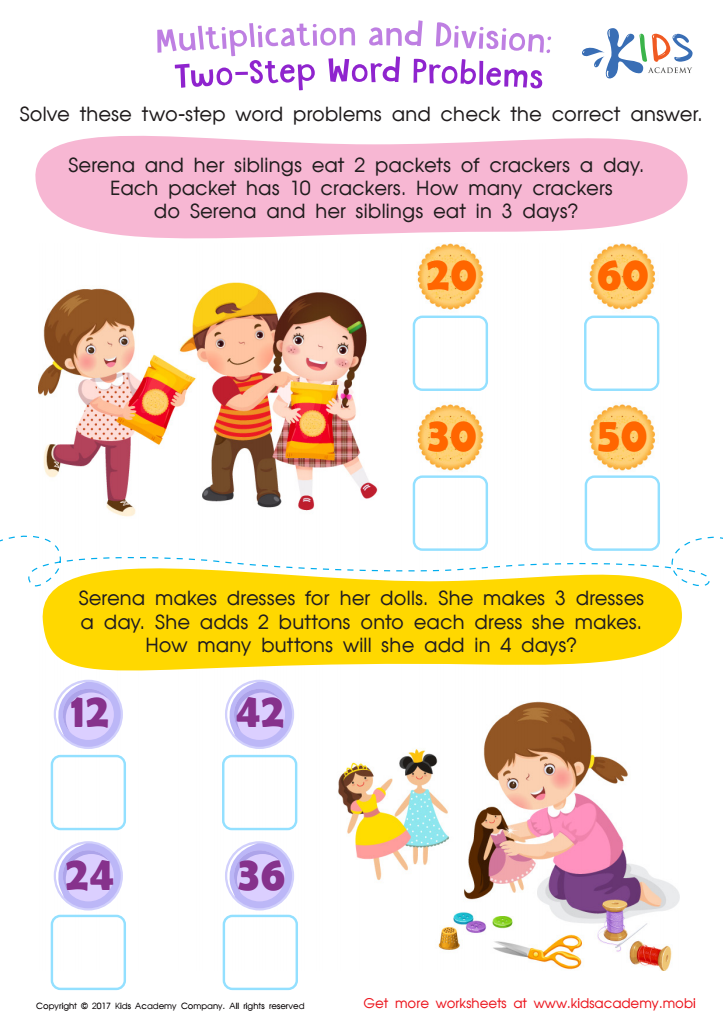
Two Step Word Problems Worksheet
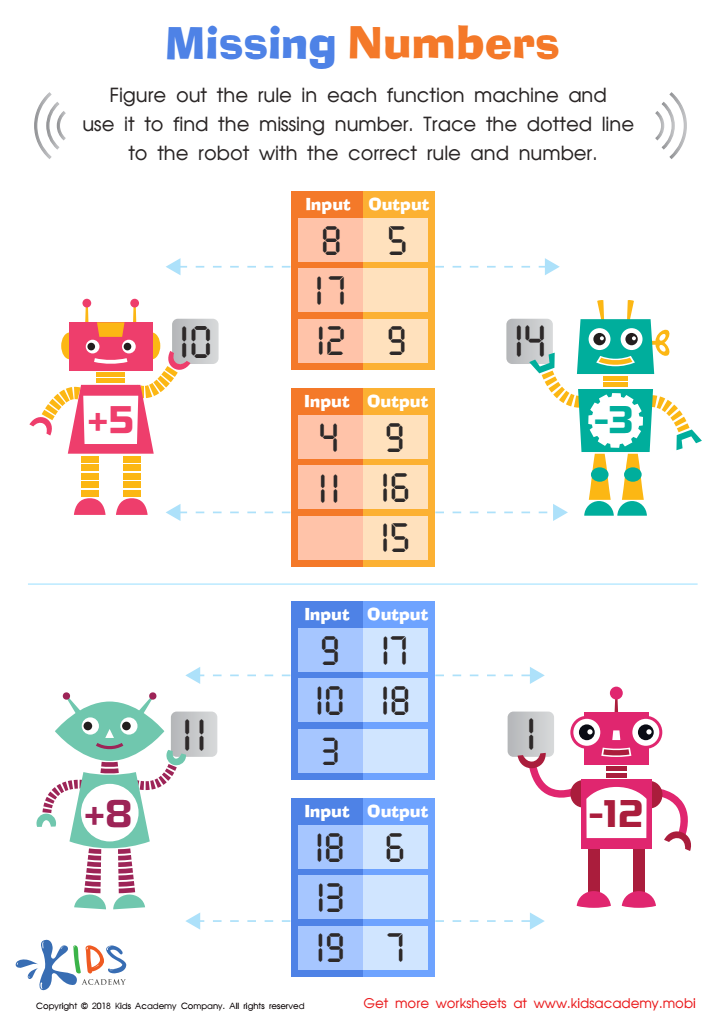
Missing Numbers Worksheet
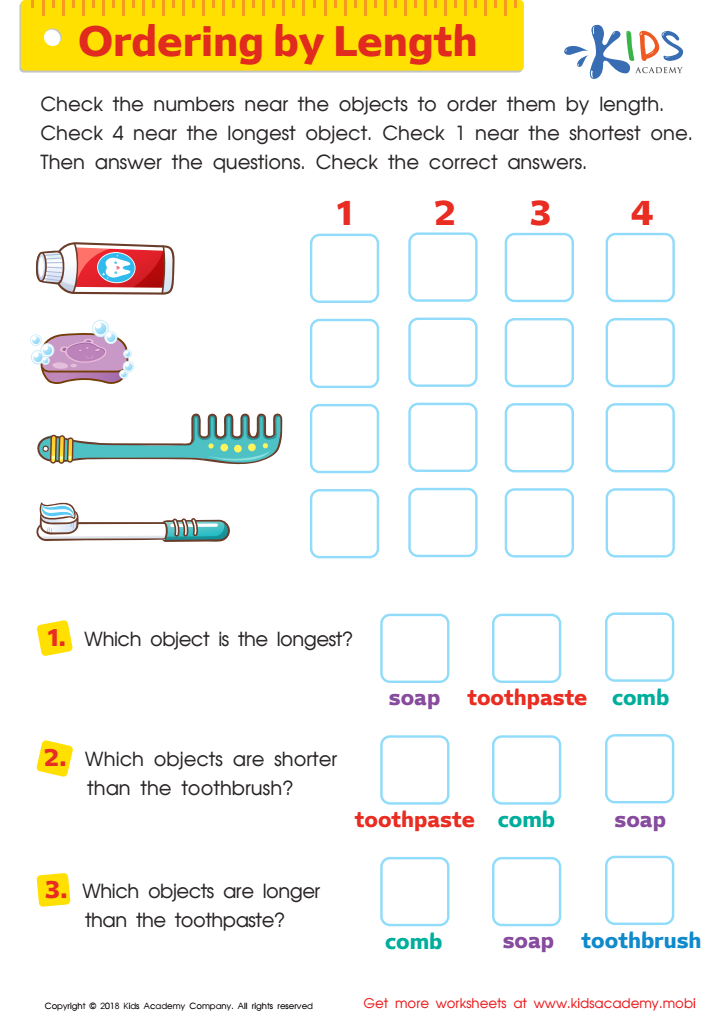
Ordering by Length Worksheet
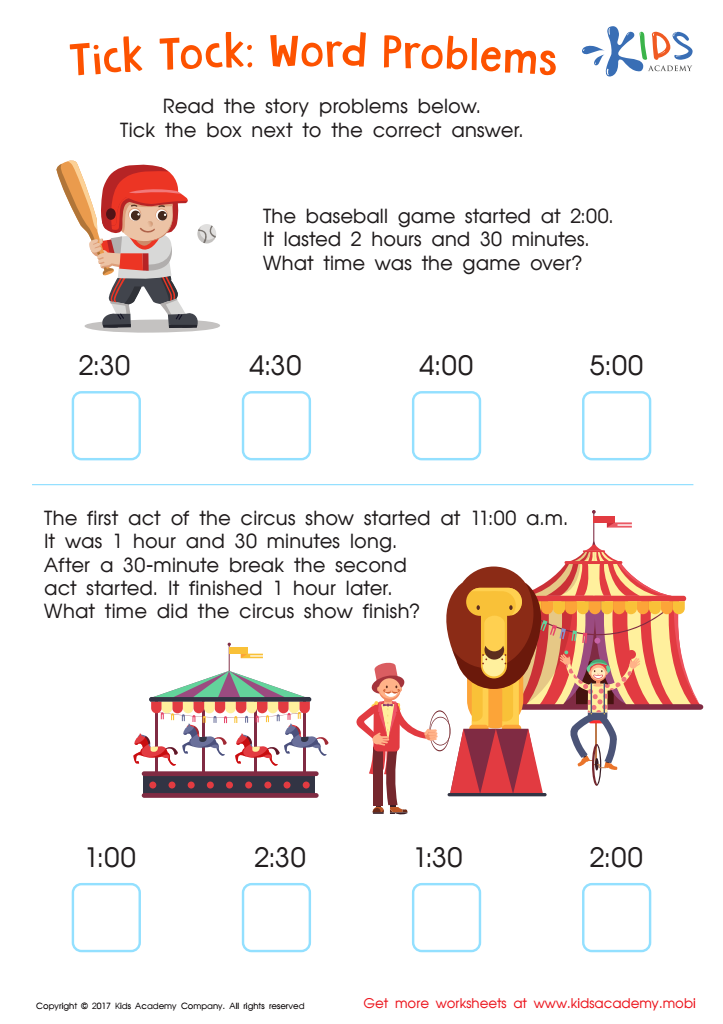
Tick Tock Word Problems Time Worksheet
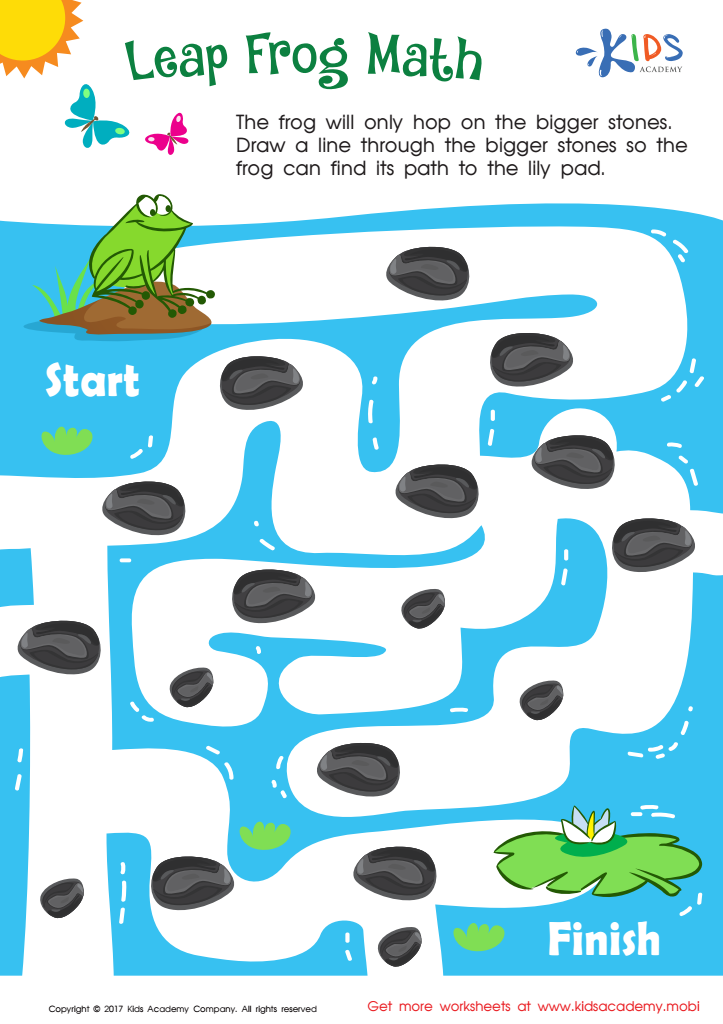
Math Puzzle Worksheet
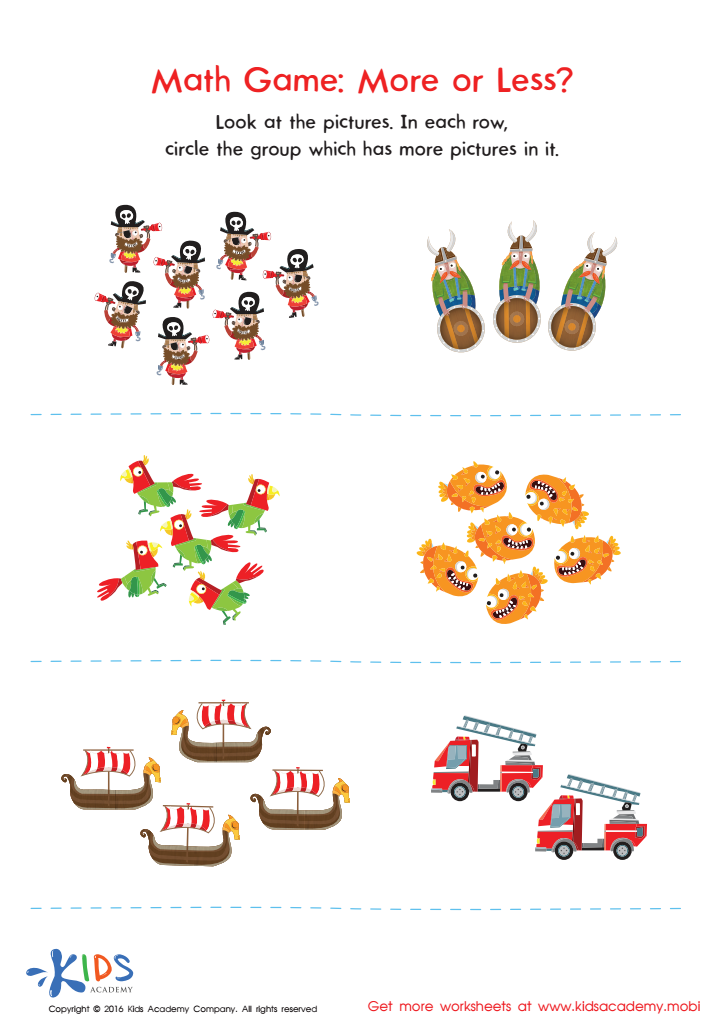
More or Less Worksheet
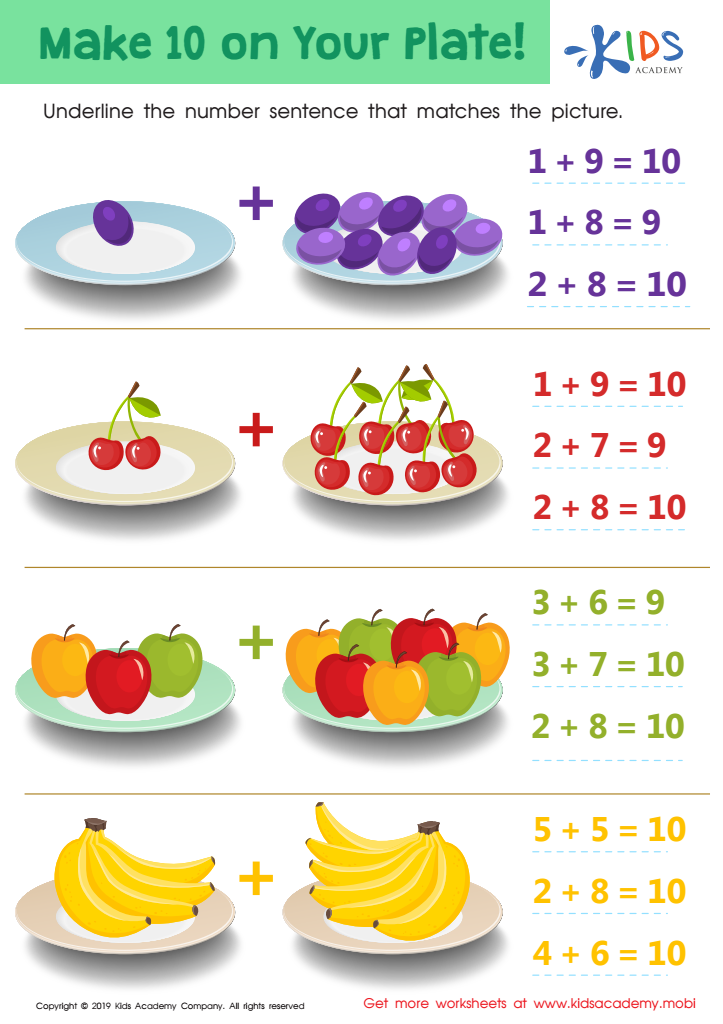
Make 10 on Your Plate! Worksheet
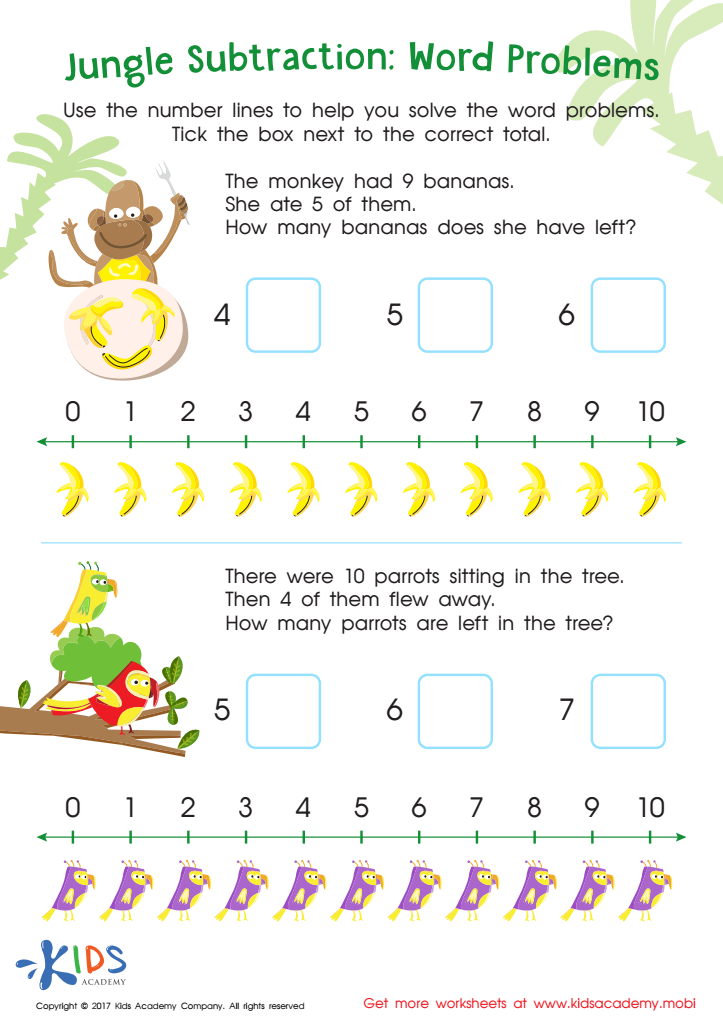
Jungle Subtraction Word Problems Substraction Worksheet








Mathematical reasoning is a foundational skill that supports a child's cognitive development, critical thinking, and problem-solving abilities. For children aged 3-6, engaging in activities that promote mathematical reasoning is essential for their overall learning and future academic success. Parents and teachers should care about these extra challenges because they enhance young learners' ability to make connections, recognize patterns, and apply mathematical concepts to real-life situations.
During these formative years, children are naturally curious and eager to explore the world around them. By utilizing fun and engaging mathematical challenges, educators can harness this curiosity while providing opportunities for children to think logically and develop their reasoning skills. These activities encourage children to ask questions, formulate hypotheses, and seek answers in creative ways.
Moreover, early exposure to mathematical reasoning lays the groundwork for a positive attitude towards mathematics in the later years. When children find joy in problem-solving and gain confidence in their abilities, they are more likely to pursue advanced math topics in school.
Ultimately, fostering mathematical reasoning in young children not only prepares them for academic success but also equips them with valuable skills needed in everyday life, such as decision-making, resourcefulness, and analytical thinking.








