Strategic thinking development Extra Challenge Chess Worksheets for Ages 3-7
3 filtered results
-
From - To
Unlock your child's potential with our "Strategic Thinking Development Extra Challenge Chess Worksheets" designed for ages 3-7! These engaging worksheets introduce young learners to the fundamentals of chess, fostering critical thinking, problem-solving, and decision-making skills in a fun way. Tailored for early education, each worksheet encourages children to anticipate moves, strategize, and develop patience while nourishing their creativity. Improve their concentration and enhance cognitive abilities through interactive challenges revolving around chess concepts. Whether at home or in the classroom, our captivating materials make learning exciting and effective. Join the chess adventure and watch your little ones thrive in strategic thinking!
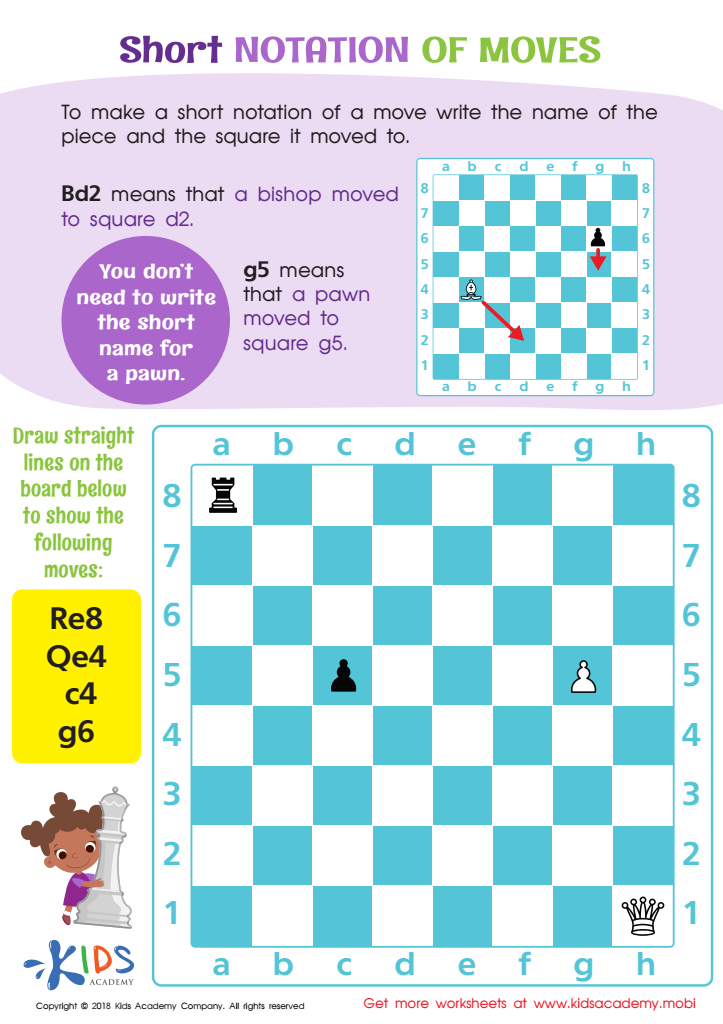
Short Notation of Moves Worksheet
 Assign to My Students
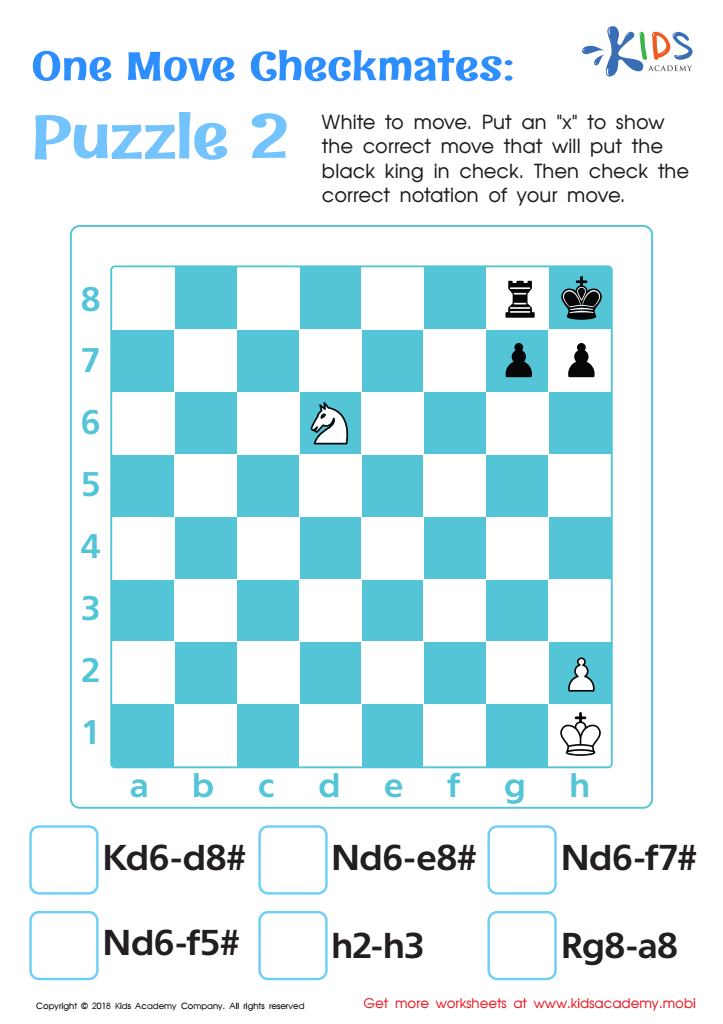
One Move Checkmates: Puzzle 2 Worksheet
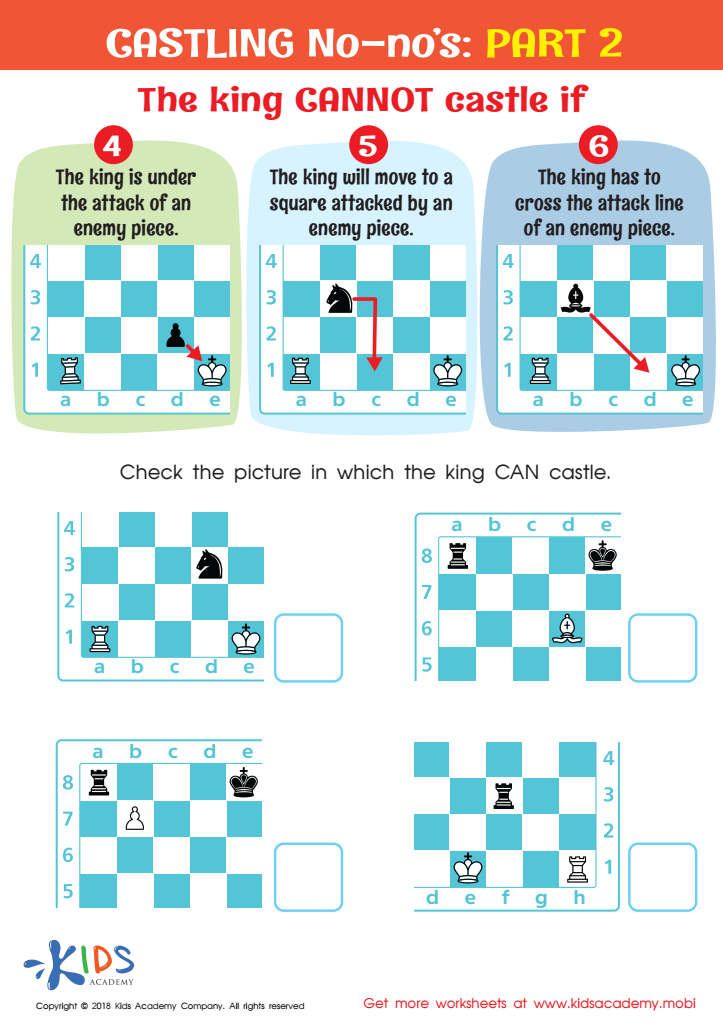
Castling No - no's: Part 2 Worksheet



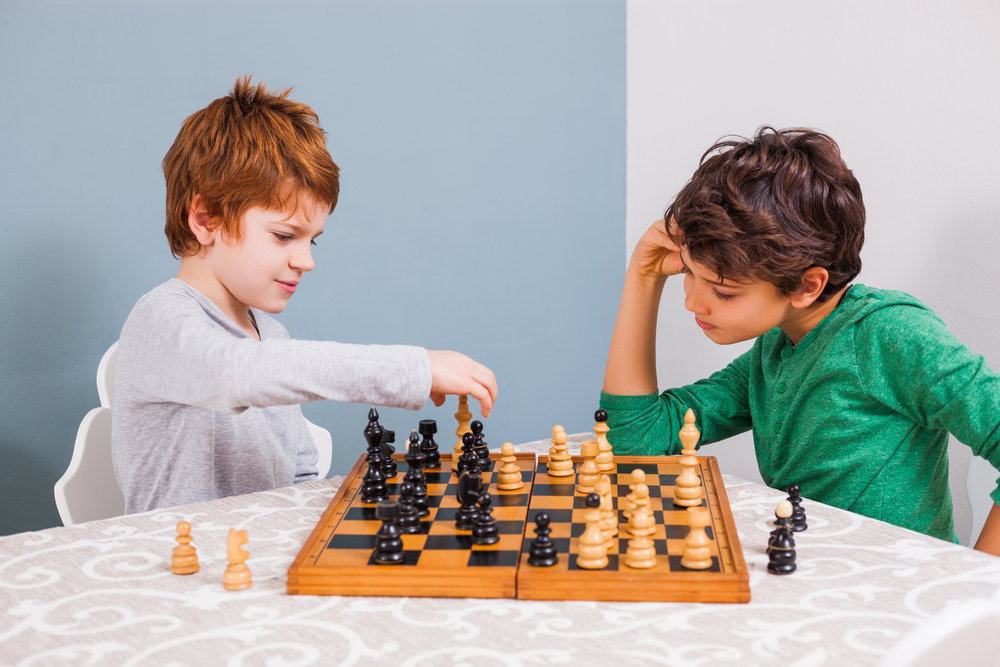




Parents and teachers should care about the development of strategic thinking in young children, particularly through programs like Extra Challenge Chess designed for ages 3-7. At this formative age, children are developing crucial cognitive and social skills that lay the groundwork for future learning and personal growth. Chess, as a structured game, introduces fundamental concepts like problem-solving, critical thinking, and foresight.
By engaging children in chess, they learn to anticipate their opponent's moves, evaluate options, and make decisions—skills that are transferable to various aspects of life and academics, including mathematics and literacy. Additionally, chess encourages patience and perseverance, reinforcing the idea that success often requires practice and dedication.
Moreover, participating in a group setting fosters social interaction, teaching children how to compete gracefully and cooperate with peers, crucial for building healthy relationships. Academic studies show that strategic games boost memory, concentration, and creative thinking. Thus, Extra Challenge Chess not only makes learning fun but also enhances essential cognitive development during a critical period. Encouraging participation in this enriching activity ultimately equips young learners with the tools they need for ongoing success, both in school and beyond.