
Animal recognition Extra Challenge Worksheets for Ages 3-7
8 filtered results
Difficulty Level
Grade
Age
-
From - To
Subject
Activity
Standards
Introduce your little ones to the animal kingdom with our Animal Recognition Extra Challenge Worksheets designed for ages 3-7! These engaging and interactive worksheets promote early learning by enhancing children's ability to identify and distinguish various animals. Perfect for reinforcing vocabulary, improving observation skills, and fostering curiosity, each worksheet features fun illustrations and imaginative activities that keep kids entertained while learning. Children will love tracing, coloring, and matching as they embark on an exciting educational adventure. These extra challenges are ideal for home, classrooms, or supplemental learning, making it easier for young learners to explore and connect with the world of animals.
Favorites
With answer key
Interactive
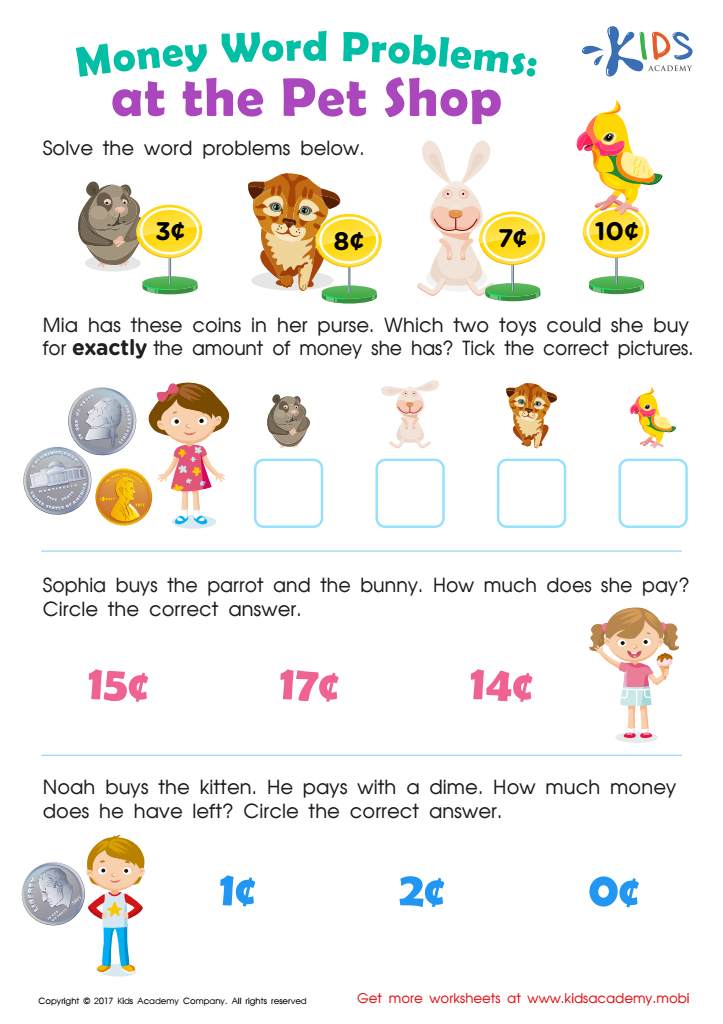
Pet Shop Worksheet
Teach your child a key life skill: counting and managing money. With this worksheet, they'll learn to count coins and calculate purchases at the pet shop. Give them colorful, fun math practice!
 Assign to My Students
Pet Shop Worksheet
Worksheet
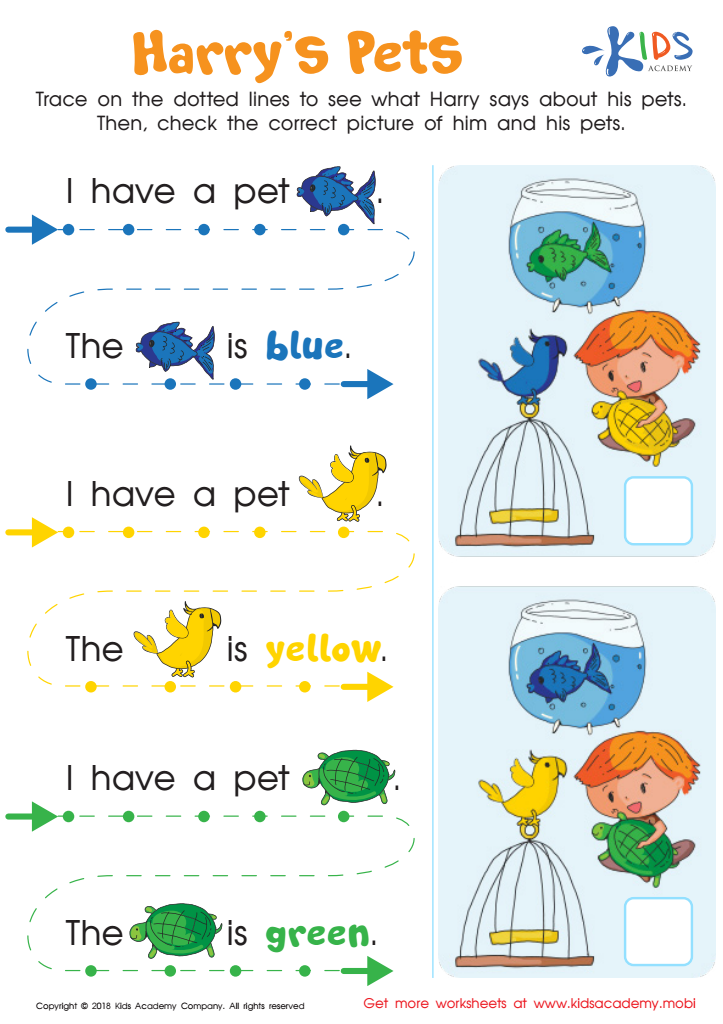
Read from Left to Right: Harry's Pets Worksheet
Help your child read the sentences on this tracing sheet about Harry and his pets. Point to the dotted lines and follow the sentences to the correct picture. Ask your child to identify which animal corresponds to which color. Check the picture to ensure accuracy. 80 words.
Read from Left to Right: Harry's Pets Worksheet
Worksheet
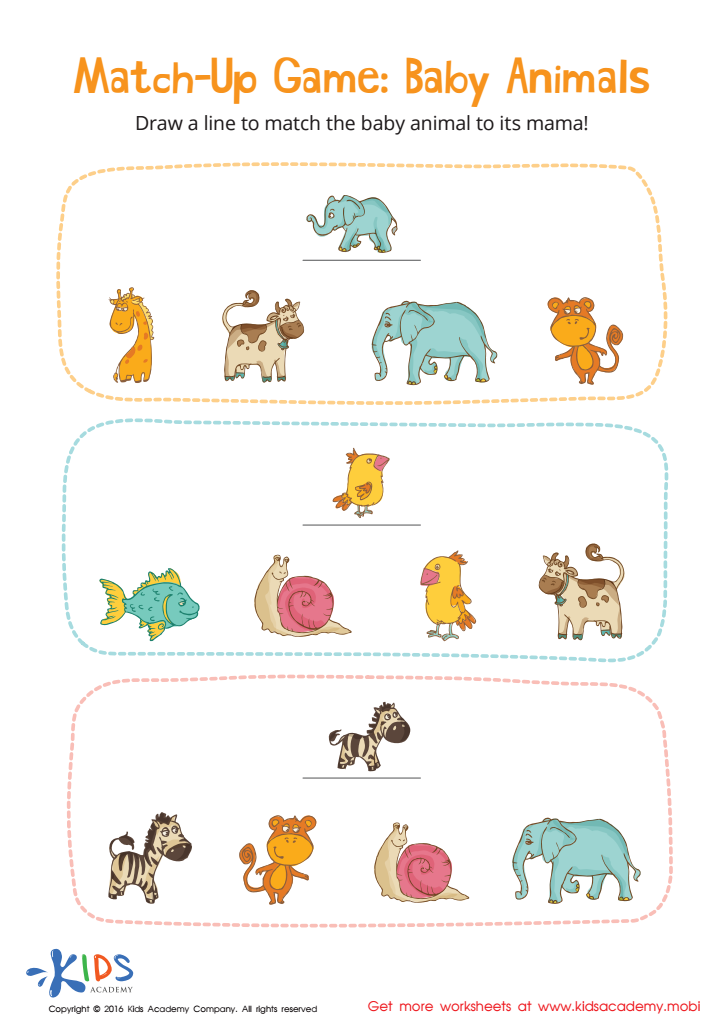
Baby Animals Match-Up Worksheet
Help baby animals find their mummies by using this fun matching worksheet. Kids can practice logical reasoning skills while recognizing similar pictures and learning about animals. Extend their knowledge by having them identify each cute animal!
Baby Animals Match-Up Worksheet
Worksheet
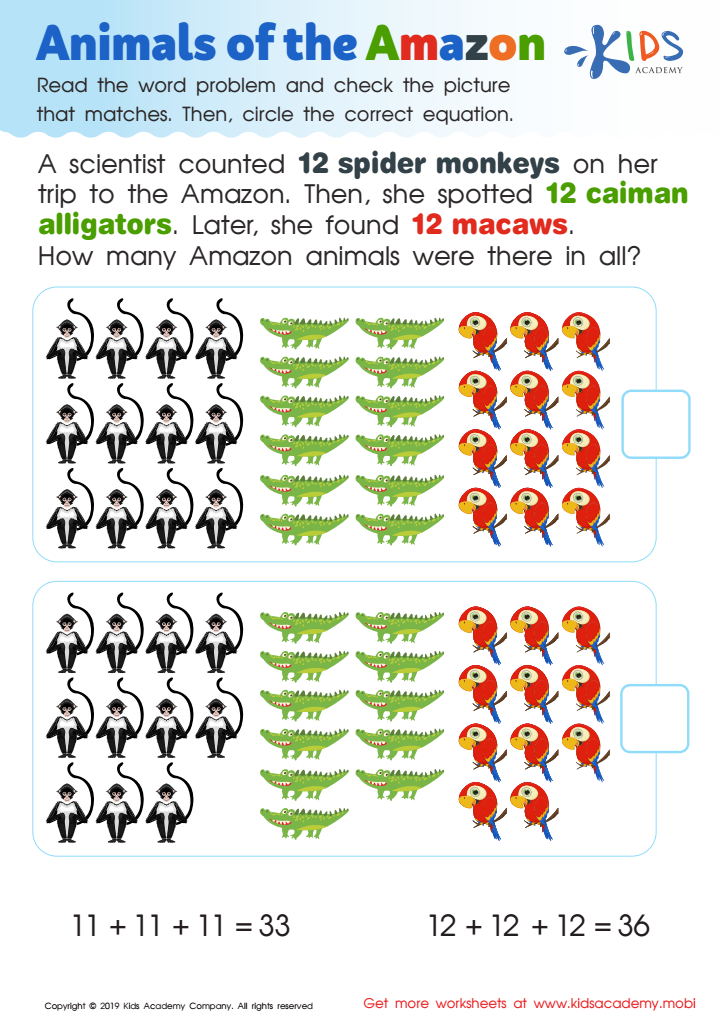
Animals of Amazon Worksheet
Kids will love exploring the Amazon while solving addition problems on this colorful PDF worksheet. They need to pay attention to the bolded info in each word problem to figure out the equation picture that matches. It's an exciting way to learn about the Amazon and practice adding multiple numbers!
Animals of Amazon Worksheet
Worksheet
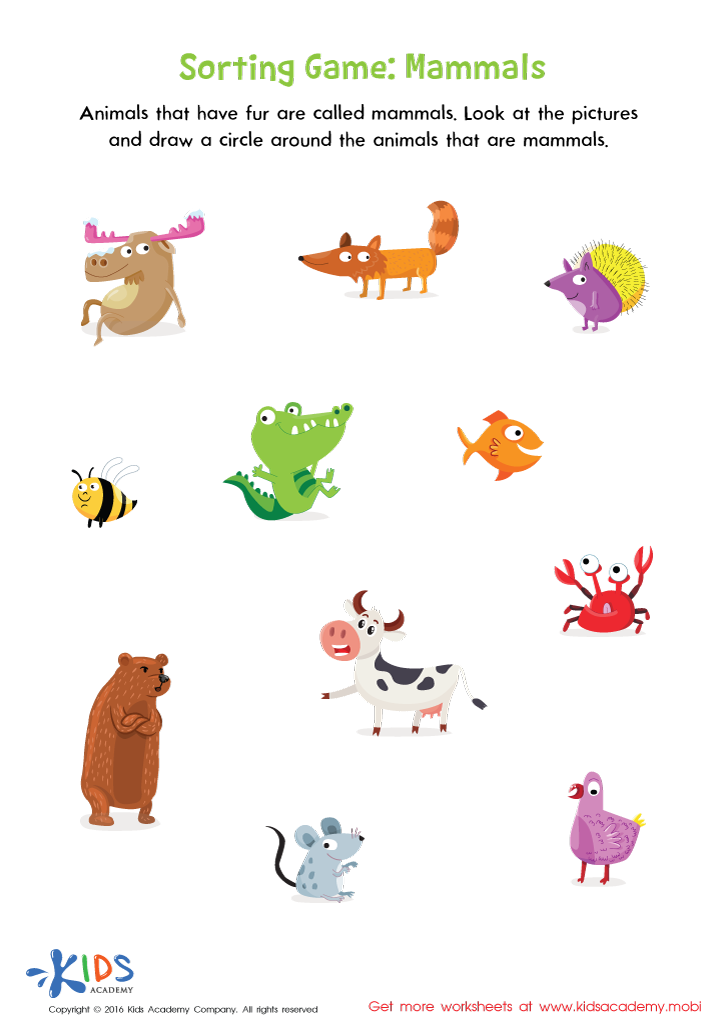
Mammals Sorting Worksheet
They'll practice sorting animals and learn their features with this fun worksheet.
Kids can test their scientific knowledge with this fun worksheet! They'll view pictures of animals, identify mammals based on their fur, and practice sorting them. This colorful worksheet is a great way for kids to learn about the differences between mammals and other animals.
Mammals Sorting Worksheet
Worksheet
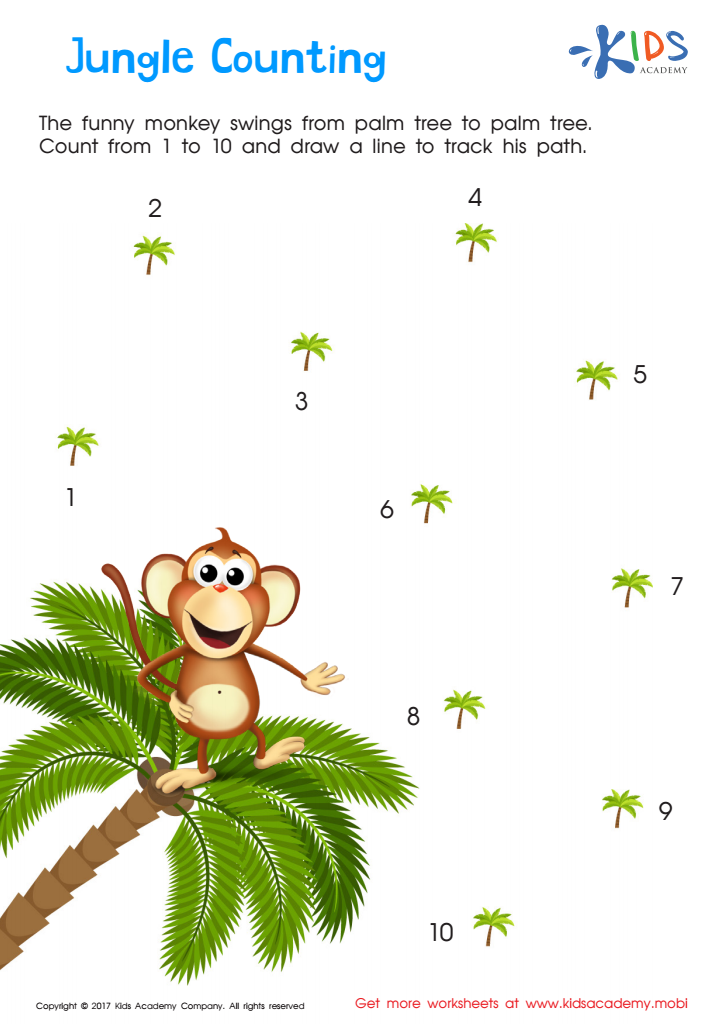
Jungle Counting Connect Dots Worksheet
Help your child count from 1-10 and practice problem solving skills with this dot to dot worksheet. Your child will enjoy helping the cute monkey swing from tree to tree while honing their math skills. Let them have a jungle-themed counting adventure!
Jungle Counting Connect Dots Worksheet
Worksheet
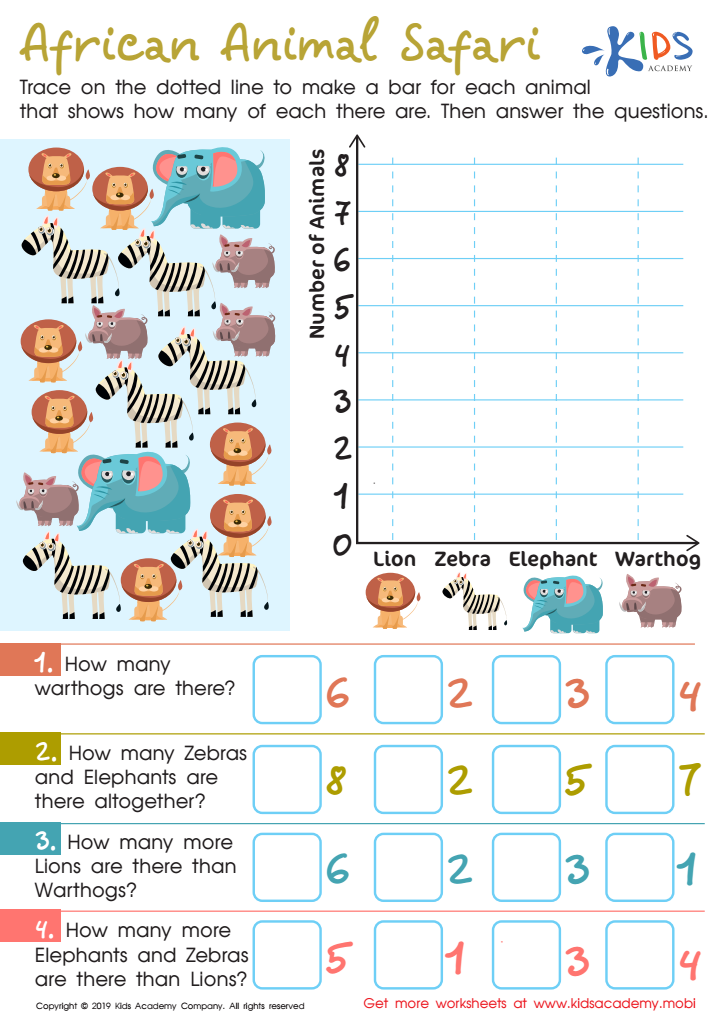
African Animal Safari Worksheet
Help students learn geography and math, with this worksheet. Examine the graph and ask your students questions. Have them answer using the graph and addition/subtraction exercises. This can help them name continents, countries, and animals unique to each.
African Animal Safari Worksheet
Worksheet
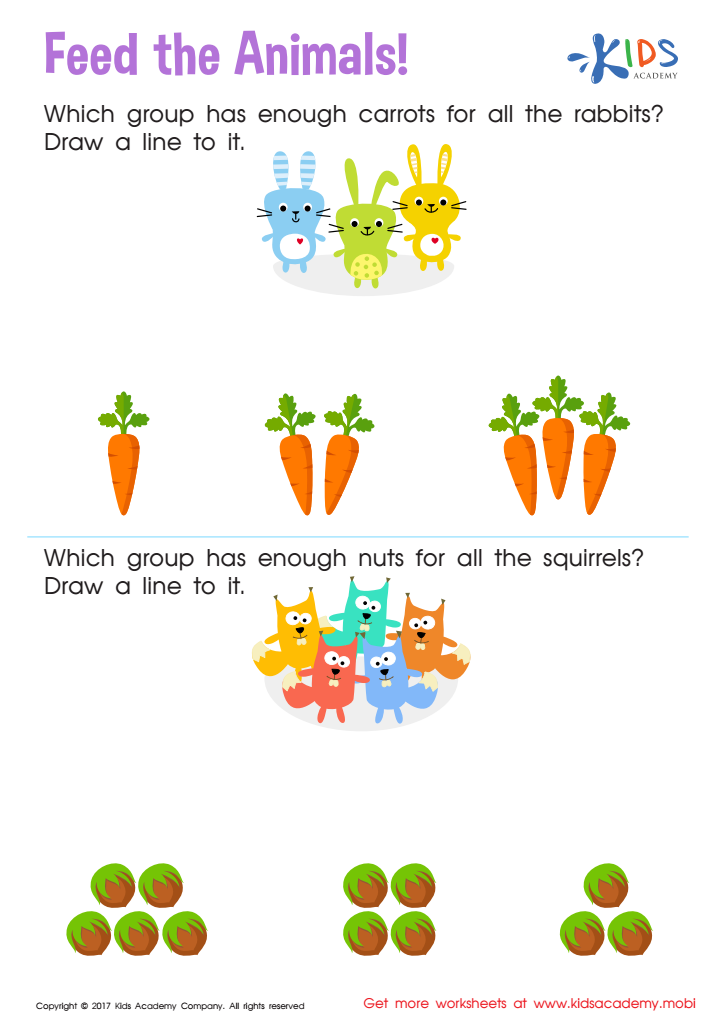
Count and Match: Feed the Animals Worksheet
Learning and growing involves more than just numbers, phonics and comparison. This Feed the Animals worksheet helps kids to exercise their reasoning skills. They must work out how many rabbits and carrots there are, and then repeat the process for the squirrels. This encourages problem solving and counting skills.
Count and Match: Feed the Animals Worksheet
Worksheet
Join Kids Academy for Free
Who is primarily going to use this learning content?








Animal recognition is a vital extra challenge for children aged 3-7 as it fosters cognitive development and enhances educational experiences. Understanding different animals aids in language skills, broadening vocabulary with names, sounds, and habitats. This foundational knowledge supports literacy, encouraging reading and storytelling as children find ways to incorporate their learning into expressive narratives.
Furthermore, animal recognition promotes observational skills, as children learn to identify similarities and differences among species. This enhances critical thinking and boosts problem-solving abilities, as kids classify animals based on characteristics such as color, size, and behavior. Engaging with animals also nurtures empathy and compassion as children learn about living beings and their significance in ecosystems.
Additionally, animal recognition can spark interests in science and nature, laying the groundwork for future academic pursuits. Educators and parents can use this challenge as a tool for bonding and interactive learning, making education fun and engaging. Ultimately, the benefits of promoting animal recognition extend beyond individual knowledge—it helps cultivate a generation that appreciates and respects the natural world, fostering a sense of responsibility toward environmental stewardship. Thus, parents and teachers should prioritize this vital developmental step in early education.








