Animal recognition Extra Challenge Math Worksheets for Ages 3-7
6 filtered results
-
From - To
Unlock your child's potential with our engaging Animal Recognition Extra Challenge Math Worksheets, specially designed for kids ages 3-7. These worksheets combine fun animal themes with essential math skills, promoting both cognitive development and a love for learning. With interactive exercises targeting counting, sorting, and simple problem-solving, children will be excited to explore math concepts while enhancing their recognition of various animals. Perfect for homeschoolers or as supplemental study material, these worksheets provide a creative way to engage young minds. Dive into the world of numbers and animals, and watch your little learners flourish!
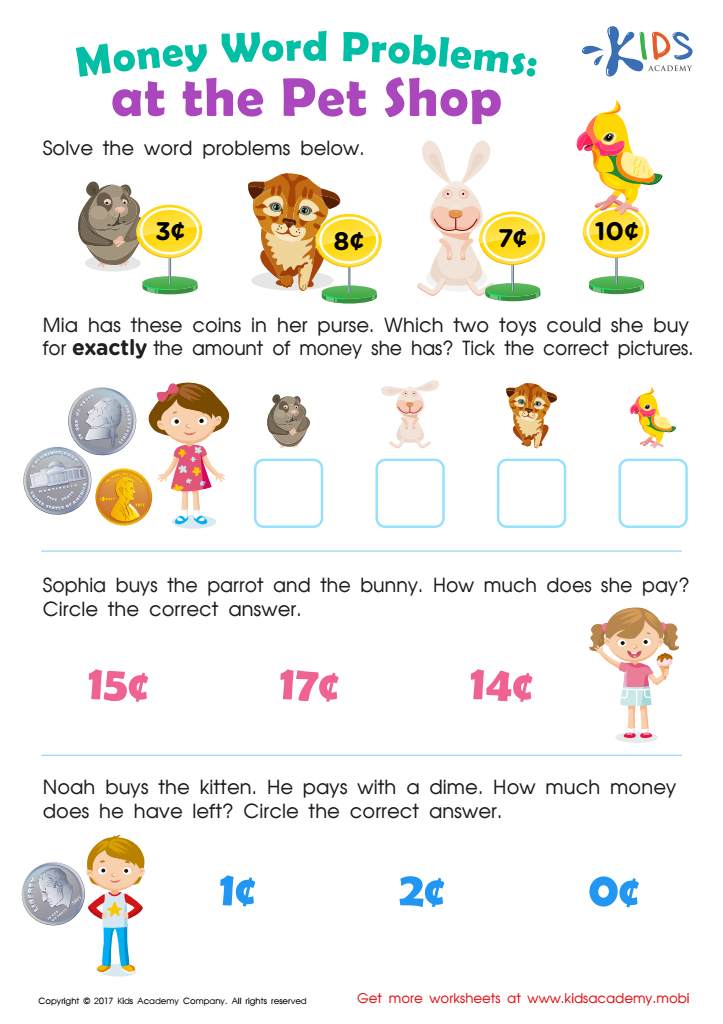
Pet Shop Worksheet
 Assign to My Students
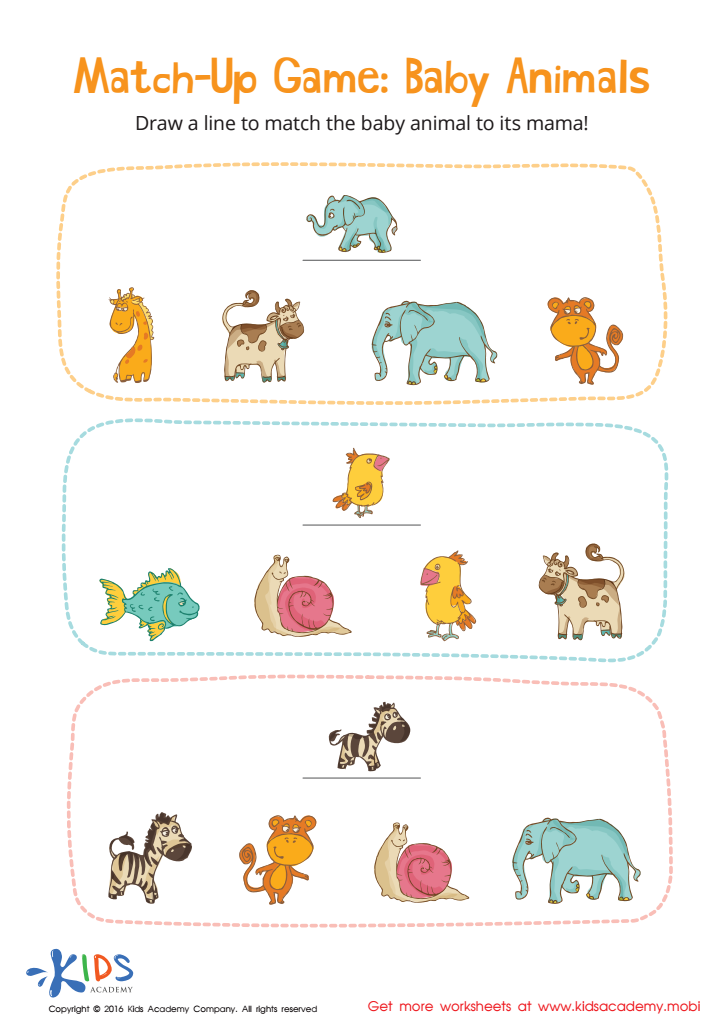
Baby Animals Match-Up Worksheet
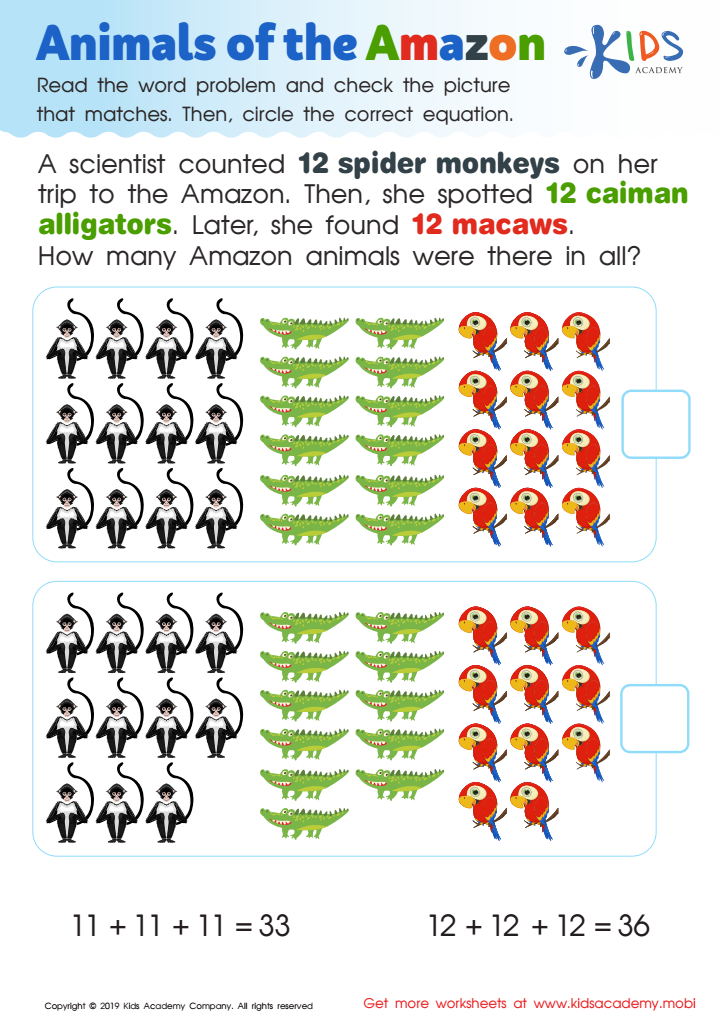
Animals of Amazon Worksheet
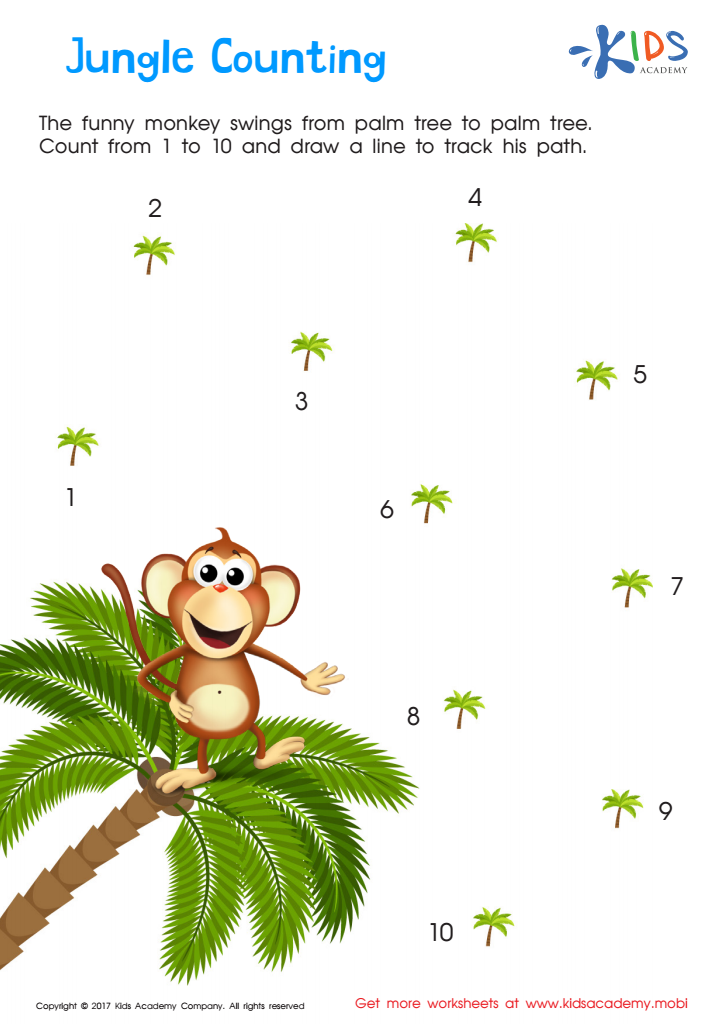
Jungle Counting Connect Dots Worksheet
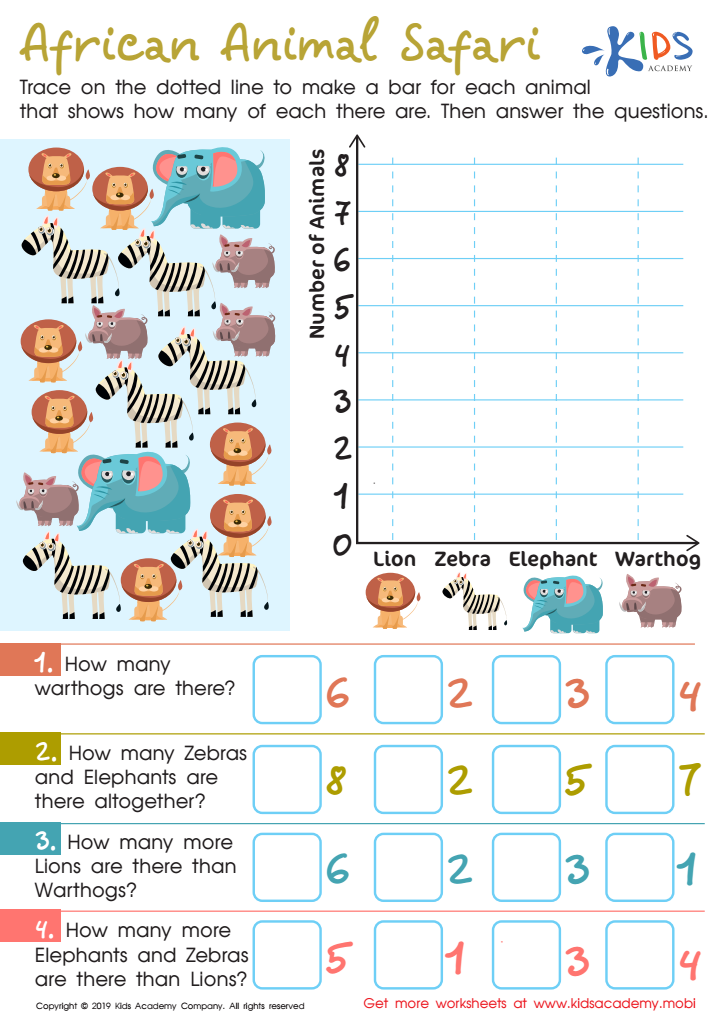
African Animal Safari Worksheet
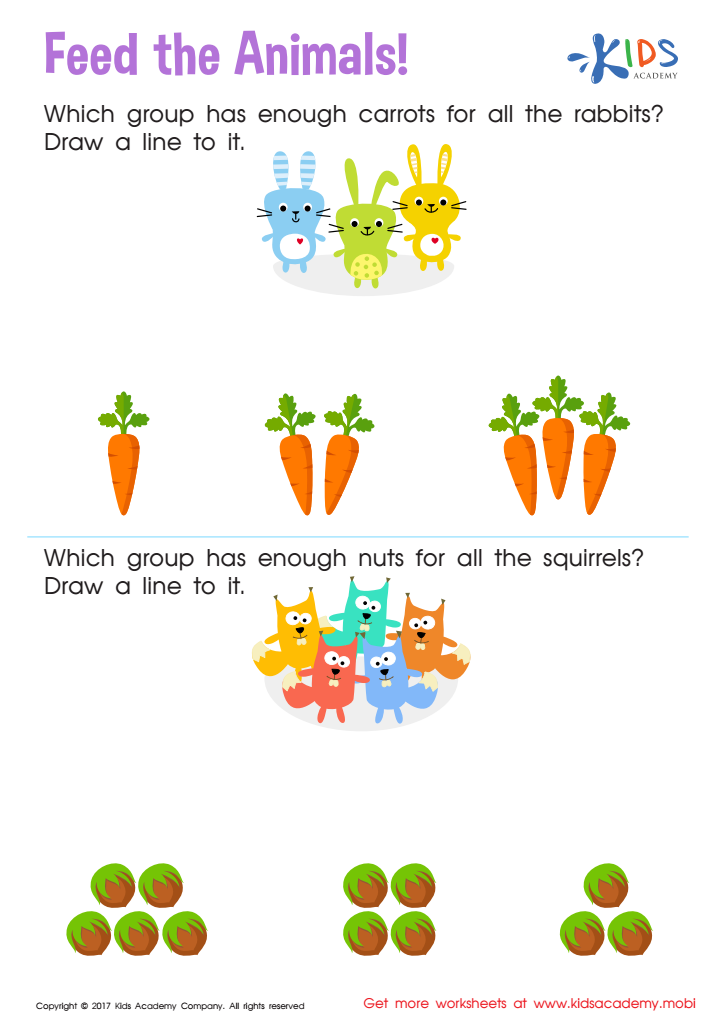
Count and Match: Feed the Animals Worksheet








Animal recognition is a vital component of early childhood education that merges learning with play, particularly through activities like the "Extra Challenge Math" for kids aged 3-7. This program motivates young learners to engage their cognitive skills while enhancing their understanding of both mathematics and the natural world.
Parents and teachers should emphasize animal recognition because it fosters curiosity and interest in wildlife, promoting empathy and respect for living beings. Young children are naturally drawn to animals, making it easier to introduce complex concepts through playful and relatable contexts. For instance, by recognizing different animals, children can gather valuable information about their habitats, diets, and behavior. Incorporating mathematical skills like counting, sorting, and categorization into animal recognition enriches their learning experience.
Furthermore, such challenges spark critical thinking and problem-solving abilities. Getting children to compare sizes, group animals by traits, or count the number of legs combines their interests with foundational math skills. By caring about this dual focus, parents and teachers prepare children for more advanced concepts while nurturing a sense of wonder and responsibility towards the environment. It’s an engaging way to build a solid academic foundation that can lead to a lifelong love of learning.