Logical Reasoning Extra Challenge Matching Worksheets for Ages 3-7
3 filtered results
Difficulty Level
Grade
Age
-
From - To
Subject
Activity
Standards
Enhance your child's critical thinking skills with our "Logical Reasoning Extra Challenge Matching Worksheets for Ages 3-7." Perfect for young learners, these worksheets are designed to develop foundational logic, problem-solving abilities, and cognitive skills through engaging and fun matching activities. Each sheet features age-appropriate challenges that encourage kids to think analytically and make connections. Ideal for use at home or in the classroom, our worksheets not only promote learning but also make it enjoyable. Help your child excel in math and beyond with these expertly crafted logical reasoning exercises. Download now for enriching educational fun!
Favorites
With answer key
Interactive
 Assign to My Students
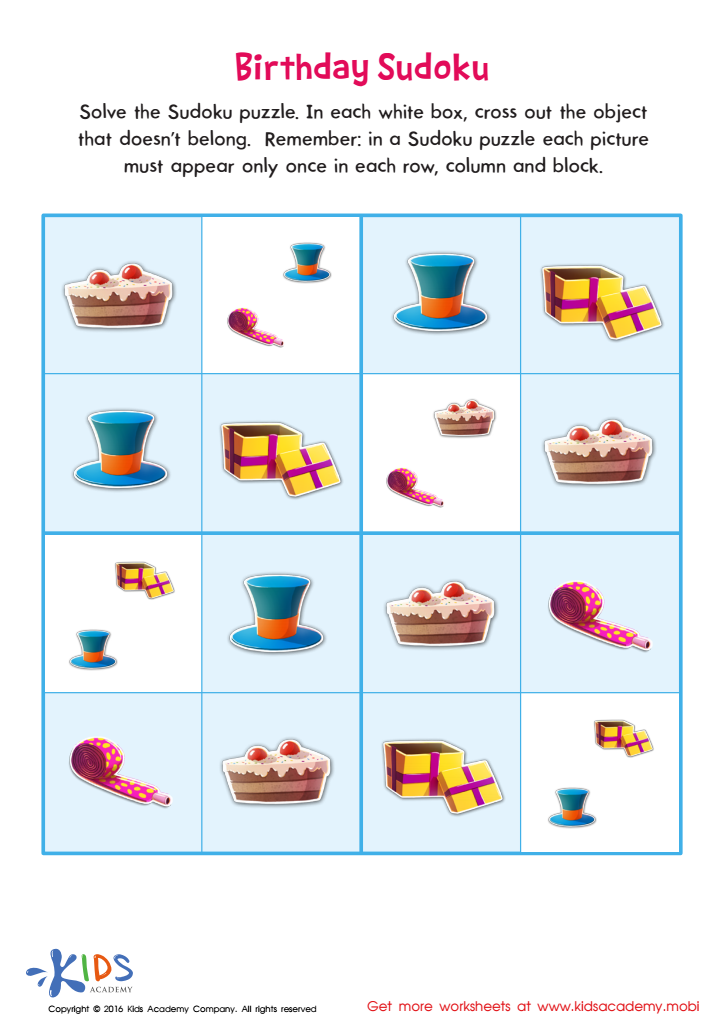
Birthday Sudoku Sorting Worksheet
With this Sudoku printable, your child will have fun and strengthen their problem-solving skills.
Birthday Sudoku Sorting Worksheet
Worksheet
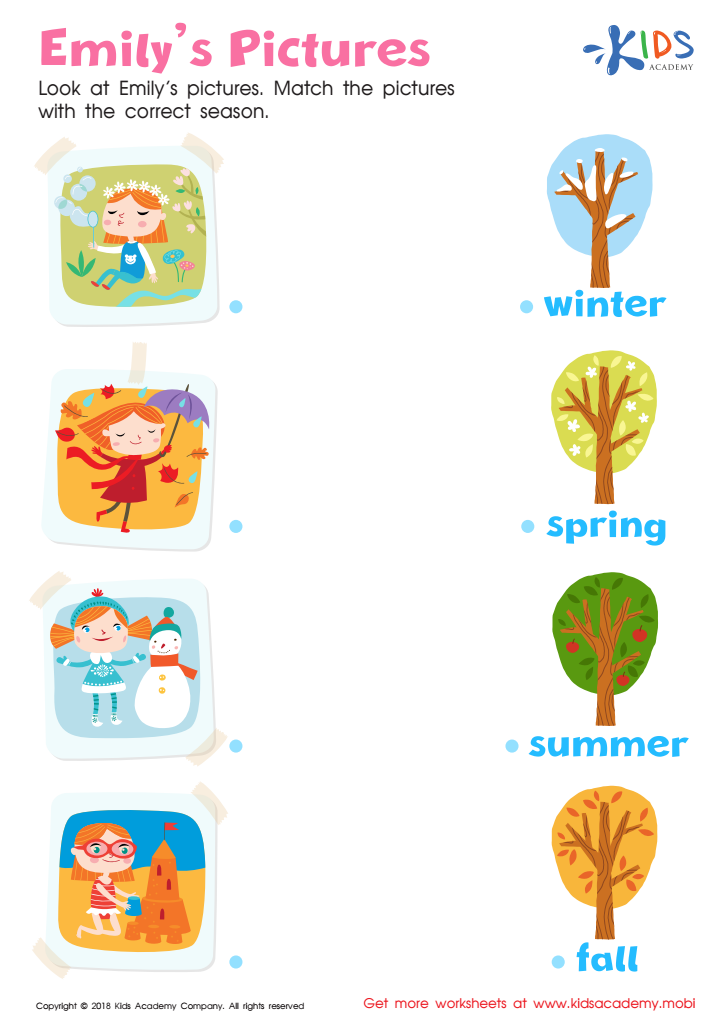
Emily's Pictures Worksheet
Look at the pictures of Emily on the left. Ask your child what she's doing in each one. Then, match the activities to the seasons on the right. Help your kids identify the correct season for each activity. Shorten to 80 words: Look at the pictures of Emily on the left. Ask your child what she's doing in each one, then match the activities to the seasons on the right. Help your kids find the correct season for each activity.
Emily's Pictures Worksheet
Worksheet
Join Kids Academy for Free
Who is primarily going to use this learning content?








Logical reasoning is a foundational cognitive skill that significantly influences a child's ability to think critically and solve problems effectively. Engaging children aged 3-7 in logical reasoning extra challenges, such as matching activities, is crucial because this developmental stage is marked by quick cognitive growth.
Firstly, logical reasoning exercises enhance a child’s ability to recognize patterns, sequences, and relationships between objects, fostering key pre-mathematical skills. Early exposure to these concepts will help them solve problems more efficiently in mathematics and other subjects later on.
Secondly, such activities boost memory and attention. When children participate in matching games or logical puzzles, they must recall rules and focus on details, which helps improve both their short- and long-term memory.
Thirdly, matching exercises encourage language development. These activities often require children to articulate their thought processes, which can enhance their vocabulary and communication skills.
Socially, working on logical puzzles can build a child's confidence as they succeed in challenging tasks, providing a sense of accomplishment. Collaboration on these tasks, when done with peers or adults, promotes teamwork and helps children learn to share ideas and strategies.
Overall, logical reasoning challenges are vital as they lay a robust foundation for future academic success and everyday problem-solving abilities, fostering well-rounded intellectual growth in early childhood.