
Subtraction practice Extra Challenge Word Problems Worksheets for Ages 3-7
4 filtered results
Difficulty Level
Grade
Age
-
From - To
Subject
Activity
Standards
Discover our "Subtraction Practice Extra Challenge Word Problems Worksheets" designed specifically for kids aged 3-7! These engaging worksheets provide a fun and interactive way for young learners to master subtraction concepts through real-life scenarios. With a variety of word problems, children will develop critical thinking and problem-solving skills while reinforcing their math abilities. Our worksheets are perfect for teachers and parents looking to give students an extra challenge beyond basic subtraction. Make learning math enjoyable and rewarding with our thoughtfully crafted exercises that cater to all learning paces. Explore our collection today and watch your child flourish in their subtraction skills!
Favorites
With answer key
Interactive
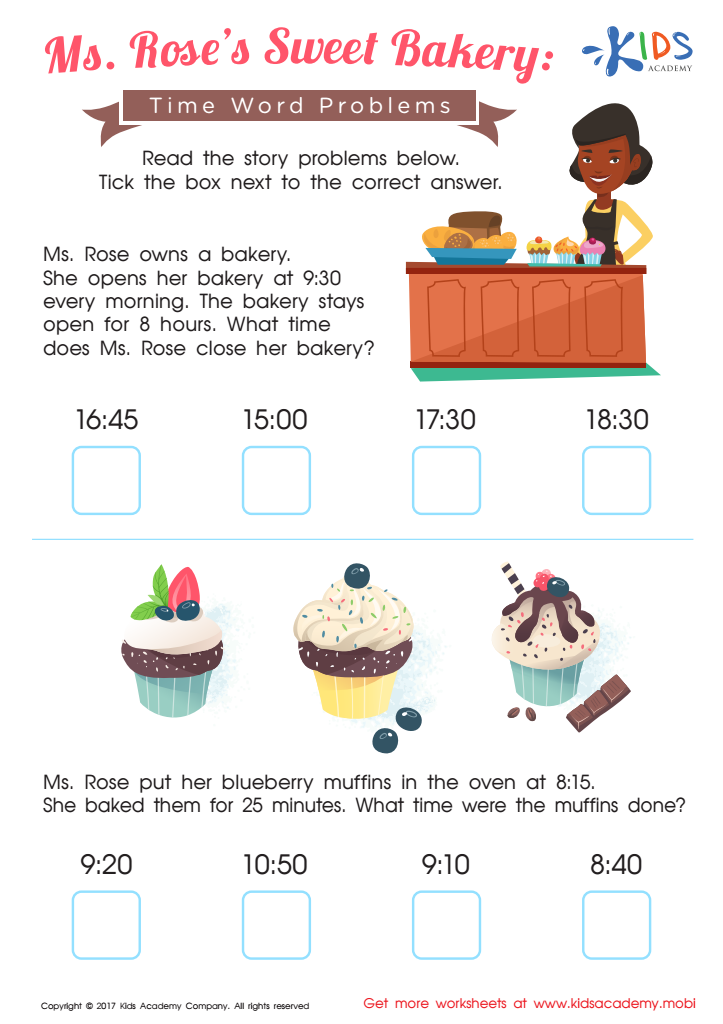
Ms. Roseв's Sweet Bakery Time Worksheet
Help your child understand the 24-hour clock using this fascinating telling time word problems worksheet: Sweet Bakery! Widely known as "military time", this skill isn't taught in school but is important for your kid to master.
 Assign to My Students
Ms. Roseв's Sweet Bakery Time Worksheet
Worksheet
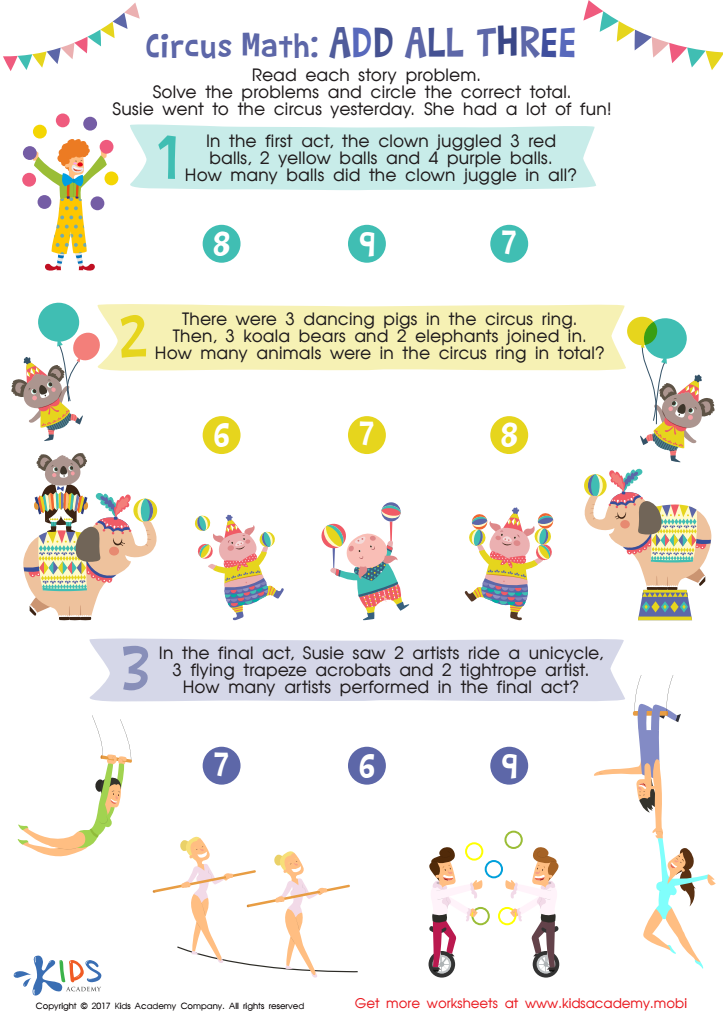
Circus Math Printable
Let's take the kids to the circus and combine literacy and numeracy skills! Our circus math printable worksheet will encourage creativity and higher-order thinking by connecting addition to real-life examples. Kids will learn to love math while they explore the fun, real-life applications of math. Ignite their passion today!
Circus Math Printable
Worksheet
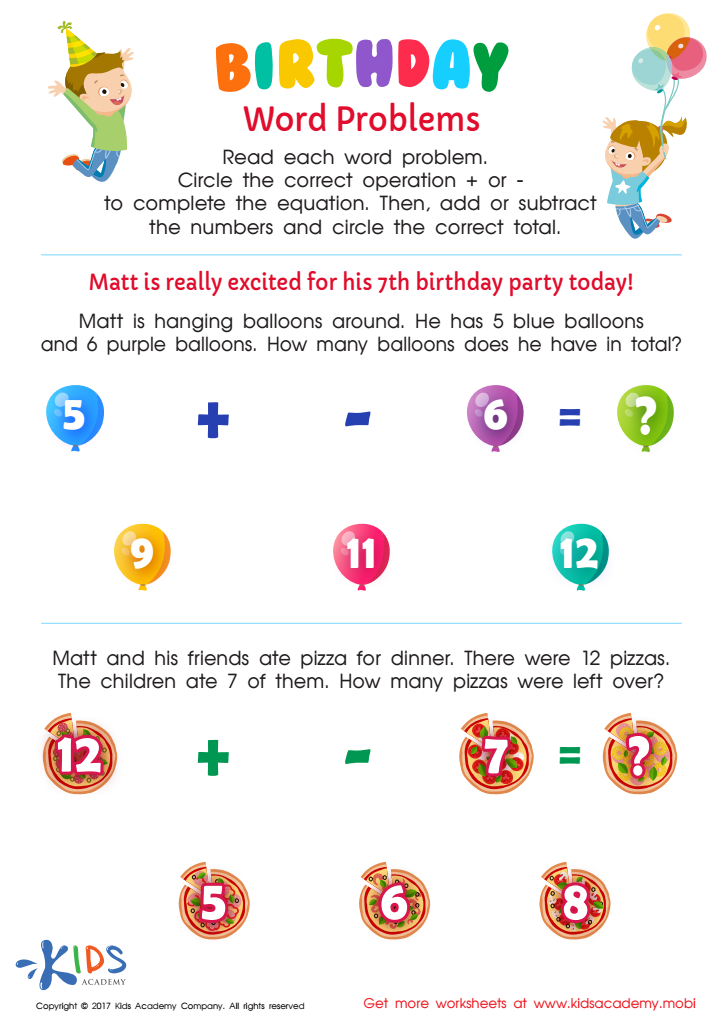
Birthday Word Problems Substraction Worksheet
This worksheet, Birthday Word Problems, is a great way to improve your child's math and literacy skills. It features tricky subtraction equations based on a birthday celebration - perfect for kids who love birthdays!
Birthday Word Problems Substraction Worksheet
Worksheet
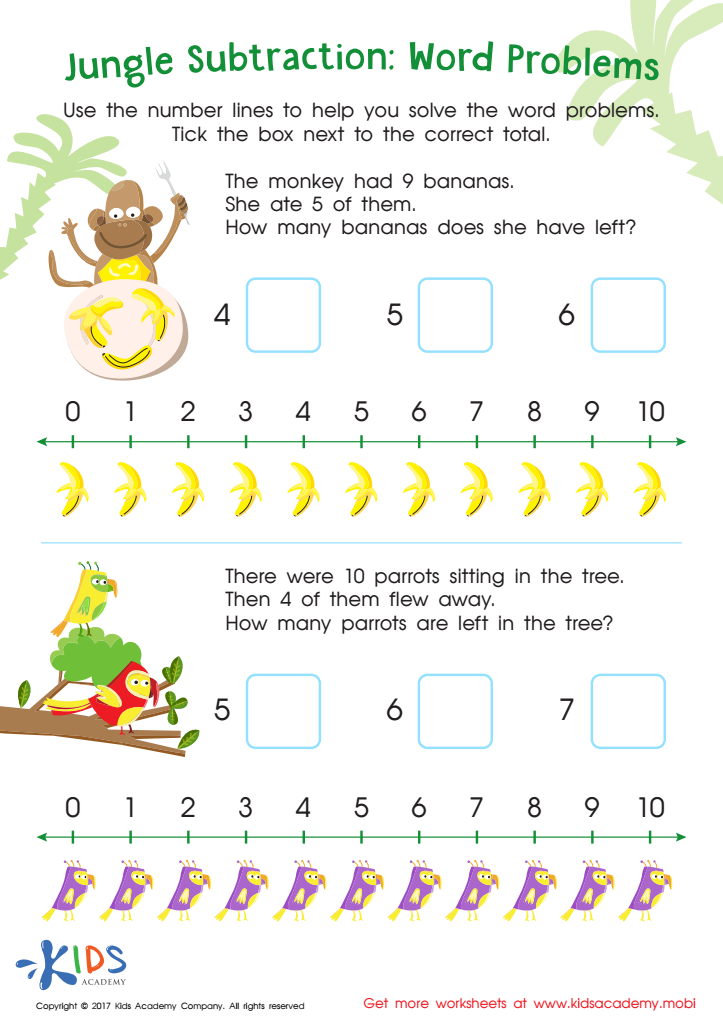
Jungle Subtraction Word Problems Substraction Worksheet
Kids will love this jungle-themed worksheet: subtraction word problems! Help the monkey work out how many bananas he has, using the number line. Encourage your child to use colorful parrots to subtract with ease and make calculations fun!
Jungle Subtraction Word Problems Substraction Worksheet
Worksheet
Join Kids Academy for Free
Who is primarily going to use this learning content?








Parents and teachers should prioritize subtraction practice, particularly through Extra Challenge Word Problems for children aged 3-7, for several key reasons. Firstly, mastering subtraction lays a vital foundation for a child’s overall mathematical understanding. At this developmental stage, children develop critical thinking and problem-solving skills that are crucial for future academic success. Engaging with word problems not only reinforces subtraction concepts but also encourages young learners to apply math in real-world scenarios, enhancing their cognitive abilities.
Moreover, word problems stimulate language development as children learn to process and express mathematical ideas verbally. When children discuss or solve these problems, they hone their comprehension and verbal reasoning skills, preparing them for more complex academic concepts later on.
Additionally, practicing Extra Challenge Word Problems can motivate children by making learning interactive and fun. When presented in a varied and engaging way, such as through storytelling or games, kids are more likely to develop a positive attitude towards math.
By focusing on subtraction with word problems, parents and teachers support children in building confidence, curiosity, and a genuine interest in mathematics as they lay the groundwork for lifelong learning. This approach cultivates both academic skills and a love for learning that can serve children well into the future.








