
Letter recognition Extra Challenge ABC Order Worksheets for Ages 3-8
7 filtered results
Difficulty Level
Grade
Age
-
From - To
Subject
Activity
Standards
Boost your child’s letter recognition skills with our engaging "Letter Recognition Extra Challenge ABC Order Worksheets," specially designed for ages 3-8. These worksheets provide an enjoyable way for young learners to identify and arrange letters in alphabetical order. With fun illustrations and interactive activities, children will develop their literacy skills while enhancing fine motor abilities. Perfect for home or classroom use, these extra challenge worksheets offer a variety of exercises that cater to different learning styles, ensuring personalized learning experiences. Foster a love for letters and lay a strong foundation for reading with these essential resources. Start the alphabet adventure today!
Favorites
With answer key
Interactive
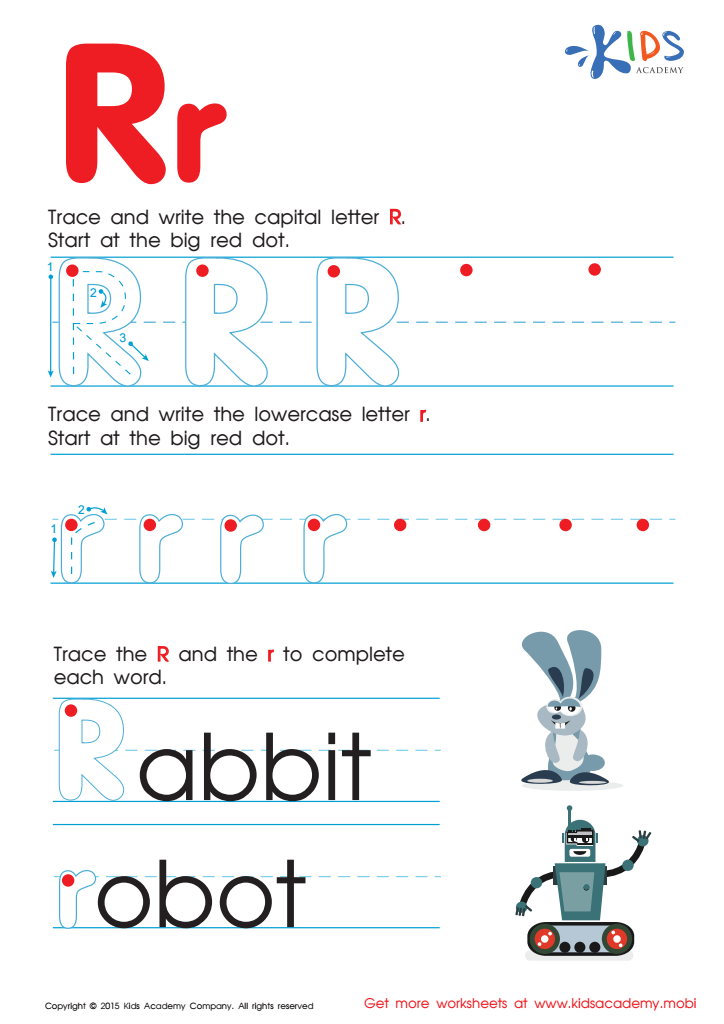
Letter R Tracing Page
Trace and write the letter "R" with this worksheet for kindergarten. Start with the uppercase, then move on to the lowercase. Write the letters several times for practice. Then help complete the words for the rabbit and robot, spelling carefully. More ABC worksheets can be found at Kids Academy.
 Assign to My Students
Letter R Tracing Page
Worksheet



Letter X Tracing Page
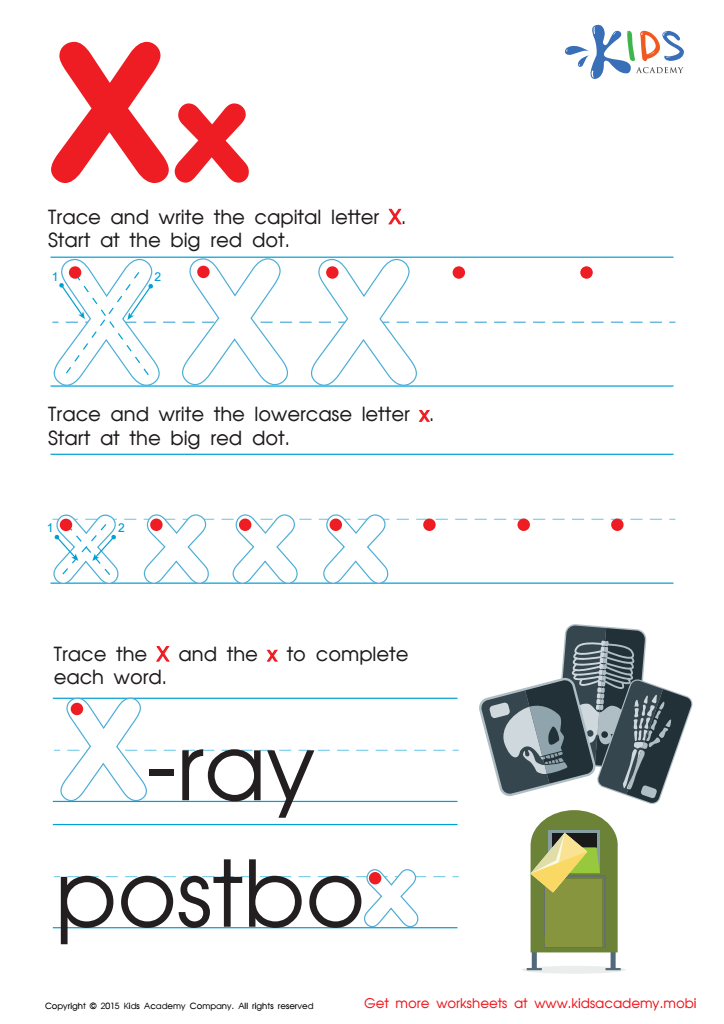
Trace the uppercase letter "X" to learn, then write it yourself and practice. Then do the same with the lowercase "x" before completing the words "X-ray" and "postbox". Enjoy our alphabet printables!
Letter X Tracing Page
Worksheet
Letter U Tracing Page
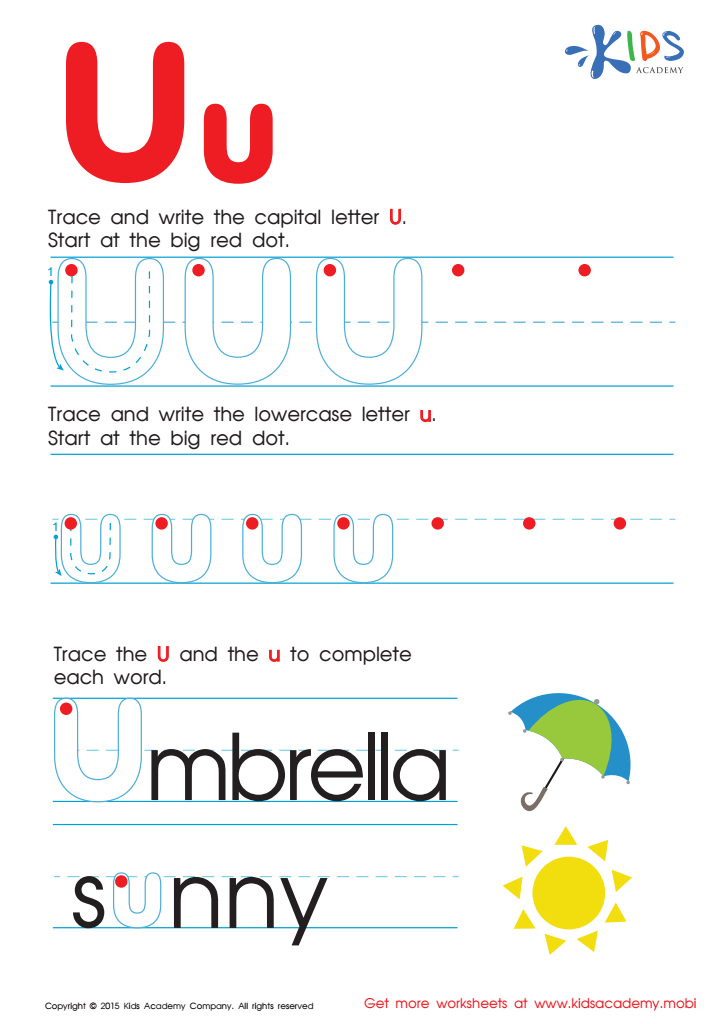
Ready to trace and write the letter "U"? Use our worksheet and practice tracing both uppercase and lowercase letters. Complete the words "umbrella" and "sunny" with a capital "U". Check our full collection of alphabet printables for more activities.
Letter U Tracing Page
Worksheet
Letter S Tracing Page
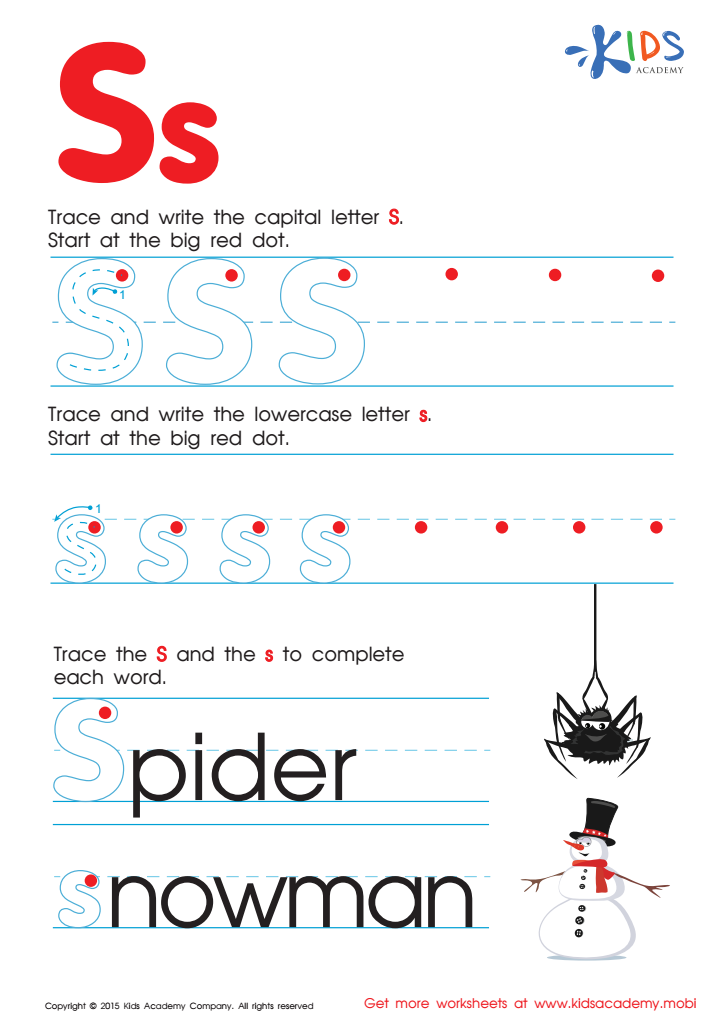
Trace and write the capital and lowercase "S" on this ABC worksheet for kindergarten. Start with the big red dot and be careful. When you finish, help the spider and snowman in the pictures restore their words with the capital and lowercase letters. Continue learning the alphabet with Kids Academy.
Letter S Tracing Page
Worksheet
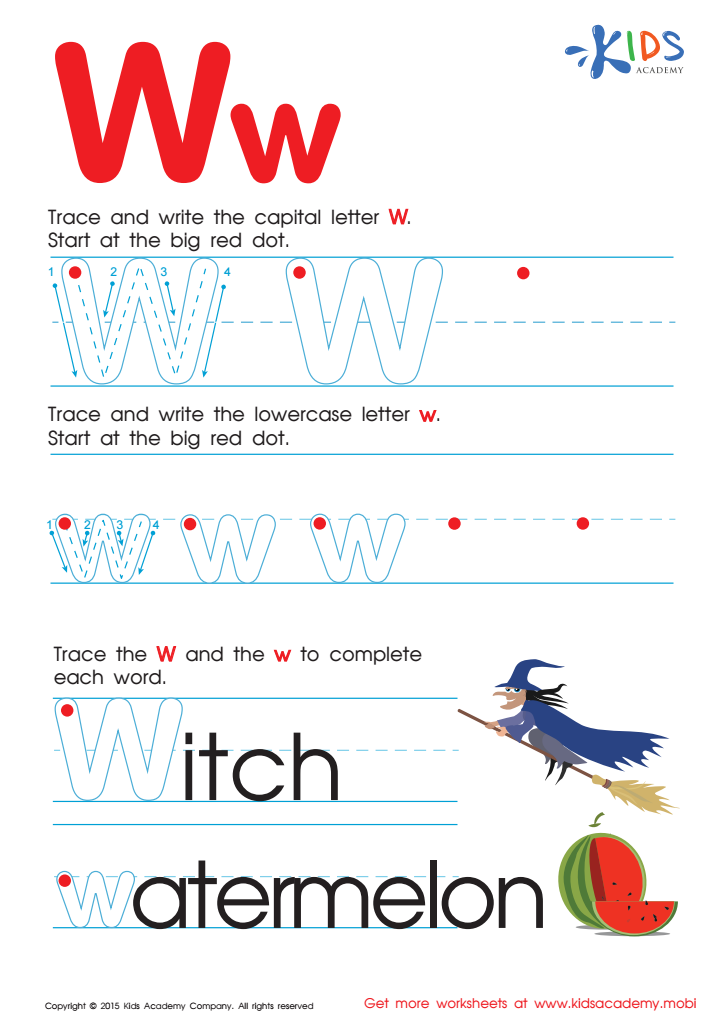
Letter W Tracing Page
Trace and write the capital and lowercase letter W with this free letter tracing worksheet by Kids Academy. Complete the words "Witch" (capital) and "watermelon" (lowercase). Check out our other kindergarten alphabet worksheets!
Letter W Tracing Page
Worksheet
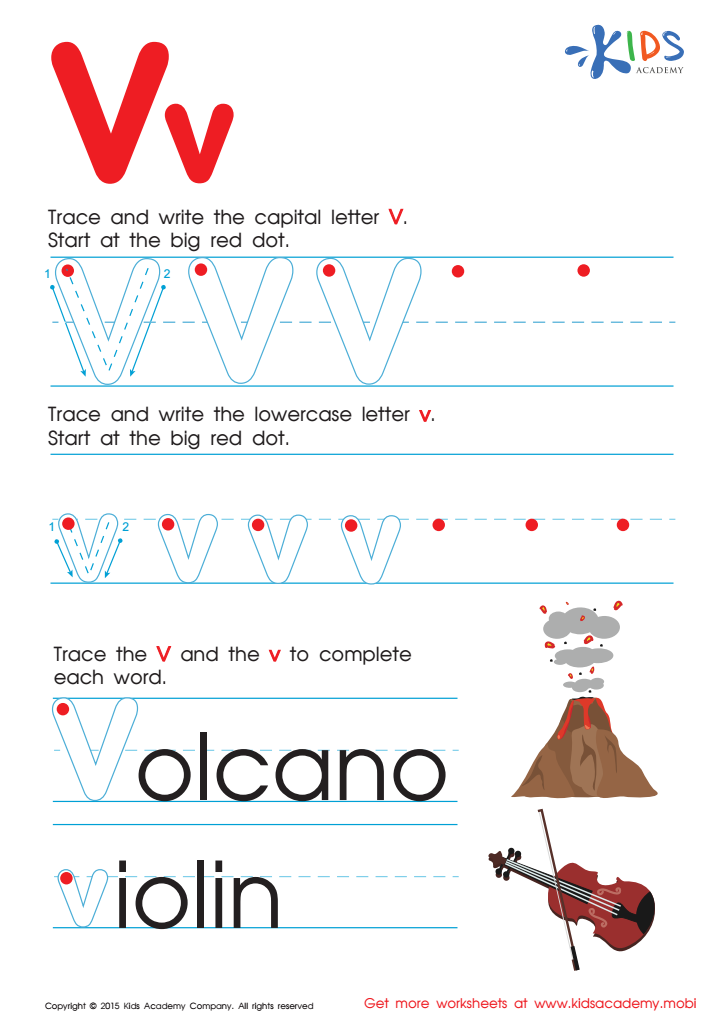
Letter V Tracing Page
Trace the uppercase and lowercase letter "V" with our kindergarten tracing worksheet. Begin at the red dot and follow the lines. Write it several times. Complete the words "Volcano" and "violin". Get more alphabet activities at Kids Academy.
Letter V Tracing Page
Worksheet
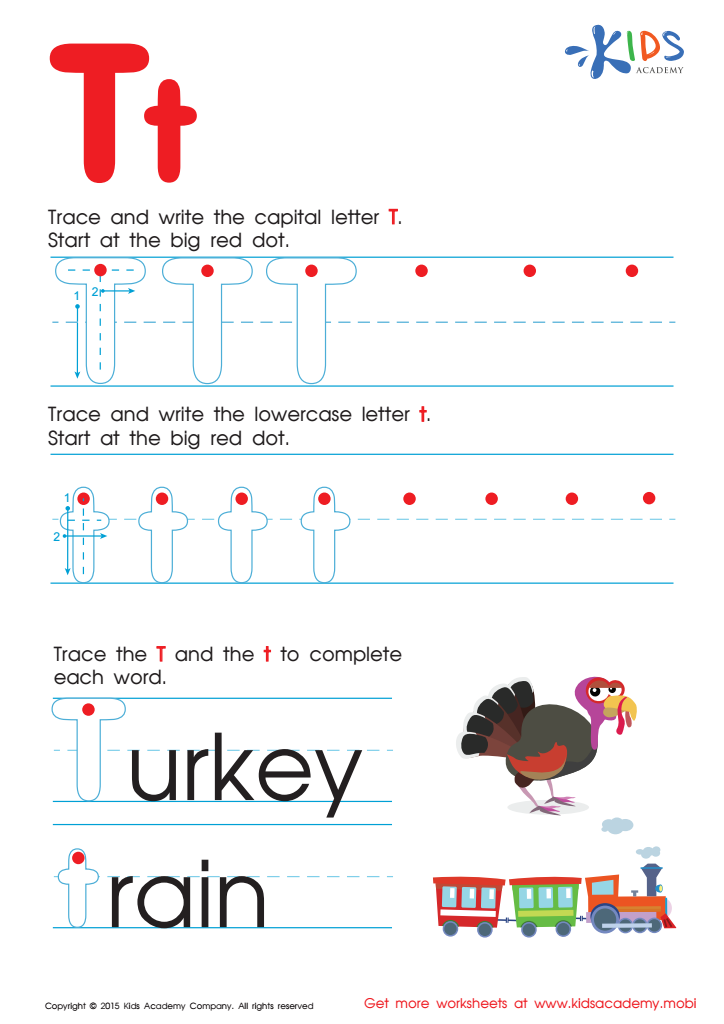
Letter T Tracing Page
Trace letters, complete words, draw pictures and see your kids having fun!
Kids Academy offers alphabet tracing worksheets to learn to write letters. Start with the big red dot, trace the letter, then write it. Practice uppercase and lowercase. Have fun completing words with a Turkey or a rain-train and draw pictures. Get more printable worksheets to make learning enjoyable.
Letter T Tracing Page
Worksheet
Join Kids Academy for Free
Who is primarily going to use this learning content?







Letter recognition is a foundational skill essential for early literacy development in children aged 3-8. When parents and teachers engage children in activities like the "Letter Recognition Extra Challenge ABC Order," they nurture critical cognitive skills. Recognizing letters enables children to identify these letters in words, an essential step toward reading fluency. Engaging in activities that promote alphabetic order enhances memory and cognitive organization as children become familiar with the sequence of letters.
By learning to organize letters alphabetically, children also improve their fine motor skills through activities like tracing or manipulating letter blocks. This not only fosters a deeper connection with the letters but also builds confidence as they experience success in tasks that become progressively challenging.
Moreover, mastering letter recognition lays the groundwork for phonics, spelling, and eventually writing skills. Parents and teachers play a vital role in cultivating these abilities, and through imaginative challenges tied to letter recognition, they can create a fun and supportive learning environment. Ultimately, the skills gained from mastering letter recognition directly contribute to children's academic success and self-esteem as they progress on their educational journey. Emphasizing these activities early on sets the stage for lifelong learning and literacy.








