Categorization skills Extra Challenge Worksheets for Ages 3-8
5 filtered results
-
From - To
Unlock your child’s potential with our "Categorization Skills Extra Challenge Worksheets for Ages 3-8." Designed to introduce advanced-level categorization exercises, these sheets enhance critical thinking, sorting, and classification abilities. Ideal for ages 3-8, our challenges help kids differentiate, group, and organize items using fun, engaging activities. Watch them master pattern recognition and logical reasoning through delightful illustrations and interactive tasks. Perfect for parents and educators, our worksheets are a versatile tool for fostering essential cognitive skills in young learners. Boost your child's development with our comprehensive collection today!
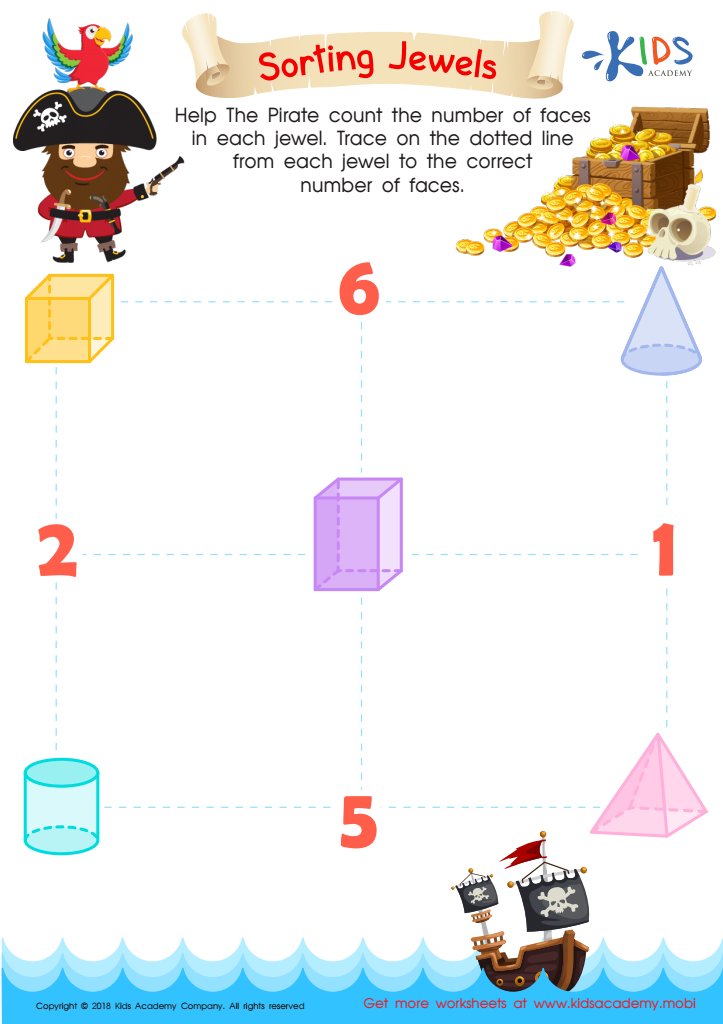
Sorting Jewels Worksheet
 Assign to My Students
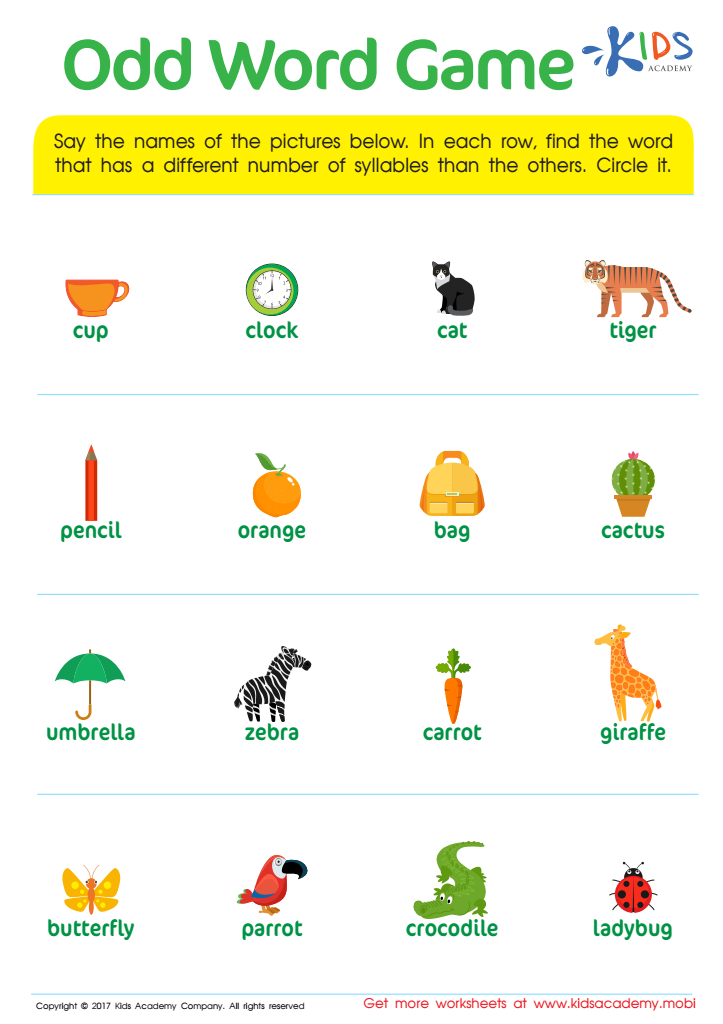
Count Syllables: Odd Word Game Worksheet
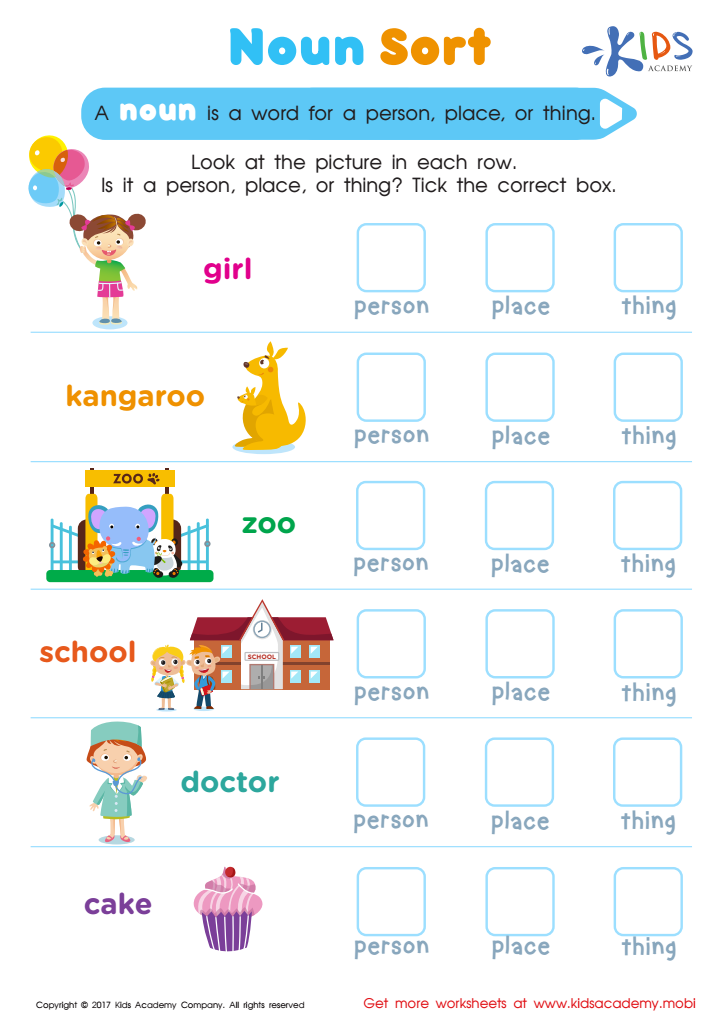
Noun Sort Printable
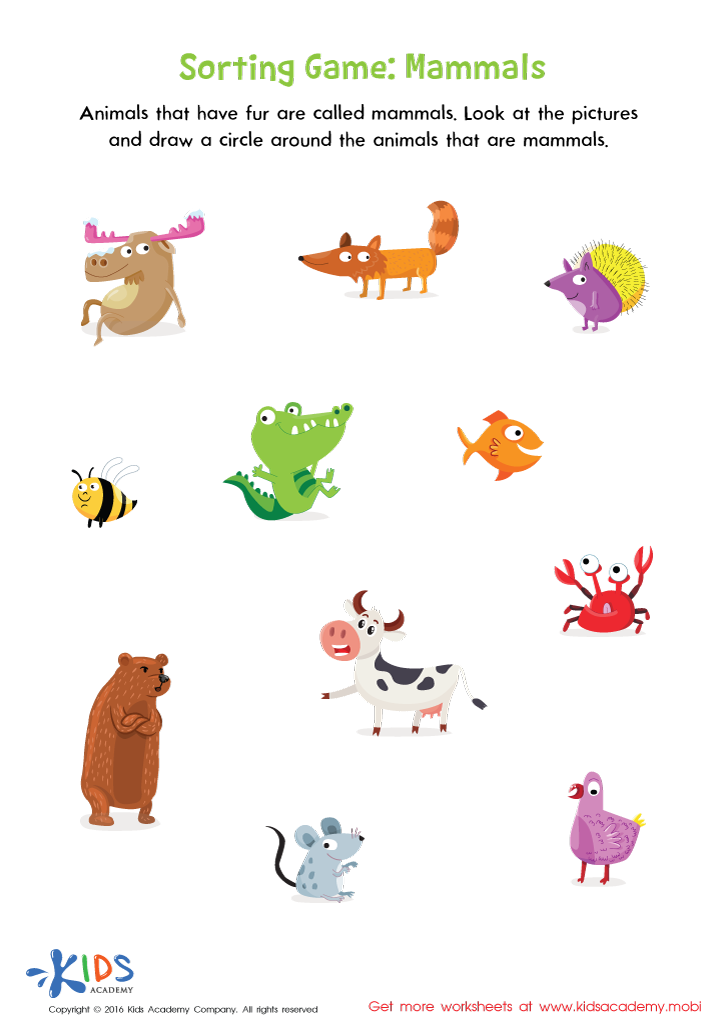
Mammals Sorting Worksheet
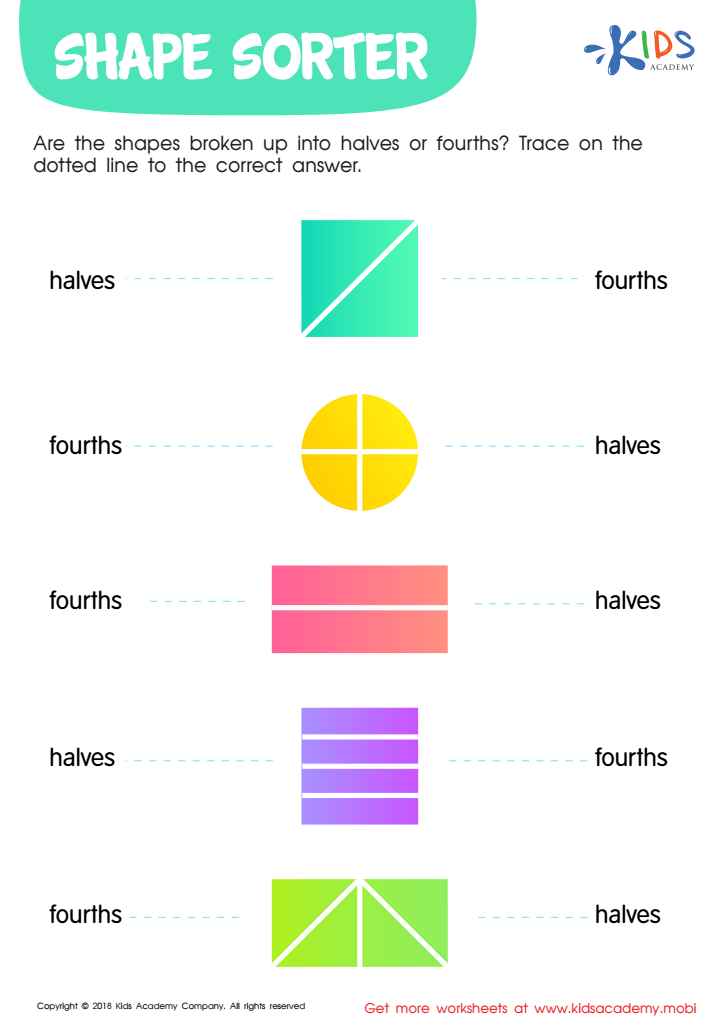
Shape Sorter Worksheet






Categorization skills are a foundational cognitive ability that plays a crucial role in the intellectual, academic, and social development of young children aged 3-8. Cultivating these skills through extra challenges is beneficial for several reasons:
-
Cognitive Development: Categorization helps children make sense of the world by organizing information into meaningful groups. This builds the groundwork for higher-order thinking skills such as problem-solving, reasoning, and critical thinking, which are essential for academic success.
-
Language Development: Sorting and classifying objects help children understand and use language more effectively. Describing categories enriches vocabulary and supports the development of descriptive and comparative language skills.
-
Math Readiness: Categorization activities prepare children for mathematical concepts such as sorting, counting, and identifying patterns. Understanding relationships between objects is foundational for learning more complex math skills like addition, subtraction, and geometry.
-
Enhancing Focus and Attention: Challenges that involve categorization naturally engage children's attention, fostering concentration and observational skills. These activities require discerning details and noticing similarities and differences, which can improve a child’s ability to concentrate on tasks.
-
Social Skills and Emotional Intelligence: Through categorization, children learn to navigate their environment better and engage more meaningfully with peers and adults. They practice decision-making and understanding perspectives by grouping people, objects, and ideas.
In summary, parents and teachers should invest in categorization skills exercises to promote comprehensive developmental benefits essential for lifelong learning and social interactions.








