Enhance your child’s matching skills with our Extra Challenge Worksheets for ages 3-8. These engaging and educational printables are designed to boost critical thinking, visual perception, and cognitive development. Each worksheet offers various matching activities that challenge young minds and promote learning in a fun, interactive way. Perfect for early learners, these exercises not only support essential skills but also keep children entertained with vibrant, age-appropriate illustrations. Ideal for parents and educators, our matching skills worksheets are a great addition to any learning routine, ensuring your little ones stay ahead in their educational journey.

Check out this FREE "Matching skills" Trial Lesson for age 3-8!

Spell simple words phonetically

Favorites
With answer key
Interactive
  • 3-8
  • Matching skills
  • Extra Challenge
none
none

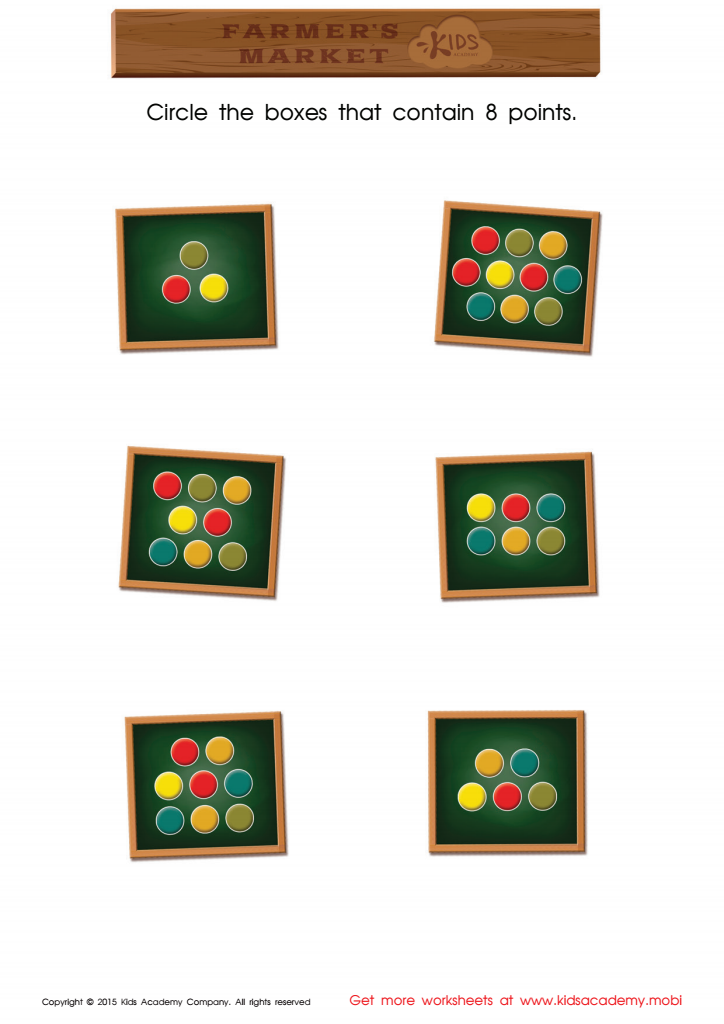
Count and Match Points 8 Math Worksheet

This free PDF helps children develop their number skills by counting the points in the boxes. Each box contains a total of 9 points, making it a fun and colorful activity. Parents can encourage their young ones by guiding them if they need help counting. By the end of the worksheet, children should have a better understanding of numbers.
Count and Match Points 8 Math Worksheet
Worksheet
Preschool Matching Worksheets

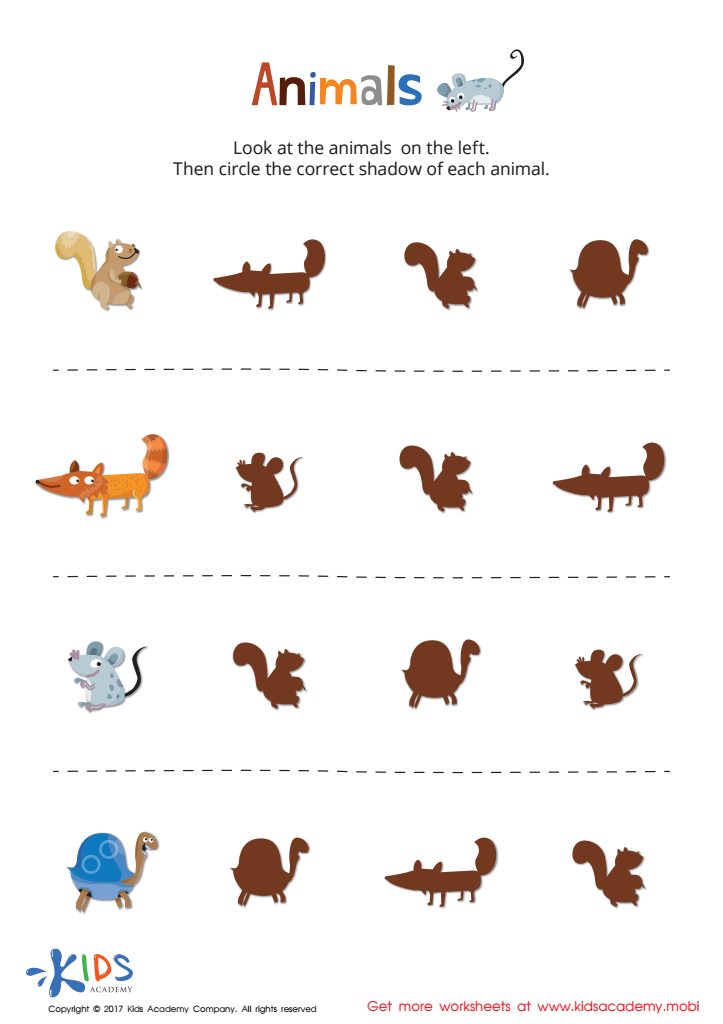
Animal Shadows Sorting Worksheet

This fun worksheet helps your child sharpen many skills. It features animals to match shapes and practice relative directions. Your child will sort animal features, practice spatial recognition, and recognize right/left. Plus, you can use it to start conversations about the animals. And try it also with fruits and veggies to boost sorting skills.
Animal Shadows Sorting Worksheet
Worksheet
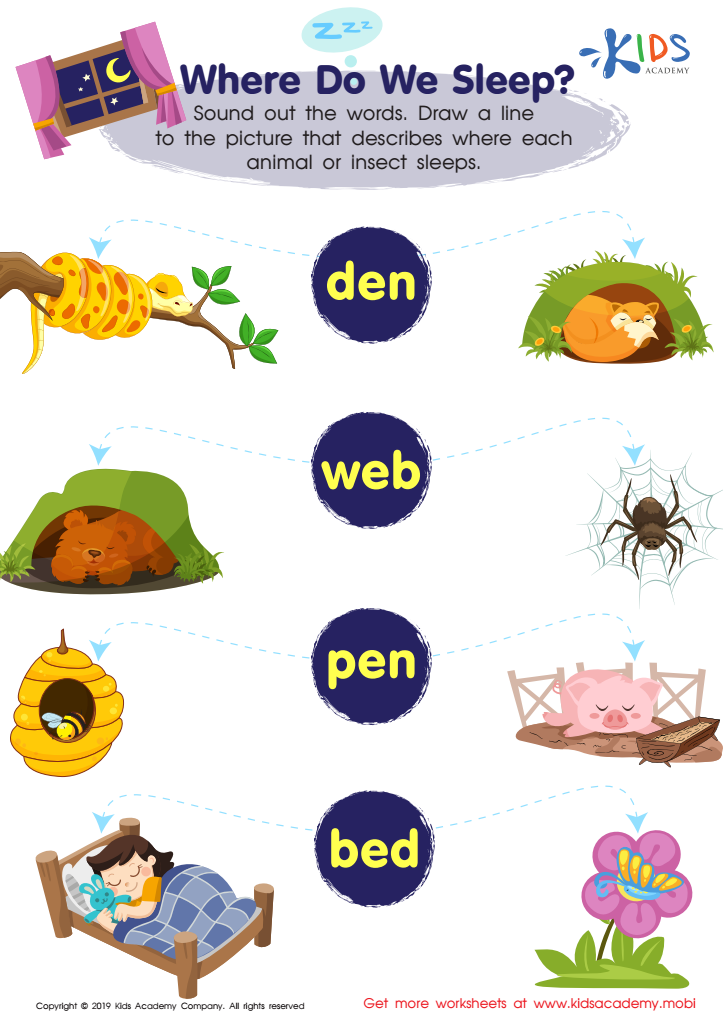
Where Do We Sleep Worksheet

Where Do We Sleep Worksheet

Help your kids understand the importance of a safe space with this activity: Ask them to draw a line connecting the different animals and insects to the words that describe where they sleep. Remind them that everyone needs a sanctuary to rest – like the animals and insects in this printout.
Where Do We Sleep Worksheet
Worksheet
Animal Paw Prints Worksheet

Animal Prints Match-Up Worksheet
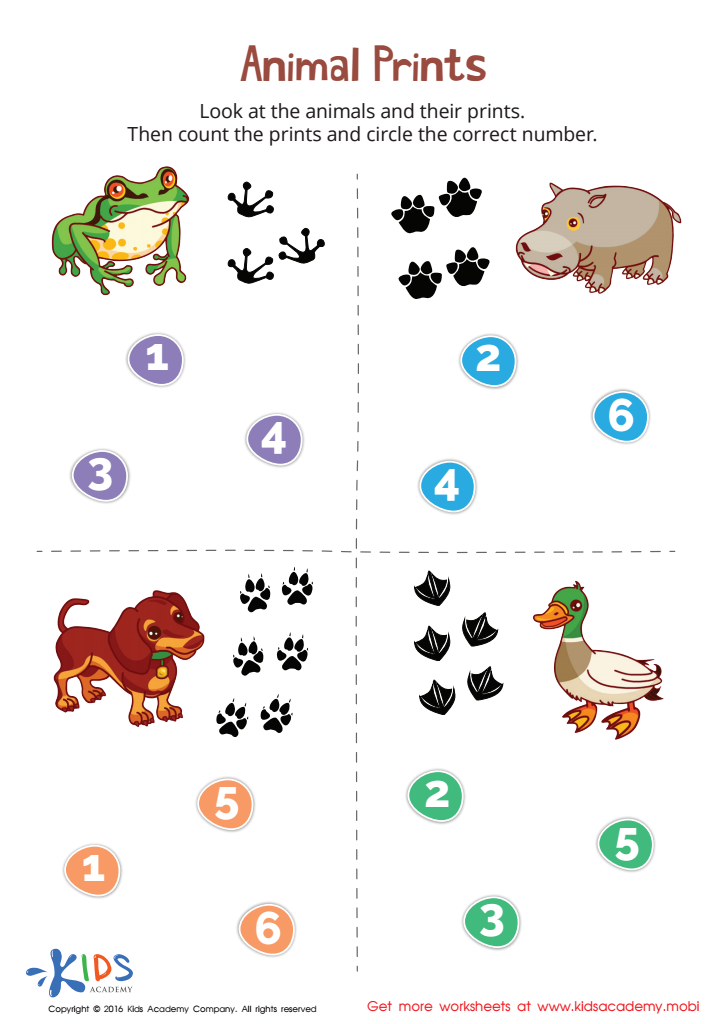
Help your little learner build early math skills with this fun animal paw prints worksheet. With it, they'll count, recognize numbers, and learn about the animals that make the paw prints. Talk to them about the prints and ask them to count. They'll love exploring and learning about the different animals, all while sharpening essential math skills!
Animal Prints Match-Up Worksheet
Worksheet
Holiday Word Matching Worksheet

Holiday Word Matching Worksheet

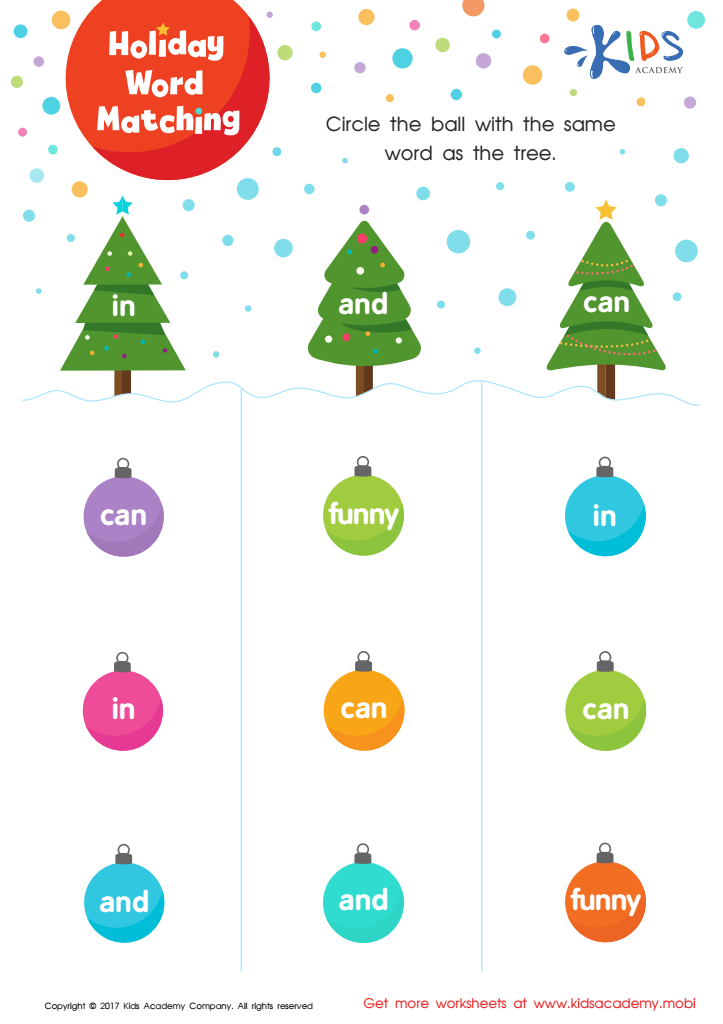
Decorate with Kids Academy this year! Keep kids learning this holiday season with this festive worksheet. Let them look for sight words on Christmas trees then circle the matching ornament to decorate. It's a fun and educational way to enjoy the holidays!
Holiday Word Matching Worksheet
Worksheet
Preschool Matching Worksheet

Shapes Worksheet

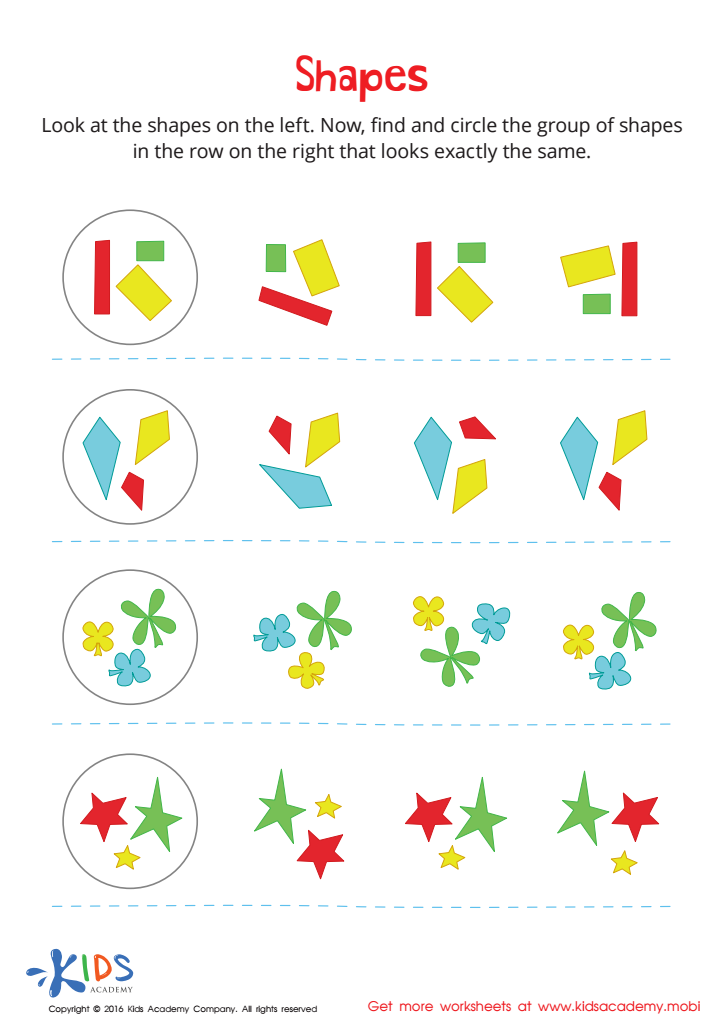
This fun worksheet will challenge your child to recognize tricky patterns, sort through similar ones, and create strategies to get the right answer. It'll also help them to strengthen problem-solving skills and build confidence. With more challenging tasks, your child will be ready to tackle higher level math and sequencing skills.
Shapes Worksheet
Worksheet


Matching skills are an essential part of early childhood development, and both parents and teachers should give them significant attention for children aged 3-8. Engaging in matching activities promotes critical cognitive skills such as pattern recognition, memory, and attention to detail. These activities lay a foundational base for more complex learning tasks, including mathematics and reading. When children match similar items or pair related concepts, they enhance their understanding of categories, relationships, and the concept of sameness and difference, crucial for their reasoning abilities.

Moreover, matching exercises can improve fine motor skills, especially when activities involve physical manipulation of objects. Handling pieces, aligning them correctly, and often moving them back and forth help develop the children’s dexterity and hand-eye coordination.

Emotionally and socially, these matching games can foster a sense of achievement and encourage children to take on new challenges. Successfully completing an 'extra challenge' boosts their self-esteem, fostering resilience and perseverance. When done in group settings, children also practice collaborative skills, such as sharing and cooperating.

Incorporating matching activities into daily learning routines offers a balanced development of cognitive, motor, and social attributes, making it vital for holistic early childhood education and ultimately creating a robust platform for future learning endeavors.