Visual discrimination Extra Challenge Geometry Worksheets for Ages 3-8
3 filtered results
Difficulty Level
Grade
Age
-
From - To
Subject
Activity
Standards
Enhance your child's learning experience with our Visual Discrimination Extra Challenge Geometry Worksheets, specially designed for ages 3-8. These engaging worksheets help children develop essential skills by encouraging them to identify shapes, sizes, and spatial relationships. Perfect for fostering critical thinking and visual comprehension, our resources feature fun activities that keep young learners entertained while they sharpen their geometric understanding. Ideal for use at home or in the classroom, these worksheets cater to various learning styles and offer an exciting way to improve visual discrimination skills. Take the adventure of learning geometry to the next level while building a strong foundation for future math success!
Favorites
With answer key
Interactive
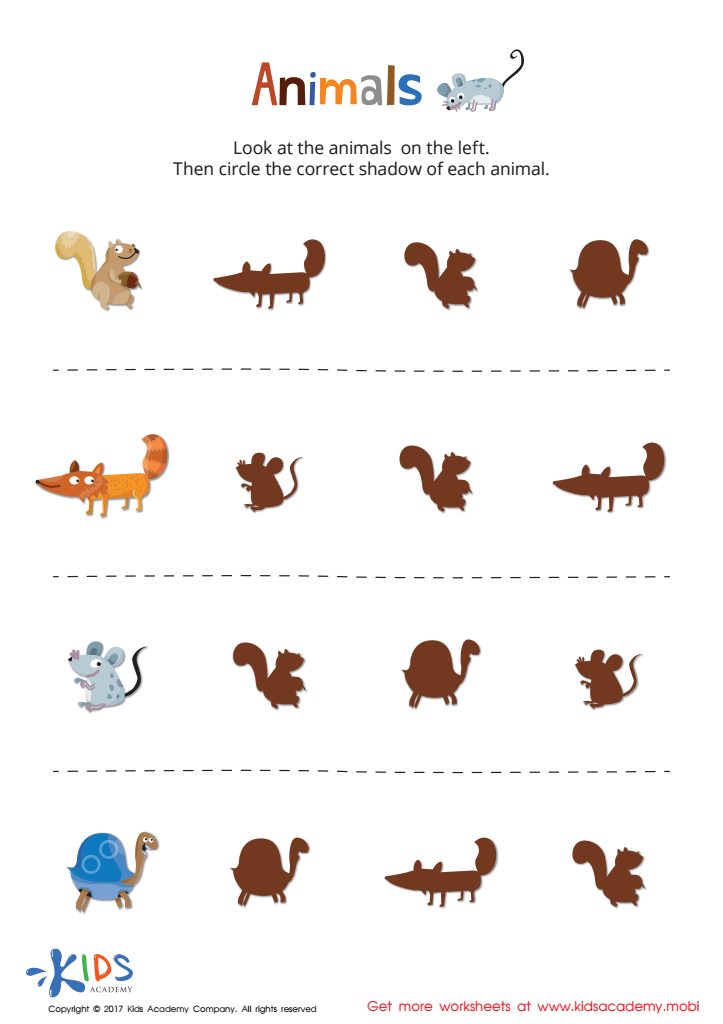
Animal Shadows Sorting Worksheet
This fun worksheet helps your child sharpen many skills. It features animals to match shapes and practice relative directions. Your child will sort animal features, practice spatial recognition, and recognize right/left. Plus, you can use it to start conversations about the animals. And try it also with fruits and veggies to boost sorting skills.
 Assign to My Students
Animal Shadows Sorting Worksheet
Worksheet











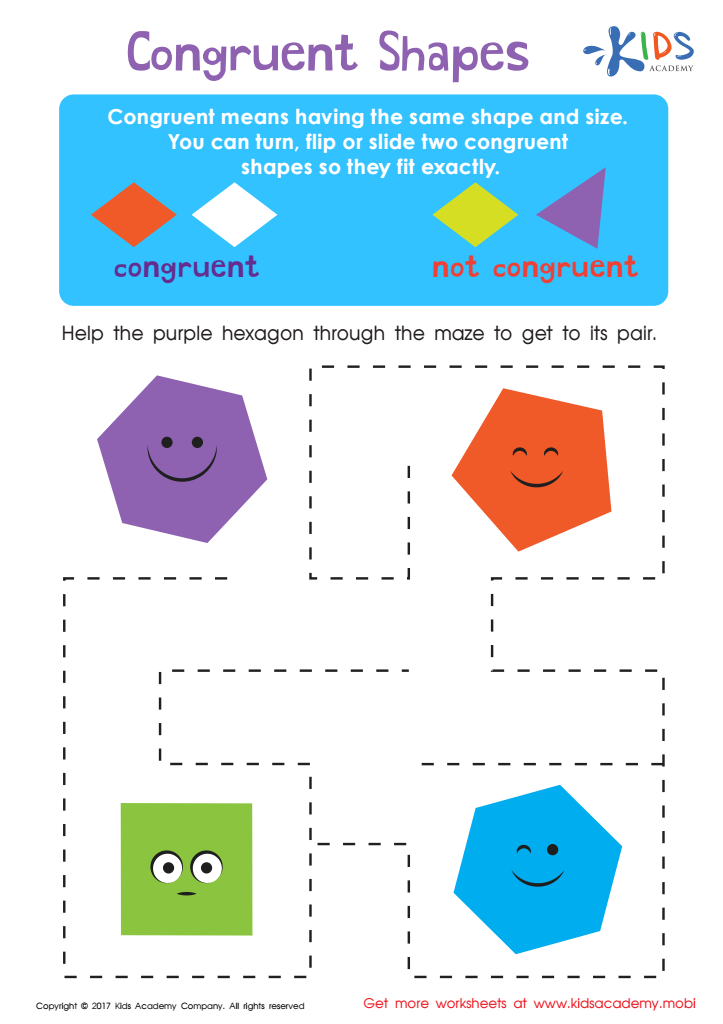
Congruent Shapes Worksheet
Help your child find the twin of the purple hexagon! This congruent shapes worksheet is great for increasing vocabulary while challenging mental rotation skills.
Congruent Shapes Worksheet
Worksheet
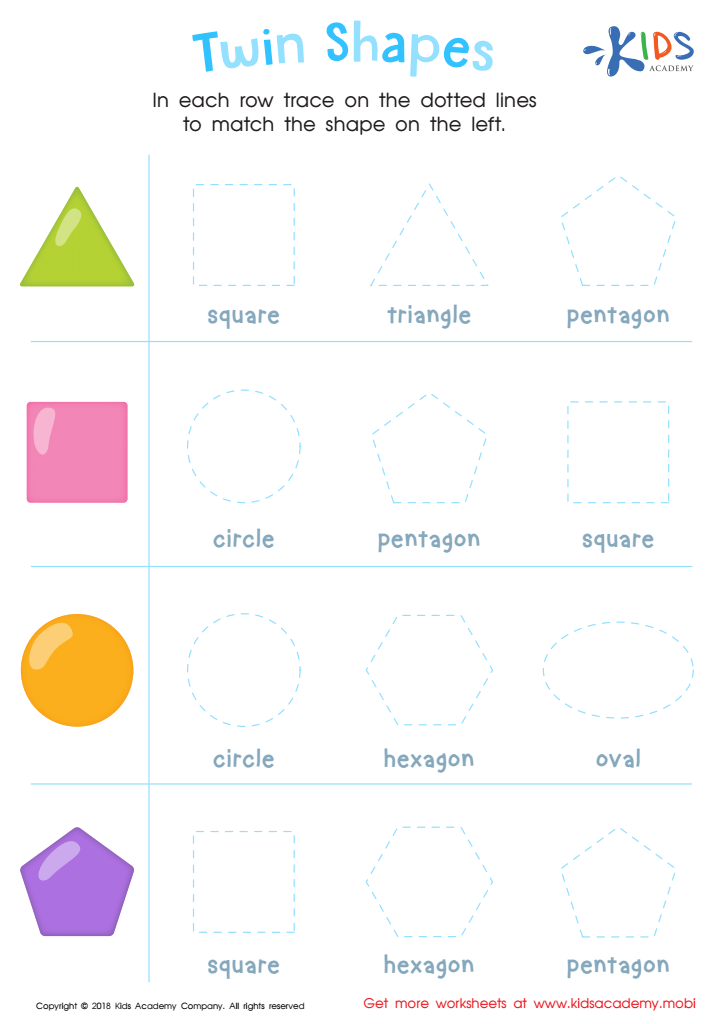
Twin Shapes Dot-to-Dot Worksheet
Test your child's ability to copy with this worksheet. Ask them to find and name the four shapes on the left. Then, they must match each with the dotted lines on the right. Help your child with all four shapes in this fun exercise.
Twin Shapes Dot-to-Dot Worksheet
Worksheet
Join Kids Academy for Free
Who is primarily going to use this learning content?








Visual discrimination is a fundamental skill that enables children to differentiate between shapes, sizes, colors, and patterns, all of which are essential components of early learning, especially in geometry. For parents and teachers of children aged 3-8, focusing on visual discrimination through extra challenge geometry activities offers numerous benefits.
Firstly, developing strong visual discrimination skills lays the groundwork for math literacy. Children who excel in distinguishing shapes and sizes will find it easier to grasp more complex geometric concepts later on, such as symmetry, angles, and spatial relationships. These skills enhance problem-solving abilities, encouraging logical thinking and reasoning.
Additionally, visual discrimination activities can aid in other areas of learning, such as reading and writing. The ability to recognize differences in letters or numbers strengthens overall literacy skills. Moreover, these engaging geometric challenges can foster creativity and encourage critical thinking, providing a well-rounded educational experience.
Finally, incorporating fun visual discrimination tasks promotes engagement and motivation, fostering a positive attitude towards learning. By prioritizing these skills, parents and educators can significantly enhance children's cognitive development, setting up a strong foundation for future academic success.