Comparing sizes Extra Challenge Math Worksheets for Ages 3-8
5 filtered results
-
From - To
Discover an exciting way to boost your child's math skills with our Comparing Sizes Extra Challenge Math Worksheets for ages 3-8! These expert-designed worksheets provide a stimulating environment where young learners can compare and contrast sizes in a variety of fun and engaging activities. Perfect for preschool to early elementary students, the worksheets include colorful visuals and dynamic tasks that promote critical thinking, problem-solving, and foundational math skills. Watch as your child grows more confident and proficient in understanding size relationships while enjoying the learning journey. Ideal for both classroom settings and at-home practice. Explore now and elevate math learning today!
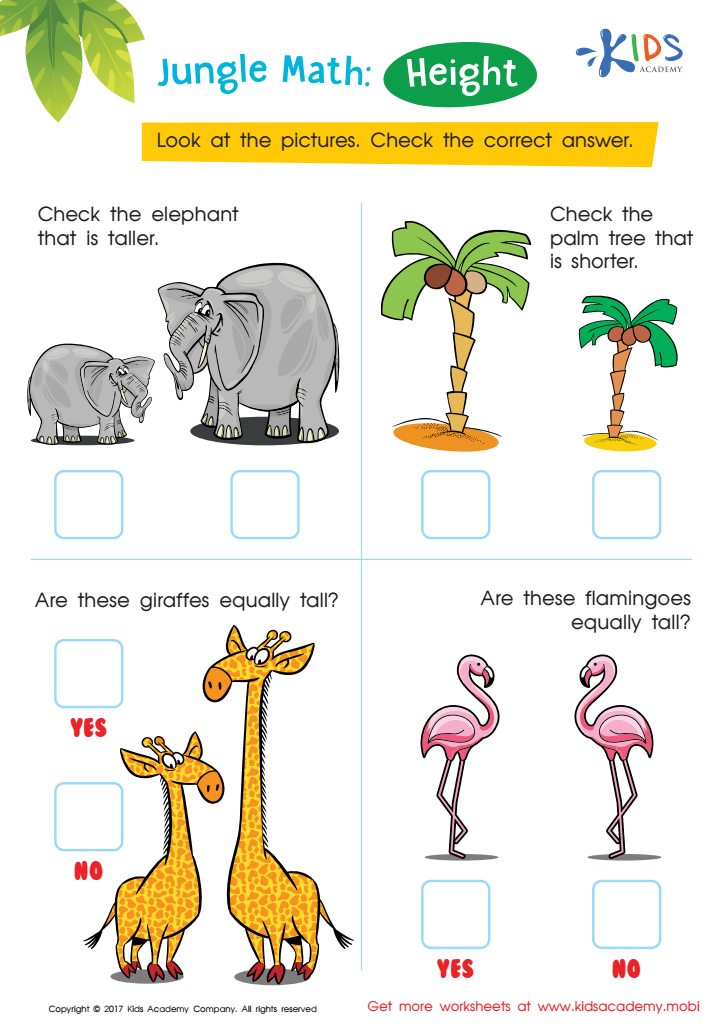
Which Is Taller Worksheet
 Assign to My Students
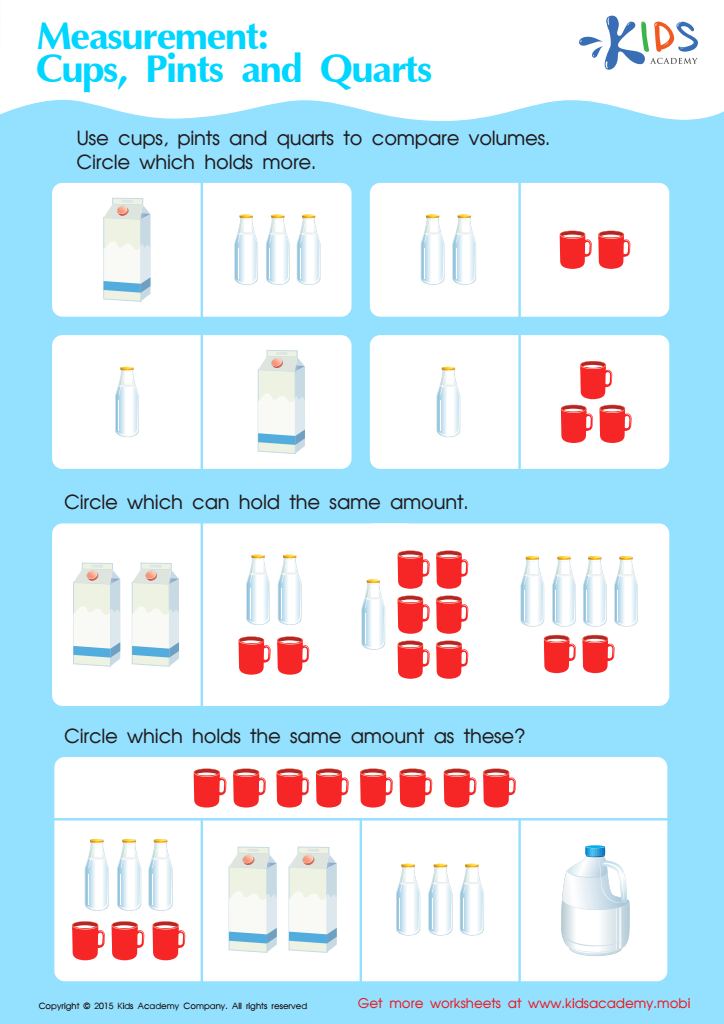
Measurement: Compare Volumes Worksheet
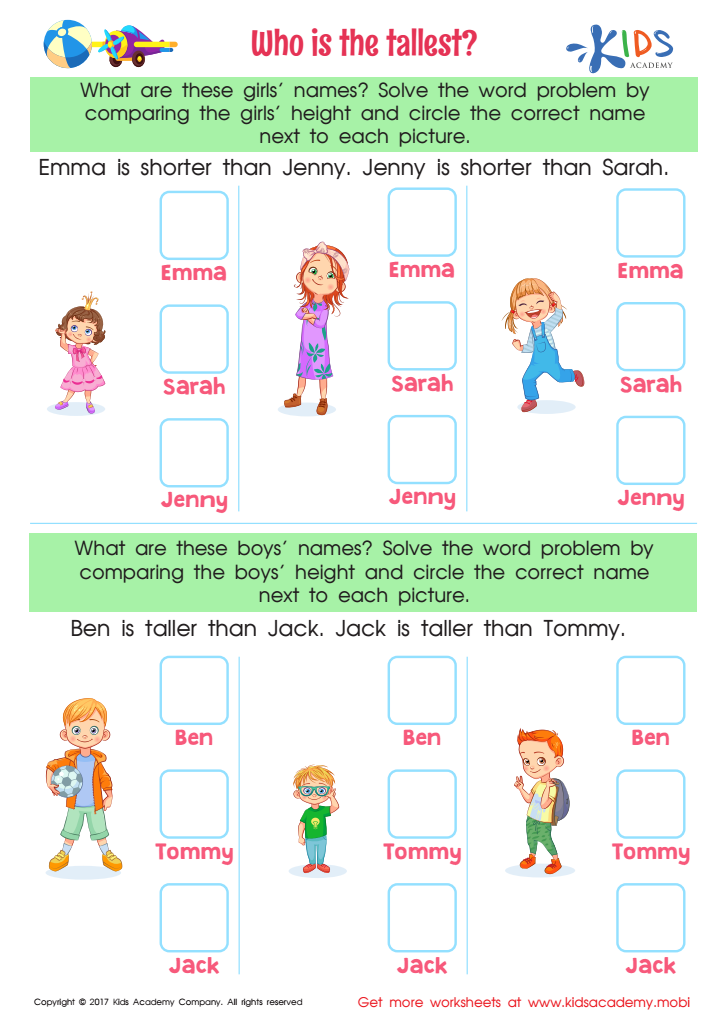
Who Tallest Printable
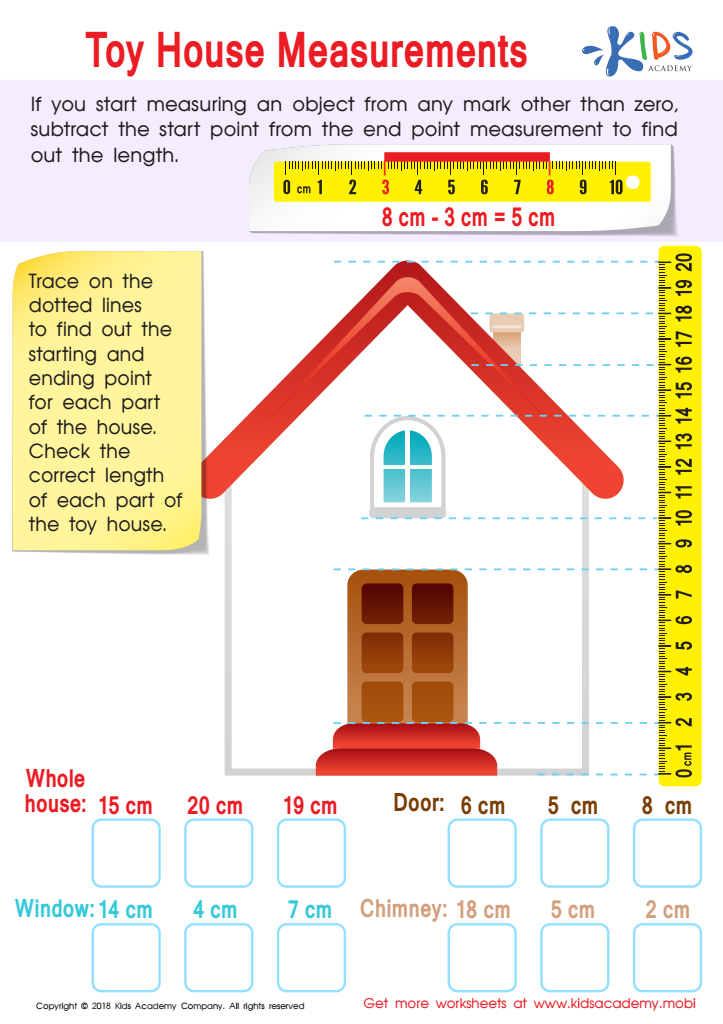
Toy House Measurements Worksheet
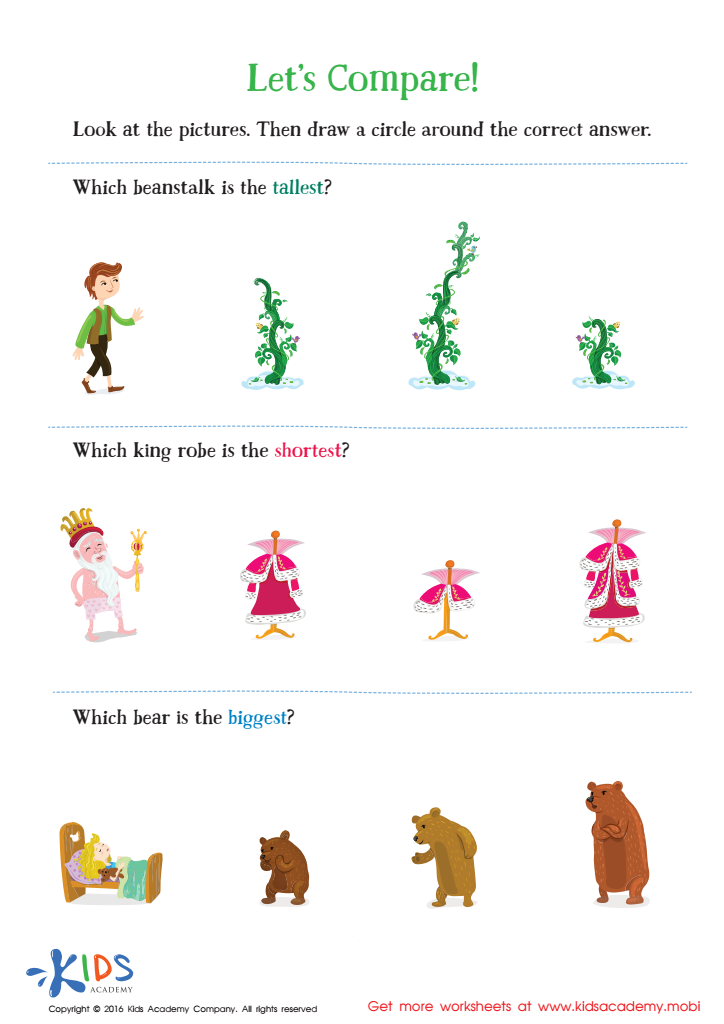
Fairy Tale Worksheet: Let's Compare







Comparing sizes is a fundamental skill that plays a crucial role in a child's early education, laying the groundwork for more advanced mathematical concepts. For ages 3-8, engaging in comparing sizes through an extra challenge math curriculum can significantly benefit cognitive development. At this stage, children are naturally curious and constantly exploring their environments, and lessons on size comparison tap into this curiosity, making learning both fun and relevant.
Understanding size differences helps children develop critical thinking skills, such as observation and analysis. These skills are the building blocks for problem-solving, a core aspect of higher math and everyday decision-making. By comparing sizes—whether it’s big versus small, tall versus short, or heavy versus light—children also enhance their vocabulary and descriptive language skills, which is vital for effective communication.
Furthermore, practical applications in daily life, like grouping and sorting objects, measuring ingredients while cooking, or predicting the space needed for different activities, become manageable tasks. Teachers and parents who prioritize these exercises promote a positive emotional connection with math, counteracting any potential anxiety or aversion early on. Beyond academics, cultivating these competencies equips children with the confidence and curiosity to face challenges, fostering lifelong learners. Thus, these activities are invaluable for holistic development, making them indispensable in early childhood education.








