Money recognition Extra Challenge Math Worksheets for Ages 3-8
4 filtered results
-
From - To
Introducing our "Money Recognition Extra Challenge Math Worksheets" designed specifically for children aged 3-8. These engaging worksheets from Kids Academy provide an enjoyable way for young learners to familiarize themselves with currency while enhancing their math skills. Perfect for early education, the activities range from identifying and counting coins and bills to understanding their values. Our expertly crafted worksheets aim to make financial literacy fun and accessible, giving kids a valuable head start on essential math concepts. Boost your child's confidence with our exciting and educational money recognition challenges today! Visit Kids Academy to download and explore.
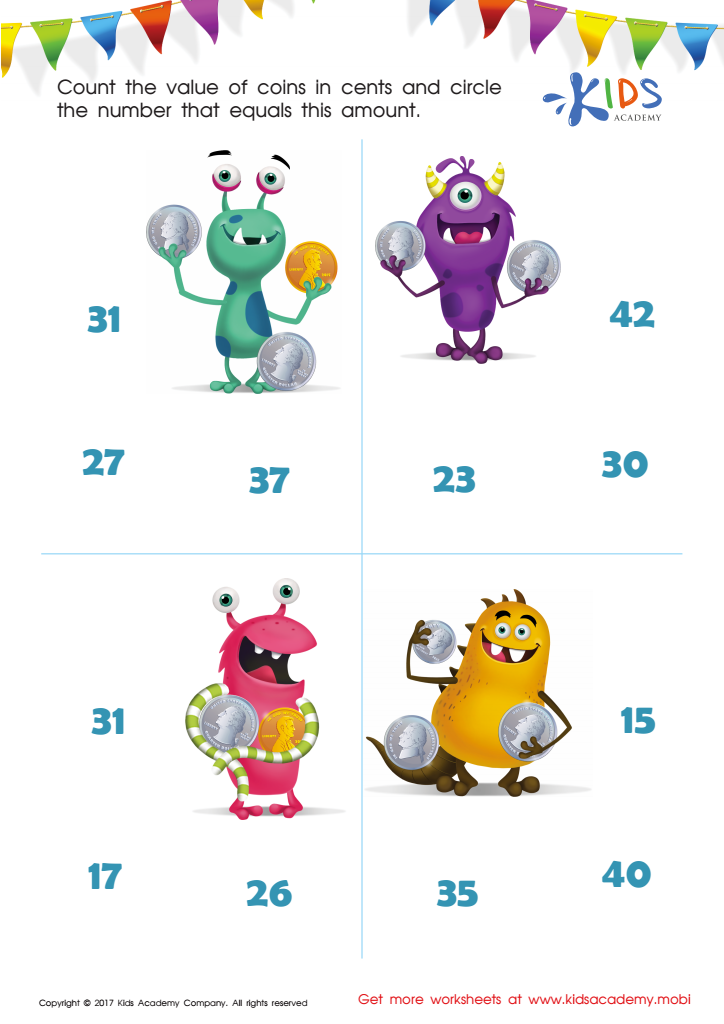
How Many Coins Money Worksheet
 Assign to My Students
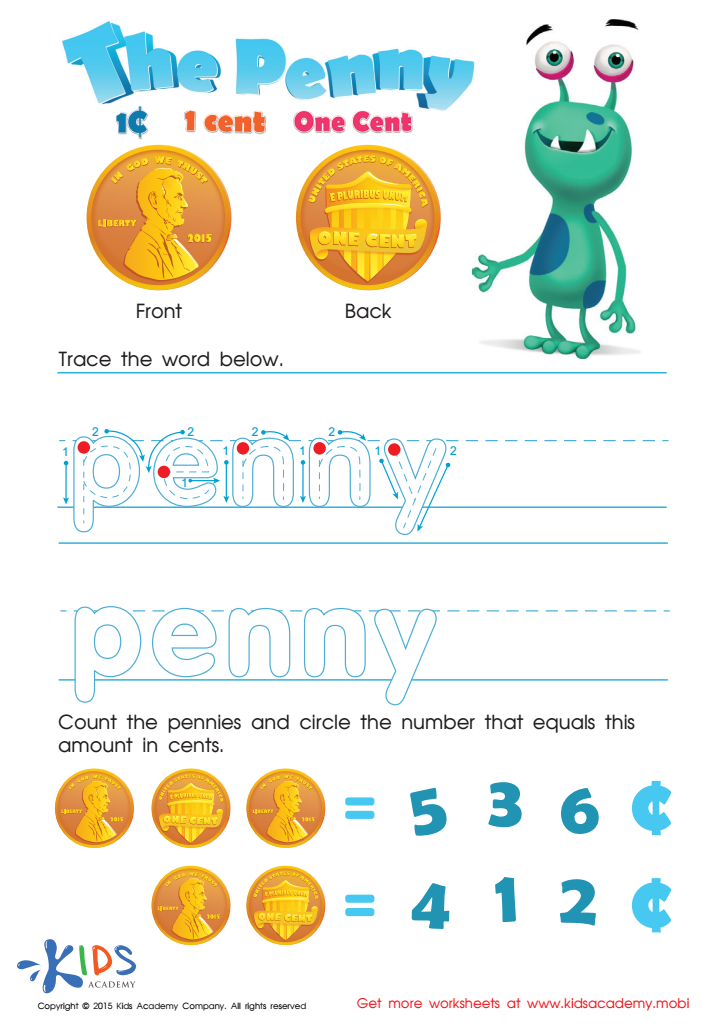
One Cent or the Penny Money Worksheet
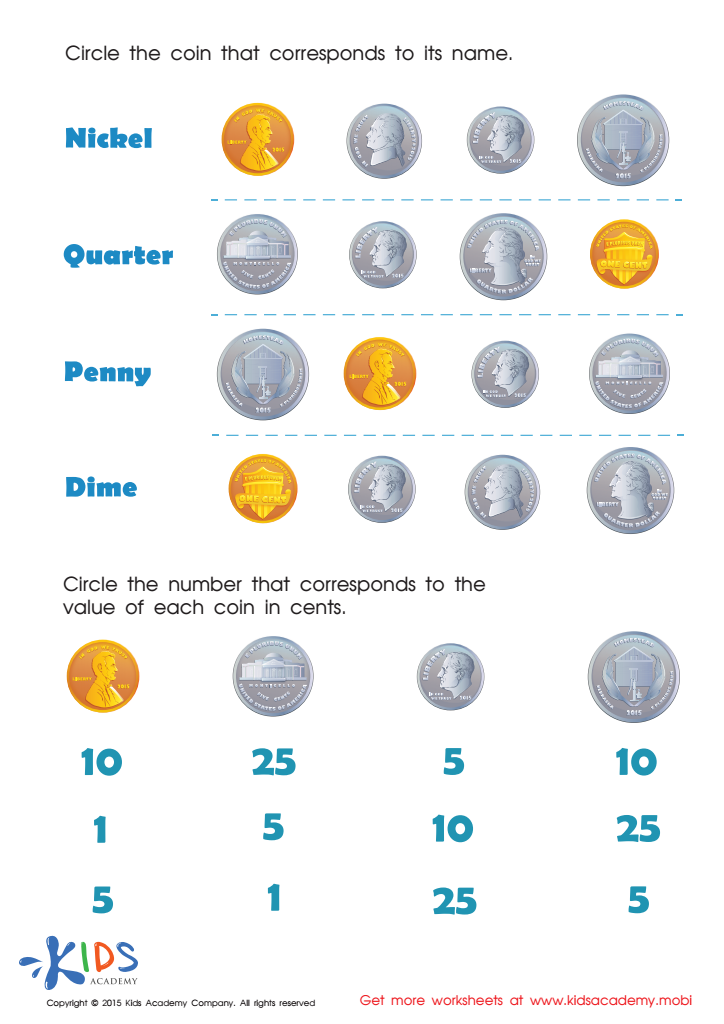
Coin Names and Values Money Worksheet
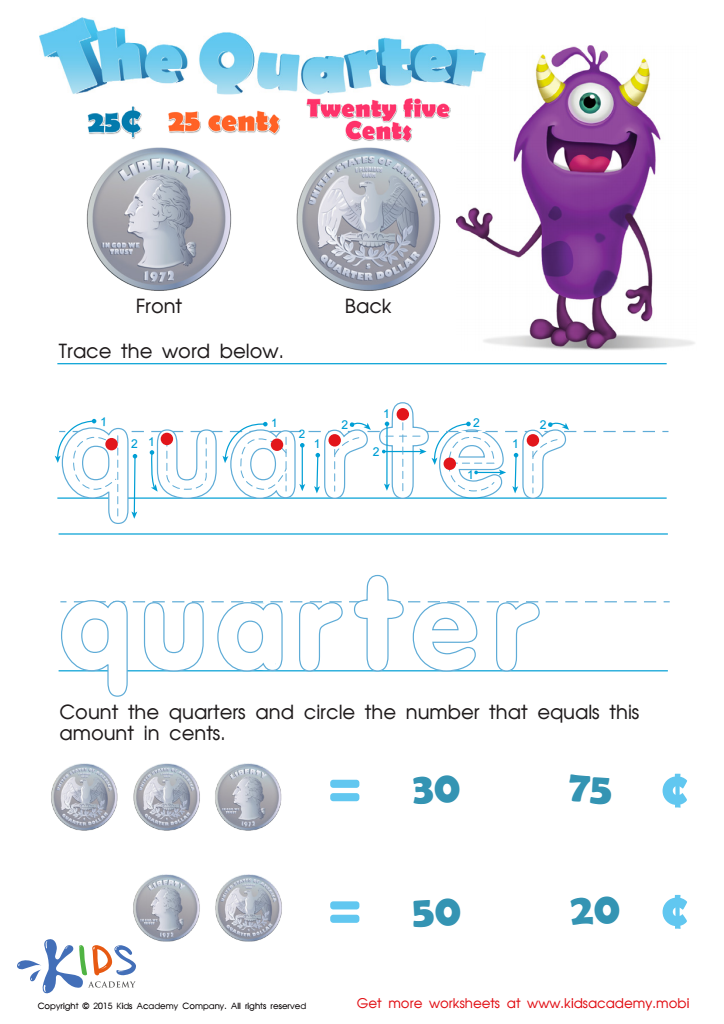
Twenty Five Cents or the Quarter Money Worksheet




%20(1).jpg)



Parents and teachers should care about Money Recognition Extra Challenge Math for ages 3-8 because it builds foundational numeracy skills critical for real-world financial literacy. Early exposure to money concepts enhances children's understanding of basic arithmetic operations, such as addition and subtraction, using tangible items like coins and bills. This hands-on learning fosters cognitive development and helps solidify abstract mathematical concepts through practical application.
Furthermore, these activities promote problem-solving skills and logical thinking. By recognizing different denominations and calculating change, children learn to analyze and approach problems methodically. This skill is transferable to various academic areas and everyday life situations.
Money recognition activities also instill values such as responsibility, budgeting, and the concept of worth. When children comprehend the value of money, they begin to understand the importance of saving and making informed financial decisions. This early financial awareness sets them on a path toward becoming financially responsible adults.
Moreover, making math fun and relevant through challenges keeps young learners engaged and motivated. Enjoyable, interactive lessons can strengthen a child’s enthusiasm for math, paving the way for continued interest and confidence in the subject as they progress in their education. In summary, investing in Money Recognition Extra Challenge Math at an early age is a dual-benefit strategy—nurturing both mathematical prowess and essential life skills.








