Number identification Extra Challenge Math Worksheets for Ages 3-8
3 filtered results
-
From - To
Transform your child's number skills with our "Number Identification Extra Challenge Math Worksheets for Ages 3-8." Perfectly designed for early learners, these engaging worksheets offer an exciting way to master number recognition and counting. Each worksheet features fun, challenging activities that promote critical thinking and problem-solving. Ideal for classroom use or at-home practice, they help boost mathematical confidence and prepare kids for more advanced concepts. Whether your child is just starting with numbers or ready for an extra challenge, these worksheets are an invaluable resource for promoting learning and fun. Spark a love for math today!
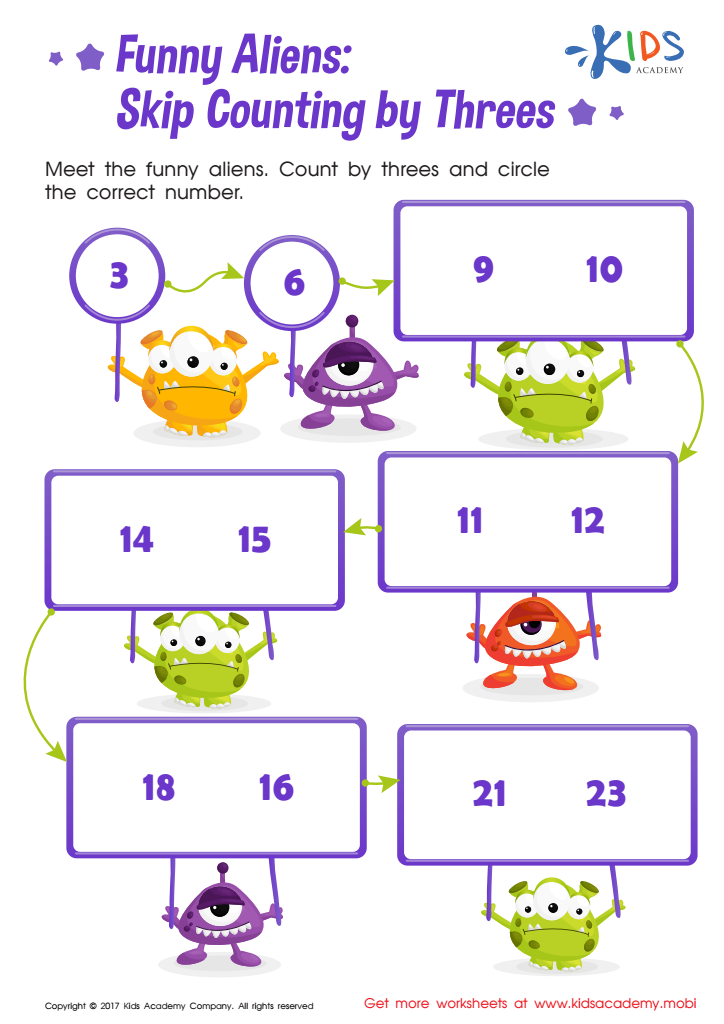
Skip Counting by 3s: Funny Aliens Printable
 Assign to My Students
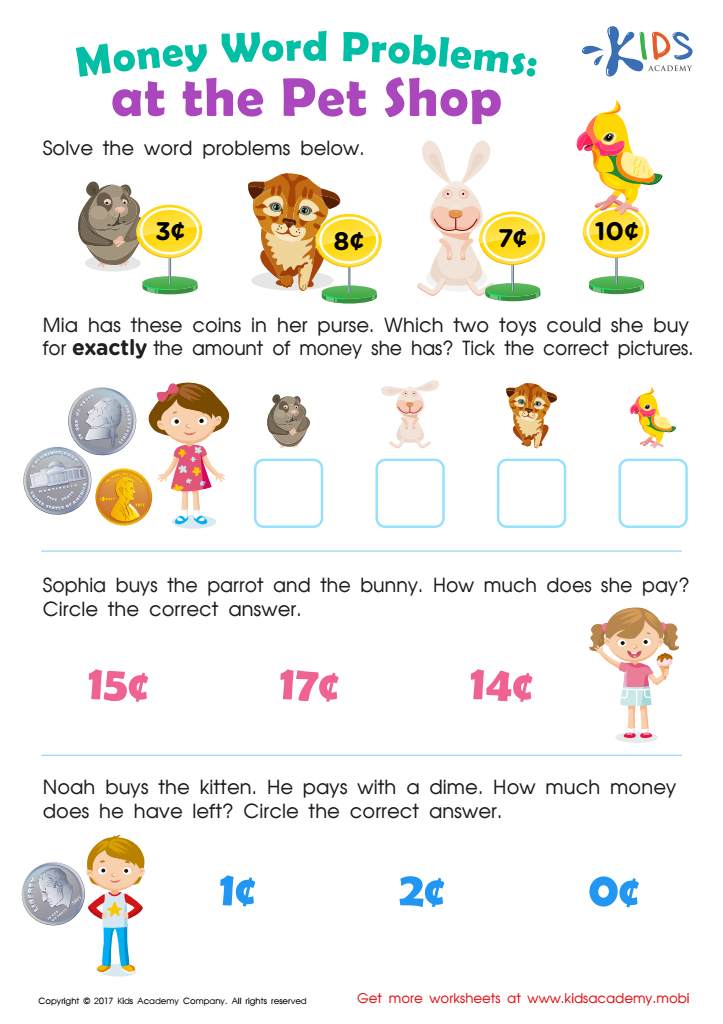
Pet Shop Worksheet
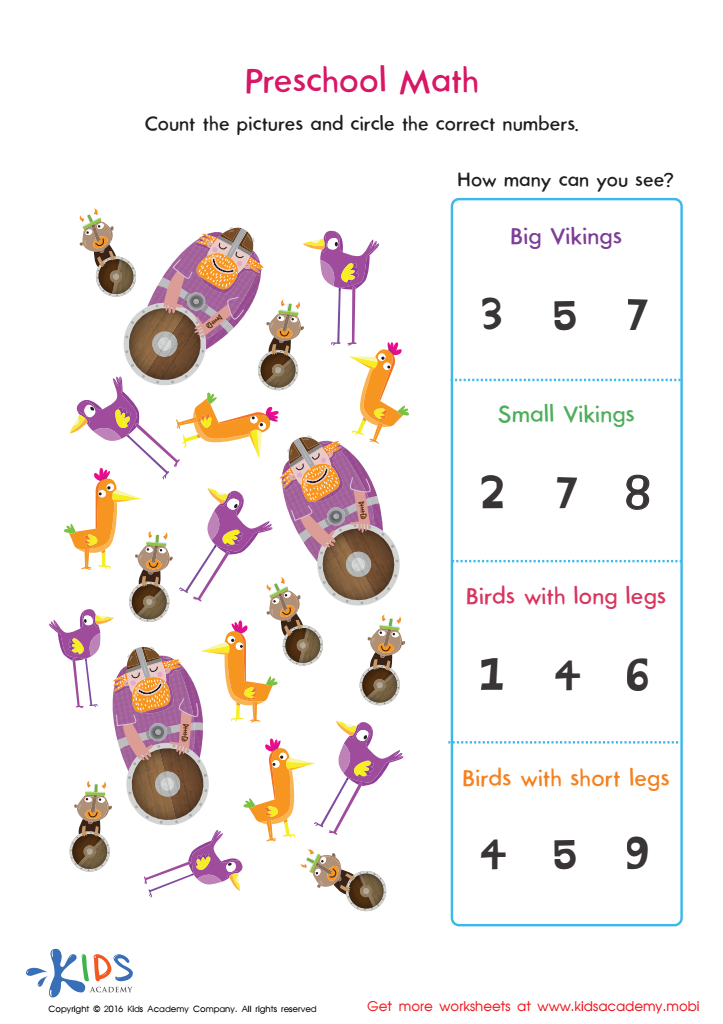








Number identification is a foundational skill in early childhood education for several key reasons. For ages 3-8, mastering this skill is crucial because it sets the stage for all future mathematical learning. When children can identify numbers confidently, they are better equipped to understand more complex mathematical concepts such as addition, subtraction, and place value.
Early exposure to number identification challenges promotes numeracy skills, which are as fundamental as literacy skills. A strong grasp of numbers improves cognitive abilities including memory, attention, and problem-solving, which are essential for academic success. Furthermore, number fluency helps children make sense of the world around them; from counting objects and recognizing shapes to understanding quantities and making time-based schedules.
Parents and teachers should especially care about these formative years because this is when children's brains are most receptive to new information. Providing number identification challenges can make learning fun and engaging, while also addressing different learning styles. It can support children who may need extra help and challenge those who are advanced, helping to personalize and improve the educational experience. Involving playful yet systematic number games can ignite a passion for learning, reinforcing a positive attitude towards math that can persist throughout the child's academic career.








