Recognizing numbers Extra Challenge Math Worksheets for Ages 3-8
4 filtered results
-
From - To
Introducing our "Recognizing Numbers Extra Challenge Math Worksheets" for ages 3-8! Designed to engage young learners, these printable worksheets offer extra challenges that promote advanced number recognition and early math skills. Each sheet is crafted to make learning numbers fun, featuring colorful visuals and interactive activities. Ideal for kids progressing beyond basics, these worksheets help in honing counting, sequencing, and identifying numbers while encouraging critical thinking and problem-solving skills. Perfect for at-home practice or classroom enrichment, give your child a head start in their math journey with our expertly designed worksheets tailored for early education.
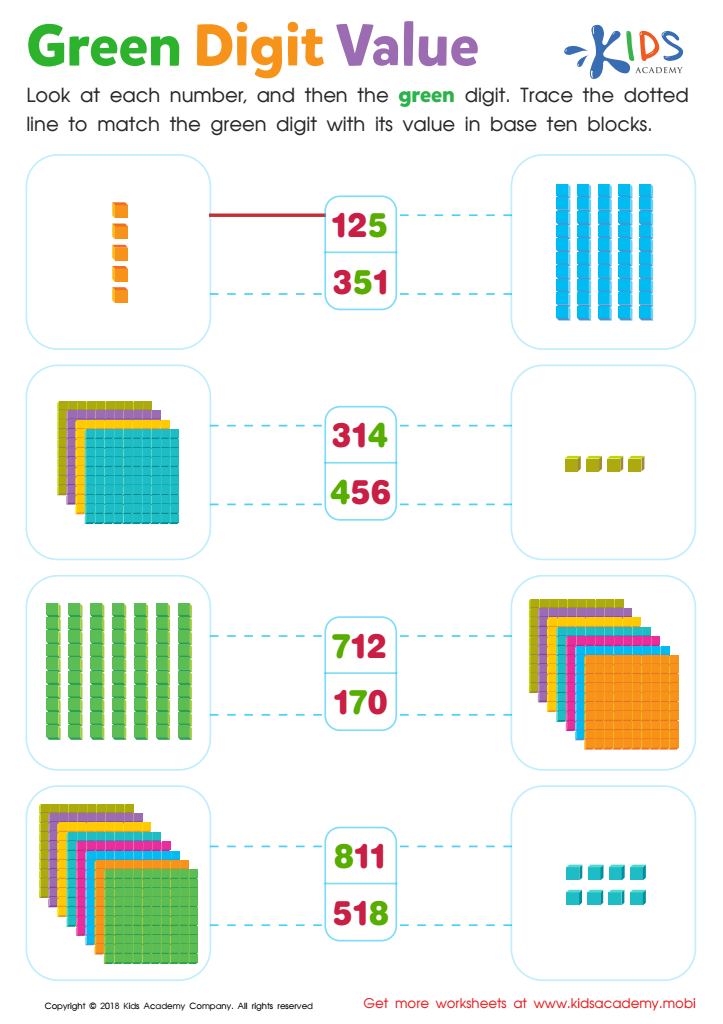
Green Digit Value Worksheet
 Assign to My Students
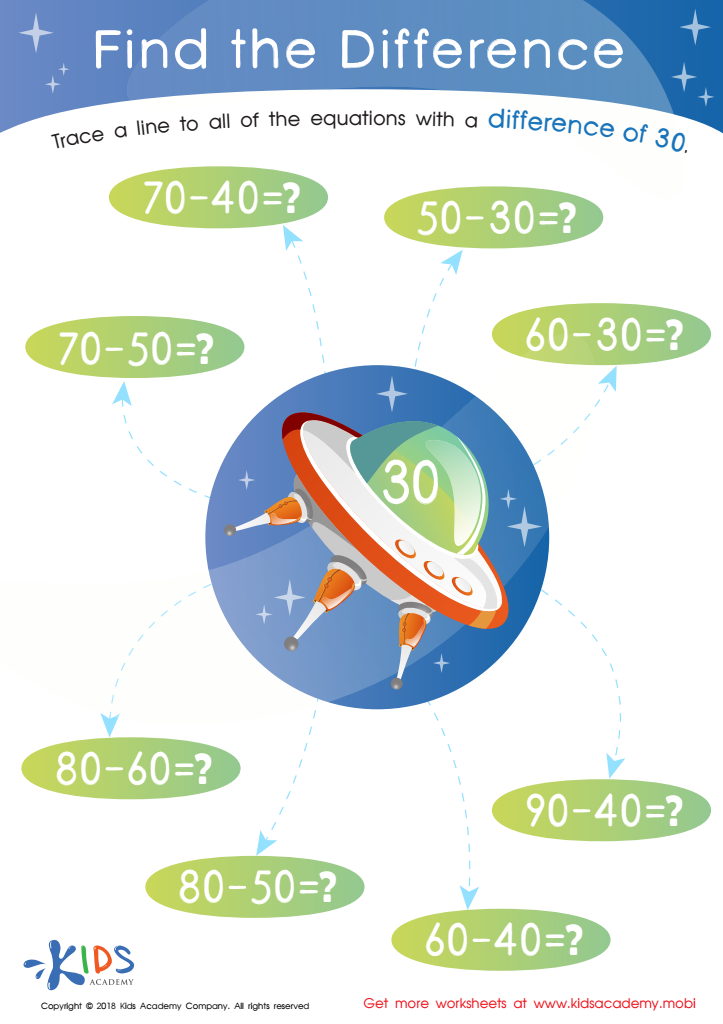
Find The Difference Worksheet
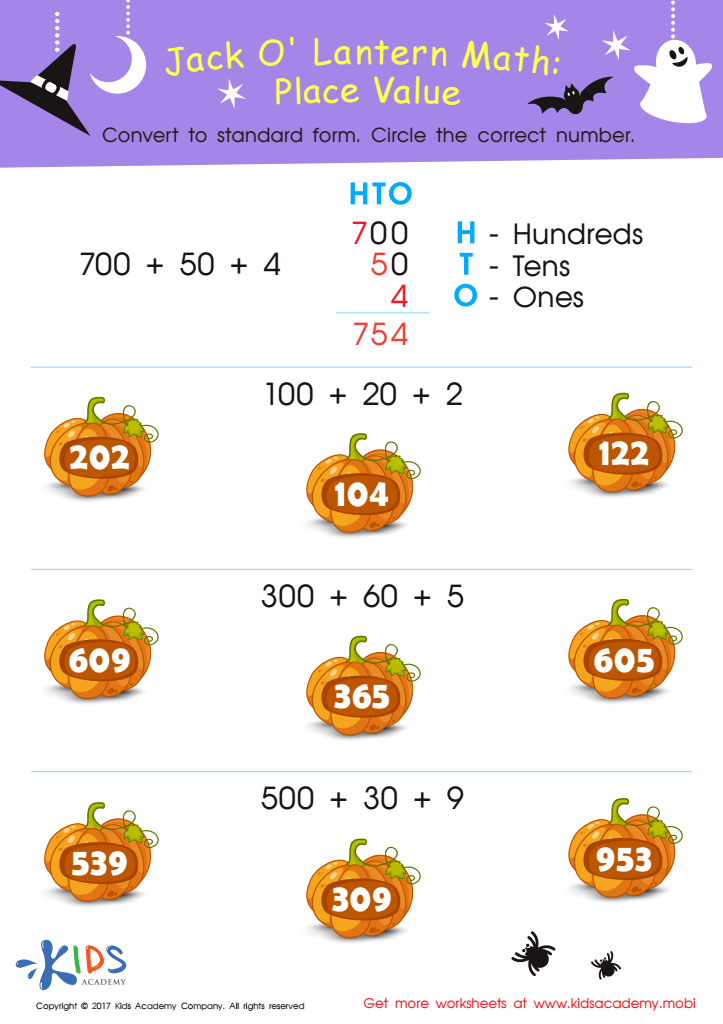
Free Place Value Worksheet
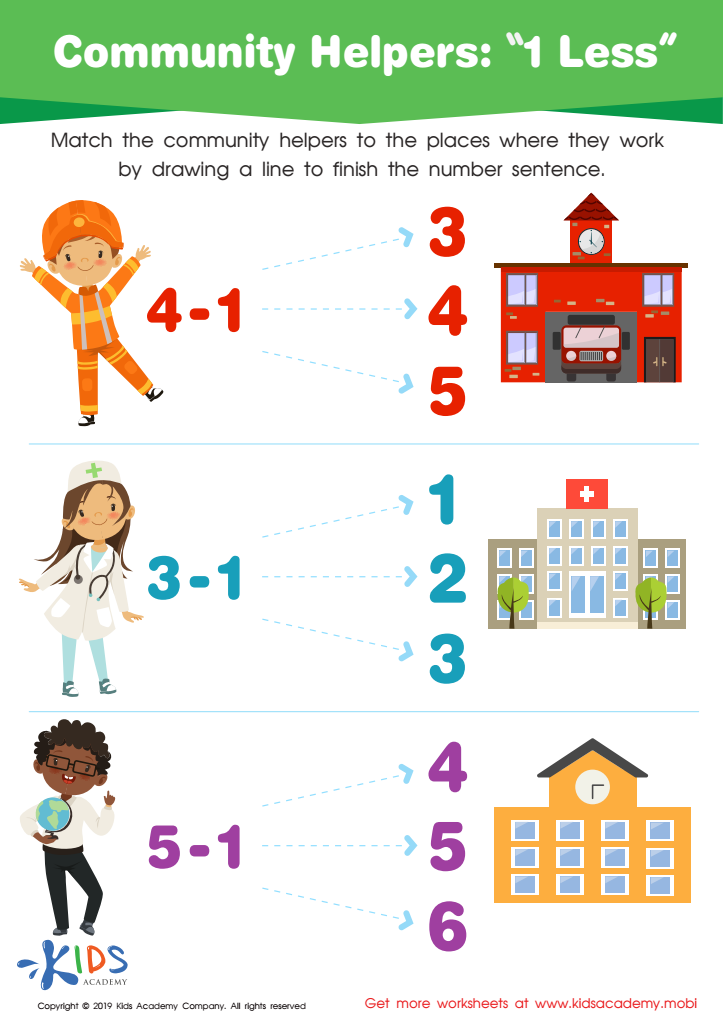
Community Helpers: 1 less Worksheet








Recognizing numbers is a foundational skill in early childhood education that has far-reaching implications for a child's academic and life success. Parents and teachers should prioritize extra challenges in recognizing numbers for children aged 3-8 because this critical phase of development lays the groundwork for mathematical literacy and advanced problem-solving skills.
For young learners, grasping basic numerical concepts extends beyond mere rote counting; it fosters cognitive development, logical reasoning, and structured thinking. Engaging with extra challenges in math at an early age enhances their ability to identify patterns, compare quantities, and perform basic operations such as addition and subtraction. This elevated engagement builds a robust number sense, which is pivotal for more complex math concepts encountered in later grades.
Additionally, providing extra challenges in recognizing numbers nurtures a growth mindset. Proactively tackling harder tasks can instill confidence and resilience, encouraging children to embrace challenges rather than shy away from them. Furthermore, early numerical proficiency is often linked with better performance in other academic areas, including literacy and sciences.
In essence, focusing on recognizing numbers through challenging exercises prepares children not just for academic success, but also equips them with critical life skills. Hence, parents and teachers who invest in these mathematical foundations will see significant long-term benefits in their child's cognitive and personal development.