Story sequencing Extra Challenge Reading Worksheets for Ages 3-8
3 filtered results
-
From - To
Discover our Story Sequencing Extra Challenge Reading Worksheets designed for children aged 3-8. These engaging printables help youngsters develop critical reading and comprehension skills by arranging story events in the correct order. With a variety of captivating tales and colorful illustrations, kids will enhance their narrative understanding, logical thinking, and memory recall while enjoying an exciting reading journey. Perfect for both classroom and home use, our worksheets cater to different learning levels, ensuring every child feels challenged and motivated. Empower your child's love for reading and storytelling today with our expertly crafted sequence exercises.
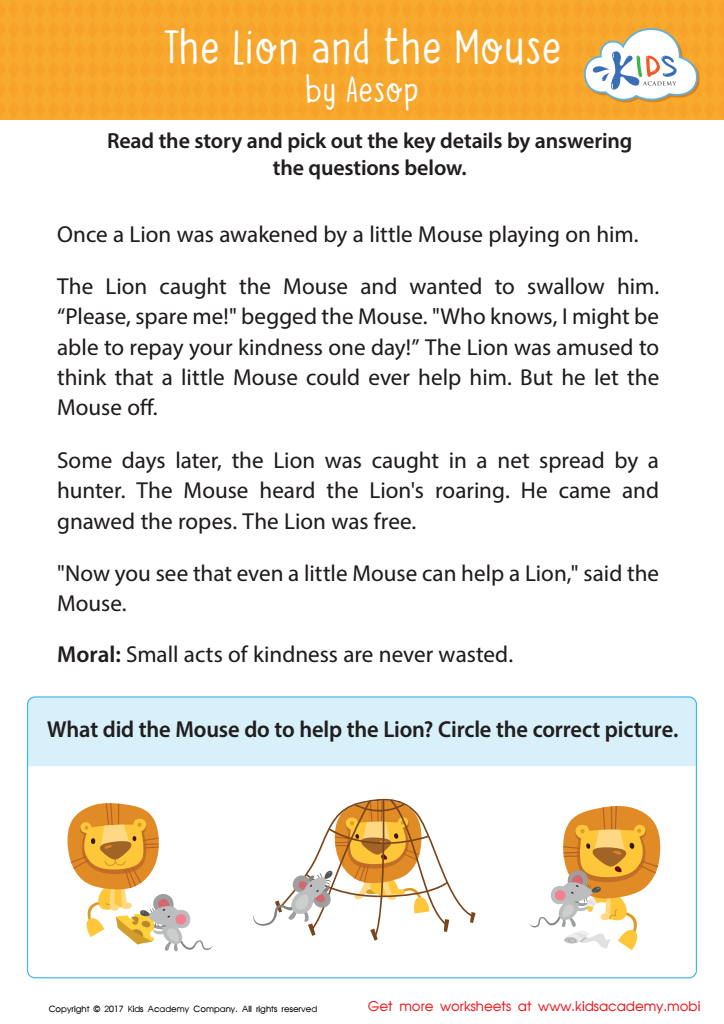
The Lion and The Mouse Sequencing Worksheet
 Assign to My Students
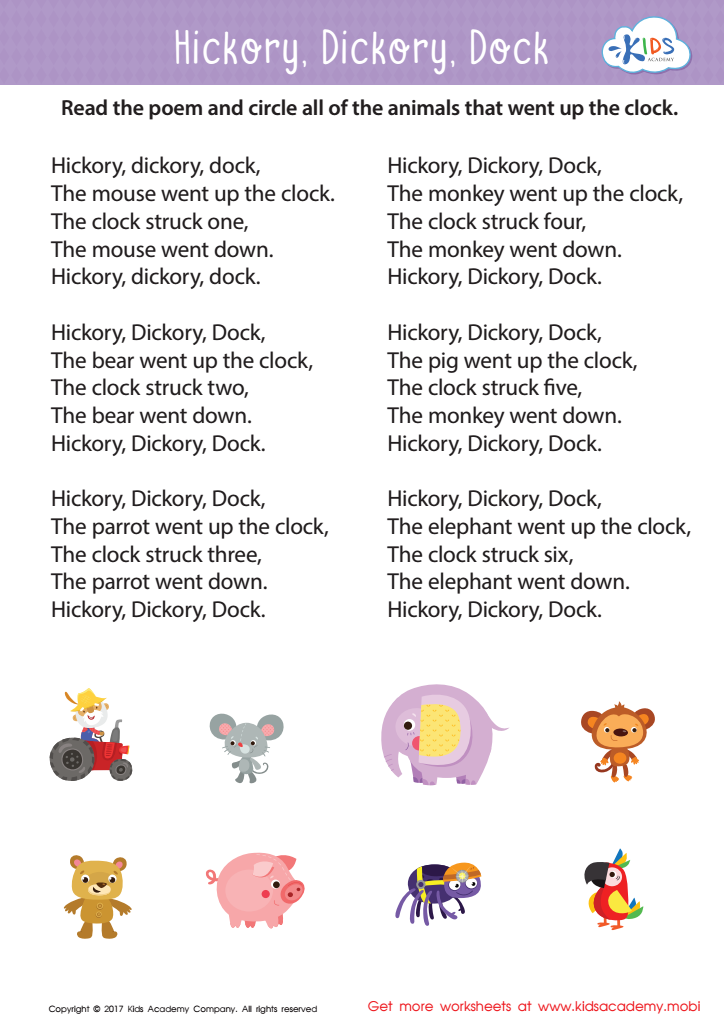
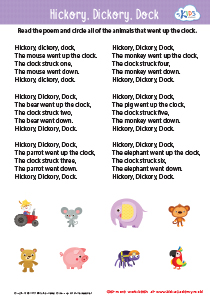
Hickory Dickory Dock Sequencing Worksheet
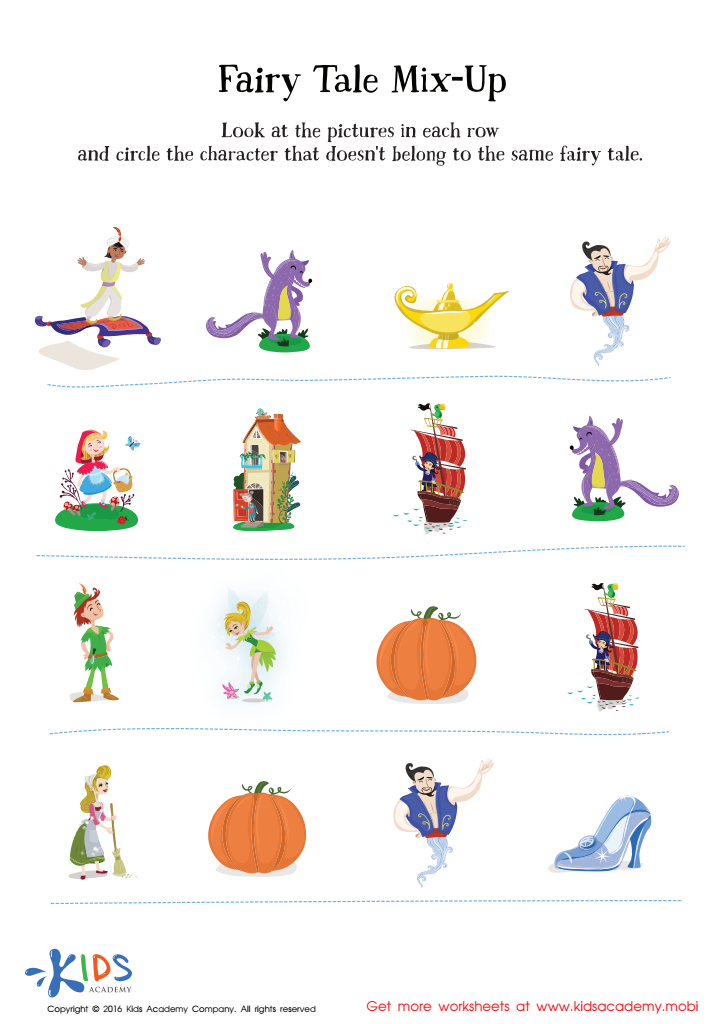
Fairy Tale Worksheet: Story Mix Up








Story sequencing extra challenge reading activities are immensely beneficial for children ages 3-8, and parents and teachers should place significant importance on them. Firstly, these activities enhance a child's understanding of narrative structure. By grasping the concept of beginning, middle, and end, children develop key comprehension skills that form the foundation of literacy. Secondly, sequencing hones critical thinking and problem-solving abilities, as children must determine the logical order of events, promoting cognitive development.
Furthermore, engaging in story sequencing strengthens memory and recall capabilities. As children strive to remember and reorder parts of a story, they enhance their ability to retain information, a skill crucial for academic success. It also promotes attention to detail and encourages active listening when the story is read aloud or discussed.
Additionally, story sequencing can boost language development. It provides opportunities for children to expand their vocabulary, improve sentence structure, and grasp complex language concepts in context. Moreover, it can be a fun, interactive activity that nurtures a love for reading and storytelling, fostering creativity and imagination.
Ultimately, incorporating story sequencing activities into their routine supports a child’s overall educational growth and lays a solid literacy foundation, making it a priority for both parents and teachers to embrace these activities with enthusiasm and commitment.