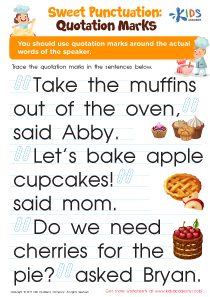
Vocabulary development Extra Challenge Grammar Worksheets for Ages 3-8
3 filtered results
-
From - To
Unlock your child’s potential with our Vocabulary Development Extra Challenge Grammar Worksheets, specially designed for ages 3 to 8! These engaging worksheets offer a variety of fun, age-appropriate activities that promote vocabulary enhancement and grammar skills. From matching words to their meanings to fill-in-the-blank exercises, each worksheet is crafted to strengthen language comprehension while igniting a love for learning. Perfect for home or classroom use, our resources encourage kids to explore new words and phrases in an interactive way. Help your child build a robust vocabulary foundation that supports their educational journey with our comprehensive and exciting worksheets!
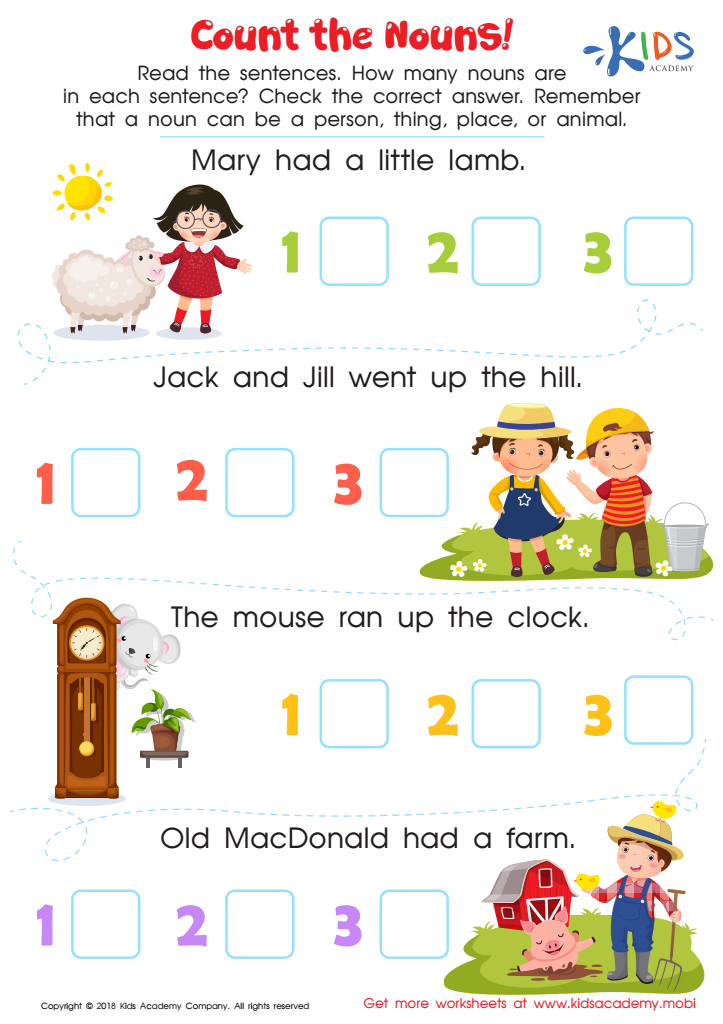
Count the Nouns Worksheet
 Assign to My Students
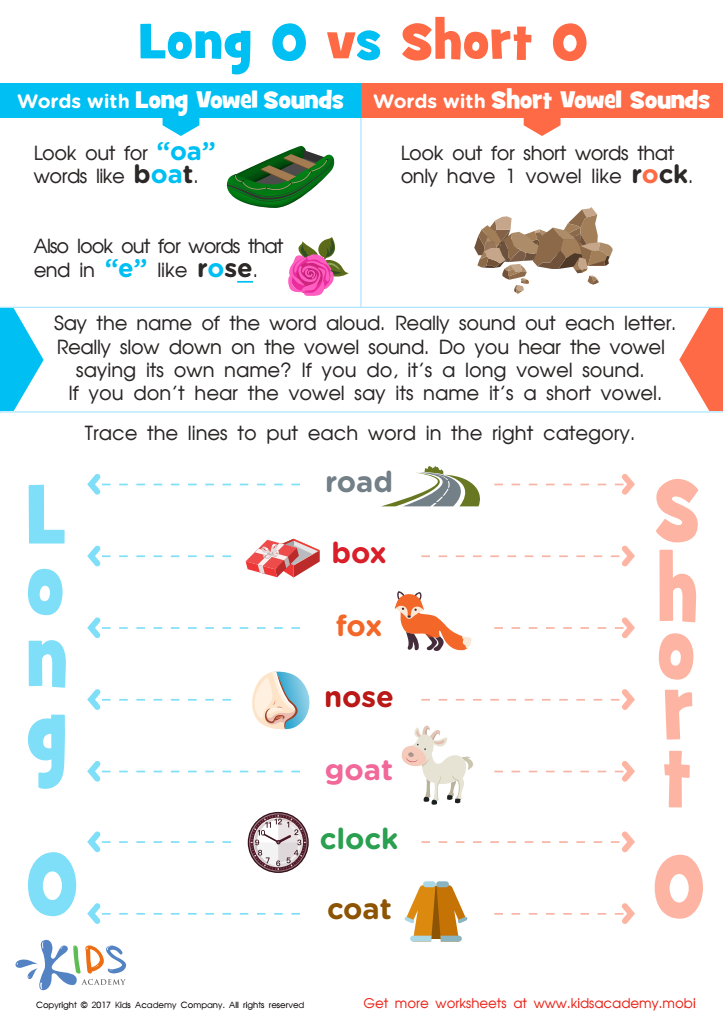
Long and Short Vowel O Spelling Worksheet
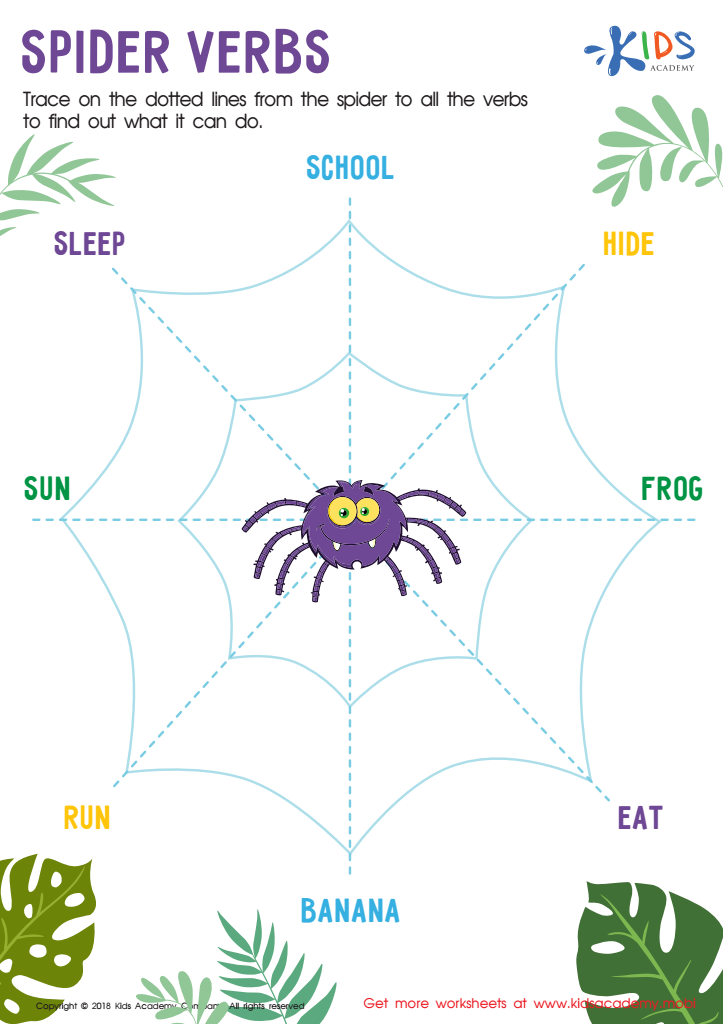
Spider Verbs Worksheet





Vocabulary development is crucial for children aged 3-8, as it lays the foundation for reading and overall communication skills. Parents and teachers should care about this aspect of language acquisition for several reasons.
Firstly, a robust vocabulary positively impacts literacy. Children with a richer vocabulary tend to comprehend texts better, which fosters a love for reading. This love can enhance their academic performance across subjects, ultimately leading to greater educational success.
Secondly, vocabulary development facilitates effective communication. When children can express themselves clearly, they are more likely to engage in meaningful conversations, make friends, and share their thoughts and feelings. This can boost their confidence and social skills.
Moreover, rich vocabulary development can support cognitive skills. Engaging young learners through stories, discussions, and vocabulary games not only nurtures their intellect but also encourages critical thinking and reasoning abilities.
Lastly, focusing on vocabulary can bridge the achievement gap; children from language-rich environments may outperform their peers otherwise. By actively promoting vocabulary and grammar development, parents and teachers can provide children with the tools they need to succeed, helping them to flourish academically and socially. Investing in vocabulary is truly an investment in a child’s future.