
Enhancing critical thinking Extra Challenge Worksheets for Ages 3-9
4 filtered results
Difficulty Level
Grade
Age
-
From - To
Subject
Activity
Standards
Unlock your child's potential with our "Enhancing Critical Thinking Extra Challenge Worksheets" tailored for ages 3-9! These engaging worksheets are designed to boost cognitive skills, encouraging young minds to analyze, evaluate, and create. Packed with fun puzzles, brain teasers, and problem-solving activities, each sheet fosters curiosity and enhances thinking abilities. Perfect for home or classroom use, our materials help children develop essential thinking strategies while having a great time. Suitable for various learning levels, these worksheets ensure kids build a strong foundation in critical thinking. Explore our resources and empower your child’s learning journey today!
Favorites
With answer key
Interactive
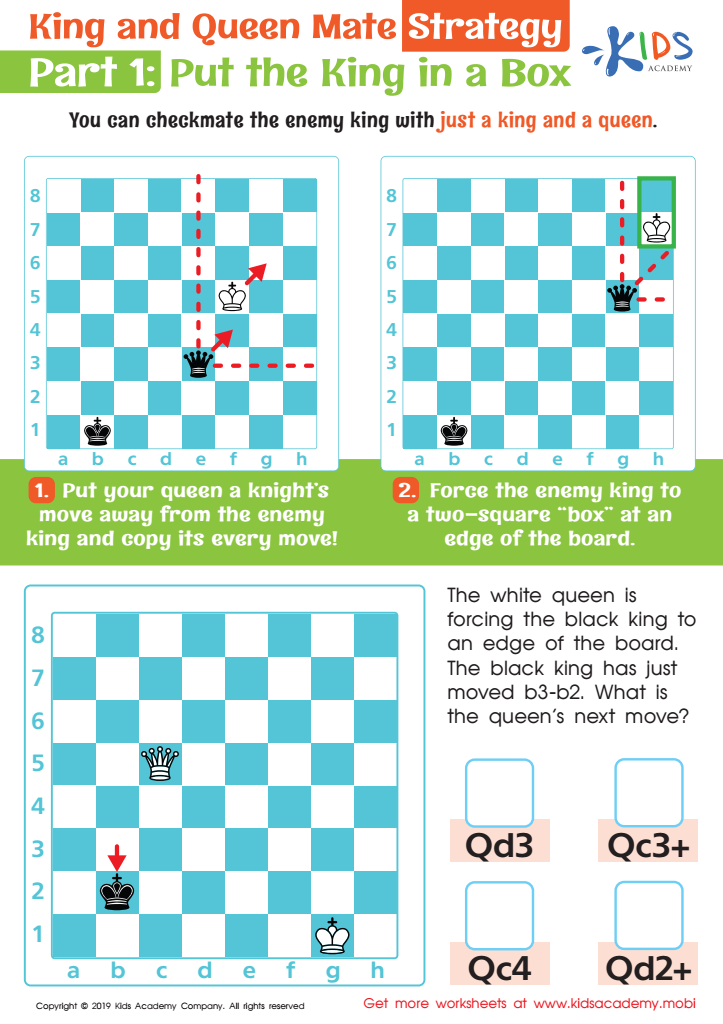
King and Queen Mate Strategy: Part 1 Worksheet
This worksheet will help your young chess player strategize. They’ll learn how to checkmate the opponent’s king using just a king and a queen. Descriptive sample boards will show them the strategy and then a practice board will test their knowledge. Allowing them to plan the queen’s next move to checkmate the opposing king.
 Assign to My Students
King and Queen Mate Strategy: Part 1 Worksheet
Worksheet
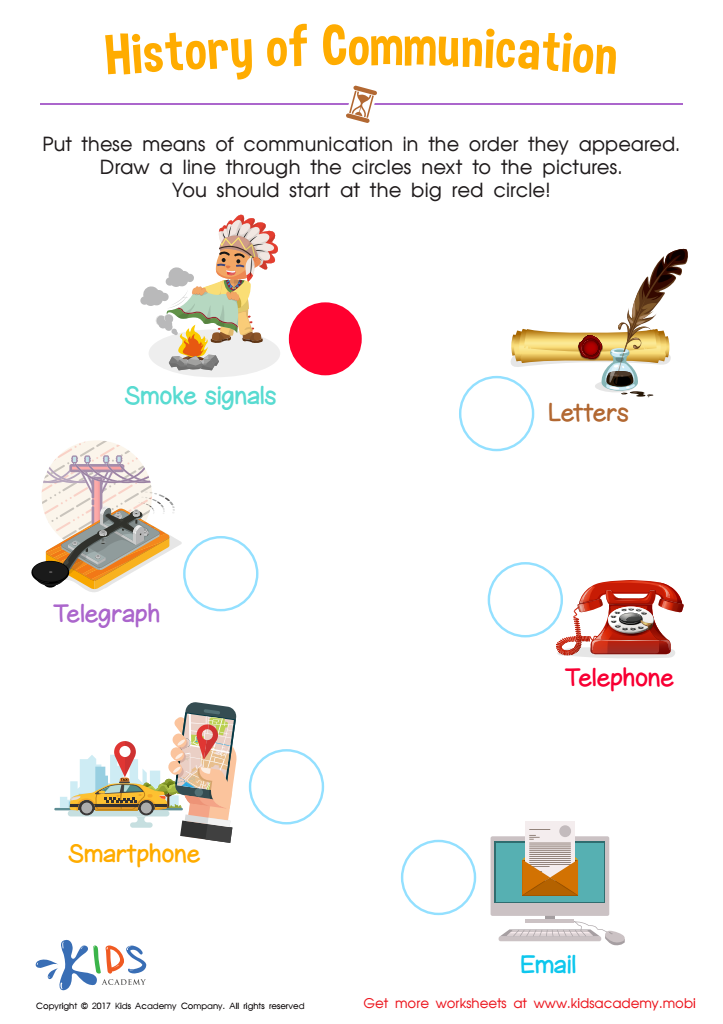
History of Communication Worksheet
Help your child understand history's communication evolution! With this worksheet, your child will learn about the various ways people communicated over time, and how that compares to today. It'll also foster an interest in history and bring the past to life!
History of Communication Worksheet
Worksheet
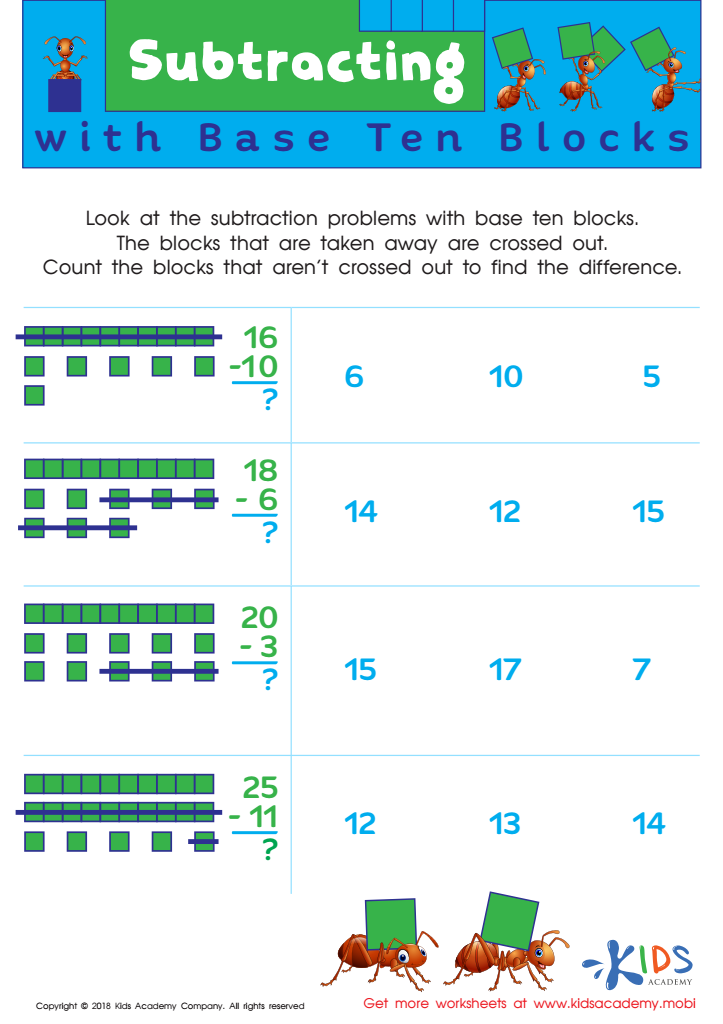
Subtracting with Base Blocks Worksheet
Little mathematicians can use base ten blocks to understand place value for subtraction. This worksheet helps them cross out blocks to solve problems with accuracy. Seeing equations like this boosts their number reasoning skills and helps them work with larger numbers.
Subtracting with Base Blocks Worksheet
Worksheet
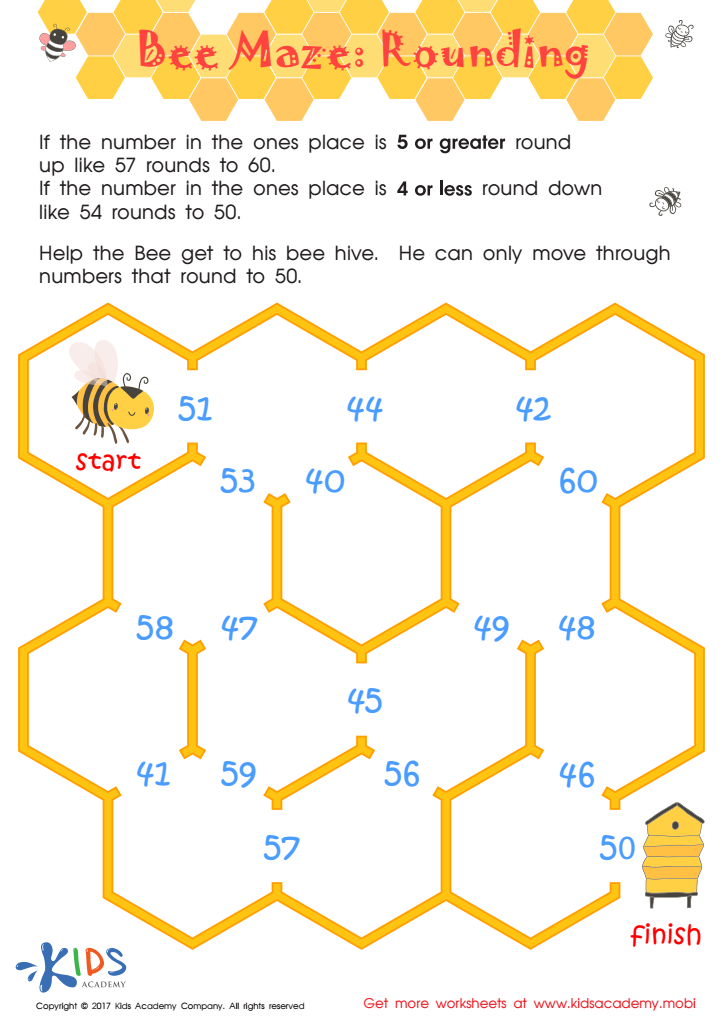
Bee Maze Worksheet
Help the bee find his way to the hive by rounding to the nearest 50!
Help the bee get to his hive with this fun, tricky rounding puzzle! This PDF worksheet challenges your child to round numbers up or down to 50. It reinforces the rules for rounding numbers and leads the bee through a maze. Get your child to help the bee reach the hive by rounding to 50!
Bee Maze Worksheet
Worksheet
Learning Skills
Enhancing critical thinking
Problem-solving skills development
Tactical thinking improvement
Chess strategy learning
Understanding game rules
Understanding communication history
Recognizing technological advancements
Developing analytical skills
Improving reading comprehension
Developing calculation skills
Join Kids Academy for Free
Who is primarily going to use this learning content?








Enhancing critical thinking in children ages 3-9 is essential for fostering well-rounded individuals who are capable of navigating the complexities of modern life. At this early age, cognitive abilities are rapidly developing, making it a prime time to nurture critical thinking skills. Parents and teachers should care because these skills empower children to analyze situations, ask meaningful questions, and make informed decisions, laying a solid foundation for future learning.
When children engage in activities that challenge their thinking—such as problem-solving tasks, open-ended questions, and creative play—they develop the ability to think independently and creatively. This not only enhances their academic performance but also builds resilience, as they learn to handle challenges and setbacks effectively.
Moreover, critical thinking encourages empathy and perspective-taking. When children are exposed to diverse viewpoints and encouraged to evaluate different pieces of information, they become more socially aware and capable of understanding others’ feelings and experiences.
Ultimately, fostering critical thinking from an early age not only prepares children for academic success but also equips them with the life skills necessary to thrive in an increasingly complex world. Investing in this crucial developmental area is crucial for parents and educators alike.








