
Letter recognition Extra Challenge Worksheets for Ages 3-9
11 filtered results
Difficulty Level
Grade
Age
-
From - To
Subject
Activity
Standards
Enhance your child's letter recognition skills with our "Letter Recognition Extra Challenge Worksheets" designed for ages 3-9. These engaging activities provide varied challenges, ensuring that young learners understand letters in different contexts. From identifying uppercase and lowercase letters to recognizing letter sounds, these worksheets are meticulously crafted to support your child's literacy journey. Fun illustrations and interactive tasks will keep them motivated and eager to learn. Ideal for both classroom and home use, these worksheets will help children confidently master letter recognition, setting a strong foundation for reading and writing success.
Favorites
With answer key
Interactive
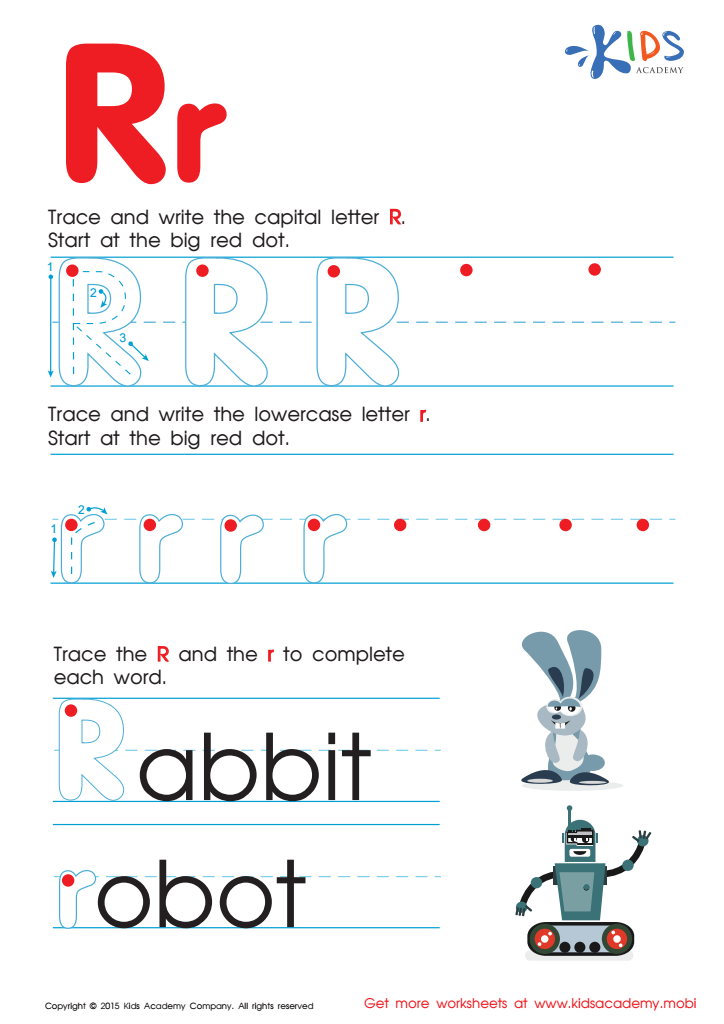
Letter R Tracing Page
Trace and write the letter "R" with this worksheet for kindergarten. Start with the uppercase, then move on to the lowercase. Write the letters several times for practice. Then help complete the words for the rabbit and robot, spelling carefully. More ABC worksheets can be found at Kids Academy.
 Assign to My Students
Letter R Tracing Page
Worksheet
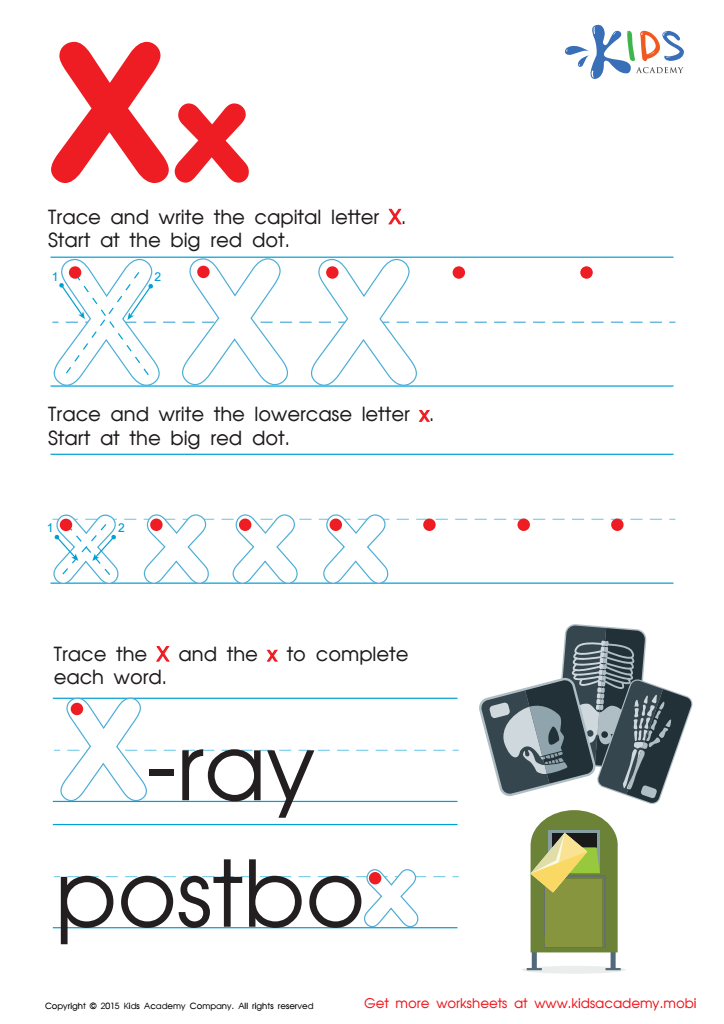
Letter X Tracing Page
Trace the uppercase letter "X" to learn, then write it yourself and practice. Then do the same with the lowercase "x" before completing the words "X-ray" and "postbox". Enjoy our alphabet printables!
Letter X Tracing Page
Worksheet
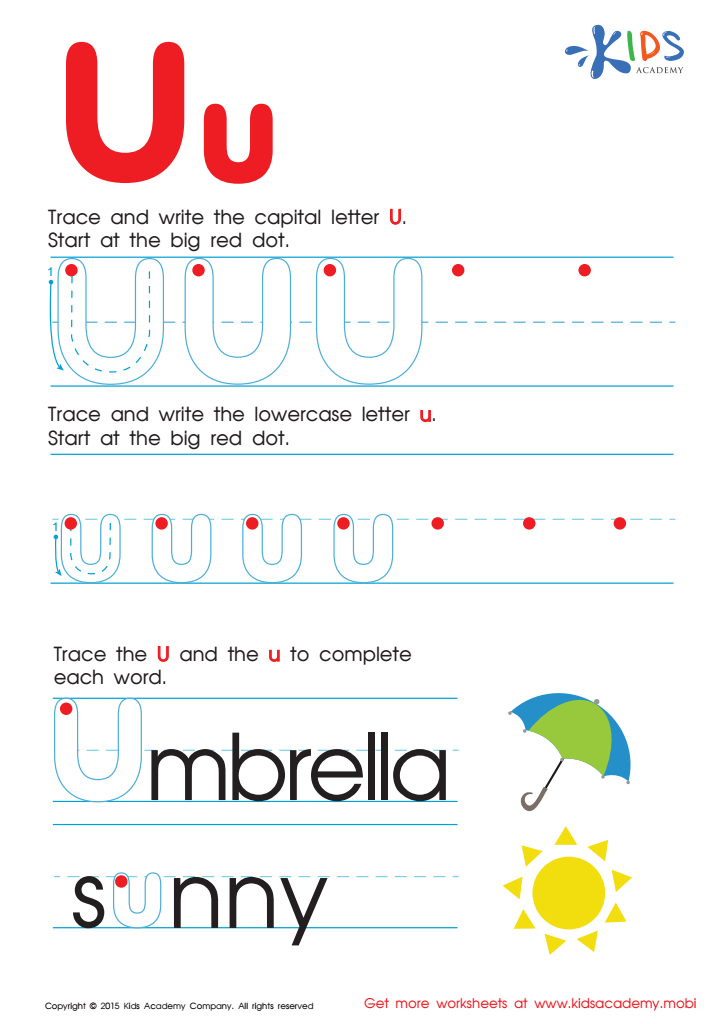
Letter U Tracing Page
Ready to trace and write the letter "U"? Use our worksheet and practice tracing both uppercase and lowercase letters. Complete the words "umbrella" and "sunny" with a capital "U". Check our full collection of alphabet printables for more activities.
Letter U Tracing Page
Worksheet
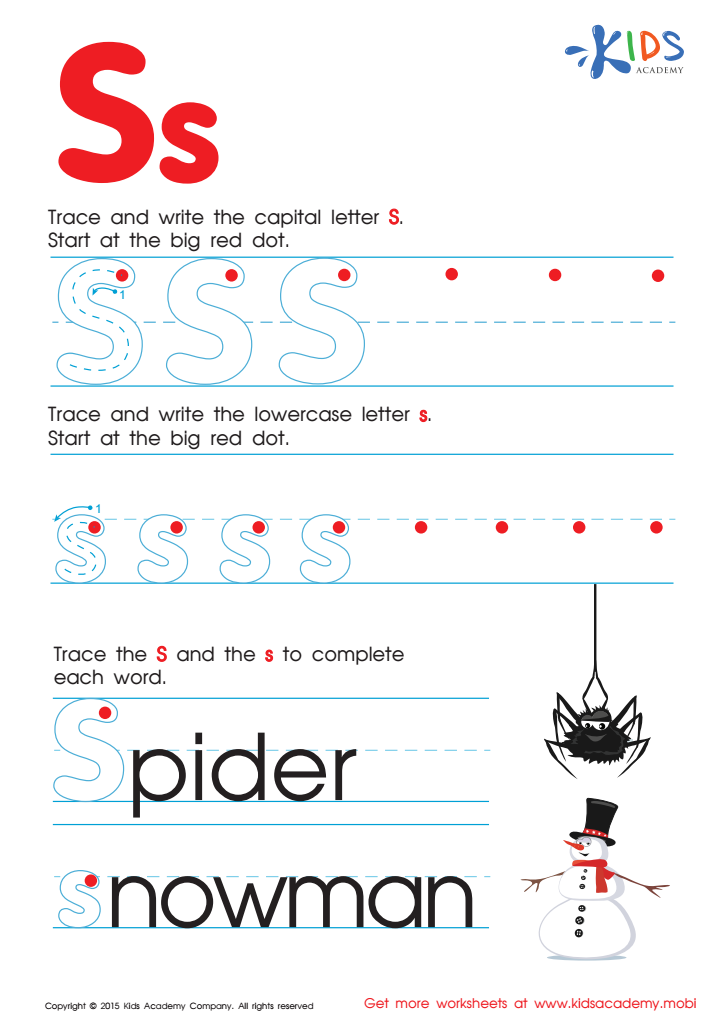
Letter S Tracing Page
Trace and write the capital and lowercase "S" on this ABC worksheet for kindergarten. Start with the big red dot and be careful. When you finish, help the spider and snowman in the pictures restore their words with the capital and lowercase letters. Continue learning the alphabet with Kids Academy.
Letter S Tracing Page
Worksheet
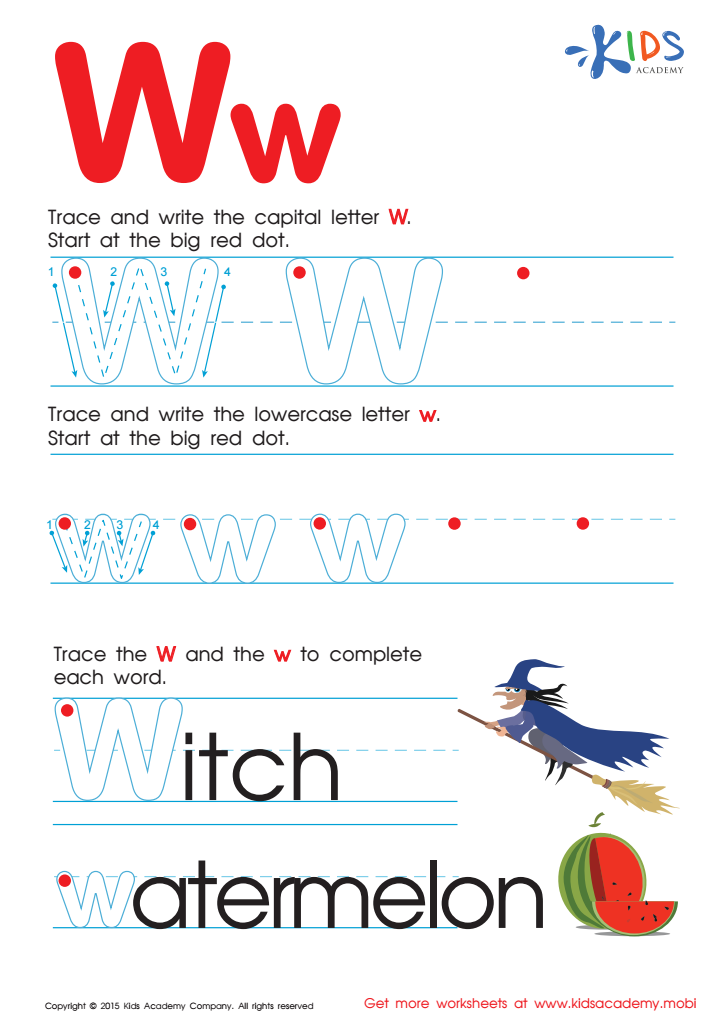
Letter W Tracing Page
Trace and write the capital and lowercase letter W with this free letter tracing worksheet by Kids Academy. Complete the words "Witch" (capital) and "watermelon" (lowercase). Check out our other kindergarten alphabet worksheets!
Letter W Tracing Page
Worksheet
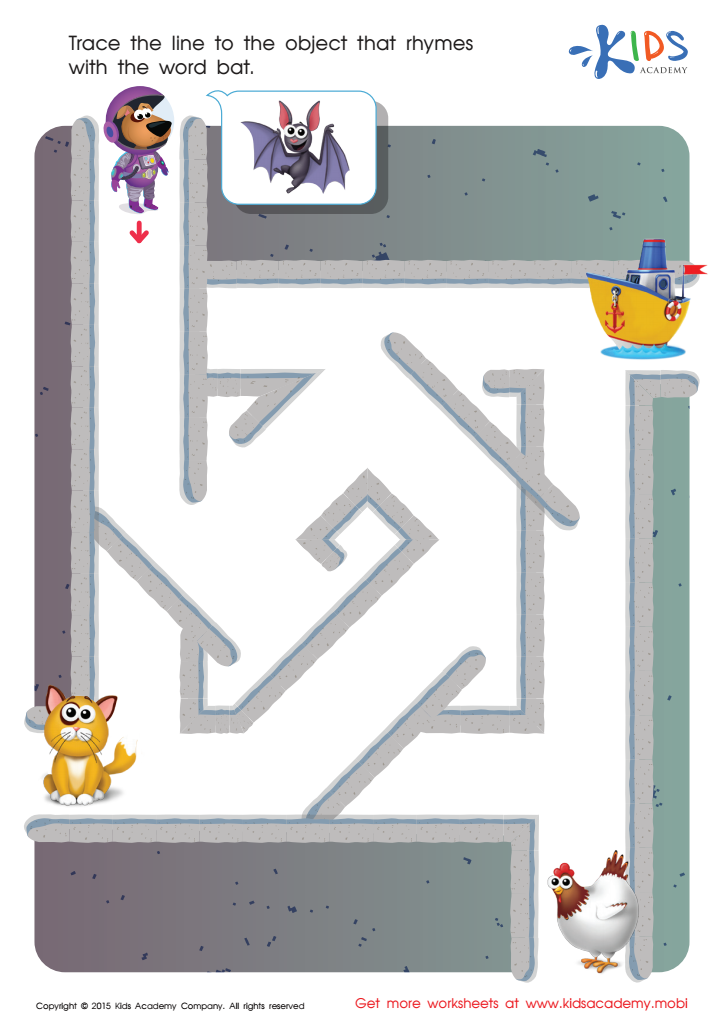
Bat Rhyming Words Worksheet
Get new reading and vocabulary worksheets to help make learning enjoyable for you and your kids. Join the dog and match the objects that rhyme. Have a blast!
Bat Rhyming Words Worksheet
Worksheet
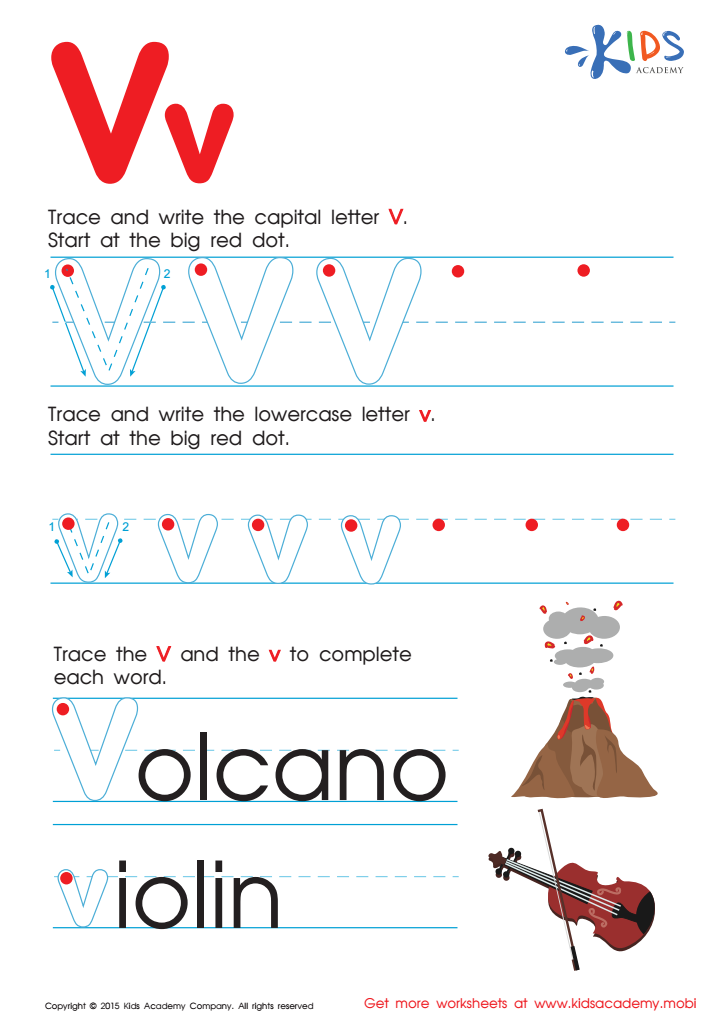
Letter V Tracing Page
Trace the uppercase and lowercase letter "V" with our kindergarten tracing worksheet. Begin at the red dot and follow the lines. Write it several times. Complete the words "Volcano" and "violin". Get more alphabet activities at Kids Academy.
Letter V Tracing Page
Worksheet
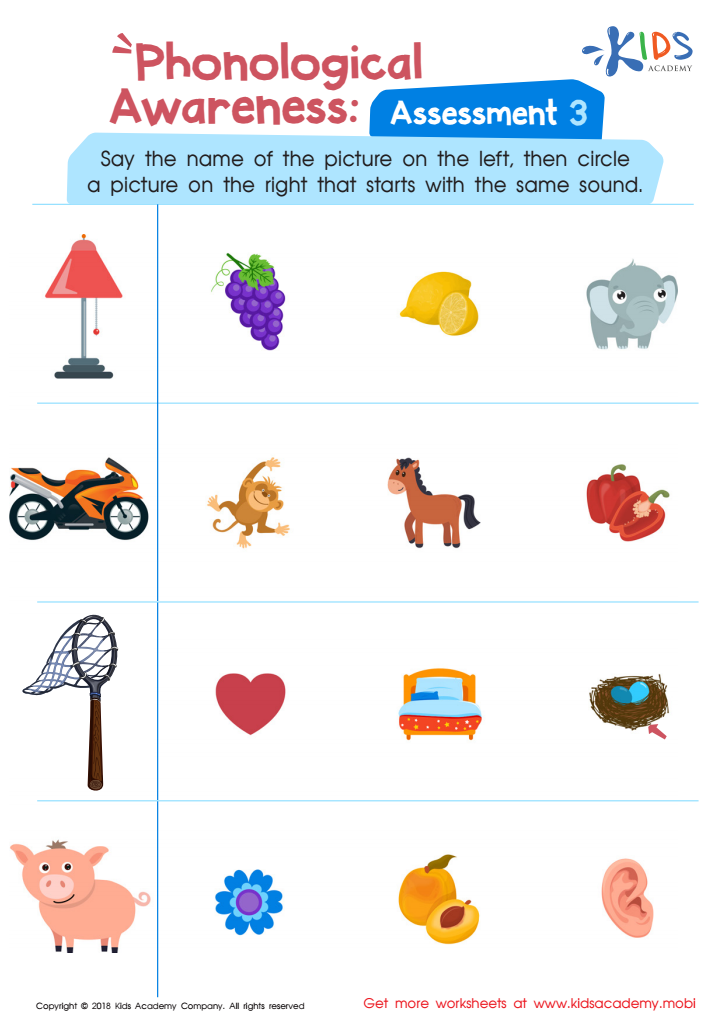
Phonological Awareness: Assessment 3 Worksheet
Test kids' reading readiness with a phonological awareness worksheet! With this PDF exercise, encourage children to name each picture aloud and match left to right. Help them learn to recognize word sounds at the start, middle and end of words. They'll be sure to remember that lamp doesn't sound like elephant!
Phonological Awareness: Assessment 3 Worksheet
Worksheet
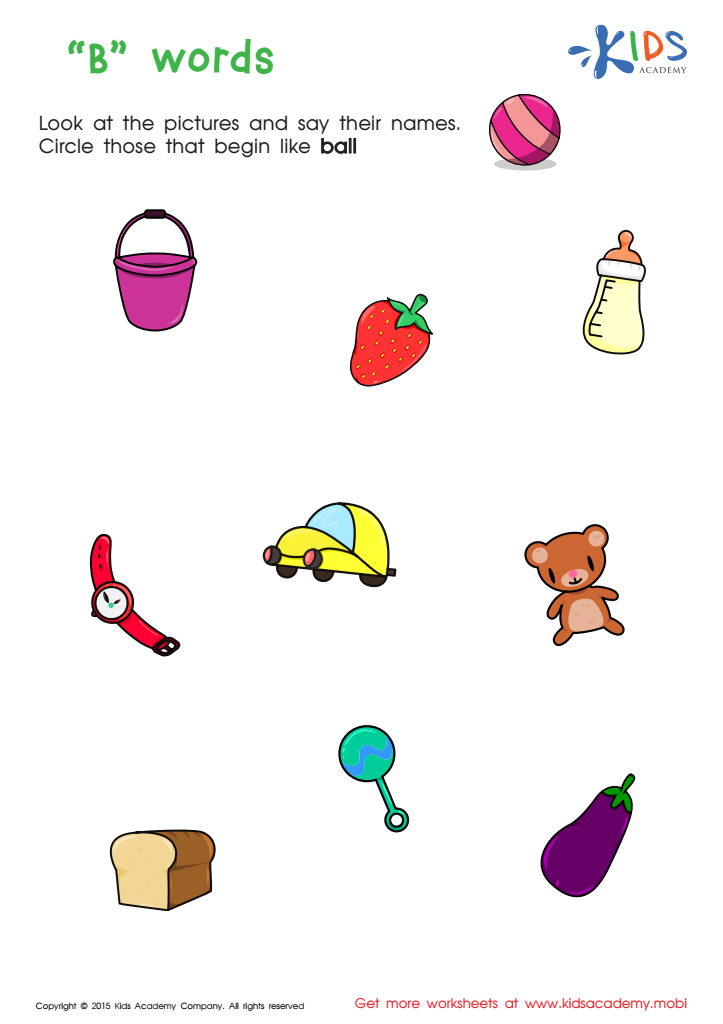
First Words Worksheet
Want to help your preschooler learn to read and write? Start with this 'B' words printable worksheet. It will help your child match pictures to the letters they know, sound out words, and build literacy. Once they understand the concept, they can start sounding out words and building reading skills.
First Words Worksheet
Worksheet
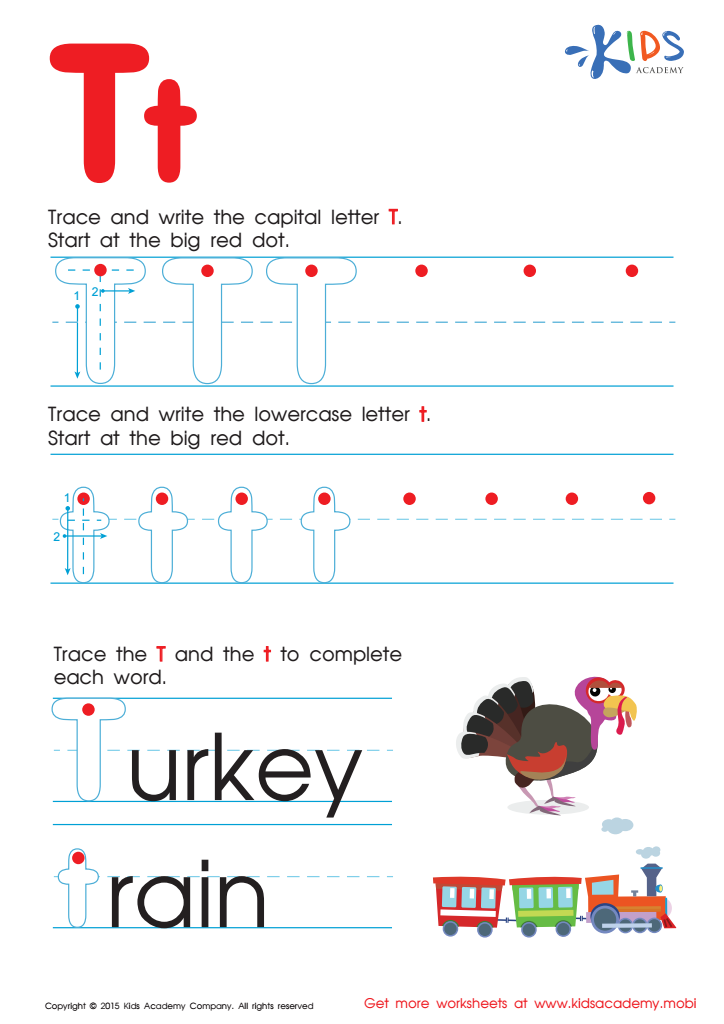
Letter T Tracing Page
Trace letters, complete words, draw pictures and see your kids having fun!
Kids Academy offers alphabet tracing worksheets to learn to write letters. Start with the big red dot, trace the letter, then write it. Practice uppercase and lowercase. Have fun completing words with a Turkey or a rain-train and draw pictures. Get more printable worksheets to make learning enjoyable.
Letter T Tracing Page
Worksheet
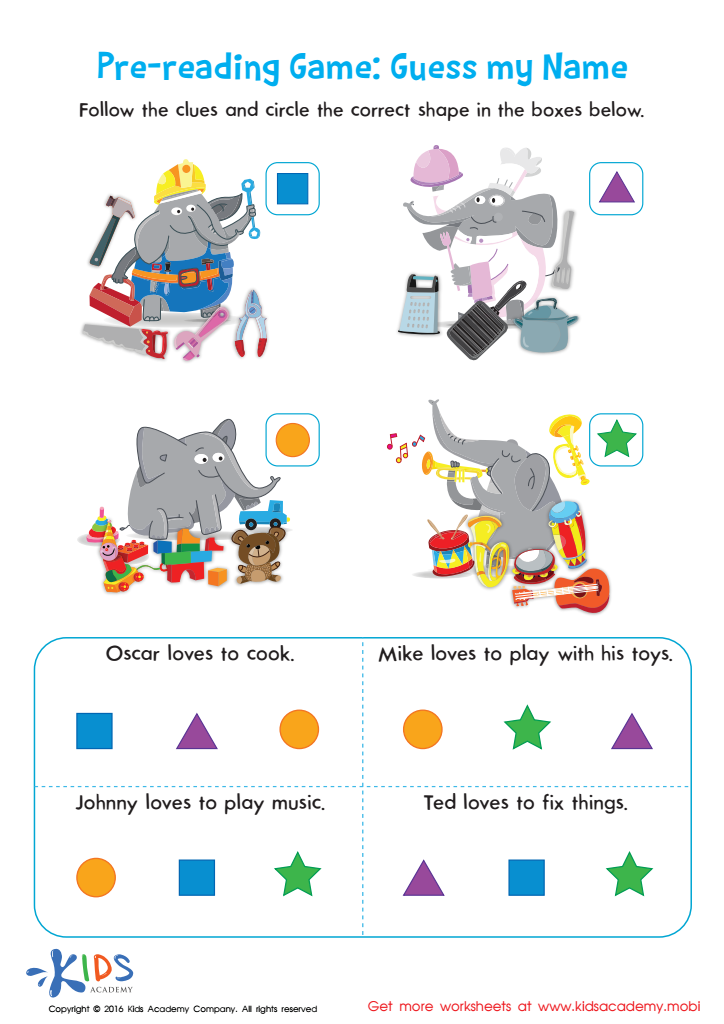
Pre Reading Worksheet Guess My Name
Guess My Name is a fun way to practice inference skills.
Guess My Name is a fun pre-reading game to help your child practice drawing inferences from clues. With colorful illustrations, they'll use clues to match each elephant with its sentence and sharpen their inference skills.
Pre Reading Worksheet Guess My Name
Worksheet
Join Kids Academy for Free
Who is primarily going to use this learning content?








Letter recognition is a fundamental skill that lays the foundation for reading and writing. For young children ages 3-9, mastering this skill early, and with an extra challenge, can have significant, long-term benefits. Parents and teachers should prioritize this because recognizing letters is the first step toward phonemic awareness, which is critical for literacy development.
When children can quickly and accurately identify letters, they are better equipped to associate these letters with their corresponding sounds. This phonics knowledge is crucial for decoding words, which is an essential part of reading. Moreover, early mastery of letter recognition fosters confidence and interest in reading, which is an essential motivation for continuous learning.
Engaging children in advanced challenges, such as recognizing letters in different fonts or within words, helps to solidify their understanding and improve cognitive flexibility. These activities can also aid in developing fine motor skills and visual perception, further contributing to overall academic success.
Incorporating letter recognition challenges into daily learning routines ensures that children not only meet but exceed foundational literacy standards. This can lead to improved reading fluency, better comprehension skills, and a love for reading that can extend well beyond their early education years.
In summary, focusing on letter recognition, and enhancing challenges around it, can significantly impact a child's future academic performance and foster a lifelong love of learning.








