Mental math improvement Extra Challenge Worksheets for Ages 3-9
3 filtered results
-
From - To
Boost your child's math skills with our "Mental Math Improvement Extra Challenge Worksheets" specifically designed for ages 3-9! These engaging worksheets help young learners develop quick and accurate mental calculation abilities through fun challenges tailored to their age and skill level. Our resource encourages critical thinking and enhances number sense, making math enjoyable and interactive. Perfect for parents and educators alike, these worksheets provide additional practice to reinforce classroom learning and build confidence in arithmetic. Explore a variety of exercises that promote mental agility and set the foundation for future math success! Start your child's math journey today with Kid's Academy!
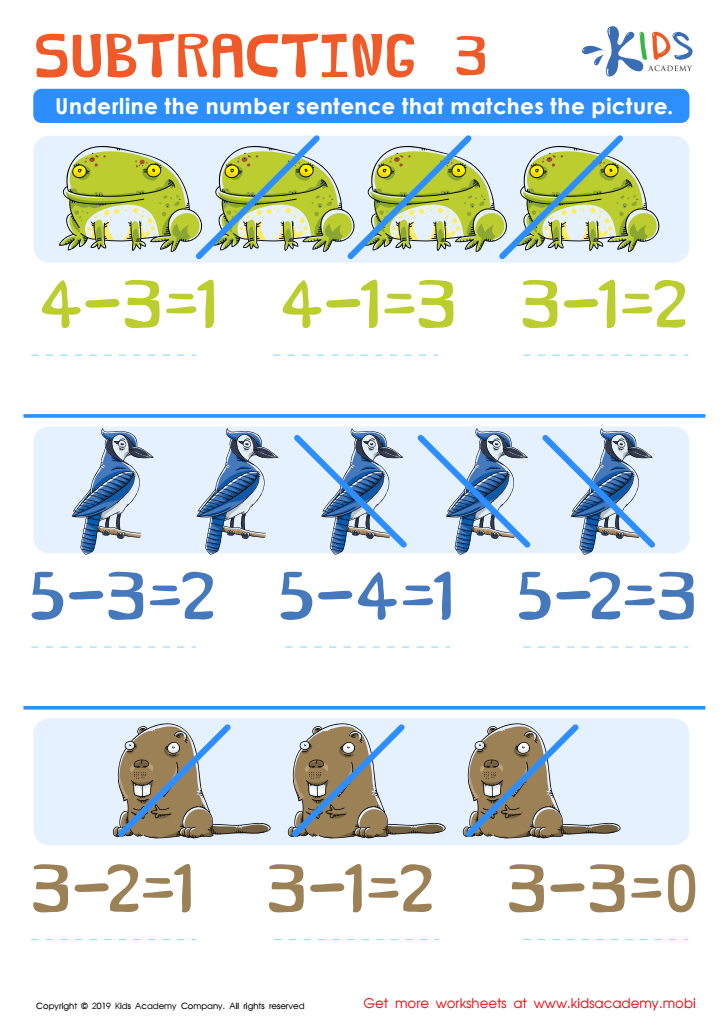
Subtracting 3 Worksheet
 Assign to My Students
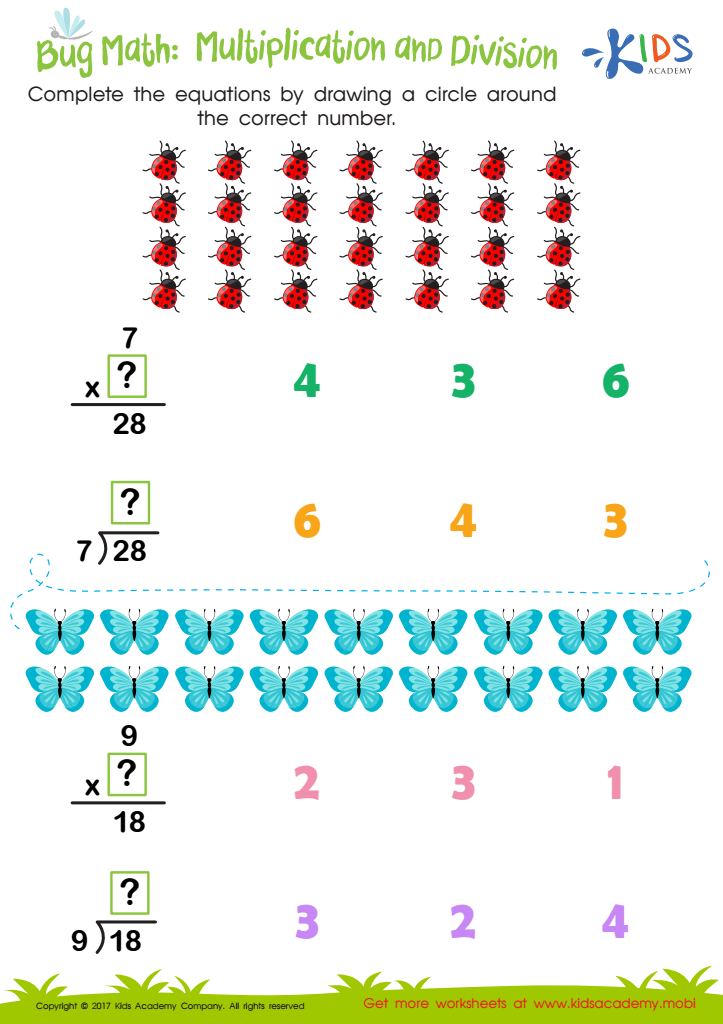
Multiplication and Division Worksheet






Parents and teachers should prioritize mental math improvement for children aged 3-9 for several compelling reasons. Firstly, mental math enhances cognitive development. By practicing calculations mentally, children strengthen their problem-solving skills, boosting overall cognitive abilities and laying a strong foundation for more advanced mathematical concepts. This skill promotes number sense, beginning from early childhood, and encourages a deeper understanding of mathematical relationships.
Secondly, mental math fosters confidence. As children practice and succeed in solving problems without relying solely on external tools, their belief in their own abilities grows. This newfound self-assurance spills over into other academic areas, promoting a positive attitude toward learning and perseverance when faced with challenges.
Additionally, mental math encourages creativity in problem-solving. Children learn to explore various strategies and approaches, which can result in innovative ways to tackle mathematical tasks. This creativity nurtures a love for mathematics and supports critical thinking skills, crucial for lifelong learning.
Finally, incorporating mental math challenges at a young age can make math fun and engaging. Games and interactive activities can transform math into an exciting adventure, laying the groundwork for a positive relationship with the subject in their future academic pursuits. Supporting mental math skills is essential for holistic development and nurturing lifelong learners.








