Story sequencing Extra Challenge Worksheets for Ages 3-9
5 filtered results
-
From - To
Boost your child’s narrative skills with our Story Sequencing Extra Challenge Worksheets tailored for ages 3-9. These engaging printables help young learners arrange story events in the correct order, enhancing their comprehension, logical thinking, and storytelling abilities. Perfectly designed for preschool to early elementary students, the worksheets feature colorful illustrations and captivating stories that make learning fun. Each worksheet provides an extra challenge to stimulate critical thinking and ensure lasting mastery of this essential skill. Elevate your child’s reading and analytical skills with our expertly crafted Story Sequencing Activities, designed by educational professionals. Explore our collection today!
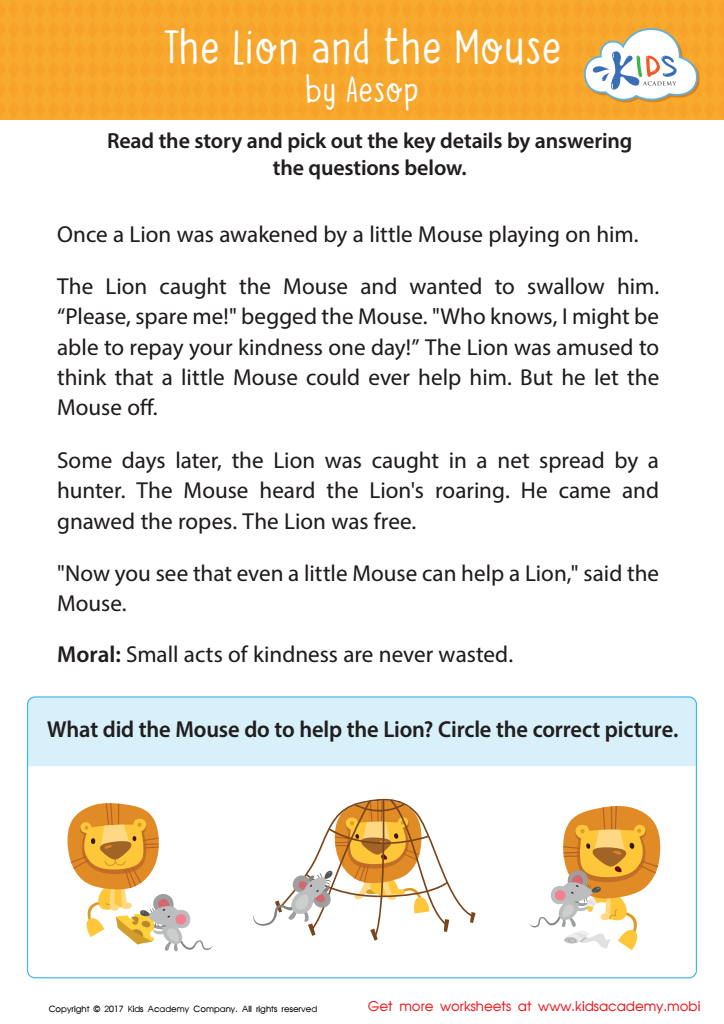
The Lion and The Mouse Sequencing Worksheet
 Assign to My Students
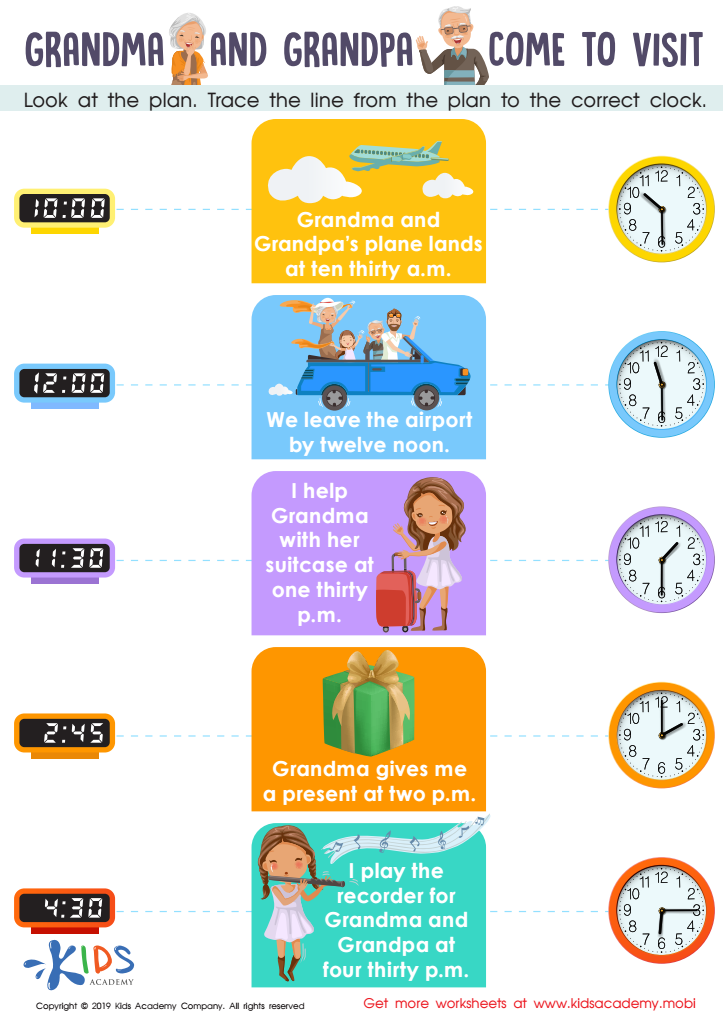
Grandpa and Grandma Come to Visit Worksheet
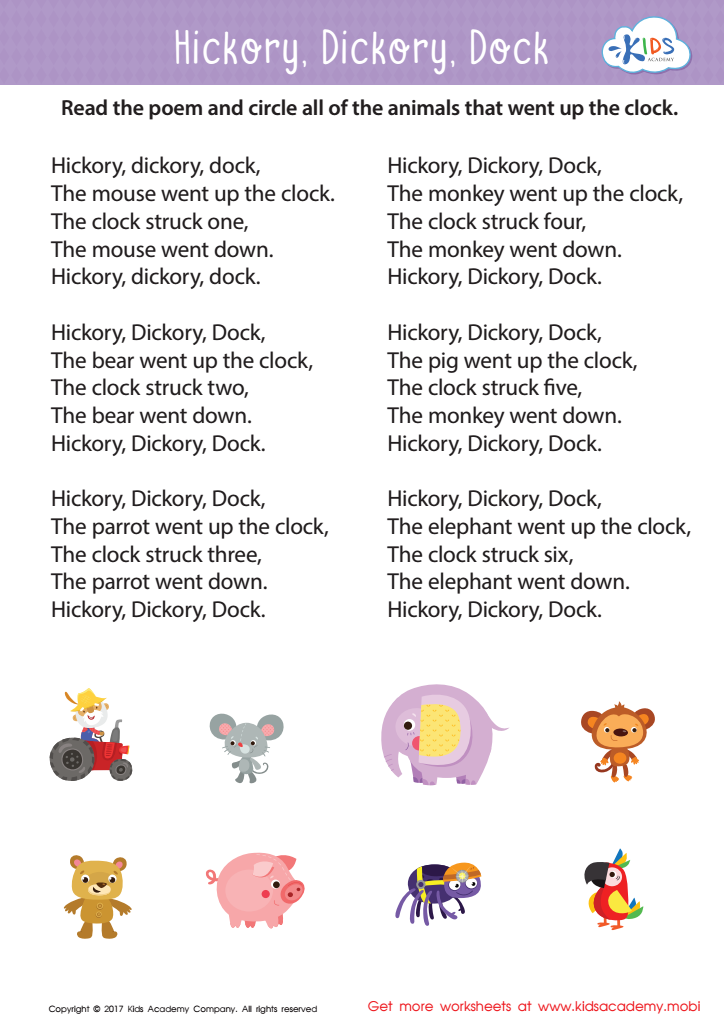
Hickory Dickory Dock Sequencing Worksheet
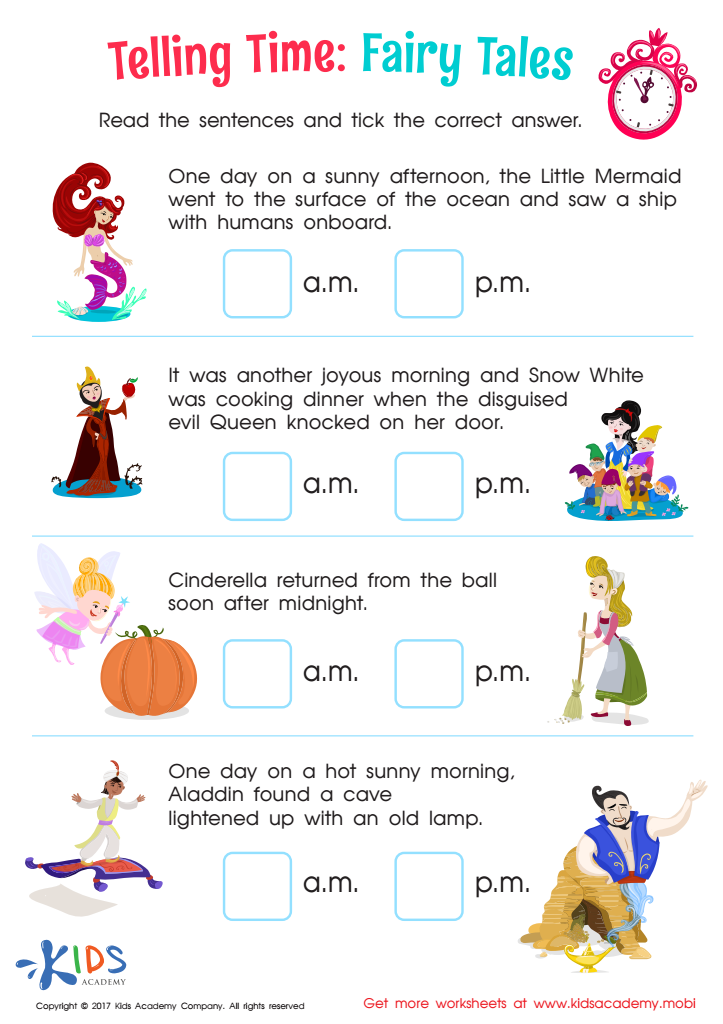
Telling Time: Fairy Tales Worksheet
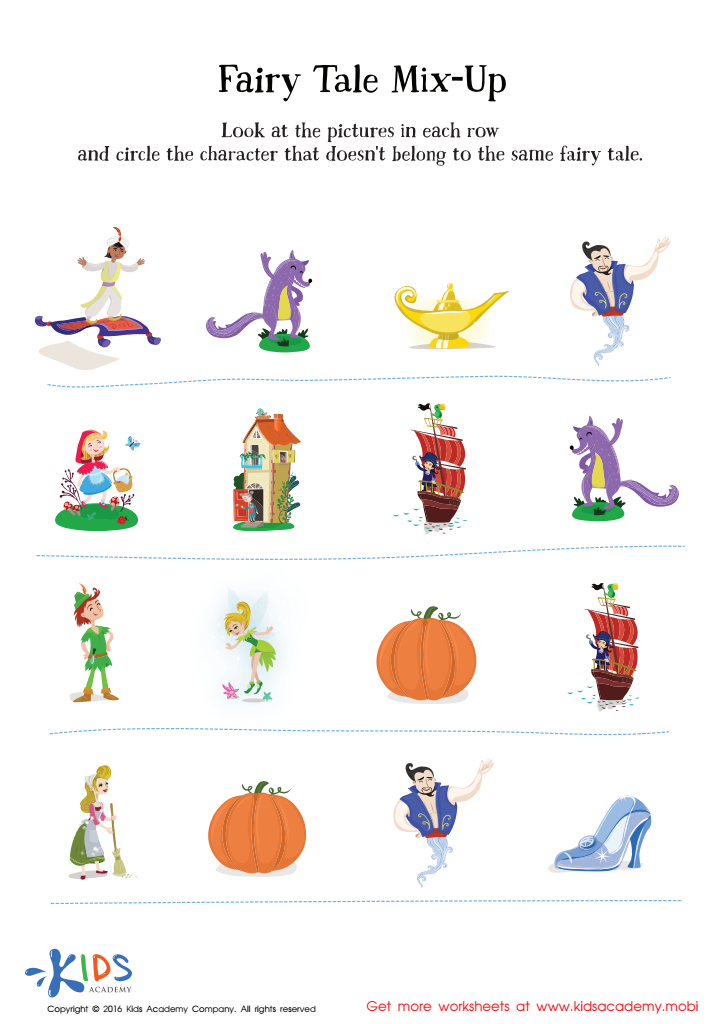
Fairy Tale Worksheet: Story Mix Up







Story sequencing is an essential skill for children aged 3-9 because it forms the foundation for numerous cognitive and language abilities that are crucial for their development. When parents and teachers engage children in sequencing activities, they promote the understanding of the logical order of events, enhancing the child’s ability to comprehend and retain information from the stories they encounter. This, in turn, improves their reading comprehension and critical thinking skills—fundamental tools for academic success.
Moreover, sequencing fosters language development. As children narrate or arrange story events in the correct order, they practice sentence formation and vocabulary usage, boosting their verbal communication skills. It also aids in developing their memory and attention to detail—skills that are not only pivotal in academic settings but are required for daily functioning and problem-solving.
Additionally, story sequencing nurtures creativity and imagination by encouraging children to anticipate and envision what happens next in a story. It engages their focus, making learning more interactive and enjoyable. Early mastery of sequencing prepares young minds for more complex tasks like writing, mathematics, and scientific reasoning they will encounter in later academic years.
In summary, story sequencing activities for young children provide a comprehensive approach to developing essential cognitive, linguistic, and creative skills, making them invaluable for both parents and teachers.








