
Vocabulary enhancement Extra Challenge Worksheets for Ages 3-9
41 filtered results
Difficulty Level
Grade
Age
-
From - To
Subject
Activity
Standards
Unlock your child's potential with our "Vocabulary Enhancement Extra Challenge Worksheets for Ages 3-9." Designed by educational experts, these engaging worksheets introduce fun and interactive activities to boost vocabulary skills. Featuring colorful illustrations and age-appropriate exercises, the materials are perfect for helping preschoolers and young learners expand their word knowledge. Tailored for different age groups, each worksheet builds on your child’s existing skills, ensuring a challenging yet manageable journey. Give your child a head start in language and cognitive development with our specially curated vocabulary boosters. Join us at Kids Academy and watch your little one's vocabulary flourish!
Favorites
With answer key
Interactive
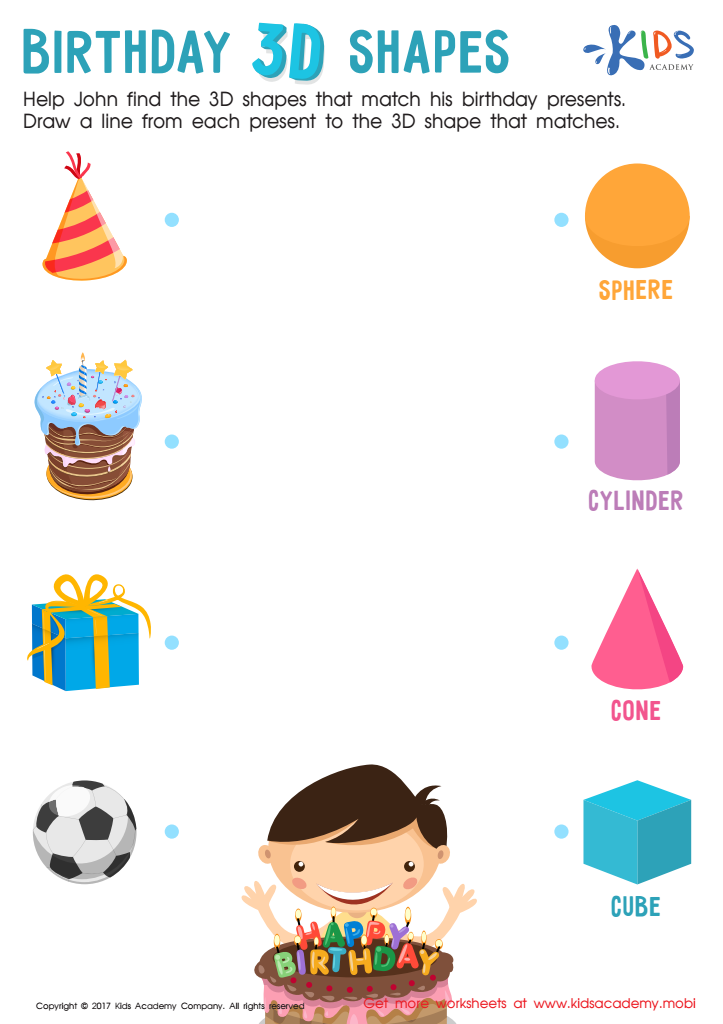
Birthday 3D Shapes Worksheet
It's John's birthday and he needs your help. Ask your kids to draw a line from each present to the matching 3D shape. First, check they understand the difference between 2D and 3D shapes. Then, they can help John figure out which 3D shape matches each present.
 Assign to My Students
Birthday 3D Shapes Worksheet
Worksheet
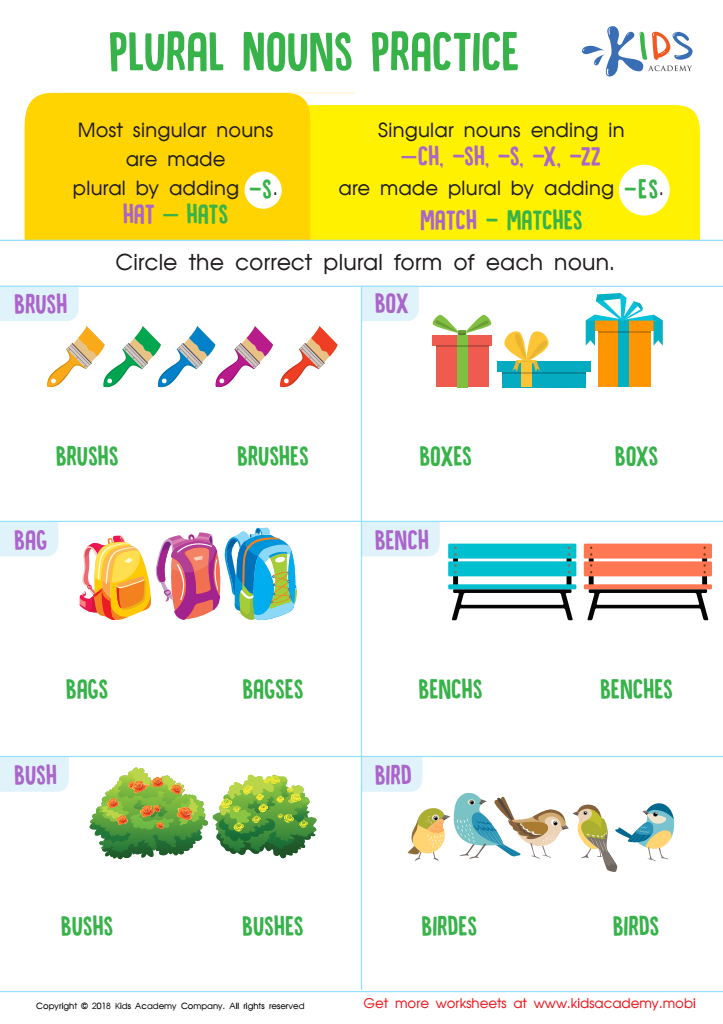
Plural Nouns Practice Worksheet
Explain to your child that most singular nouns become plural by adding "-s". E.g. "cat"->"cats". For words ending in "-ch", "-sh", "-s", "-x", or "-zz", add "-es". E.g. "buzz"->"buzzes". Then, get them to circle the right plural form of each noun on the worksheet.
Plural Nouns Practice Worksheet
Worksheet
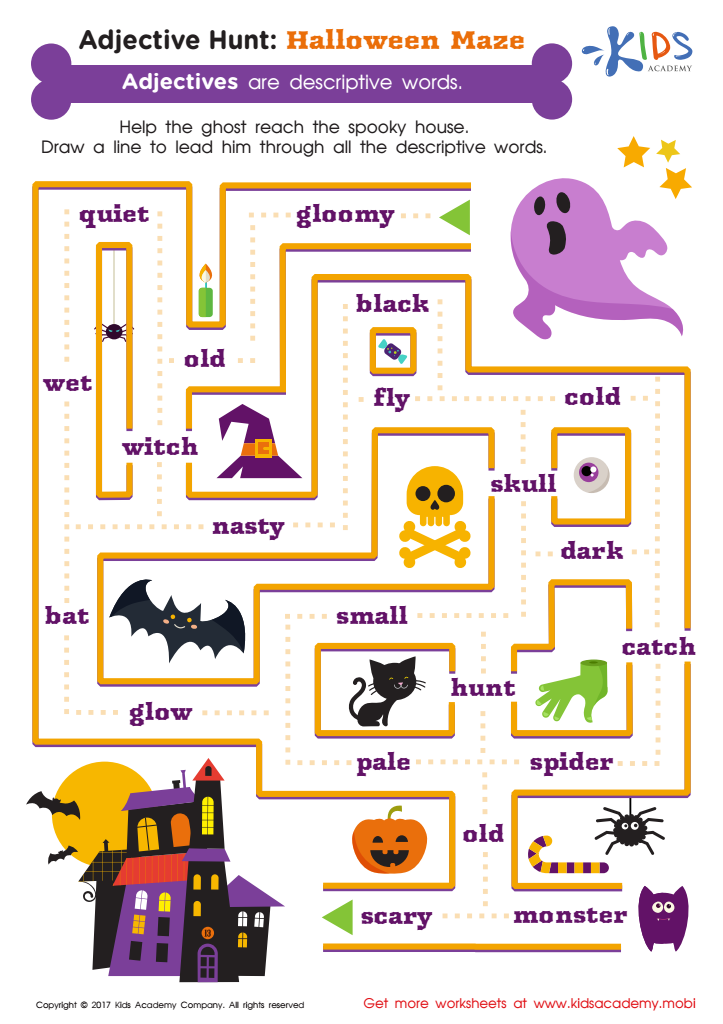
Adjective Hunt Printable
This spooky maze is perfect for Halloween! Kids will be both haunted and delighted while they figure out which words are descriptive or not. Get them excited for learning grammar with this fun and frightful worksheet!
Adjective Hunt Printable
Worksheet
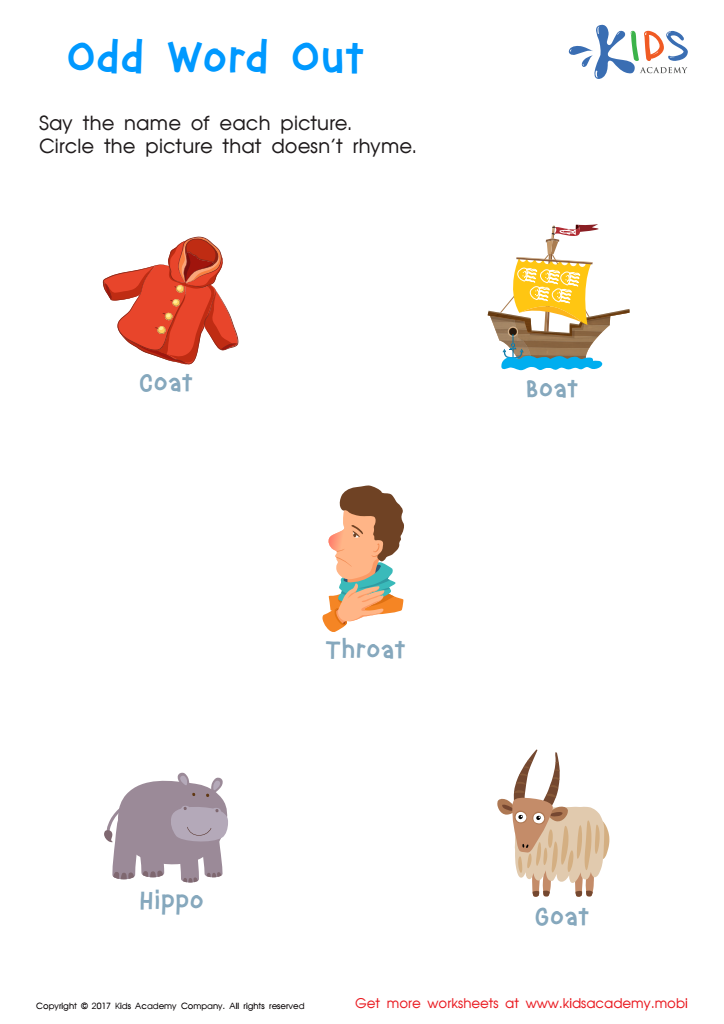
Odd Word Out Rhyming Worksheet
Try this worksheet to help your child practice finding odd words out and build their knowledge of rhyming words. They'll use problem solving and create their own words with enough room to write them down!
Odd Word Out Rhyming Worksheet
Worksheet
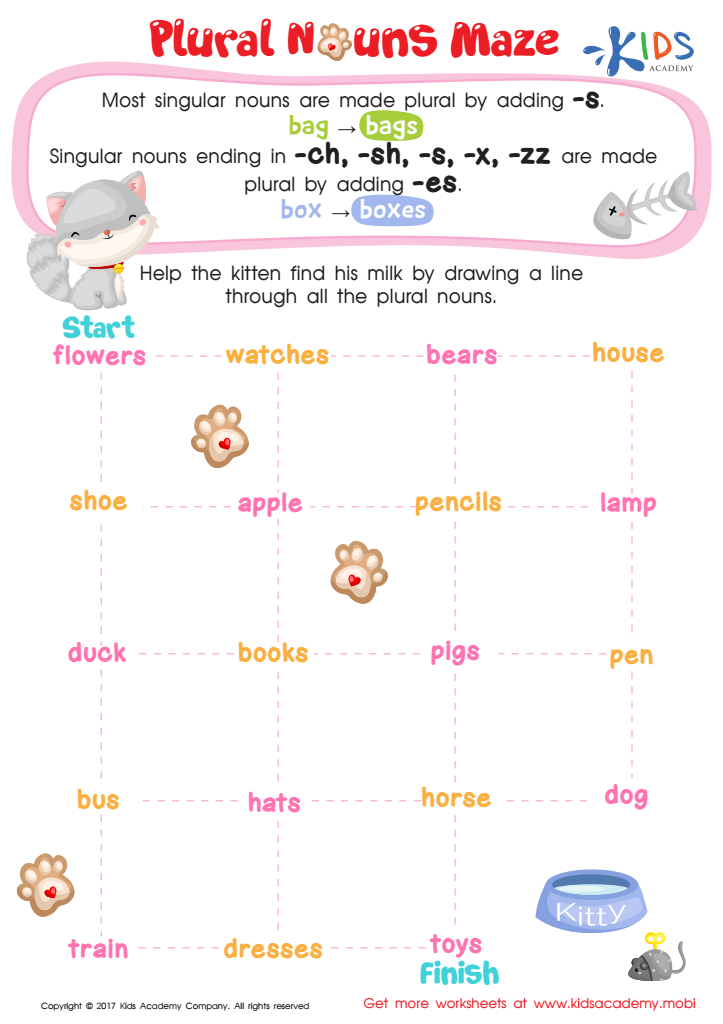
Plural Nouns Maze Worksheet
Oh no, the kitty needs her milk! Help your learner navigate the maze by drawing a line through the plural words. Review the grammar rules on -s and -es endings, then get to work to guide the kitten to her bowl! Download this PDF worksheet to start.
Plural Nouns Maze Worksheet
Worksheet
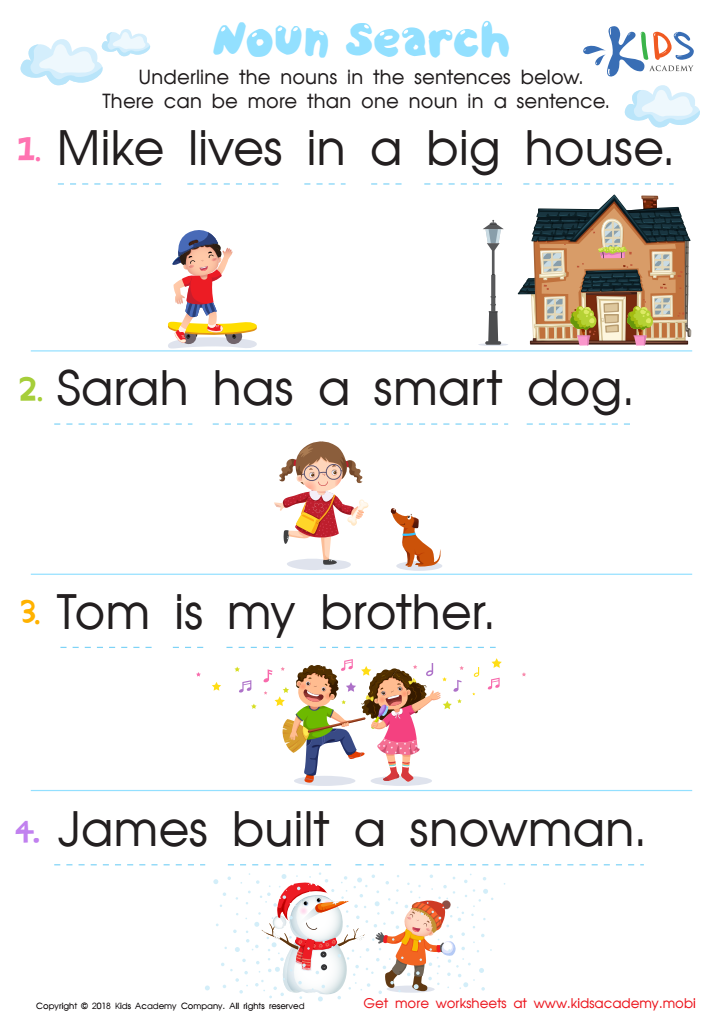
Noun Search Worksheet
To help your children learn the basics of grammar, start with nouns, verbs, adverbs and adjectives. This noun search worksheet will help your child understand the most common part of speech - the noun. Ask them to underline the nouns in each sentence. This is a great way to start learning proper grammar.
Noun Search Worksheet
Worksheet
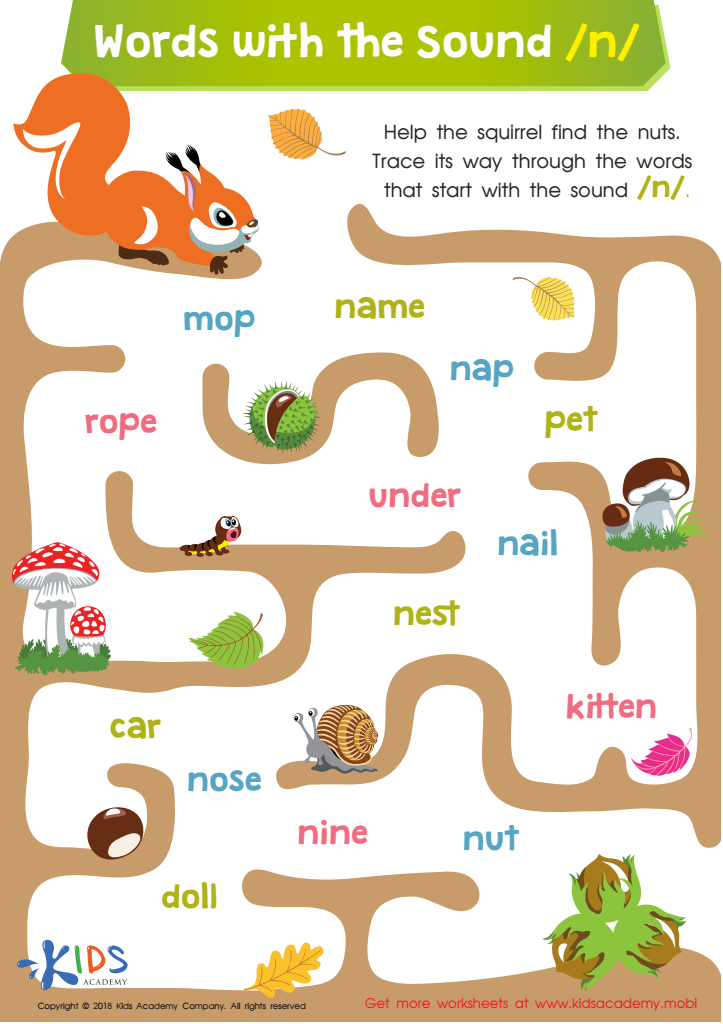
Words with Sound N Reading Worksheet
Young readers will love the colourful pictures and simple sight words on this download worksheet. They can trace their way through the maze as they help the cute squirrel reach his acorns, finding words with the sound "n" as they go. It's a fun way to work on reading skills - they won't even realise they're learning!
Words with Sound N Reading Worksheet
Worksheet
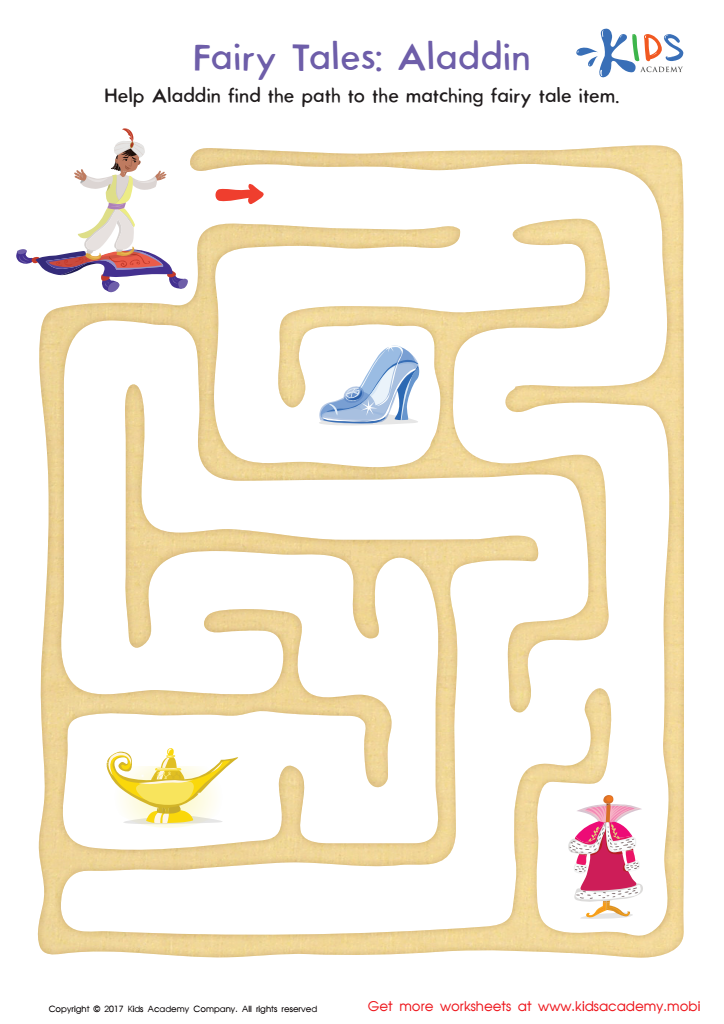
Fairy Tales Aladdin Printable
Test your child's reading recall with this challenge: the Aladdin maze worksheet! Guide your learner to identify objects linked to the story, then ask them to retell it afterwards. Hone those memory skills while having fun!
Fairy Tales Aladdin Printable
Worksheet
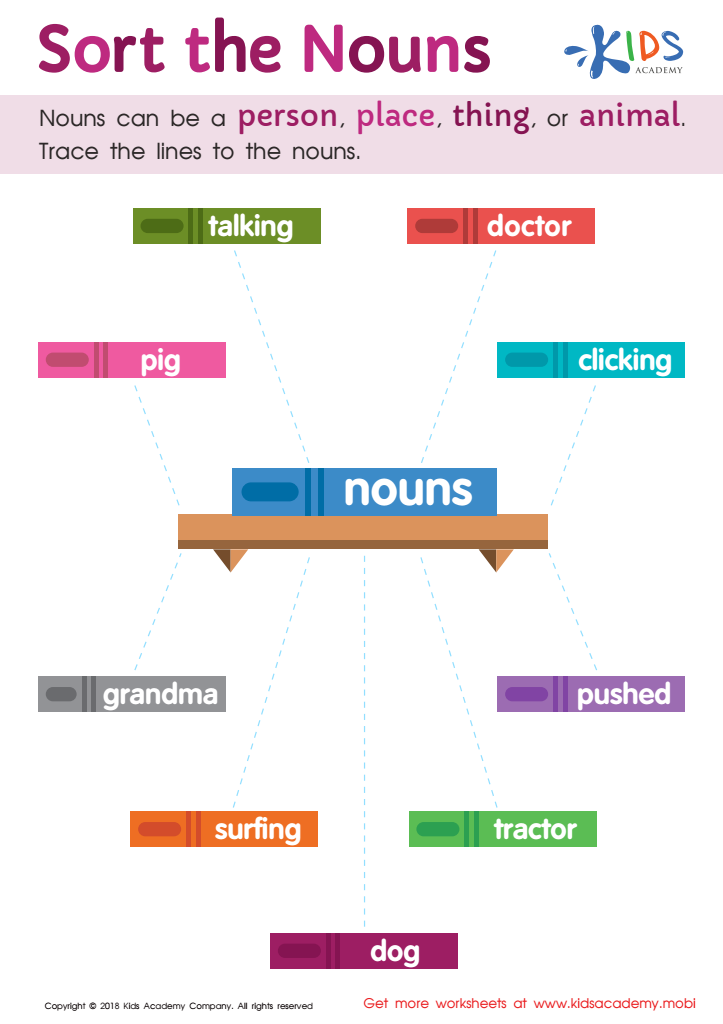
Sort the Nouns Worksheet
Help your students learn the parts of speech with this worksheet. Teach them a noun is the name of a person, place, thing, or animal, with common examples. Non-noun words are mixed in. Trace the lines to find the nouns!
Sort the Nouns Worksheet
Worksheet
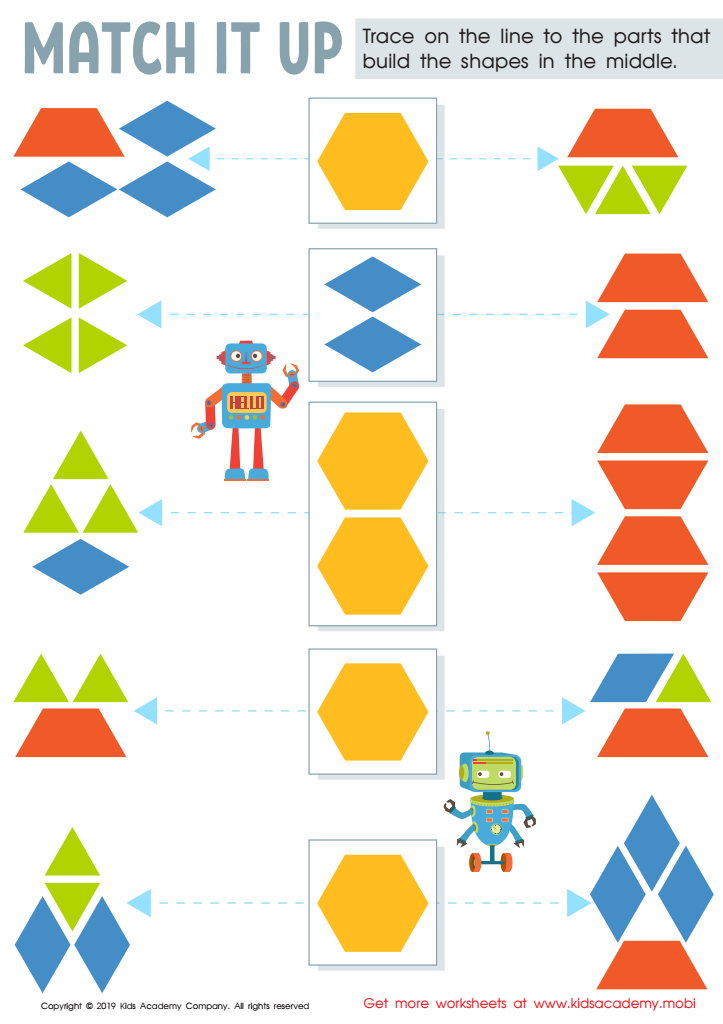
Match It up Worksheet
If your kids are into robots, they'll be thrilled to work on this worksheet. Ask them to name shapes they know, and help them draw and identify these shapes. Look at the shapes in the middle, and the sides. Finally, help your kids trace the lines to build the shapes in the middle.
Match It up Worksheet
Worksheet
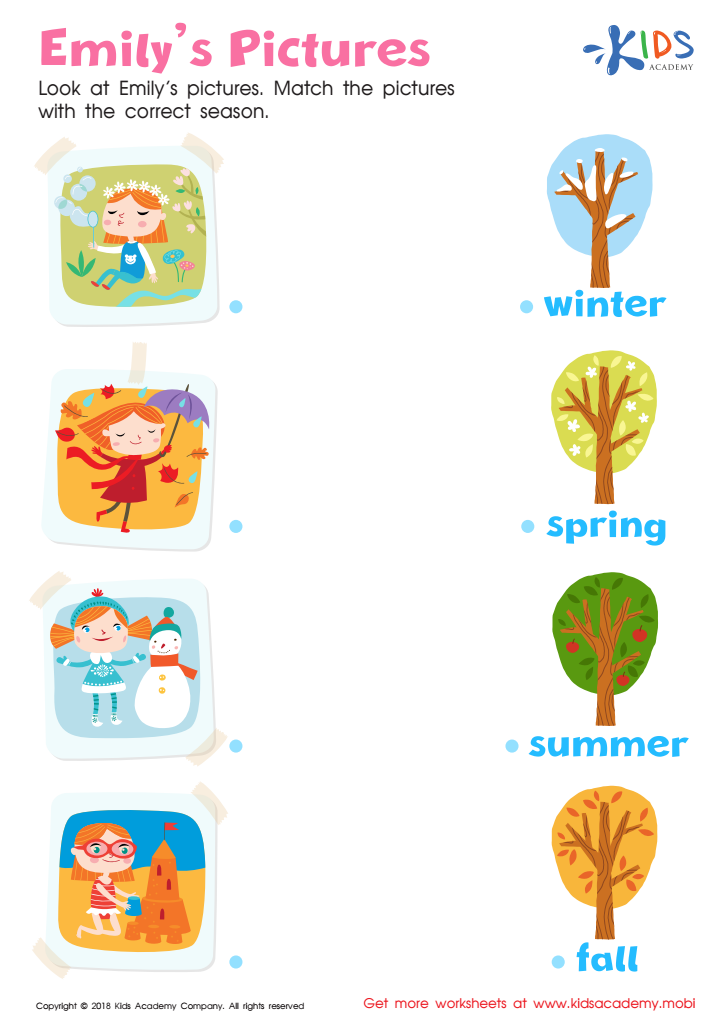
Emily's Pictures Worksheet
Look at the pictures of Emily on the left. Ask your child what she's doing in each one. Then, match the activities to the seasons on the right. Help your kids identify the correct season for each activity. Shorten to 80 words: Look at the pictures of Emily on the left. Ask your child what she's doing in each one, then match the activities to the seasons on the right. Help your kids find the correct season for each activity.
Emily's Pictures Worksheet
Worksheet
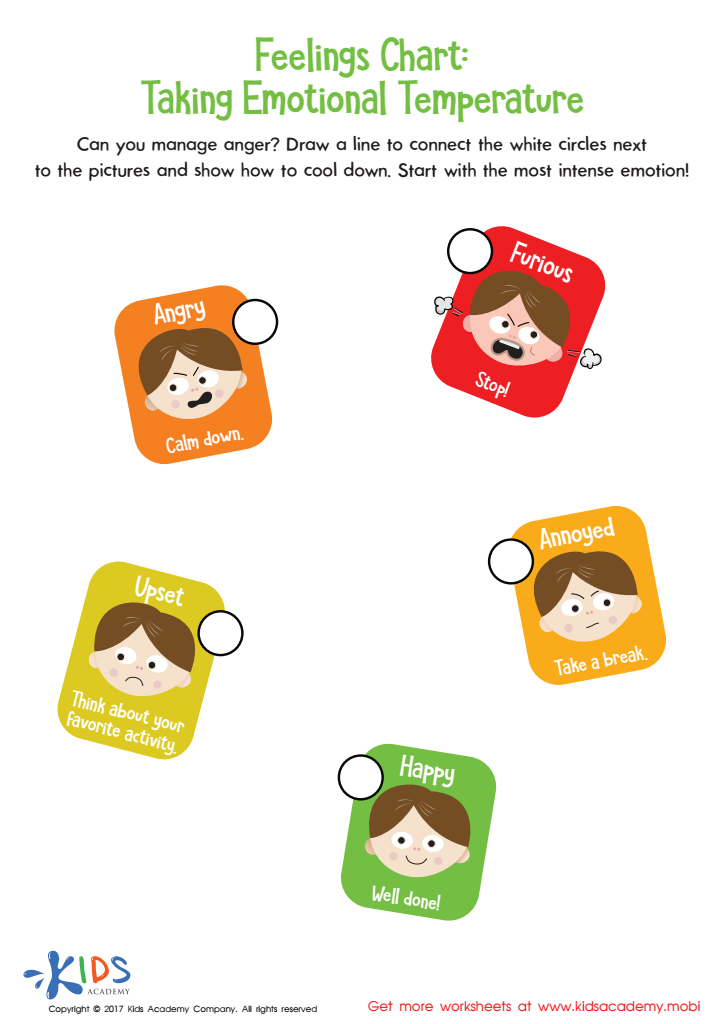
Feelings Chart Worksheet
Anger can be tricky to manage, so help your child learn techniques for coping. Use this feelings chart worksheet which leads them through identifying the most intense face and connecting the dots to help them calm down.
Feelings Chart Worksheet
Worksheet
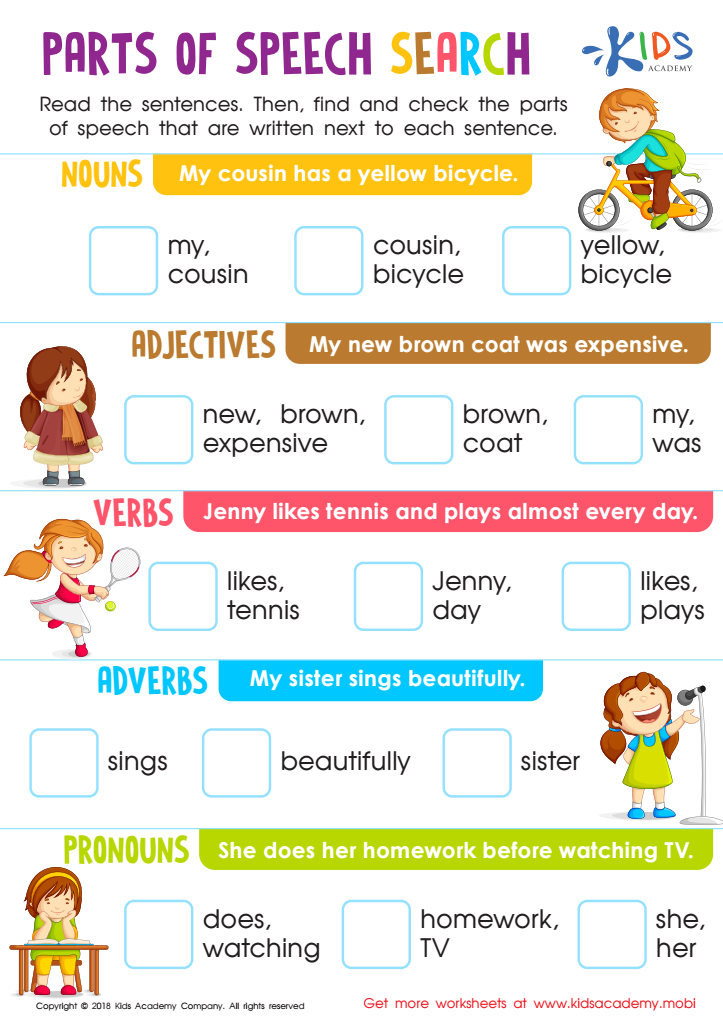
Parts of Speech Worksheet for Grade 3
This worksheet is ideal for 3rd graders to review tricky parts of speech! It is vibrantly illustrated and contains sentences to read through. Each sentence has a category to select the correct word or words that match the part of speech indicated. Try it today!
Parts of Speech Worksheet for Grade 3
Worksheet
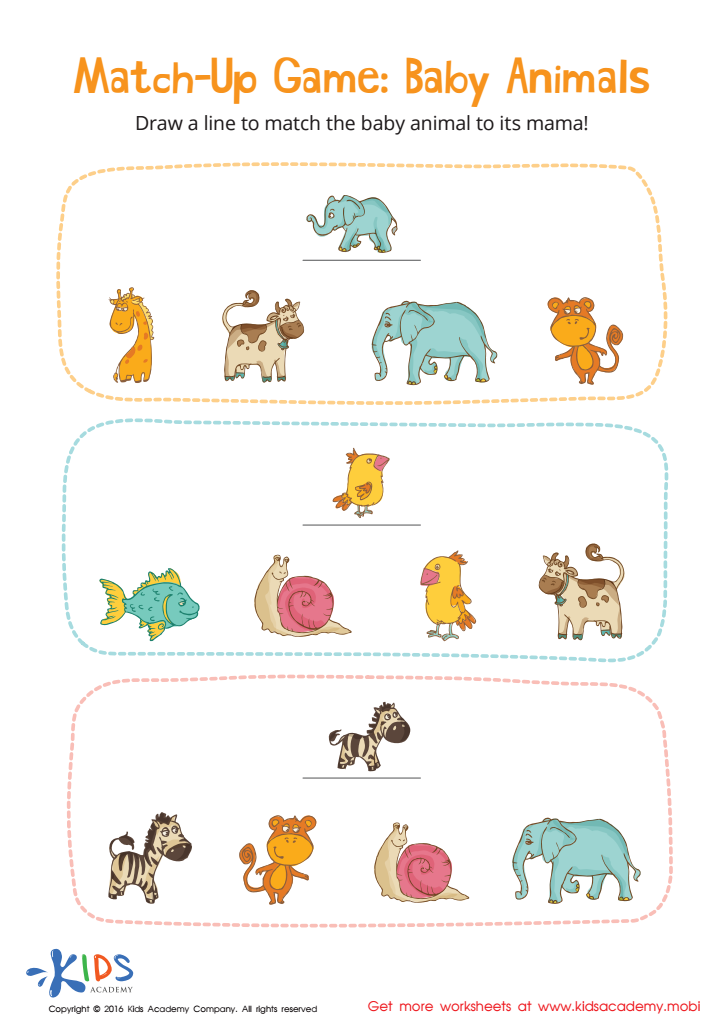
Baby Animals Match-Up Worksheet
Help baby animals find their mummies by using this fun matching worksheet. Kids can practice logical reasoning skills while recognizing similar pictures and learning about animals. Extend their knowledge by having them identify each cute animal!
Baby Animals Match-Up Worksheet
Worksheet
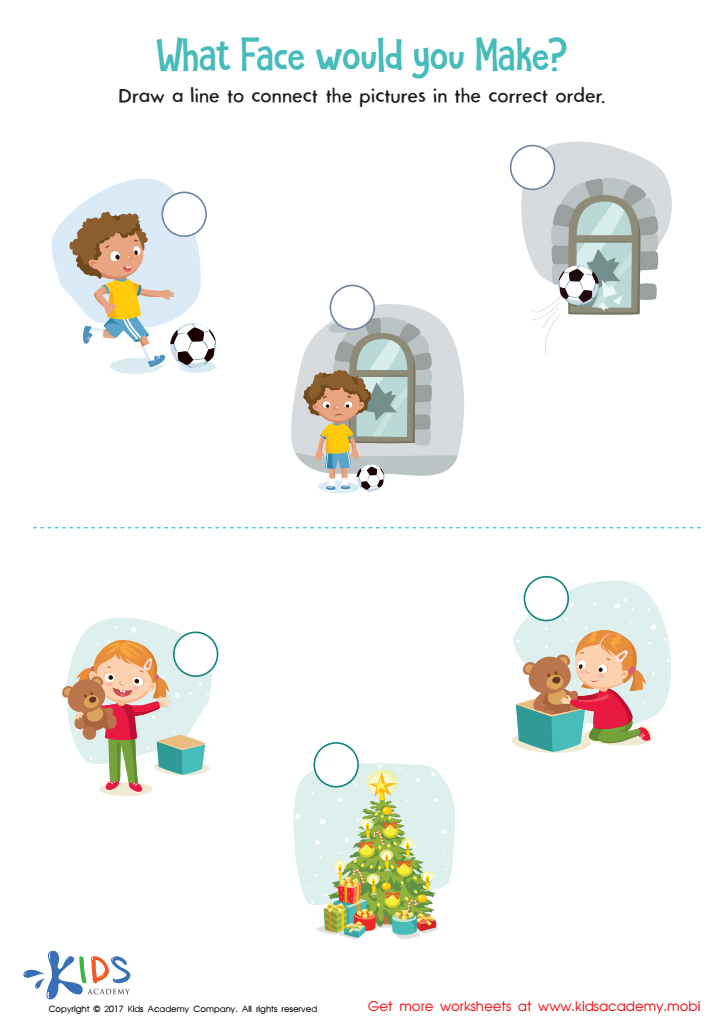
Understanding Emotions Worksheet
This worksheet helps children build social and emotional skills. As they complete it, they imagine themselves in the boy's situation, practicing empathy. It's an engaging and meaningful way to learn.
Understanding Emotions Worksheet
Worksheet
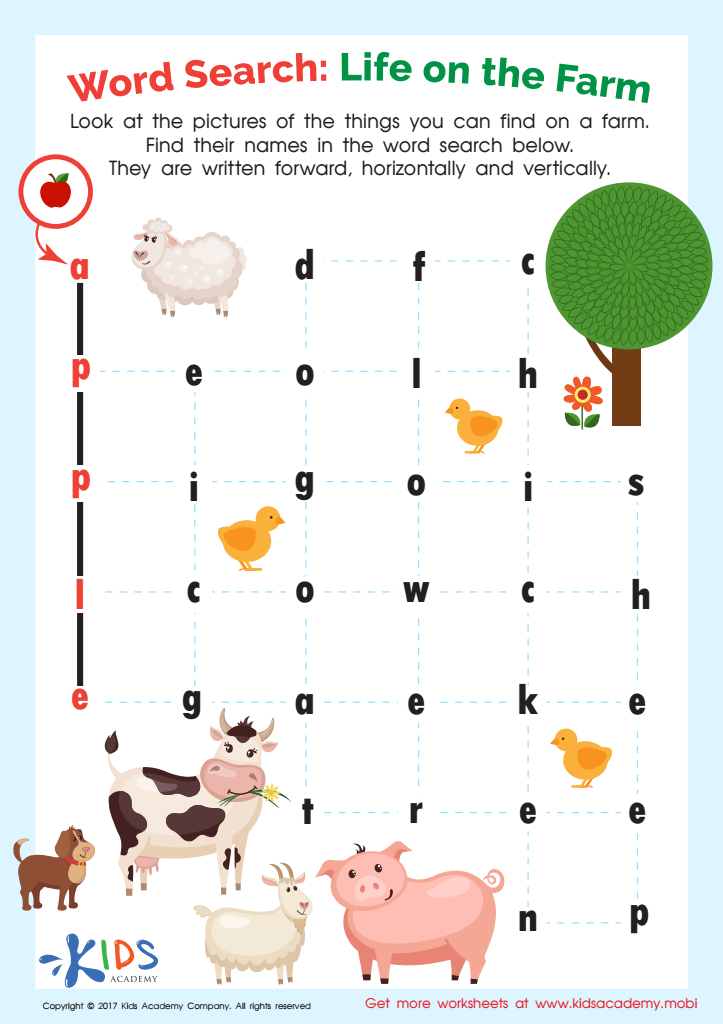
Word Search Puzzles Worksheet
2nd grade word search puzzles are great fun, helping kids flex their knowledge of words and spellings. Kids can use the pictures to find farm-themed words hidden on the page. It's a great way to learn!
Word Search Puzzles Worksheet
Worksheet
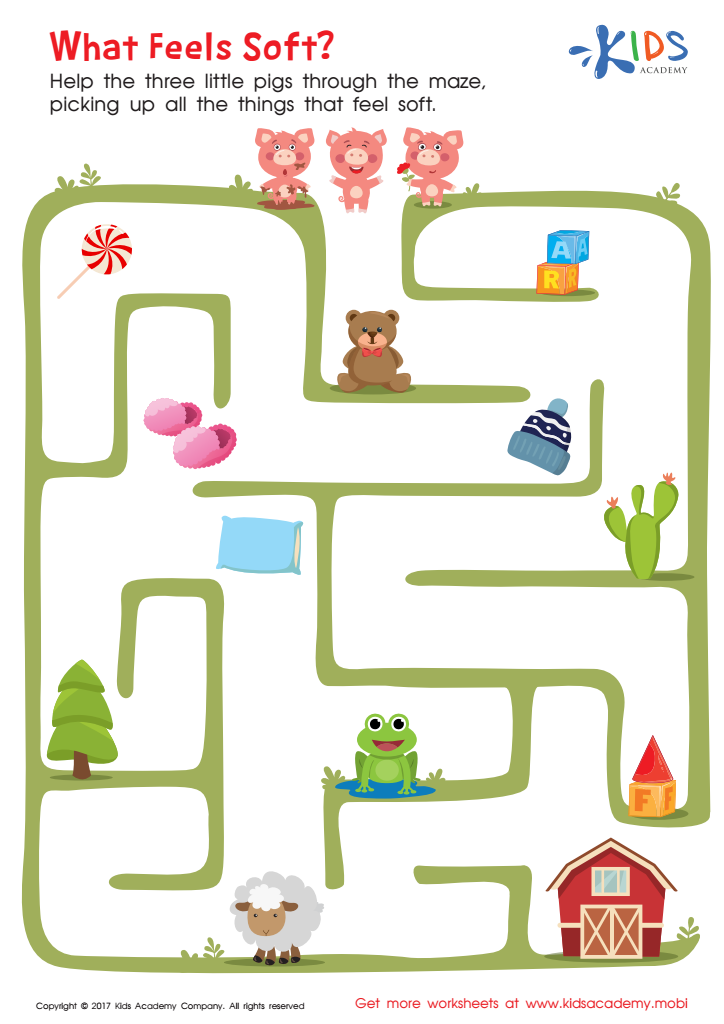
What Feels Soft Printable
Help your child learn to describe their perceptions! Improve their problem solving and critical thinking skills by having them identify soft objects in our What Feels Soft printable maze. Talk about the textures of other pictures and explore similar textures at home. This will help them understand and communicate their feelings better.
What Feels Soft Printable
Worksheet
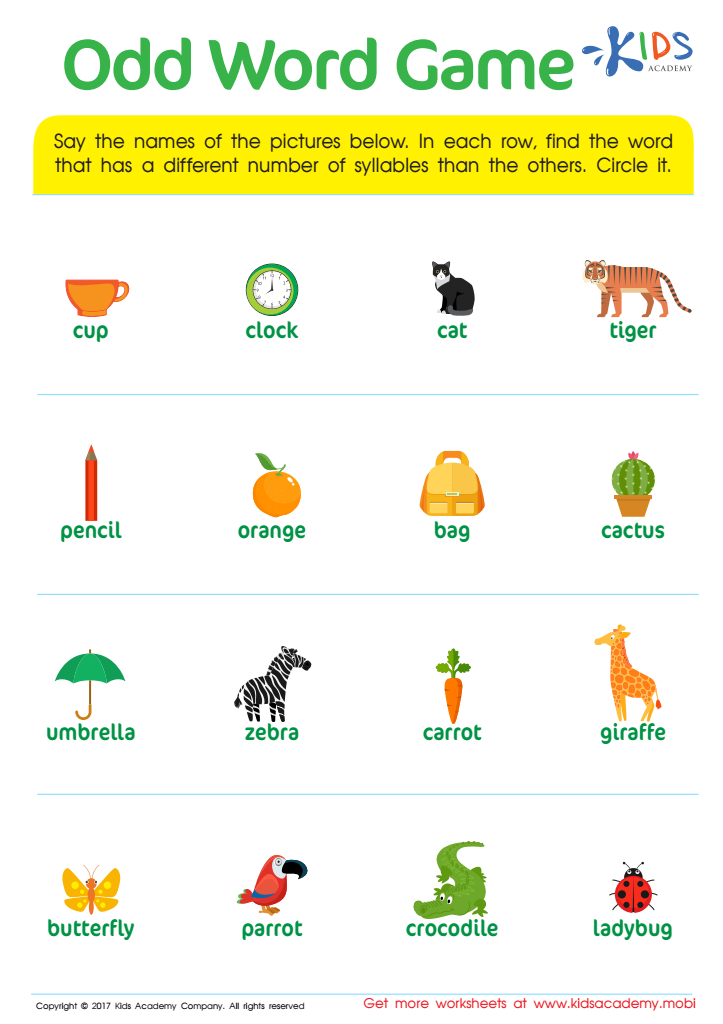
Count Syllables: Odd Word Game Worksheet
Counting syllables strengthens kids' decoding skills. This printable helps them say common item names and chunk words for fluency and accuracy. They don't even realize they're working on their reading! Bright colors make it fun, so it's a fast and easy way to practice.
Count Syllables: Odd Word Game Worksheet
Worksheet
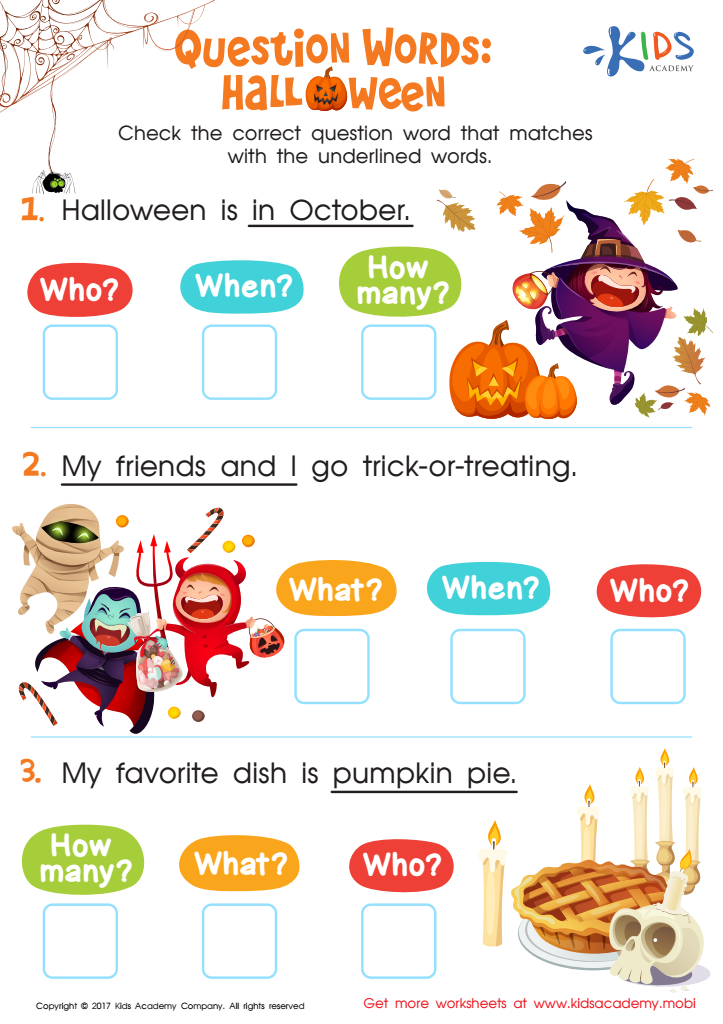
Question Words: Halloween Worksheet
Questions lead to answers, so it's important to use the right words. This Halloween-themed worksheet helps kids learn to use precise language when writing or asking a question. Just read each sentence, noting the underlined phrases, and pick the question word that fits. Have spooky fun!
Question Words: Halloween Worksheet
Worksheet
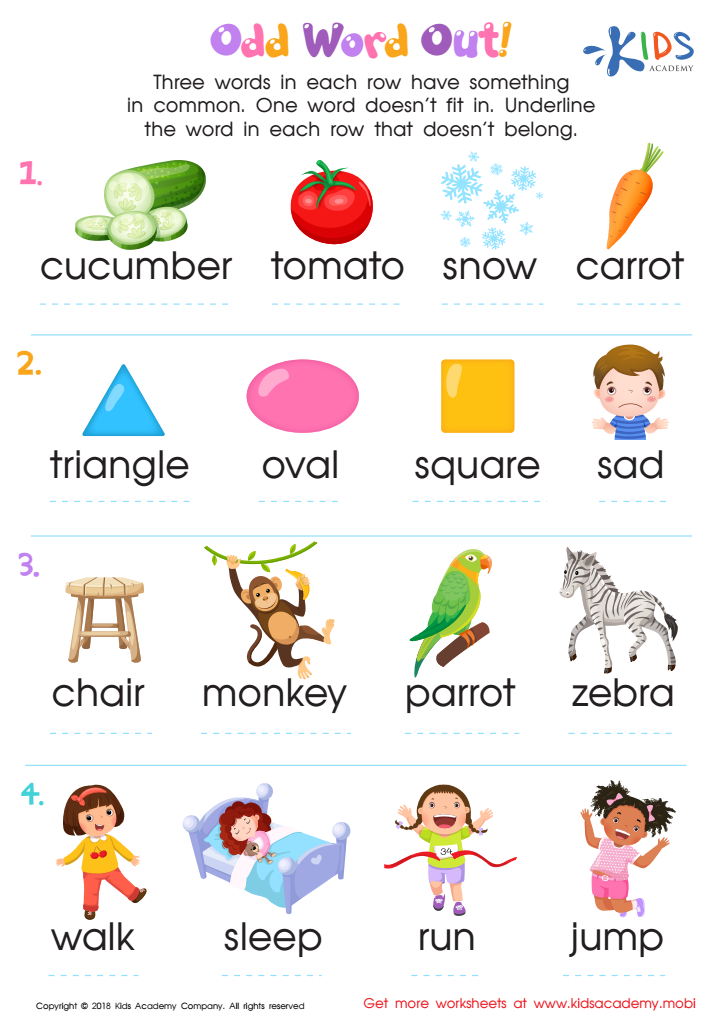
Odd Word Out Worksheet
Ask your child to name all pictures in each row and see if there's something they share. Then, have them identify the odd one out and underline it. Repeat for all words in the rows to help them understand how to identify words.
Odd Word Out Worksheet
Worksheet
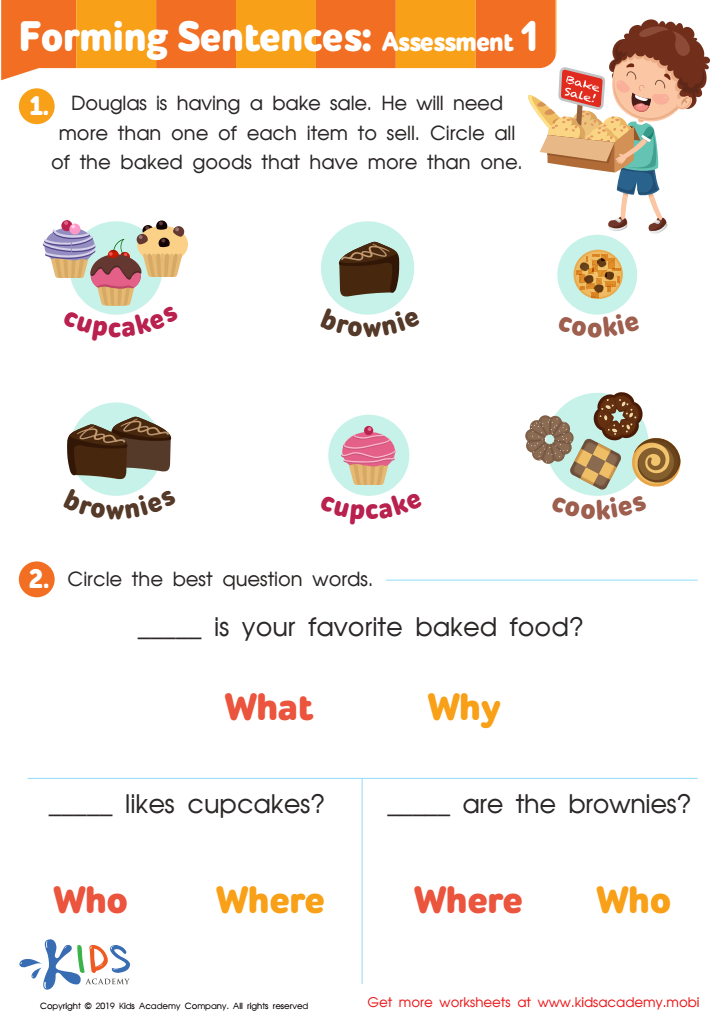
Forming Sentences: Assessment 1 Worksheet
Bake sales are great fun, offering a variety of goodies and treats! Kids also have a chance to make a bit of money. Help your students circle all the yummy baked goods with more than one in this worksheet - Douglas is hosting a bake sale and needs items in bulk!
Forming Sentences: Assessment 1 Worksheet
Worksheet
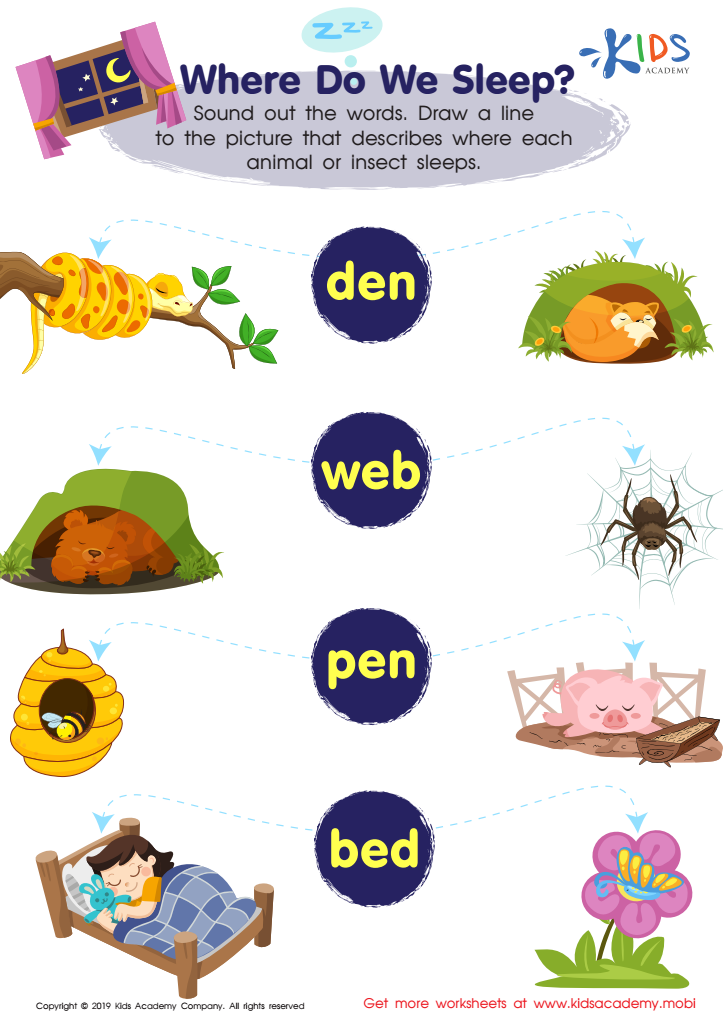
Where Do We Sleep Worksheet
Help your kids understand the importance of a safe space with this activity: Ask them to draw a line connecting the different animals and insects to the words that describe where they sleep. Remind them that everyone needs a sanctuary to rest – like the animals and insects in this printout.
Where Do We Sleep Worksheet
Worksheet
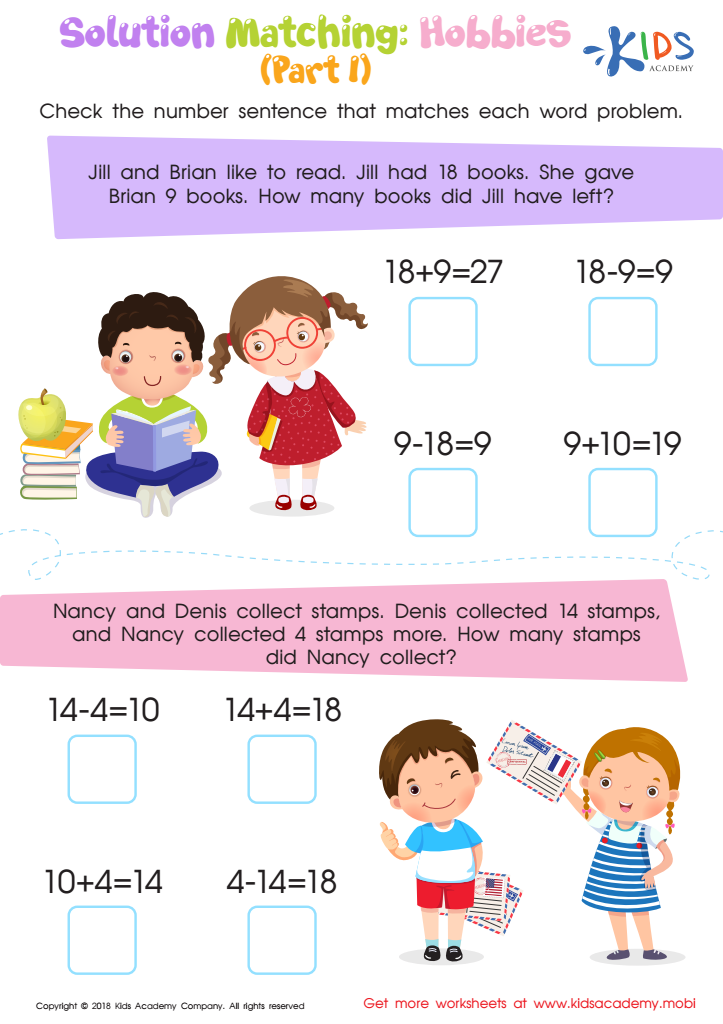
Solution Matching: Hobbies. Part 1 Worksheet
Math problems can be made more fun and easier to solve by relating them to real-life activities. Kids Academy's free printable worksheet helps your child to do this. Read each problem, paying attention to the numbers and terms, then choose the correct equation from the options given. This will help your child to understand the problem and get the right result!
Solution Matching: Hobbies. Part 1 Worksheet
Worksheet
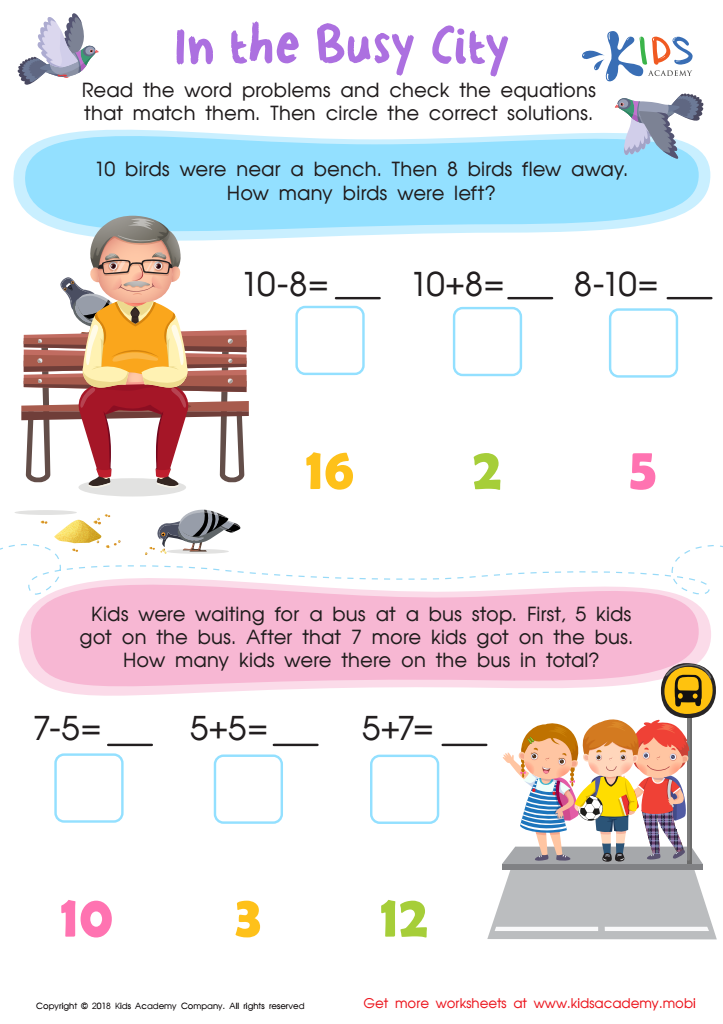
In the Busy City Word Problems Worksheet
Take a stroll and help your child solve math word problems with this fun printable from Kids Academy! Colorful images make the scenarios more enjoyable. Have them read the problem carefully and solve the matching equation. Check the box next to the answer to mark it as correct!
In the Busy City Word Problems Worksheet
Worksheet
Join Kids Academy for Free
Who is primarily going to use this learning content?




.jpg)

Vocabulary enhancement for children aged 3-9 is crucial for several reasons. During these early years, kids are in a critical period of language acquisition and cognitive development. An enriched vocabulary equips them with the tools they need to better express their thoughts, feelings, and ideas, which is fundamental for effective communication.
Firstly, a robust vocabulary directly supports reading comprehension and literacy skills. Children with a large vocabulary can understand and enjoy texts more easily, making learning to read a smoother, more engaging process. This early success fosters a love for reading, which is beneficial throughout their academic journey.
Additionally, vocabulary growth complements and enhances cognitive development. Understanding and using a variety of words helps children think more precisely and creatively. It enables them to grasp complex concepts and engage in more sophisticated problem-solving activities.
Furthermore, a strong vocabulary is linked to better academic performance across all subjects, not just language arts. For example, subjects like math and science often have specific terminologies that require understanding beyond everyday language.
Parents and teachers who focus on vocabulary development early on are setting up children for future academic and personal success. This creation of a rich linguistic environment can be supported through regular reading, conversation, and interactive vocabulary activities, forming a solid foundation for lifelong learning.








