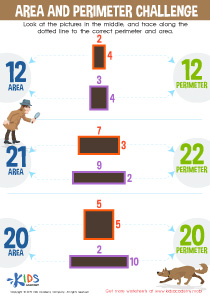
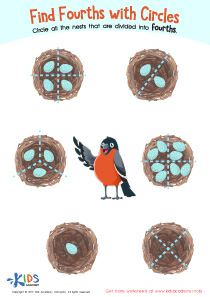
Shape identification Extra Challenge 2D Shapes Worksheets for Ages 3-9
3 filtered results
-
From - To
Boost your child's shape recognition skills with our "Shape Identification Extra Challenge 2D Shapes Worksheets" designed for ages 3-9. These engaging, educational worksheets provide a fun way for kids to explore and identify various 2D shapes, enhancing their critical thinking and spatial awareness. Perfect for complementing classroom learning or homeschooling, each worksheet features colorful illustrations and interactive activities that challenge young learners. Whether your child is just beginning to recognize basic shapes or is ready to tackle more complex ones, these extra challenge worksheets support their journey towards mastering shape identification. Download now to make learning exciting and effective!
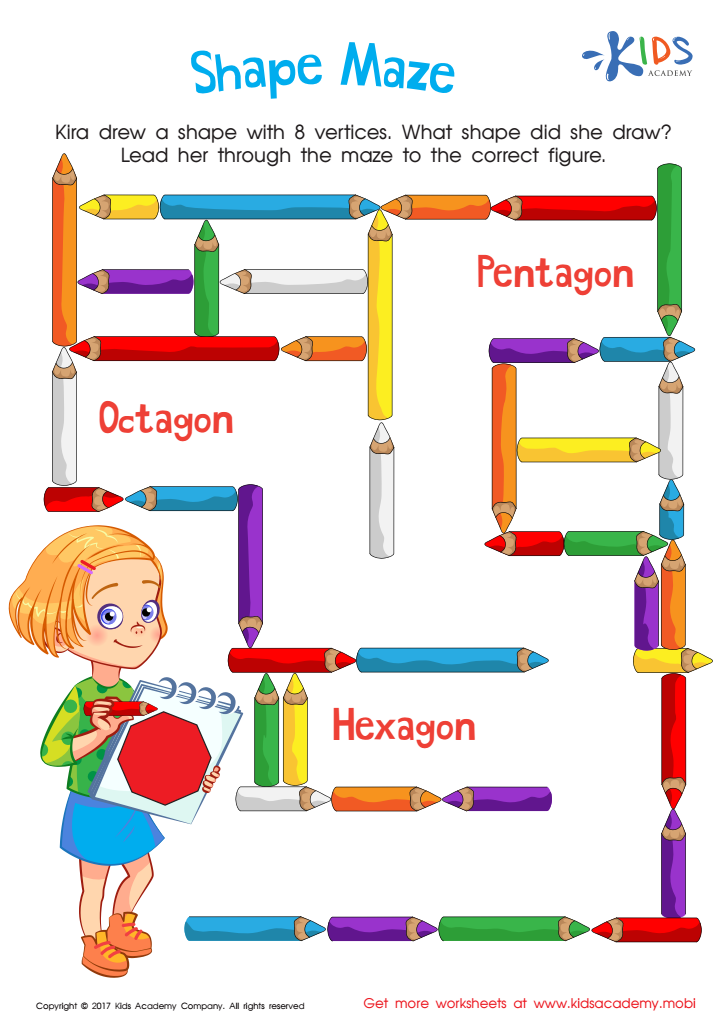
Shape Maze Worksheet
 Assign to My Students











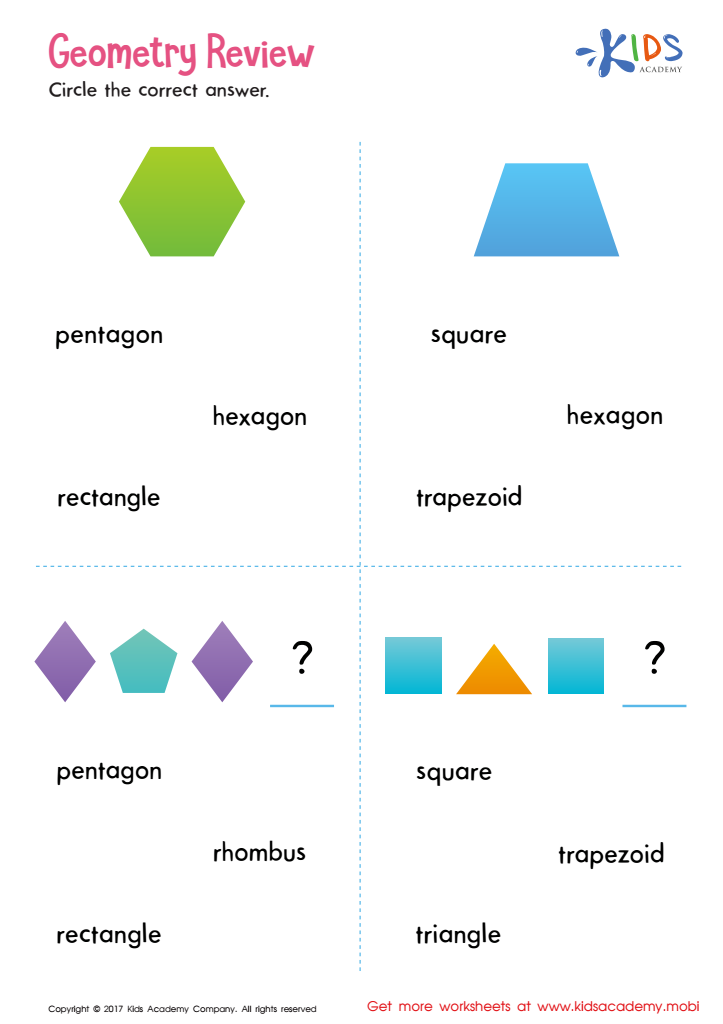
Geometry Review Printable
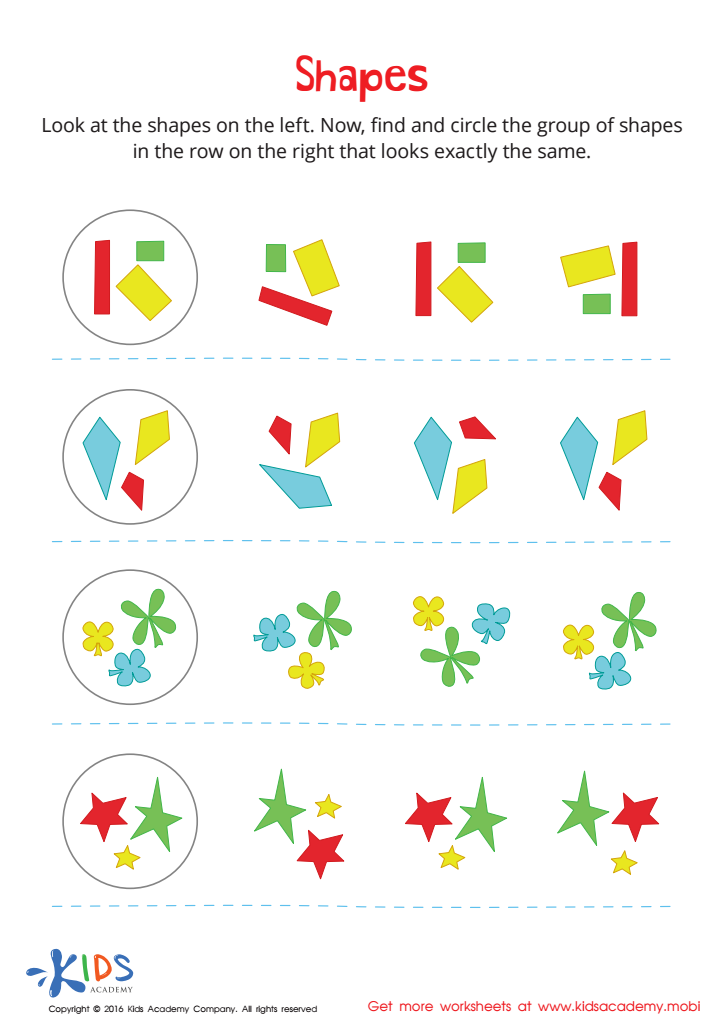
Shapes Worksheet








Shape identification is crucial for young children as it lays the foundation for future learning in various disciplines. For ages 3-9, engaging in extra challenges involving 2D shapes goes beyond simple recognition; it fosters essential cognitive and developmental skills.
Firstly, learning to identify shapes strengthens spatial awareness, helping children understand the space around them better. This ability is not just paramount for geometry but also for physical coordination. Moreover, shape recognition improves problem-solving skills. When children discern that a shape does not fit within another, they instinctively attempt another approach, gradually cultivating resilience and critical thinking.
Language development also benefits from shape identification. As children learn to describe shapes—like “square,” “circle,” or “rectangle”—they broaden their vocabulary and enhance their verbal expression. This linguistic growth supports better communication skills.
Teachers and parents should also note the role of shape recognition in early mathematics. Understanding what makes a triangle different from a square introduces basic concepts of geometry, laying the groundwork for more advanced mathematical concepts. Additionally, recognizing and differentiating shapes assists in the comprehension of symbols used in everyday life.
Finally, engaging children in extra challenges with 2D shapes can enhance creativity. By manipulating and organizing shapes into new patterns, children exercises imaginative thinking, which is beneficial across all areas of learning.
In summary, shape identification is a fundamental aspect that supports a broad range of developmental skills, making it essential for parents and teachers to focus on this element in early education.