Basic Math Skills Extra Challenge Geometry Worksheets for Ages 3-9
5 filtered results
Difficulty Level
Grade
Age
-
From - To
Subject
Activity
Standards
Discover our "Basic Math Skills Extra Challenge Geometry Worksheets" designed for children ages 3 to 9! These engaging worksheets aim to enhance foundational geometry skills while providing a fun and interactive learning experience. Ideal for young learners, our resources cover essential concepts such as shapes, spatial relationships, and measurement in a playful way. The extra challenges encourage critical thinking and advanced problem-solving, fostering a deeper understanding of geometry. Perfect for homework, classroom activities, or enrichment programs, these worksheets ensure your child is building confidence in math skills essential for their academic journey. Start exploring our collection today and watch your child shine!
Favorites
With answer key
Interactive
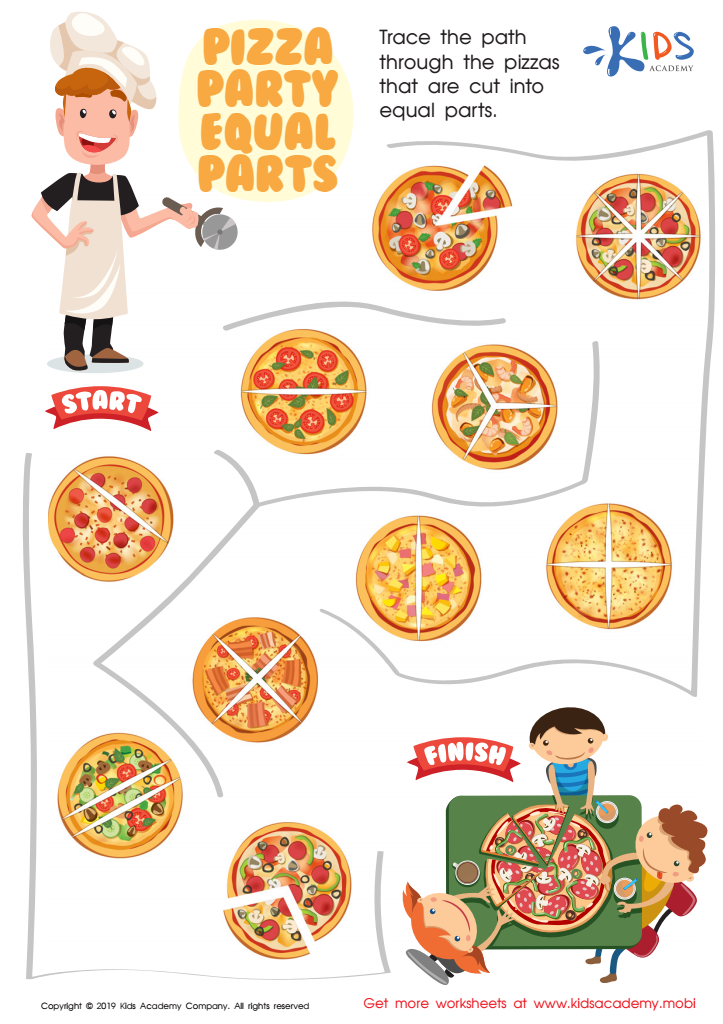
Pizza Party Equal Parts Worksheet
Love pizza? This printout is a great way to help kids learn about equal parts! Kids must identify pizzas cut into equal parts, then trace the path through the pizzas. It's an exciting maze - and a great way to help kids learn! Get the traceable pdf today and let the fun begin!
 Assign to My Students
Pizza Party Equal Parts Worksheet
Worksheet











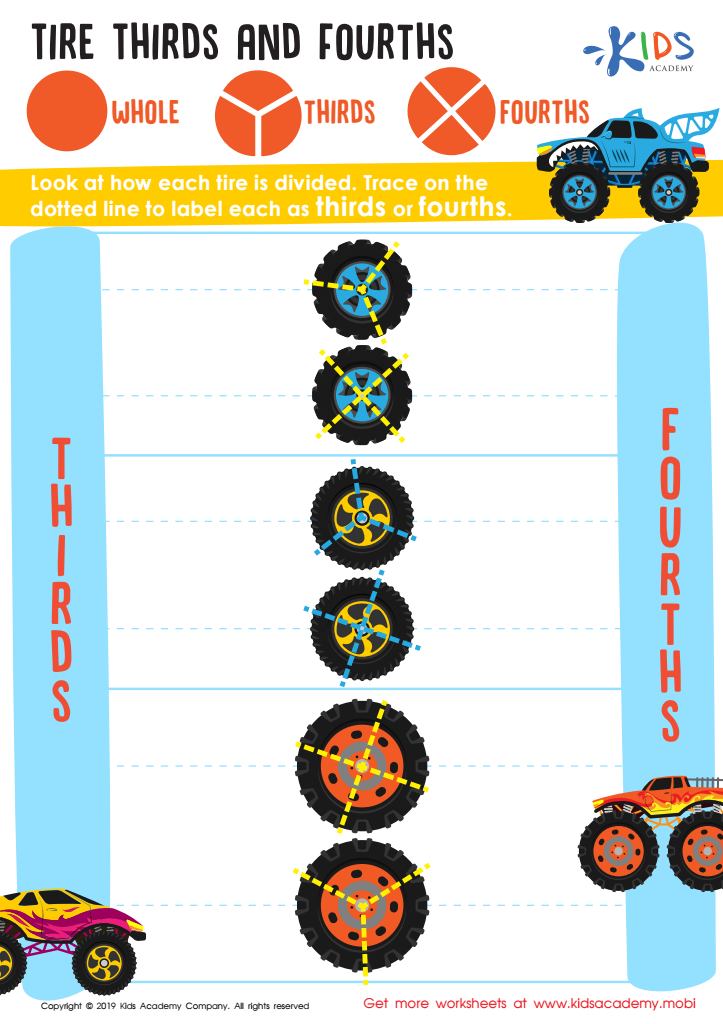
Tire Thirds and Fourths Worksheet
Learning geometry is key in your child's education. Have them identify and name shapes cut into 2, 3 and 4 parts. Test their knowledge with this worksheet - trace the dotted line to label each as third or fourth. Encourage them to keep learning!
Tire Thirds and Fourths Worksheet
Worksheet
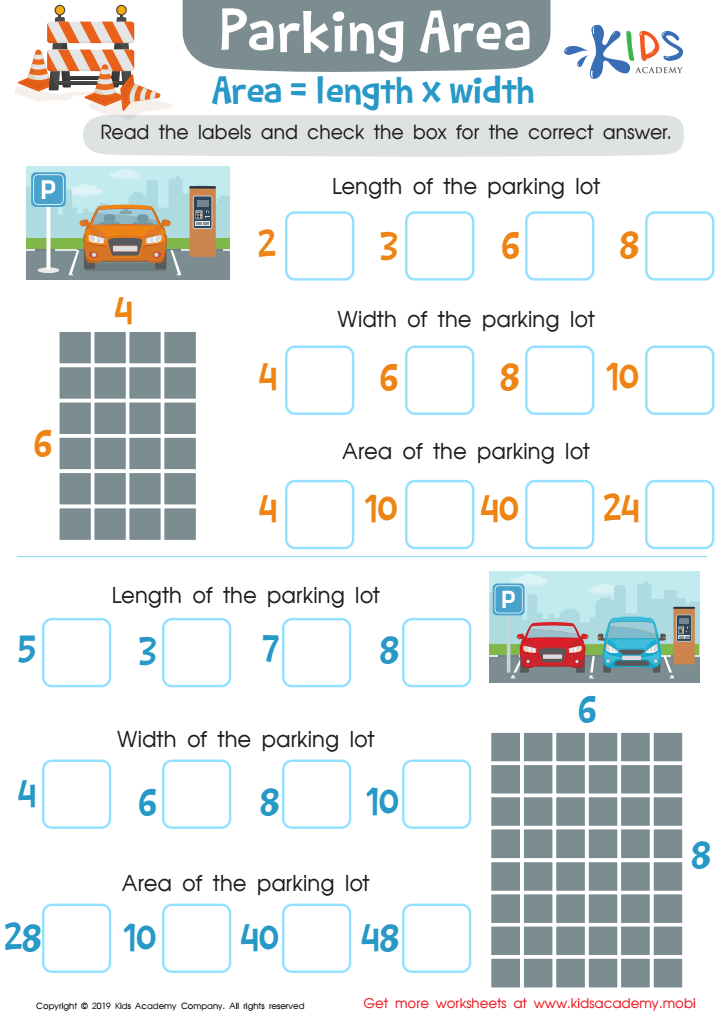
Parking Area Worksheet
Math may not be your child's favorite, but that doesn't mean they can't excel. Math can seem intimidating, but with practice, they can learn it's not so hard. In this worksheet, your kids will calculate the area of a parking lot, by adding length and width. Help them read the labels and select the correct answer.
Parking Area Worksheet
Worksheet
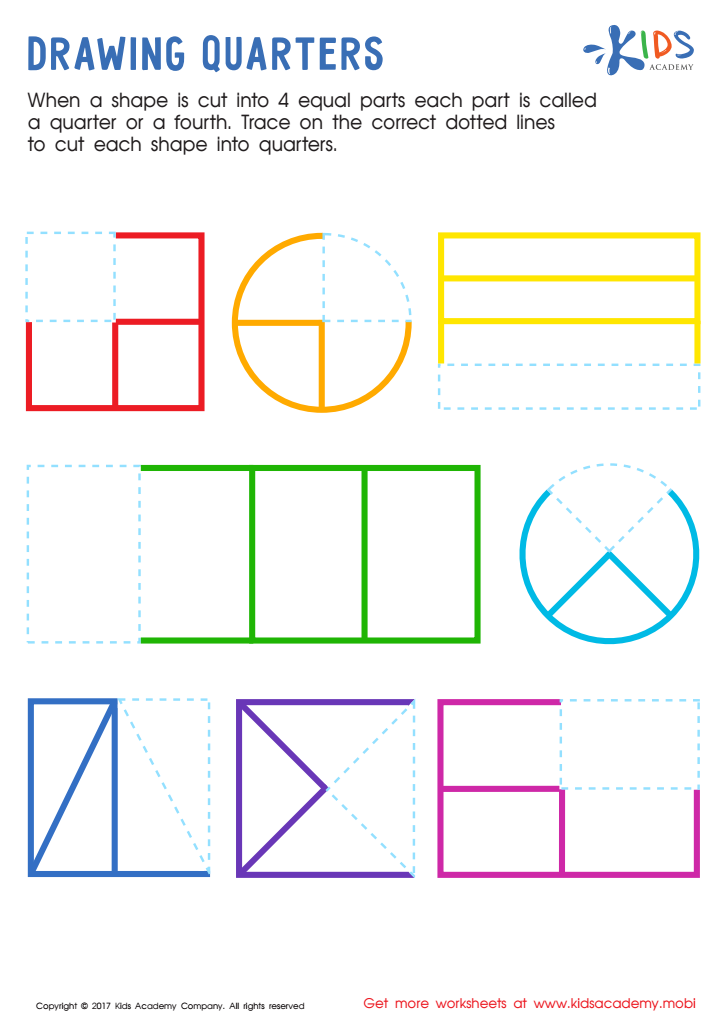
Drawing Quarters Worksheet
Help your kids divide shapes into quarters! Have them trace dotted lines to cut each shape into 4 equal parts. Each of the 4 parts is called a quarter or a fourth. This worksheet will help kids learn more about dividing shapes into four equal parts.
Drawing Quarters Worksheet
Worksheet
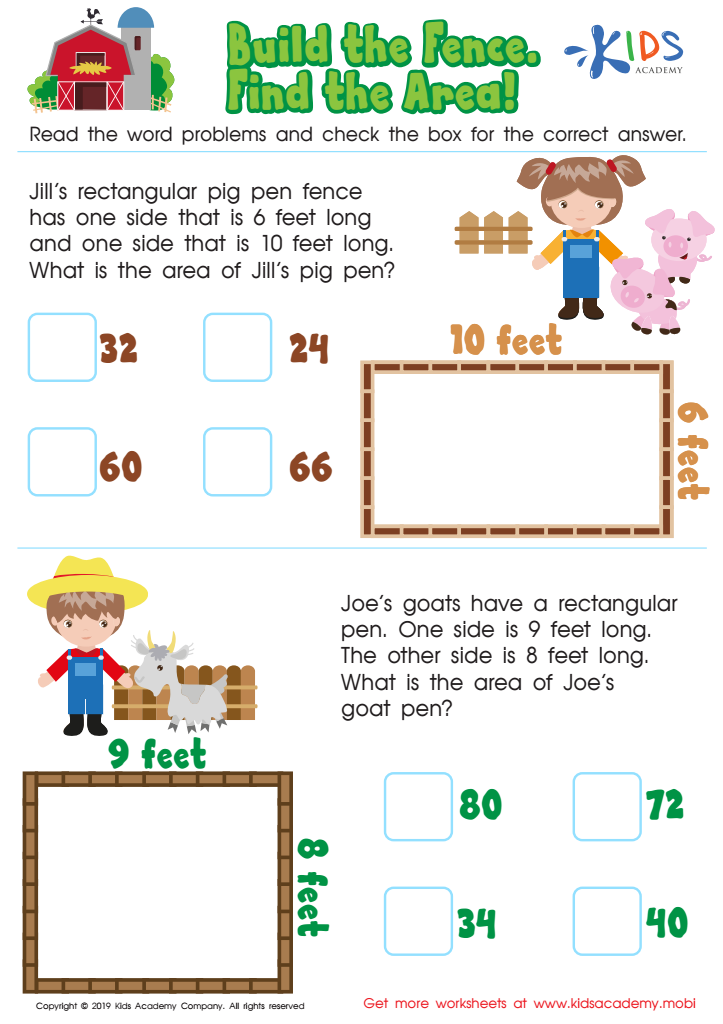
Build the Fence, Find the Area Worksheet
Help your kids gain skills in mathematics with this simple worksheet. Kids can refresh their addition and subtraction to solve geometry problems. Read the word problems and then help them check the box for the correct answer if they need extra help. This worksheet is great for improving kids' familiarity with basic equations.
Build the Fence, Find the Area Worksheet
Worksheet
Join Kids Academy for Free
Who is primarily going to use this learning content?








Parents and teachers should prioritize basic math skills, particularly in geometry, for children aged 3-9 because these foundational skills significantly impact a child's cognitive development and problem-solving abilities. Early exposure to geometric concepts—such as shapes, sizes, and spatial understanding—helps children develop critical thinking skills through visualization and manipulation of objects.
In these formative years, geometry lays the groundwork for more complex mathematical concepts. Engaging in activities that challenge children's understanding of shapes and spatial relationships enhances their ability to comprehend and tackle problems in various contexts, from everyday situations to advanced mathematical studies in later grades.
Additionally, incorporating geometry into early education promotes fine motor skills through hands-on activities like drawing shapes or building structures. These movements support coordination while stimulating creativity and imagination.
Moreover, mastering basic geometry boosts self-confidence and positive attitudes towards math. As children become more proficient in recognizing patterns and understanding spatial relationships, it fosters a growth mindset. Ultimately, nurturing these skills at an early age prepares children not only for future academic success but also for real-life applications—essentially unlocking a clearer path towards lifelong learning and problem-solving capabilities.