
Visual discrimination Extra Challenge Geometry Worksheets for Ages 3-9
3 filtered results
Difficulty Level
Grade
Age
-
From - To
Subject
Activity
Standards
Introducing our "Visual Discrimination Extra Challenge Geometry Worksheets" designed for children aged 3-9! These engaging and educational worksheets enhance kids' visual discrimination skills through fun, challenging geometry activities. Perfect for early childhood and elementary students, each worksheet offers exciting tasks that help young learners recognize shapes, patterns, and spatial relationships. From identifying differences to matching pairs, our expertly crafted exercises stimulate critical thinking and boost cognitive development. Give your child the extra challenge they need with our printable, easy-to-use resources. Visit our website to access these incredible tools and unlock your child's full potential in geometry!
Favorites
With answer key
Interactive
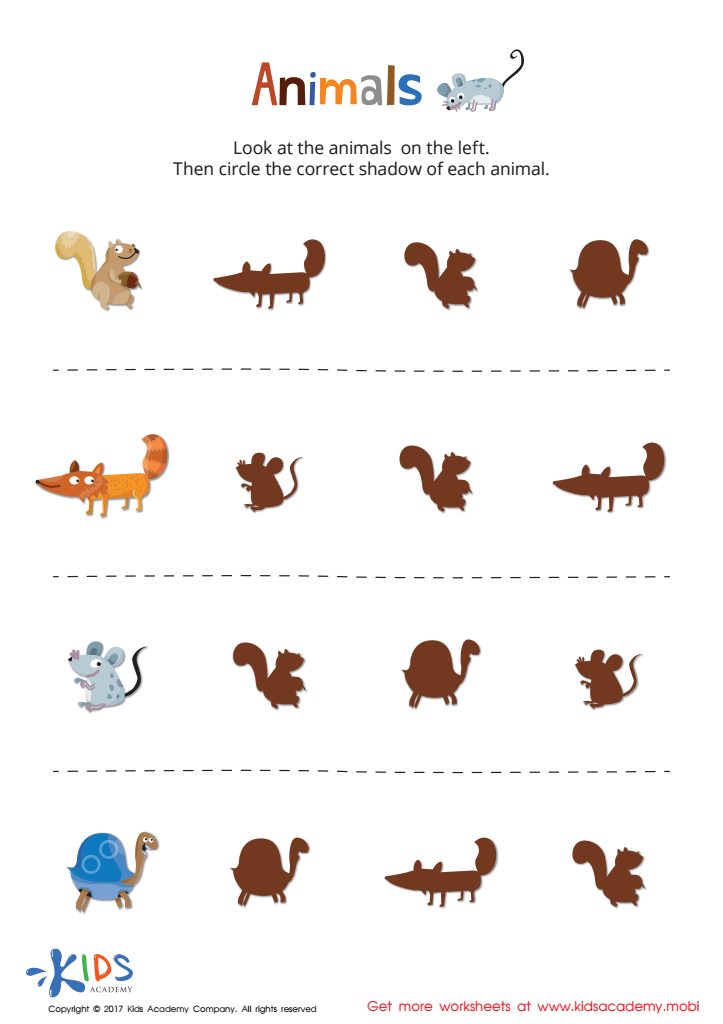
Animal Shadows Sorting Worksheet
This fun worksheet helps your child sharpen many skills. It features animals to match shapes and practice relative directions. Your child will sort animal features, practice spatial recognition, and recognize right/left. Plus, you can use it to start conversations about the animals. And try it also with fruits and veggies to boost sorting skills.
 Assign to My Students
Animal Shadows Sorting Worksheet
Worksheet











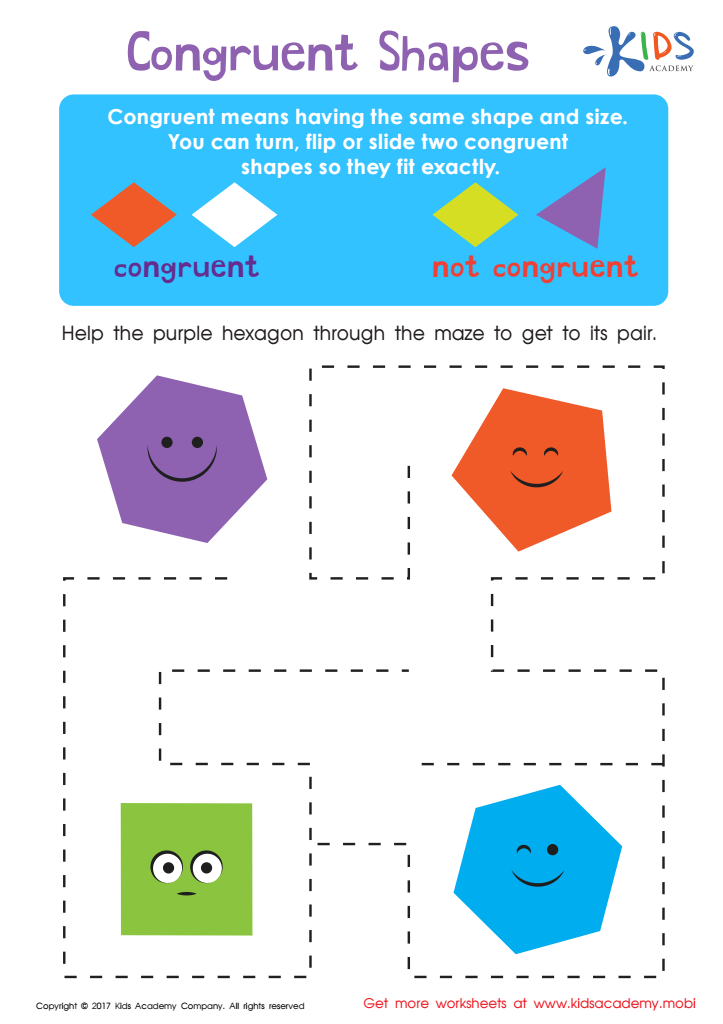
Congruent Shapes Worksheet
Help your child find the twin of the purple hexagon! This congruent shapes worksheet is great for increasing vocabulary while challenging mental rotation skills.
Congruent Shapes Worksheet
Worksheet
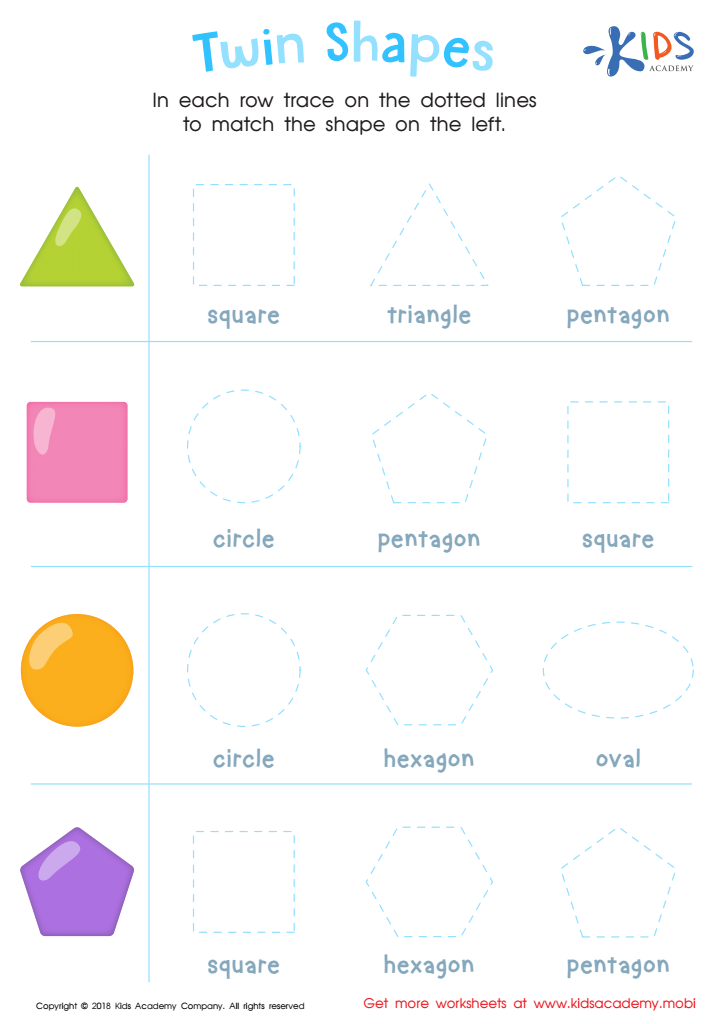
Twin Shapes Dot-to-Dot Worksheet
Test your child's ability to copy with this worksheet. Ask them to find and name the four shapes on the left. Then, they must match each with the dotted lines on the right. Help your child with all four shapes in this fun exercise.
Twin Shapes Dot-to-Dot Worksheet
Worksheet
Join Kids Academy for Free
Who is primarily going to use this learning content?








Visual discrimination is an essential cognitive skill for young children, crucial for early learning and development. Incorporating an Extra Challenge Geometry activity aimed at ages 3-9 enhances this skill and lays a strong foundation for future academic success.
Parents and teachers should care about visual discrimination because it directly influences a child's ability to differentiate between shapes, sizes, and patterns, which is fundamental to reading, writing, and mathematics. As children engage in geometry challenges, they learn to recognize and categorize different geometric figures, enhancing their spatial awareness and problem-solving abilities. This, in turn, improves their ability to follow instructions, complete puzzles, and comprehend classroom material more effectively.
Moreover, these activities are designed to stimulate a child’s curiosity and encourage critical thinking, creativity, and persistence. By introducing complex geometry concepts in an engaging and age-appropriate manner, children build confidence and resilience in facing challenging tasks.
Visual discrimination games are not just about academic readiness; they also promote a love for learning and create a playful yet educational environment. In summary, by prioritizing these geometry activities, parents and teachers can support children's all-around cognitive development, ensuring a well-rounded and effective early childhood education.








