
Counting practice Extra Challenge Math Worksheets for Ages 3-9
19 filtered results
Difficulty Level
Grade
Age
-
From - To
Subject
Activity
Standards
Enhance your child's counting skills with our Counting Practice Extra Challenge Math Worksheets, designed specifically for ages 3-9! These engaging and colorful worksheets provide an exciting way for young learners to develop essential counting abilities, ranging from basic number recognition to more complex counting tasks. Tailored to match various skill levels, each worksheet features fun themes and interactive exercises that stimulate curiosity and encourage a love for math. With these extra challenges, children can practice and reinforce their counting knowledge while enjoying a fun learning experience. Perfect for home or classroom use, these worksheets make math magical and rewarding for young minds!
Favorites
With answer key
Interactive
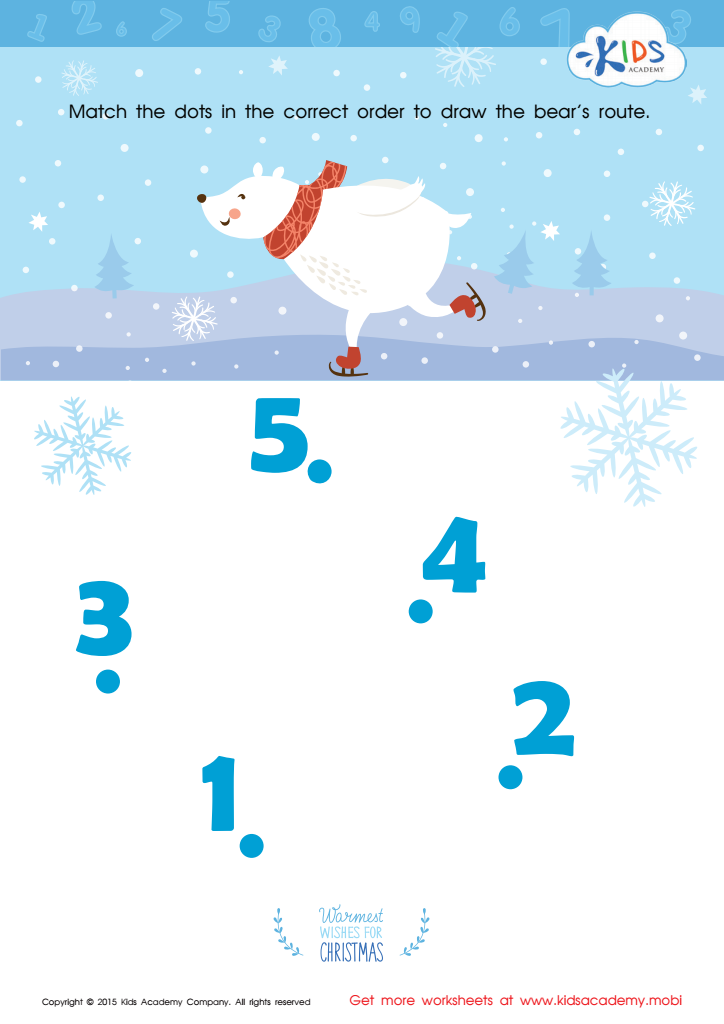
Drawing the Bear's Route by Number Worksheet
This winter-themed math worksheet is perfect for counting practice. Have fun learning and celebrating the season with your kindergartener as they trace and recognize numbers. It also helps develop fine motor muscles. For more fun, check out the math worksheets on Kids Academy.
 Assign to My Students
Drawing the Bear's Route by Number Worksheet
Worksheet
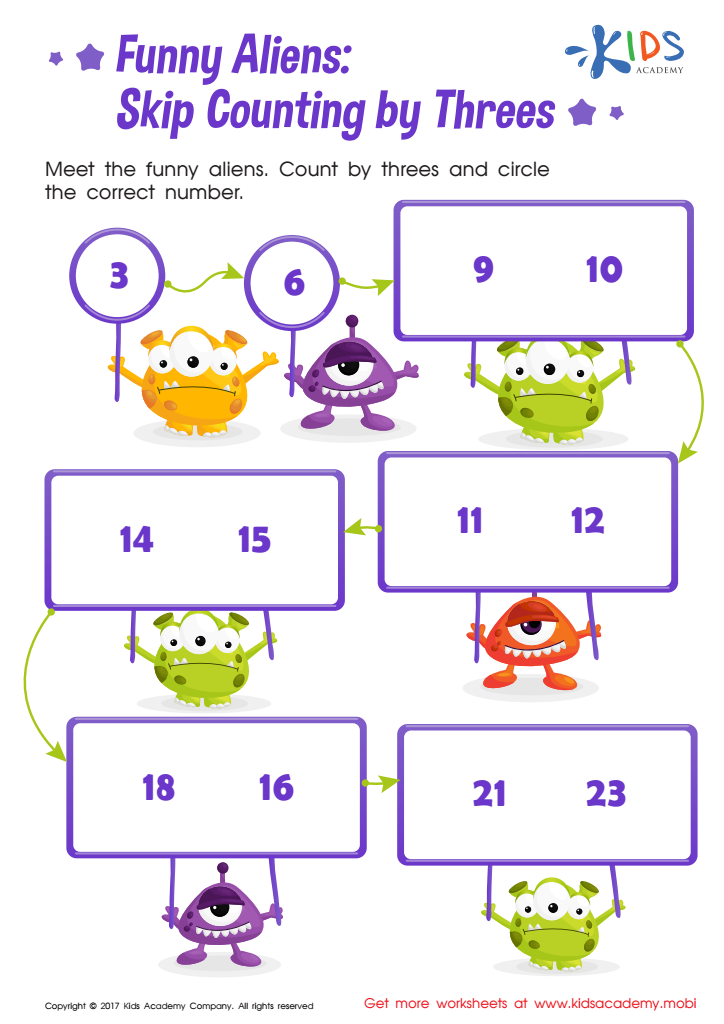
Skip Counting by 3s: Funny Aliens Printable
Blast off to outer space learning fun with this skip counting by 3 worksheet!
Skip Counting by 3s: Funny Aliens Printable
Worksheet
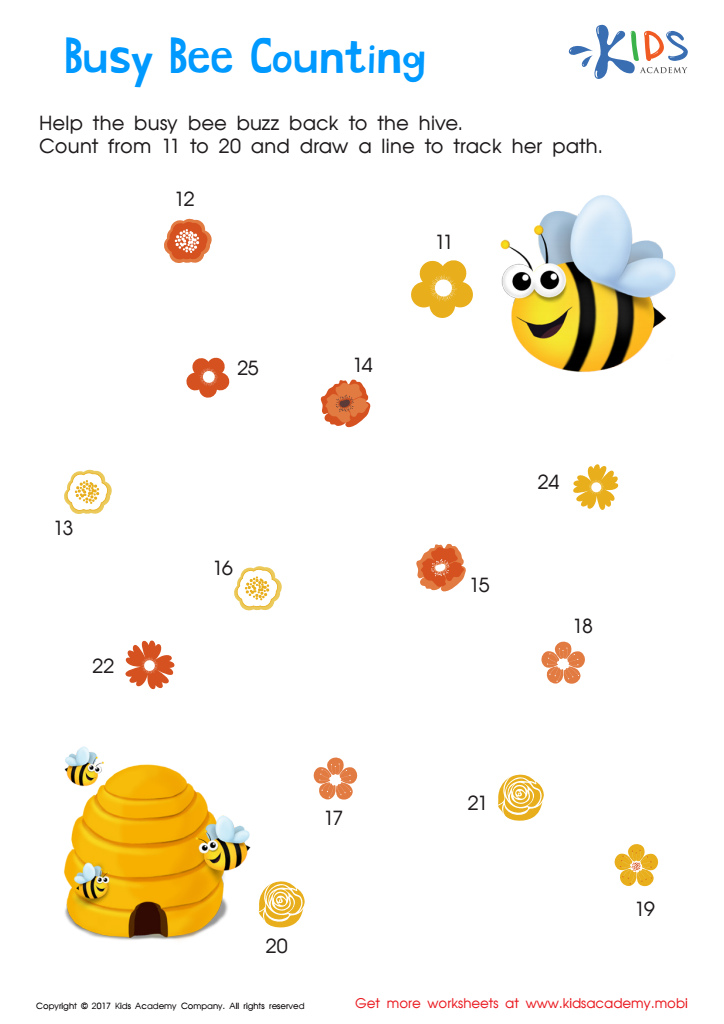
Ordering 11–20: Busy Bee Counting Worksheet
Help your child master counting from 11 to 20 with our connect the dot counting worksheet. Kids will have fun counting, drawing and problem-solving with this vibrant worksheet. With clear directions, adorable pictures and a sense of purpose, your child will develop crucial numeracy skills without even knowing it!
Ordering 11–20: Busy Bee Counting Worksheet
Worksheet
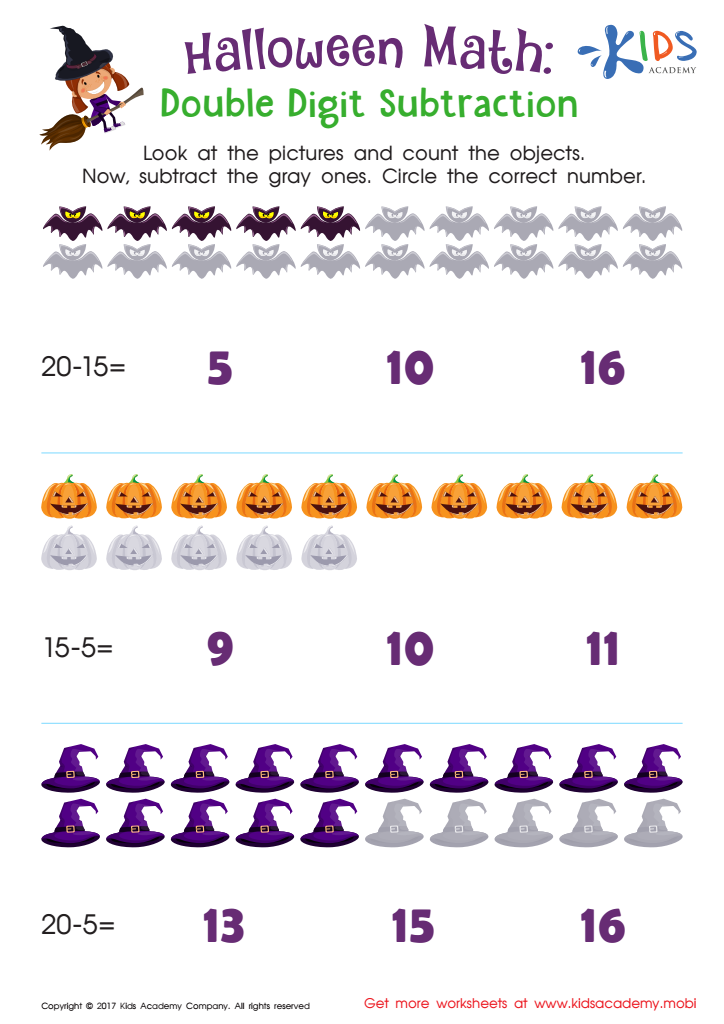
Halloween Math Subtraction Worksheet
Kids can easily understand subtraction by using the visuals provided in this worksheet. Get ready for some fun math!
This Halloween math worksheet uses spooky images to help kids understand subtraction. With it, they can count and solve double digit problems more easily. Get ready for some fun and engaging math practice!
Halloween Math Subtraction Worksheet
Worksheet
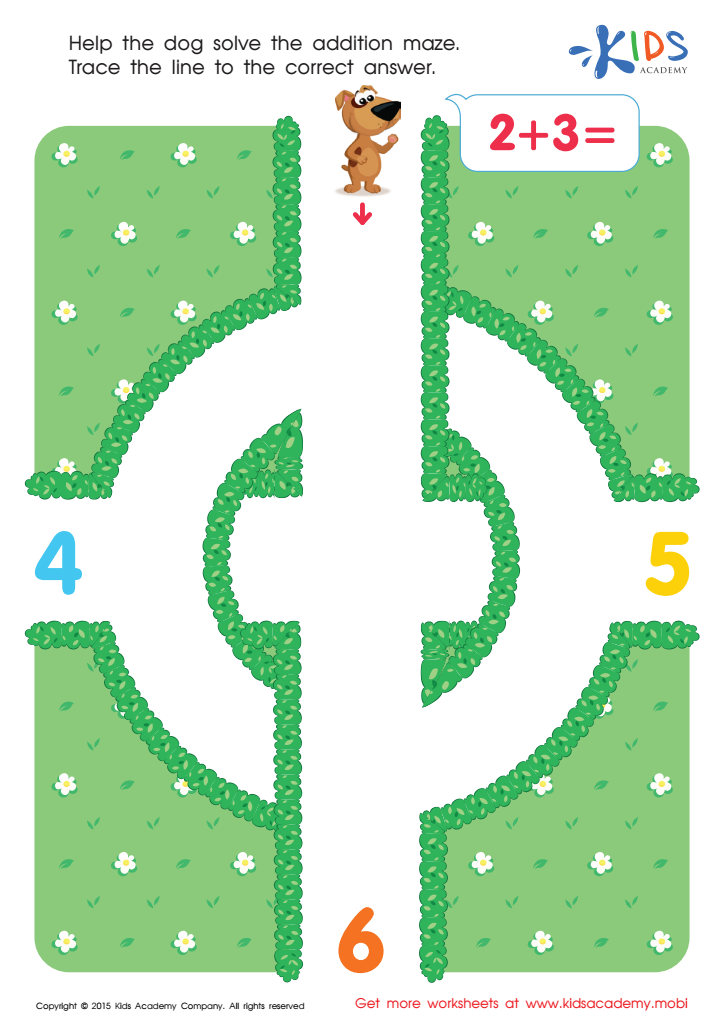
Two And Three Addition Worksheet
Give your children the task and let them find the path to the right answer while they make their way through the maze, and don't forget to let them trace the path.
Two And Three Addition Worksheet
Worksheet
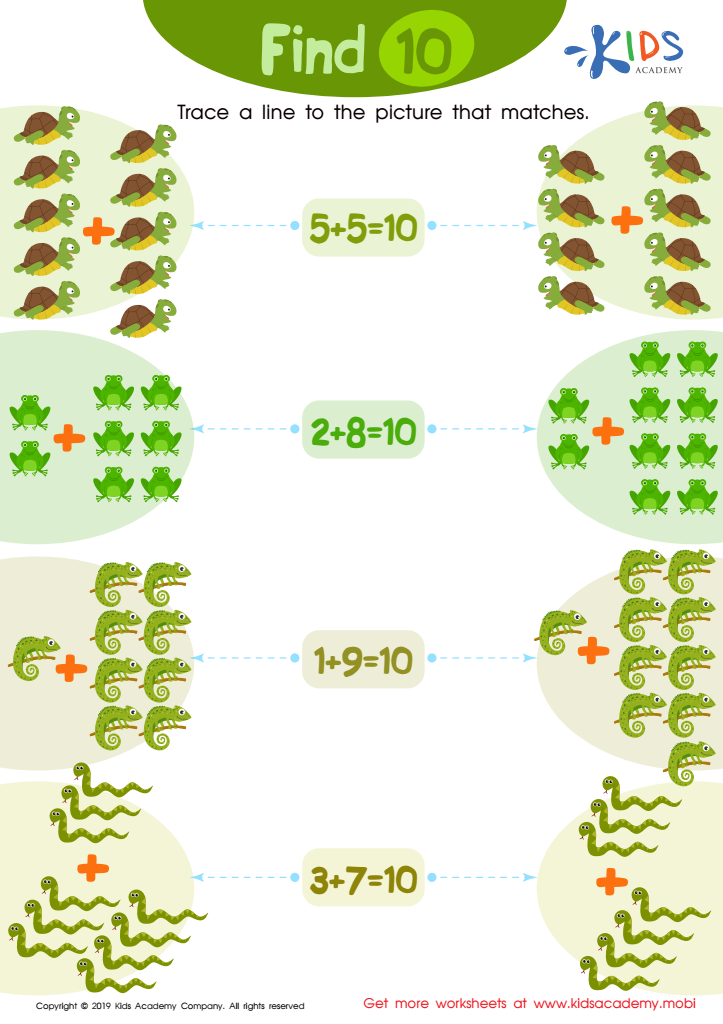
Find 10 Worksheet
Counting can be tricky, but your kids can master it with regular practice. Here's a fun activity to help: count the animals, then trace a line to the pictures that matches. With these tips, math will be an easy walk in the park.
Find 10 Worksheet
Worksheet
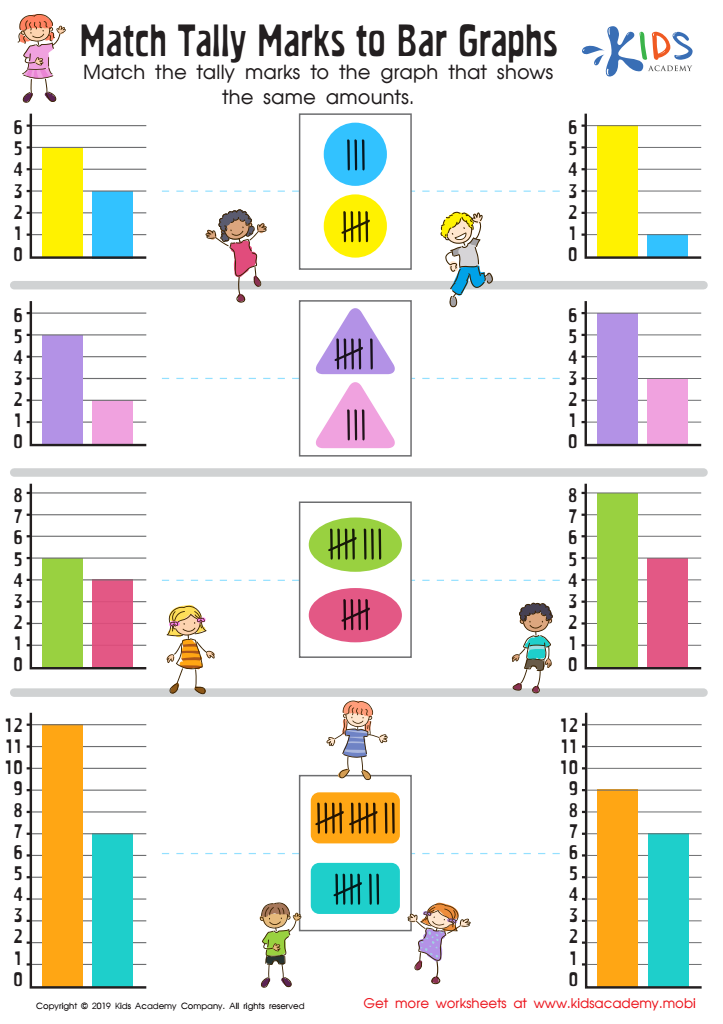
Match Tally Marks to Bar Graphs Worksheet
Learning math can be tough for kids. Rules and formulas can be confusing. Don't worry, this worksheet can help them understand graphs better. Show them how to match the tally marks with the graph that shows the same amount. It will help them grasp the basics and prepare them for more complex equations.
Match Tally Marks to Bar Graphs Worksheet
Worksheet
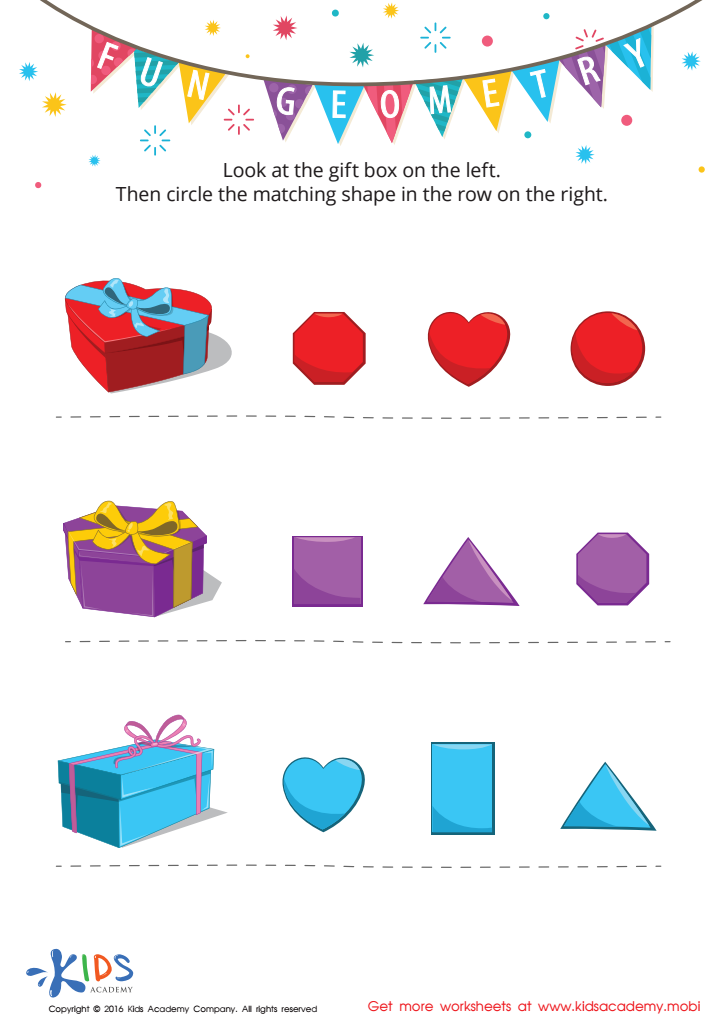
Fun Geometry Worksheet
Give your child the gift of learning with this fun and educational geometry matching worksheet! It'll help them develop essential matching and problem-solving skills while having fun. Vibrant pictures will excite them to complete it and get a better grasp of the world around them.
Fun Geometry Worksheet
Worksheet
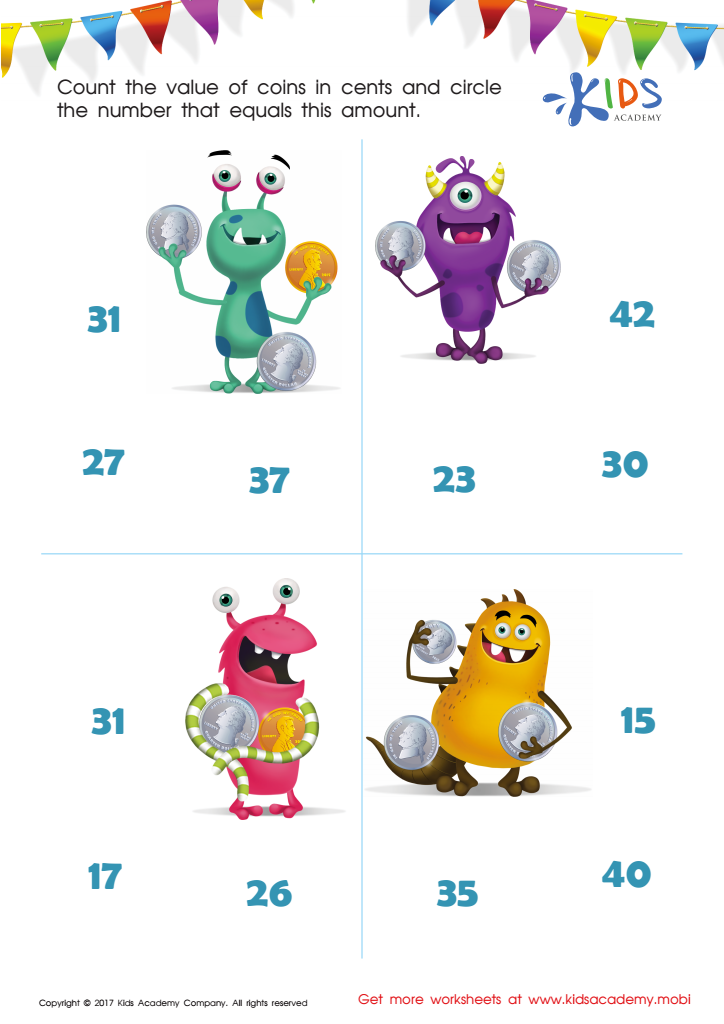
How Many Coins Money Worksheet
Have fun while counting coins: look at the monsters and count the coins in their hands. Challenge your little learners to count and write down the number of coins each one has. Enjoy the time together!
How Many Coins Money Worksheet
Worksheet
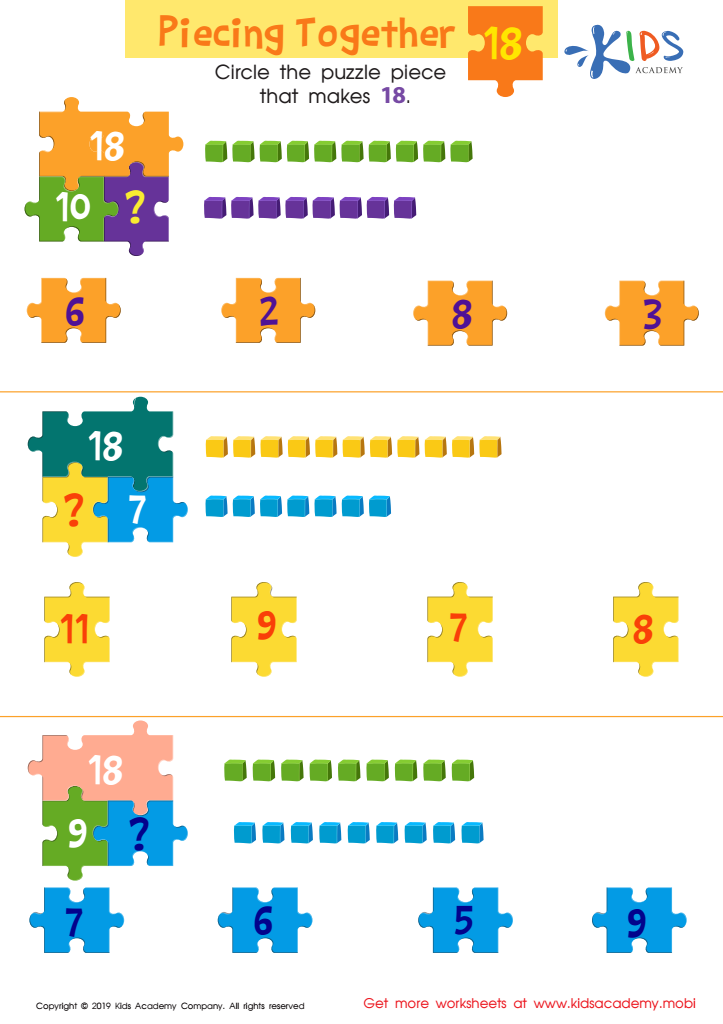
Piecing Together 18 Worksheet
Let your preschoolers learn and have fun with this colorful worksheet. Look at the picture with them and ask what they see. Help them solve the equations missing on each puzzle piece and then circle the one that will make the bottom puzzle piece numbers equal 16. Puzzles and bright colors make learning easy and enjoyable!
Piecing Together 18 Worksheet
Worksheet
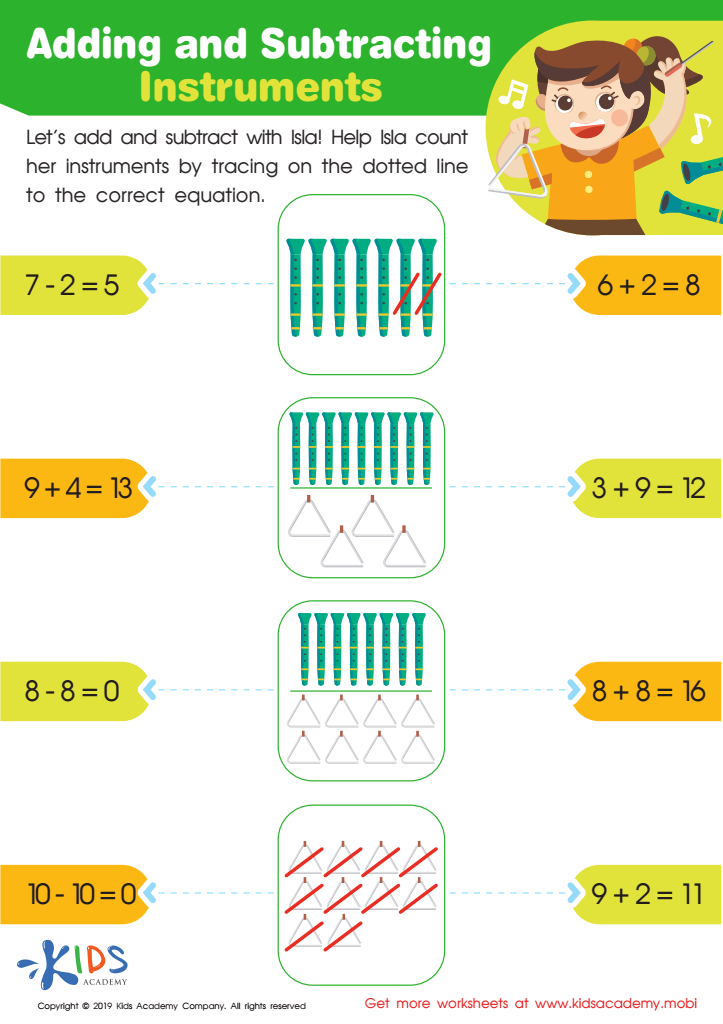
Adding and Subtracting: Instruments Worksheet
Children can help Isla count her musical instruments with this fun worksheet. The downloadable PDF gives them a chance to practice addition and subtraction by connecting pictures to equations. It's also a great way to learn the order of operations.
Adding and Subtracting: Instruments Worksheet
Worksheet
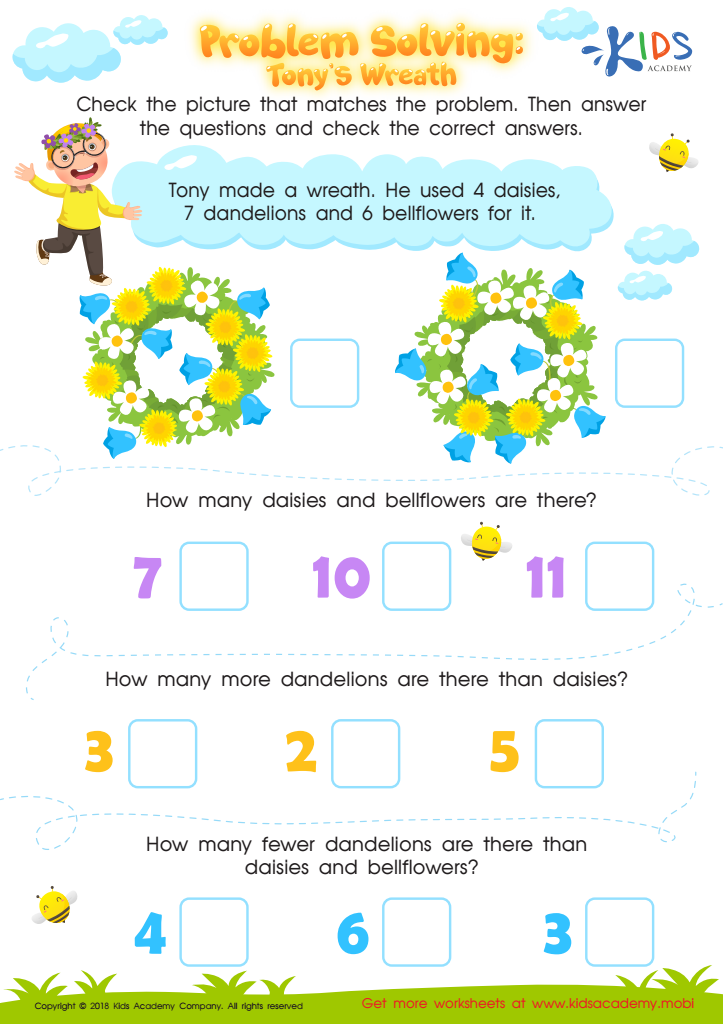
Problem Solving: Tony's Wreath Worksheet
Tony needs help! He's made a beautiful, colorful wreath and needs help counting the flowers. Your math student can read the word problems, match answers to the problems and solve basic addition and subtraction. They'll practice with two and three addends, minuends and subtrahends to find sums and differences and help Tony and his bee friends.
Problem Solving: Tony's Wreath Worksheet
Worksheet
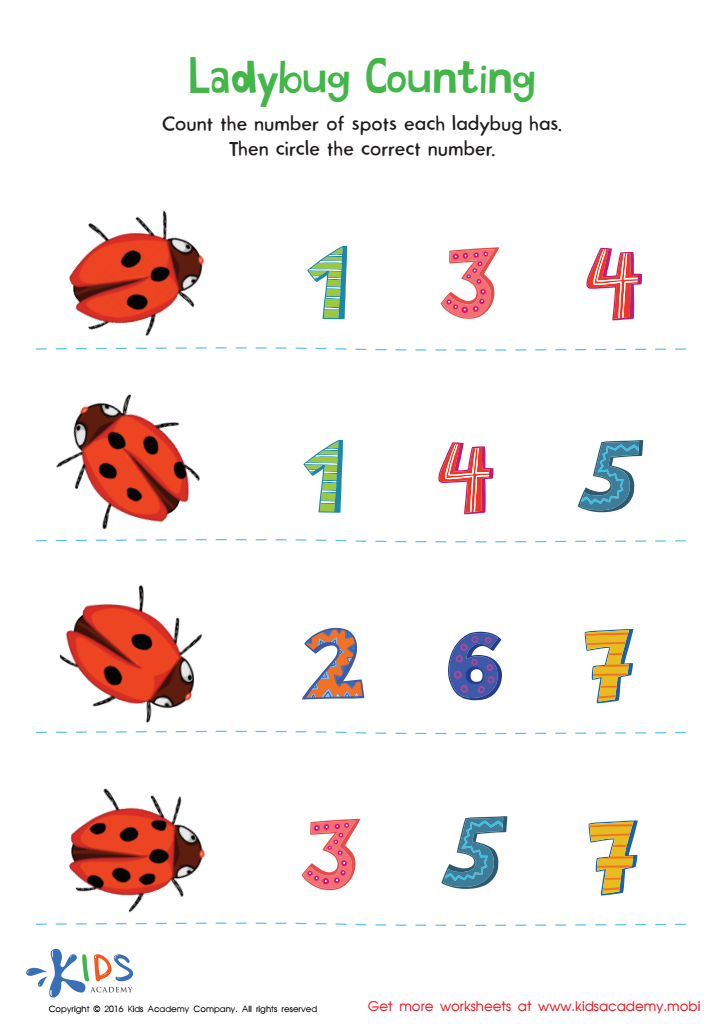
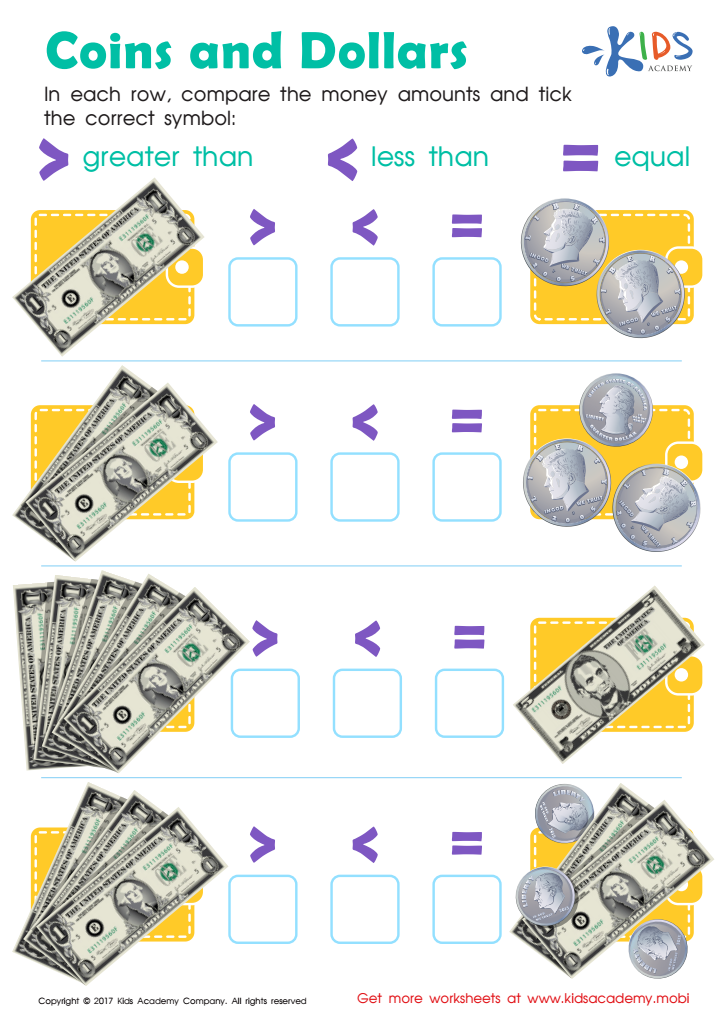
Money: Coins Dollars Printable
Motivate your kid to learn and practise essential math skills, like 'greater than' and 'less than', by introducing the importance of money! The money worksheet "Coins and Dollars" will give them a hands-on experience of counting coins and dollars, making math symbols more memorable.
Money: Coins Dollars Printable
Worksheet
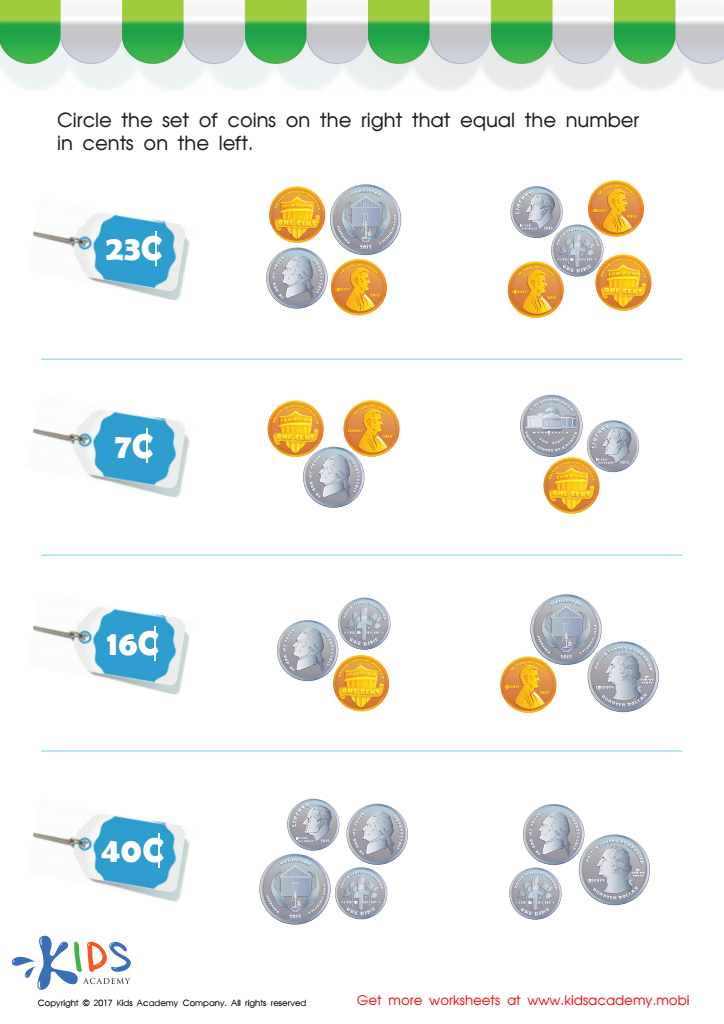
Picking the Coins You Need Money Worksheet
Let's learn to count money with Parents and Kids Academy! Investigate a real shop together: buy a globe, pencils, books, and a school bag using coins. Then, circle the coins you'll need. Visit our website for more free and fun money games for kids!
Picking the Coins You Need Money Worksheet
Worksheet
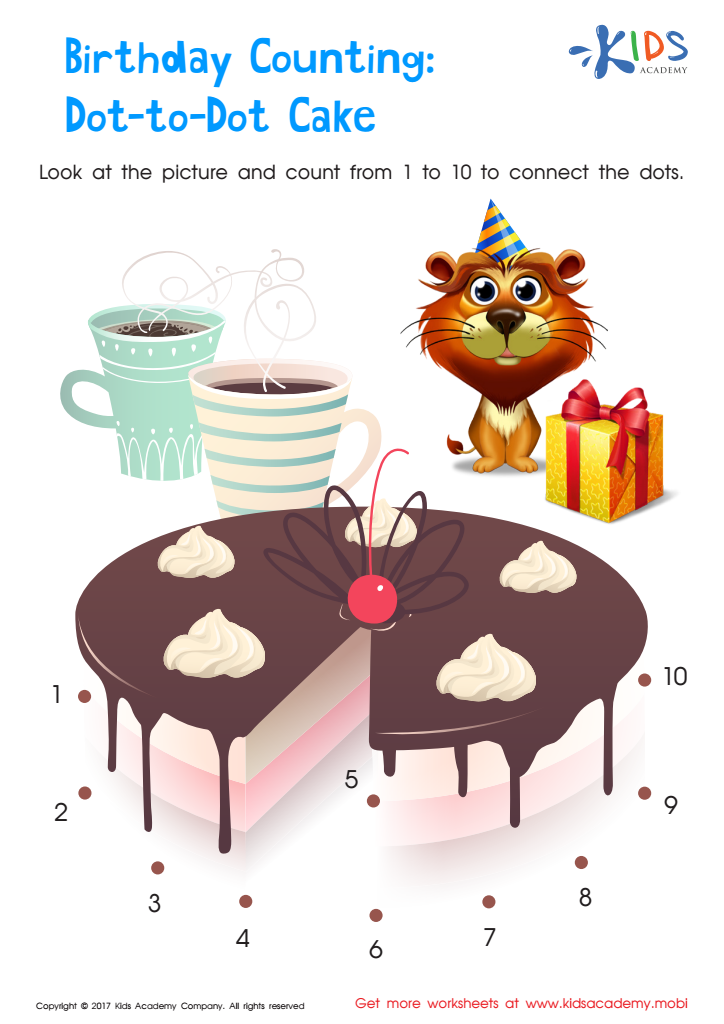
Birthday Counting Connect Dots Worksheet
Help your child count to ten and draw curved lines with this birthday cake dot to dot! Practice numeracy and problem solving skills, and enjoy the fun of creating a picture. Then, use it as a reminder for your child’s birthday and learn about the days and months of the year.
Birthday Counting Connect Dots Worksheet
Worksheet
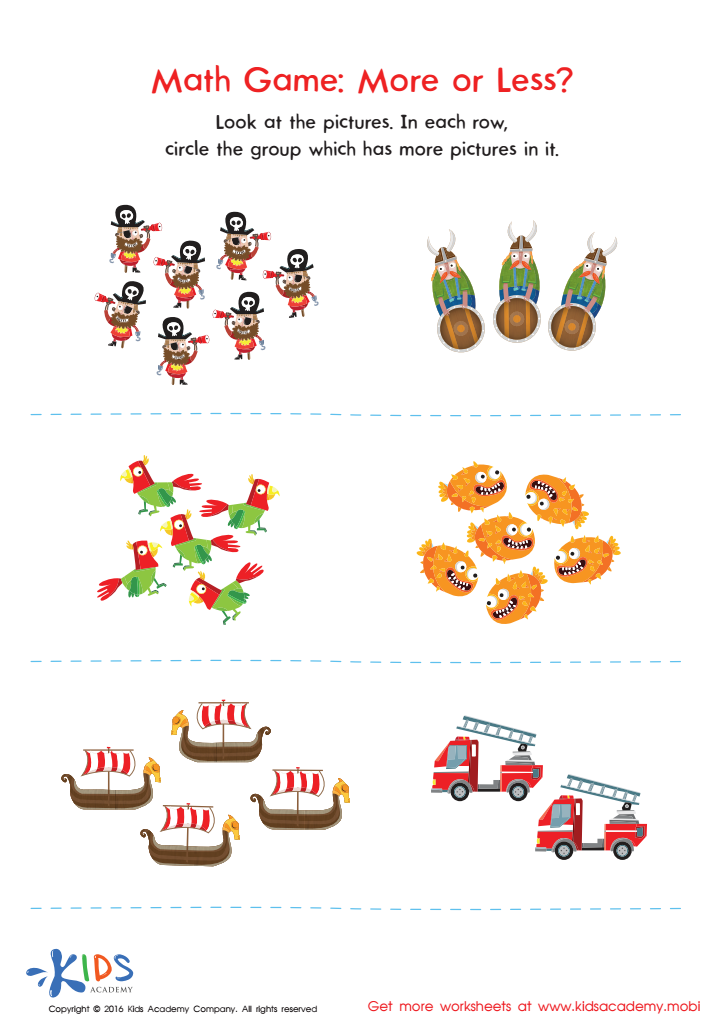
More or Less Worksheet
Counting and understanding quantity are essential skills for kindergarteners. Get your free printable more or less worksheet now!
More or Less Worksheet
Worksheet
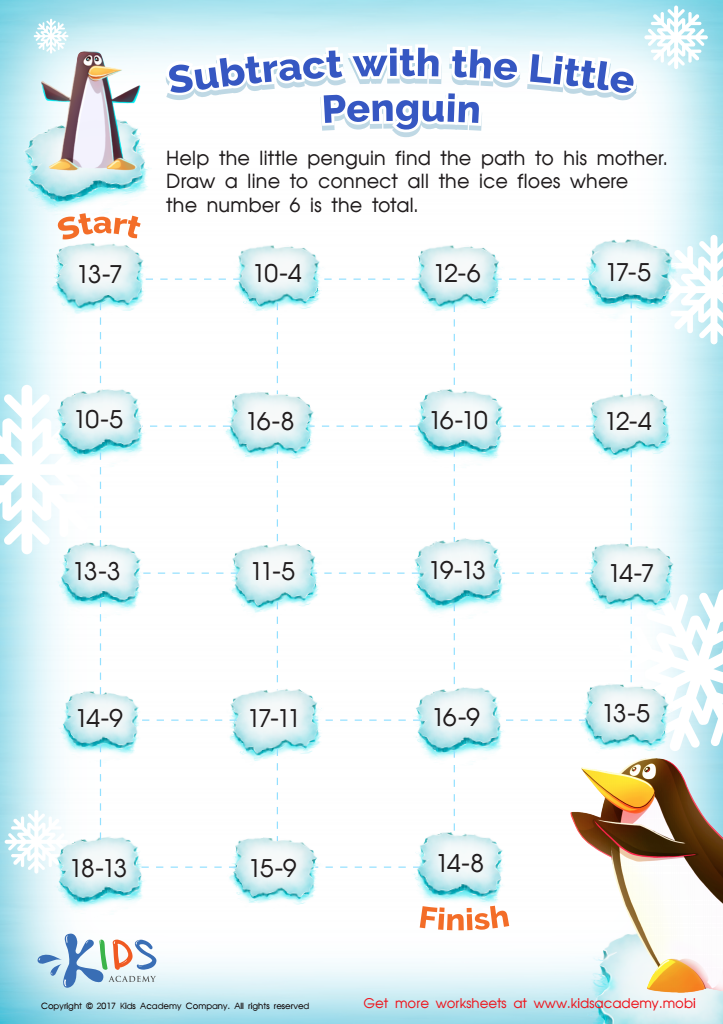
Subtract With The Little Penguin Substraction Worksheet
Uh oh! Little penguin needs help finding mommy! Delight your child with a fun subtraction puzzle. Complete each problem and guide little penguin home with this charming worksheet! Challenge and capture their hearts with this adorable game!
Subtract With The Little Penguin Substraction Worksheet
Worksheet
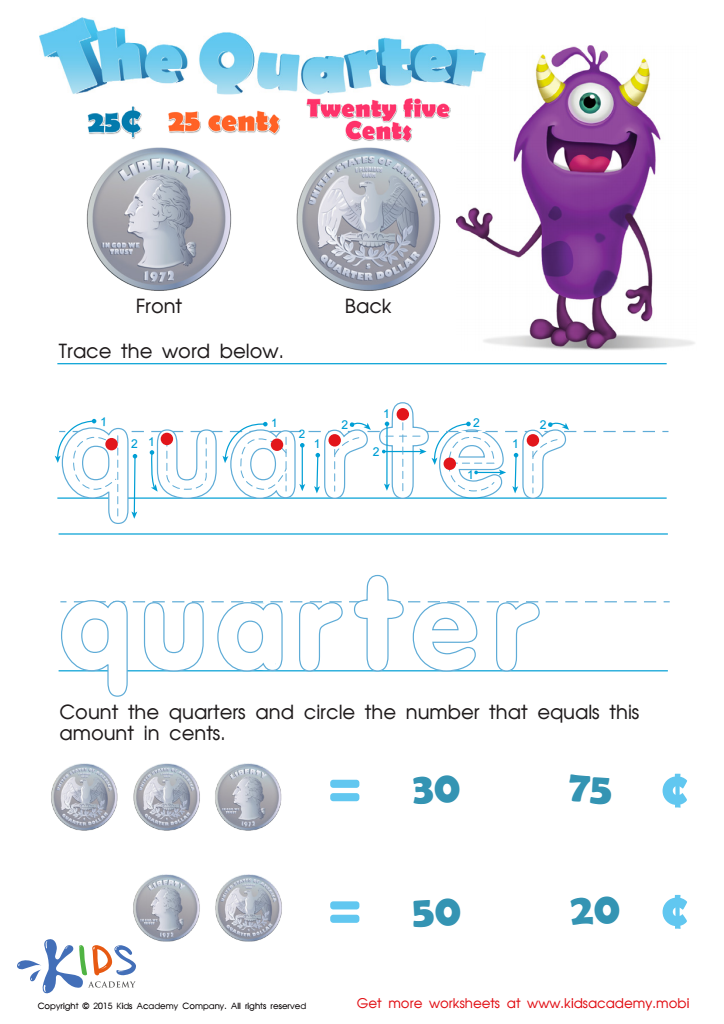
Twenty Five Cents or the Quarter Money Worksheet
Check out our new printable money games - learn to count money easily! With quarters, trace the word, count them and calculate the amount in cents. More worksheets at our website. Give it a try!
Twenty Five Cents or the Quarter Money Worksheet
Worksheet
Join Kids Academy for Free
Who is primarily going to use this learning content?




.jpg)


Counting practice is vital for young learners aged 3-9, serving as the foundation for a wide array of mathematical skills. For parents and teachers, engaging children in Counting practice Extra Challenge Math enhances not only their numerical understanding but also critical cognitive abilities. When children practice counting, they develop their number recognition, one-to-one correspondence, and early addition and subtraction skills, which are essential building blocks for future mathematics.
Moreover, incorporating challenges in counting practice makes learning interactive and fun, supporting a child's natural curiosity. By introducing extra challenges, such as counting by twos or fives, teachers and parents can cultivate problem-solving abilities and encourage creativity in thinking about numbers. This approach fosters resilience and helps children develop a growth mindset, as they learn that persistence leads to improvement.
Additionally, counting practice can support social skills through group activities, enabling teamwork and communication. This foundational skill also relates to various real-life situations, enhancing a child’s confidence in everyday applications of math. By prioritizing Counting practice, parents and teachers are investing in a child’s academic success and overall development, setting them up for future achievements in mathematics and beyond.








