Extra Challenge Mixed Times Tables Worksheets for Ages 3-9
10 filtered results
-
From - To
Explore our "Extra Challenge Mixed Times Tables Worksheets" designed specifically for children aged 3-9! These engaging worksheets provide an excellent opportunity for young learners to deepen their understanding of multiplication in a fun and interactive way. With a variety of challenging problems, your child will practice multiplication across different times tables, enhancing their math skills and problem-solving abilities. Perfect for at-home learning or classroom use, our worksheets cater to diverse learning styles and ensure a solid foundation in mathematics. Help your child build confidence and mastery in multiplication with these fun and effective challenges!
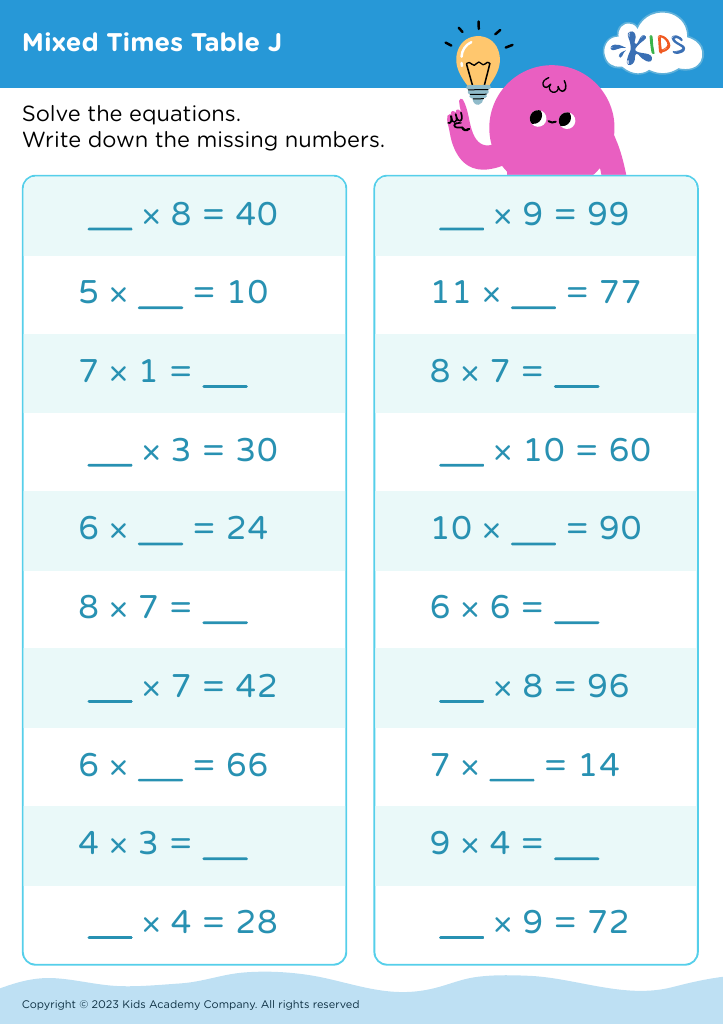
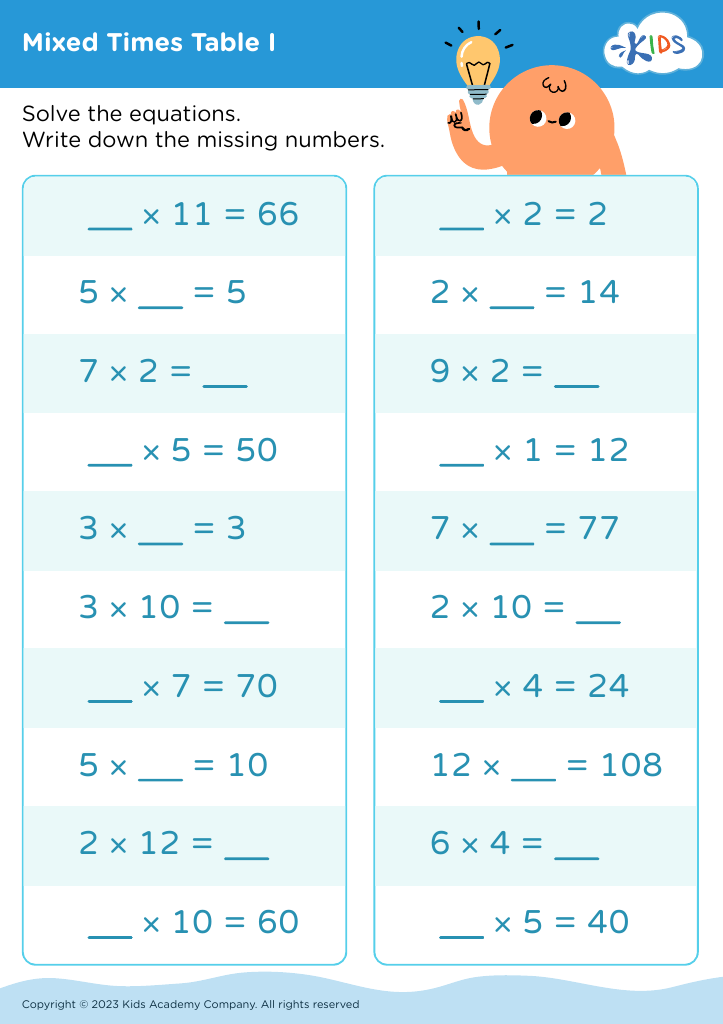
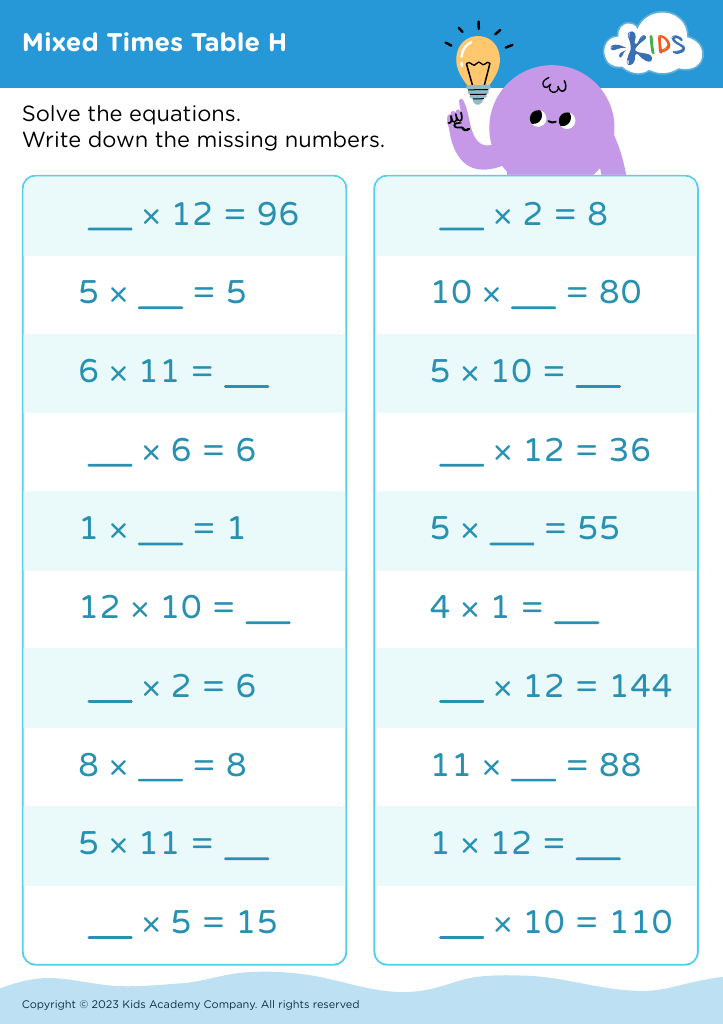
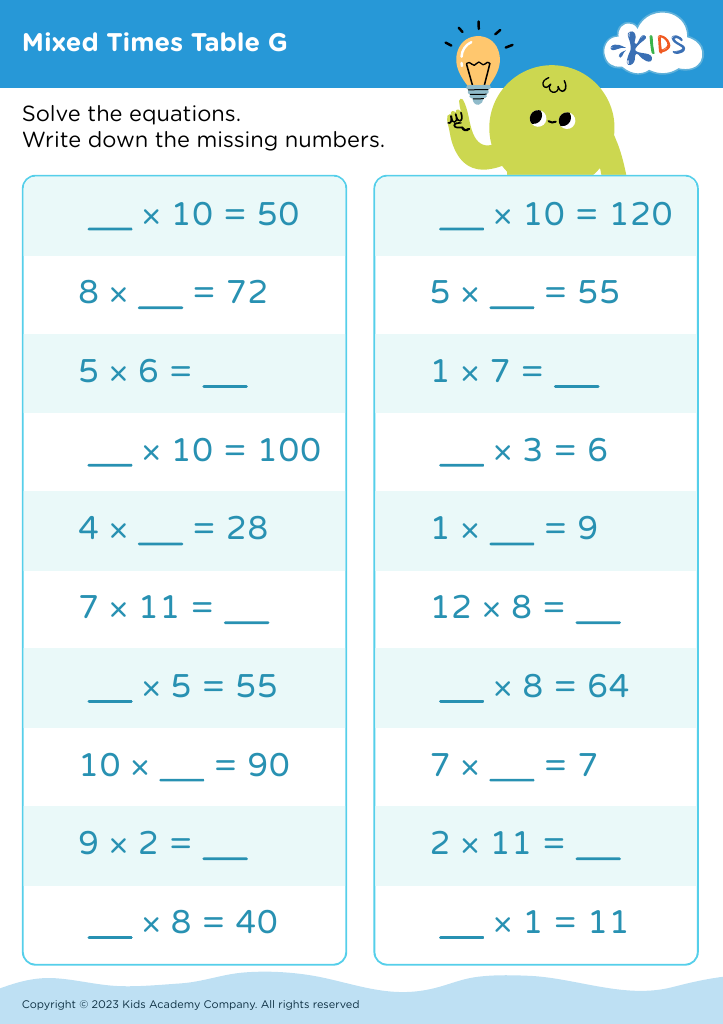
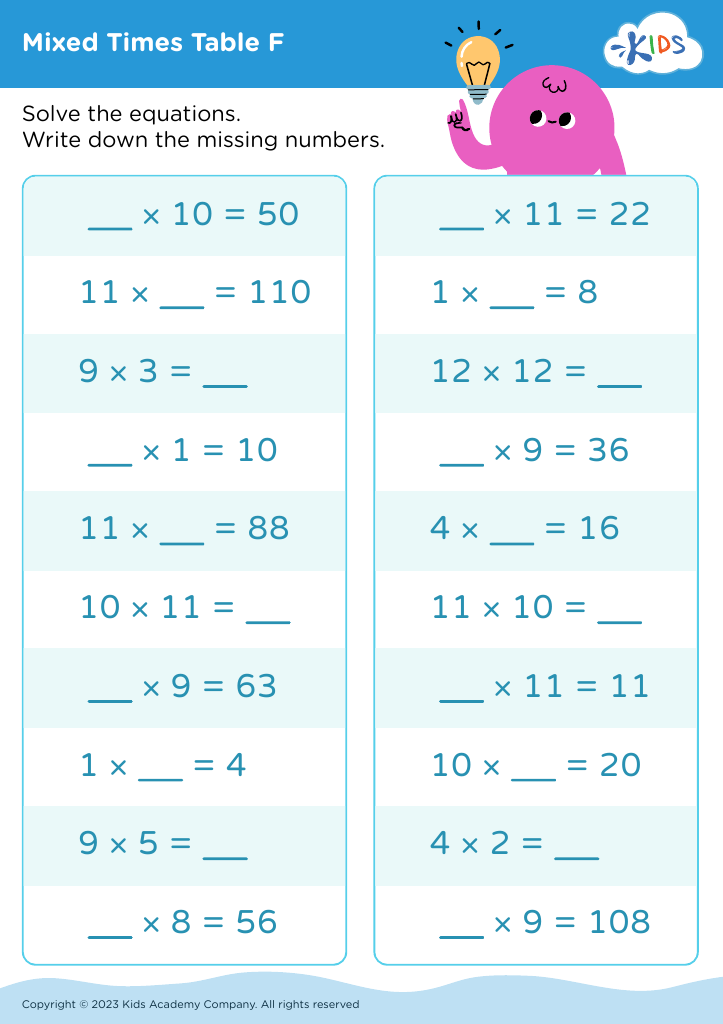
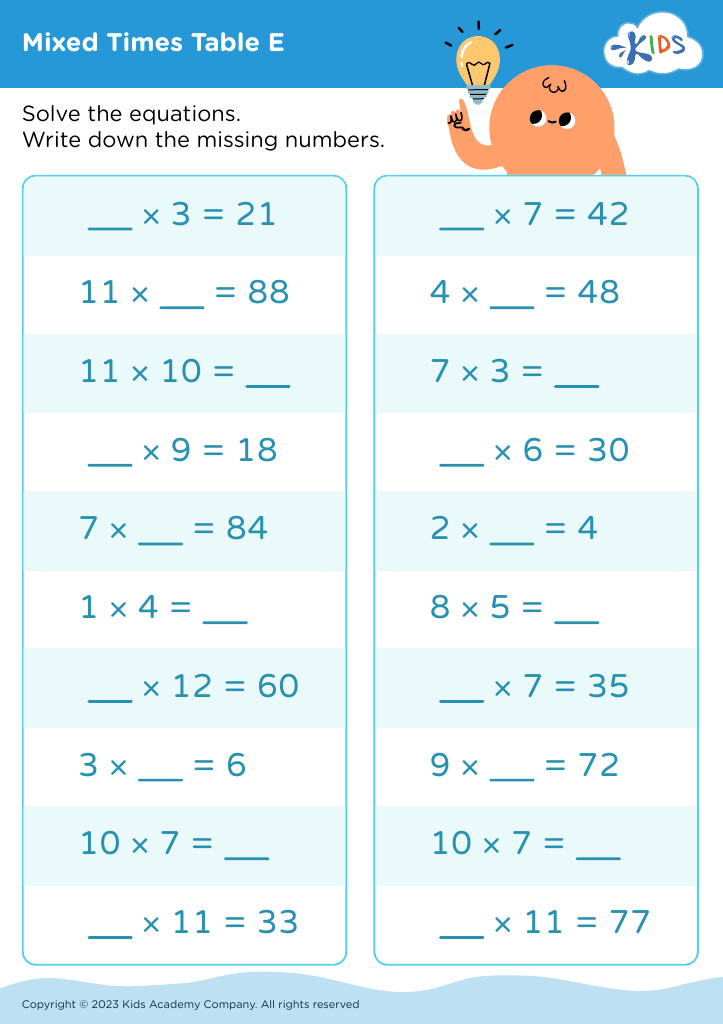
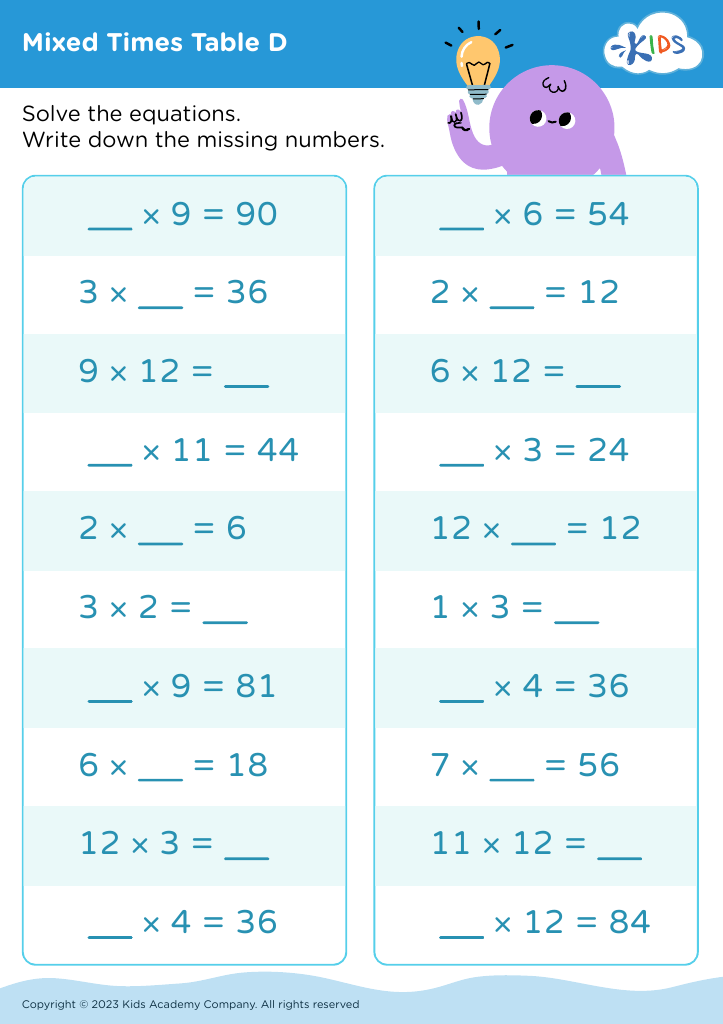
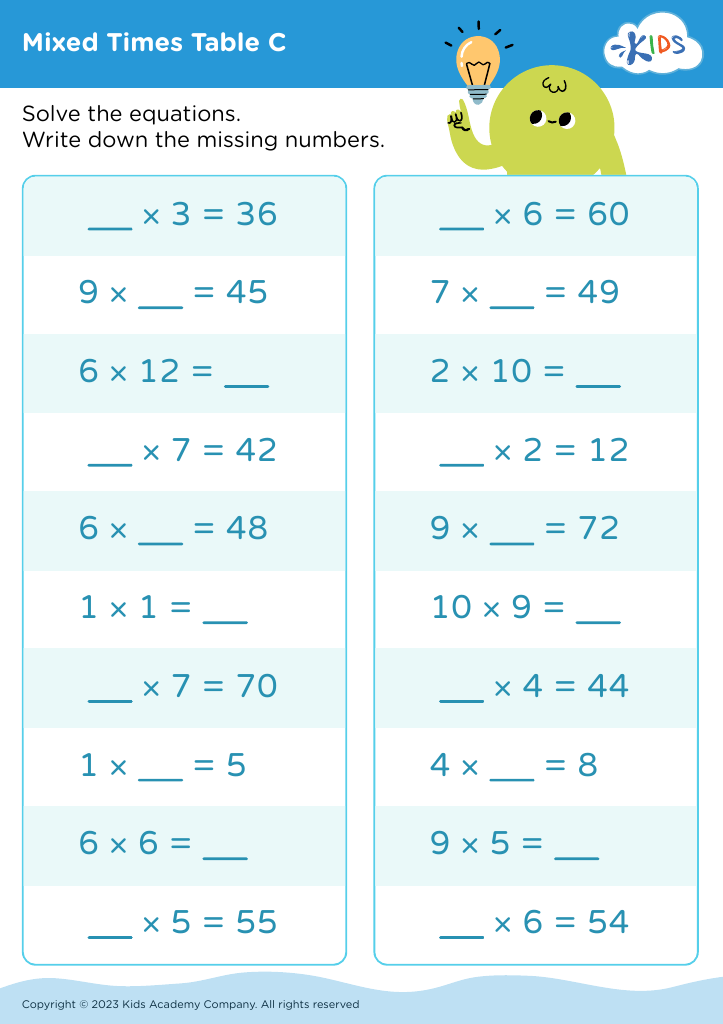
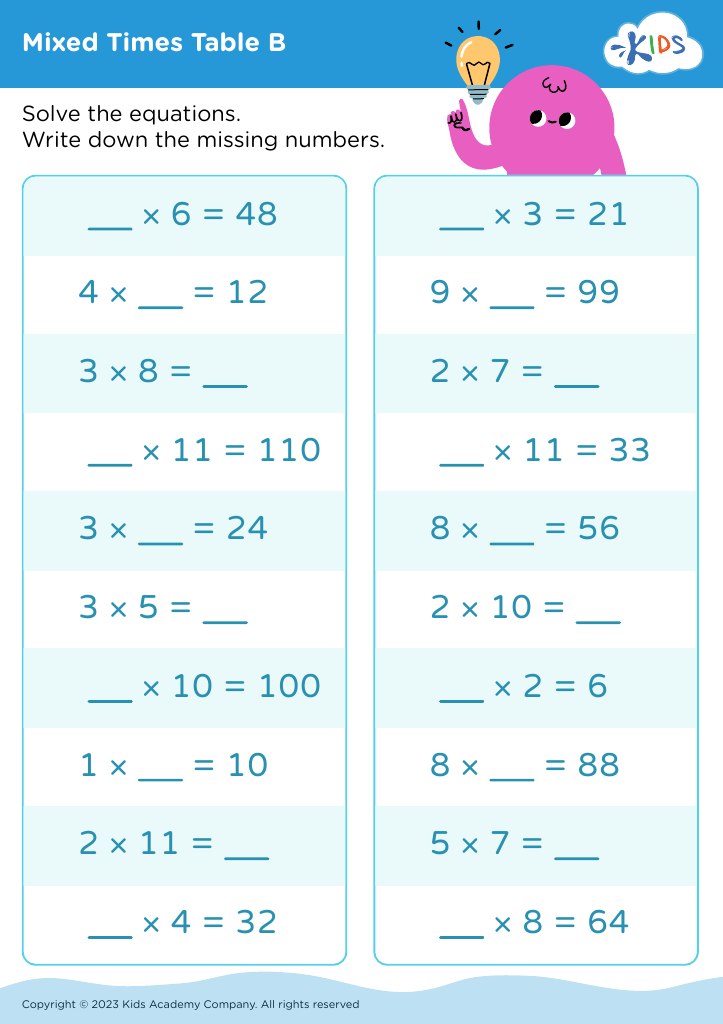
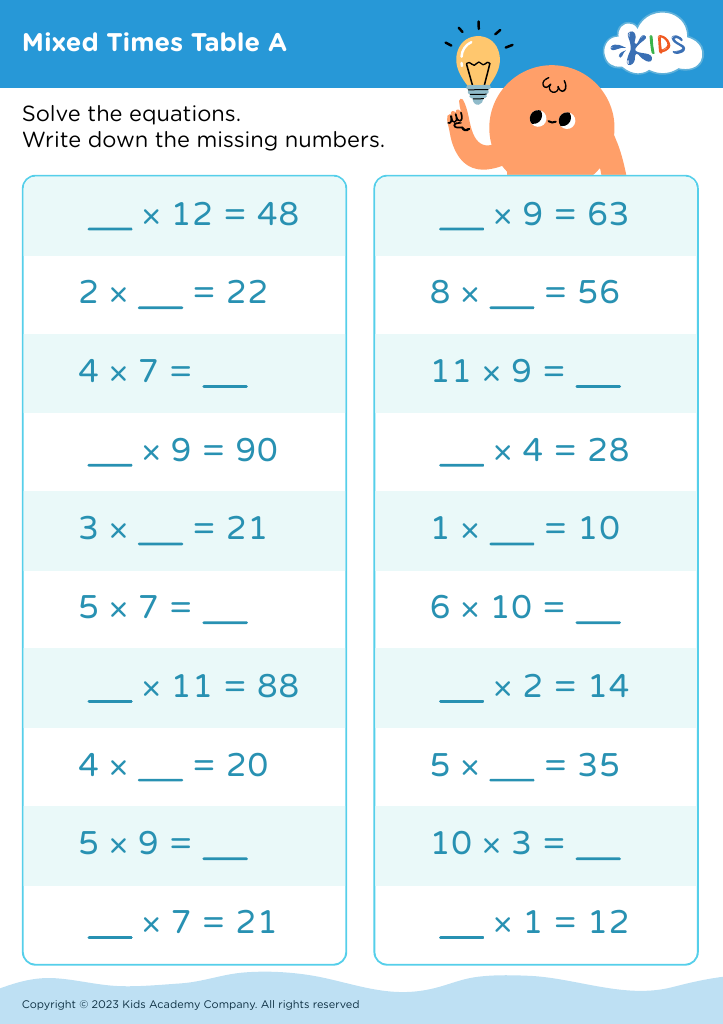


Parents and teachers should care about Extra Challenge Mixed Times Tables for Ages 3-9 because building a strong foundational understanding of multiplication is crucial for children's numerical literacy. Introducing mixed times tables at an early age helps develop flexibility in thinking, encouraging children to approach problems from various angles. This flexibility is essential for mathematical problem-solving and lays the groundwork for more advanced concepts in math.
Additionally, learning multiplication facts through engaging and interactive challenges can boost a child's confidence and motivation. As kids face varied exercises, they cultivate resilience and a growth mindset, essential traits for lifelong learning. Early mastery of multiplication not only assists in developing basic math skills but also prepares students for algebra and other higher-level math concepts they will encounter later in school.
Moreover, extra challenges provide opportunities for teachers and parents to identify areas where a child may need extra support, tailoring their learning experience for more effective development. By promoting these challenges in a fun way, both educators and caregivers can create a positive learning environment that fosters a love for mathematics. Ultimately, Extra Challenge Mixed Times Tables strengthen skill sets that are vital for children’s future academic success.








