
Money counting skills Extra Challenge Worksheets for 3-Year-Olds
3 filtered results
Difficulty Level
Grade
Age
-
From - To
Subject
Activity
Standards
Introducing our engaging "Money Counting Skills Extra Challenge Worksheets" designed specifically for 3-year-olds! These worksheets provide young learners with the opportunity to develop essential money counting skills through fun and interactive activities. Featuring colorful illustrations and simple exercises, children will practice identifying, counting, and matching coins, enhancing their numerical understanding. Perfect for early education at home or in the classroom, our worksheets promote cognitive development and fine motor skills. Empower your little ones to build a solid foundation in handling money while enjoying these extra challenges. Start their journey to financial literacy today with our exciting resources!
Favorites
With answer key
Interactive
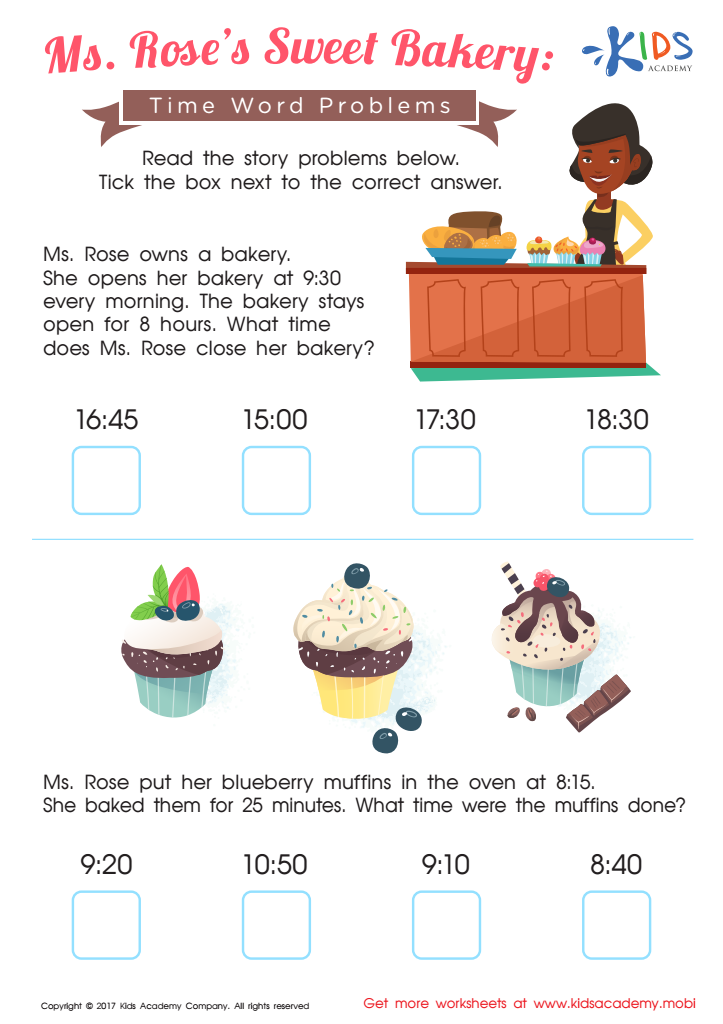
Ms. Roseв's Sweet Bakery Time Worksheet
Help your child understand the 24-hour clock using this fascinating telling time word problems worksheet: Sweet Bakery! Widely known as "military time", this skill isn't taught in school but is important for your kid to master.
 Assign to My Students
Ms. Roseв's Sweet Bakery Time Worksheet
Worksheet
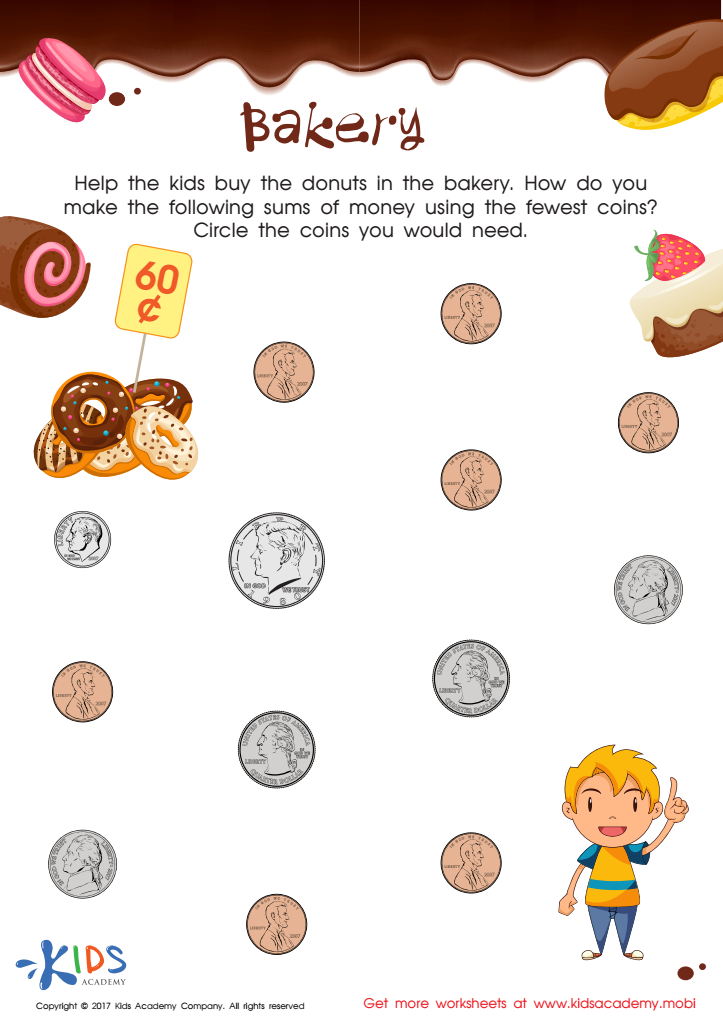
Counting Coins Worksheet
It will challenge them to spend a given amount using the least coins possible. Perfect for 2nd grade.
Help your child learn to count coins with this fun bakery-themed worksheet. It's perfect for 2nd graders and will challenge them to use the least coins possible to spend a set amount. Develop a valuable life skill and have fun while doing it!
Counting Coins Worksheet
Worksheet
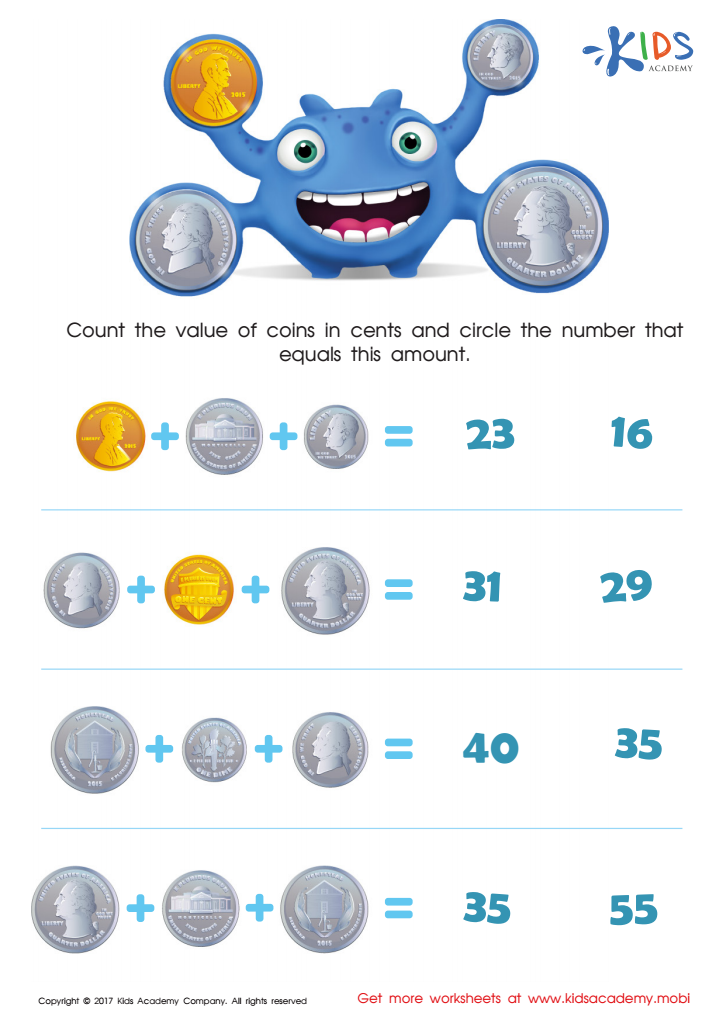
Counting the Coins Money Worksheet
Count coins quickly and work out sums in cents. Remember the value of each coin!
Counting the Coins Money Worksheet
Worksheet
Join Kids Academy for Free
Who is primarily going to use this learning content?







Money counting skills are vital for three-year-olds as they lay the foundation for early math proficiency and everyday life skills. At this age, children begin to understand basic concepts of quantity and value, which are crucial aspects of financial literacy. Teaching money counting helps them grasp numerical relationships, enhance cognitive development, and foster critical thinking abilities.
Moreover, these activities indulge children's curiosity and imagination through playful learning, making abstract concepts more tangible. Activities like sorting coins, playing store, or using real or play money not only make learning fun but also improve fine motor skills and hand-eye coordination.
Engaging in money counting also equips children with skills that extend beyond math. They learn the importance of saving, budgeting, and making choices—lessons that contribute to responsible future financial behavior. As they grow older, these foundational skills lead to improved academic performance and self-confidence.
Parents and teachers play a crucial role in creating a supportive and enriching environment. By emphasizing money counting, they help nurture a generation that is not only financially competent but also capable of making informed decisions. Understanding basic money skills enhances children's readiness for the future, both academically and practically.








