Phonics practice Extra Challenge Worksheets for 3-Year-Olds
3 filtered results
-
From - To
Discover our engaging Phonics Practice Extra Challenge Worksheets designed specifically for 3-year-olds! These printable worksheets provide a fun and interactive way to enhance early literacy skills through phonics exercises tailored to young learners. Each activity encourages recognition of sounds, letters, and words, helping children build a strong foundation for reading. Our colorful and whimsical designs capture their attention, making phonics practice enjoyable. Whether used at home or in preschool settings, these worksheets are perfect for reinforcing phonemic awareness and developing critical thinking skills. Empower your child’s learning journey with our supplemental phonics worksheets that ignite curiosity and promote literacy success!
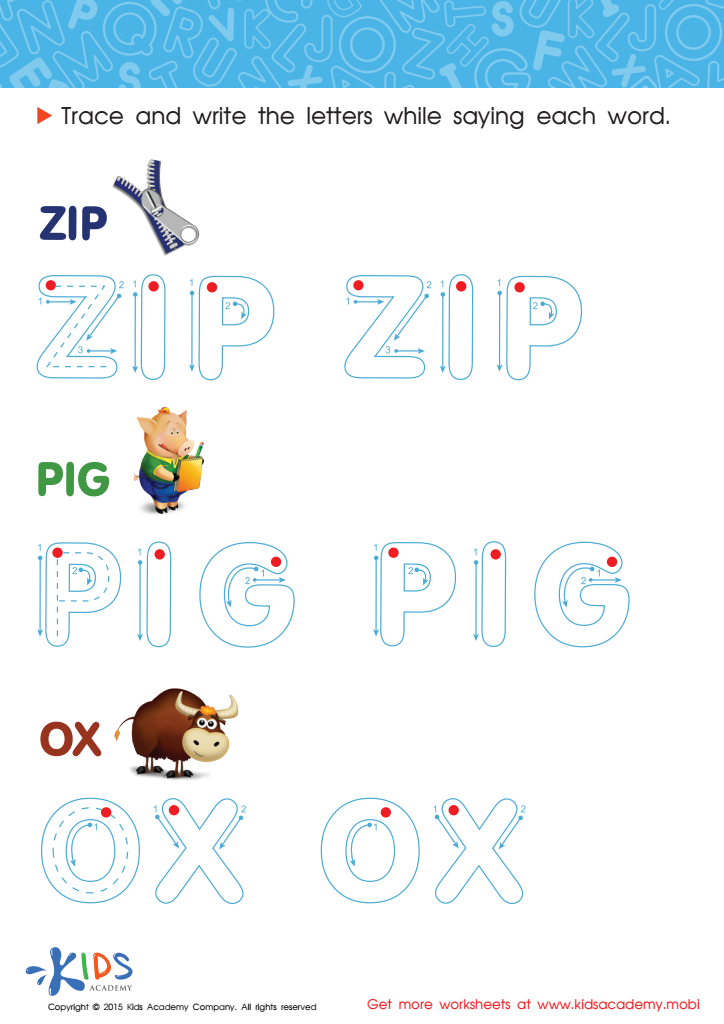
A Zip, a Pig and an Ox Spelling Worksheet
 Assign to My Students
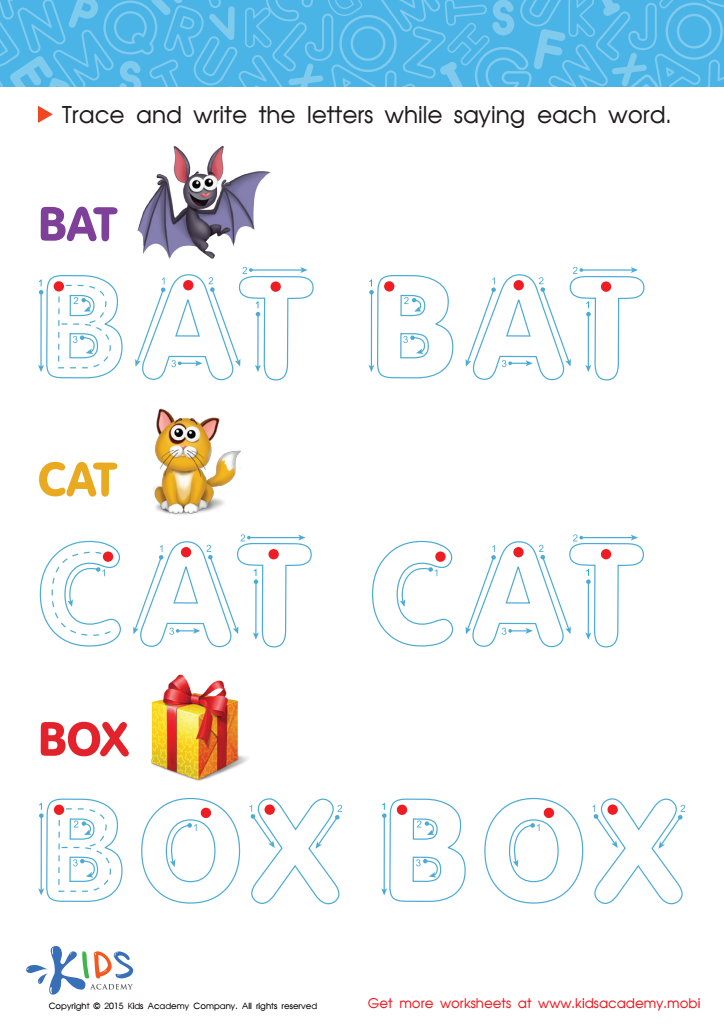
A Bat, a Cat and a Box Spelling Worksheet
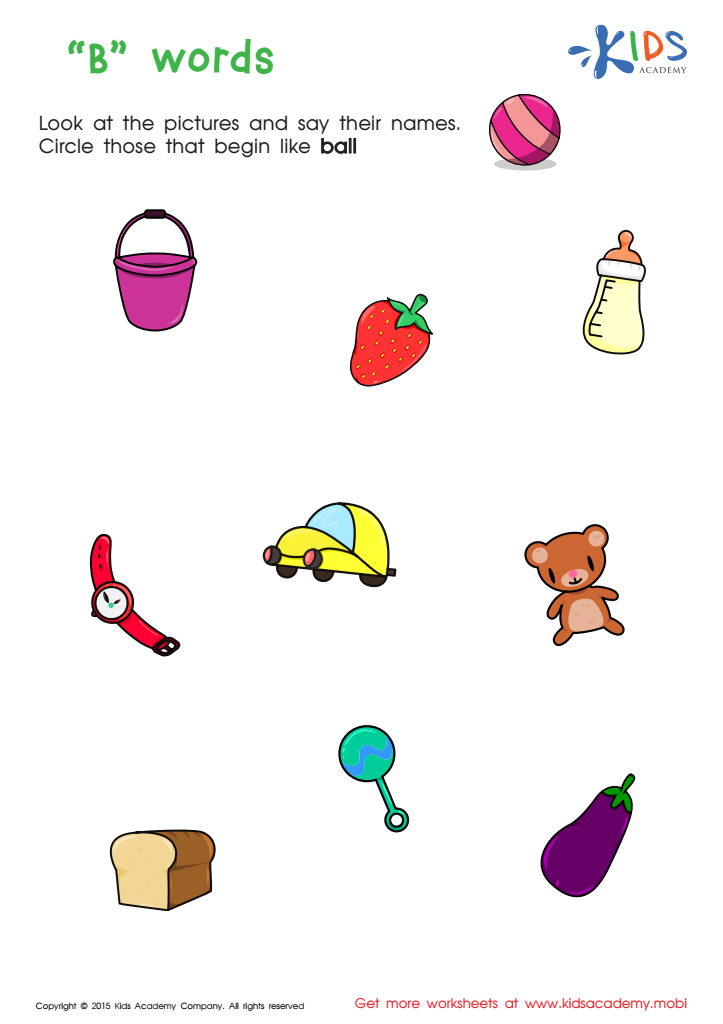
First Words Worksheet








Phonics practice is crucial for young children, as it lays the foundation for reading and literacy skills. For 3-year-olds, engaging in phonics through Extra Challenge activities can significantly enhance their early language development. At this age, children are naturally curious and eager to explore sounds, making phonics an ideal fit for their learning style.
Parents and teachers should prioritize phonics practice because it helps children understand the relationship between sounds and letters, a vital skill for reading fluency. Incorporating phonics through games, songs, and interactive activities keeps learning enjoyable and reinforces vocabulary development. Moreover, this early exposure supports critical thinking and cognitive development, giving children a head start when they enter formal education.
Additionally, phonics practice can promote confidence and a love for reading, which are essential for lifelong learning. Children who are comfortable with sounds are more likely to approach reading with excitement rather than apprehension. By investing time in phonics for 3-year-olds, parents and teachers equip children with essential skills that empower them throughout their academic journeys. Engaged learners become skilled readers, leading to improved literacy outcomes and greater educational success in the future.








