Cognitive Development Extra Challenge Addition & Subtraction Worksheets for 3-Year-Olds
3 filtered results
-
From - To
Boost your child's cognitive development with our specially crafted Addition & Subtraction Worksheets for 3-year-olds. These exciting and age-appropriate worksheets are designed to enhance early math skills while making learning fun. Perfectly balanced between challenge and engagement, they are ideal for nurturing foundational cognitive abilities, attention, and problem-solving skills. Whether at home or in preschool, our unique exercises will keep young minds active and enthusiastic about learning. Start your little one on the path to academic success today with these effective and enjoyable worksheets from Kids Academy. Let's make math an adventure for your child!
 Assign to My Students
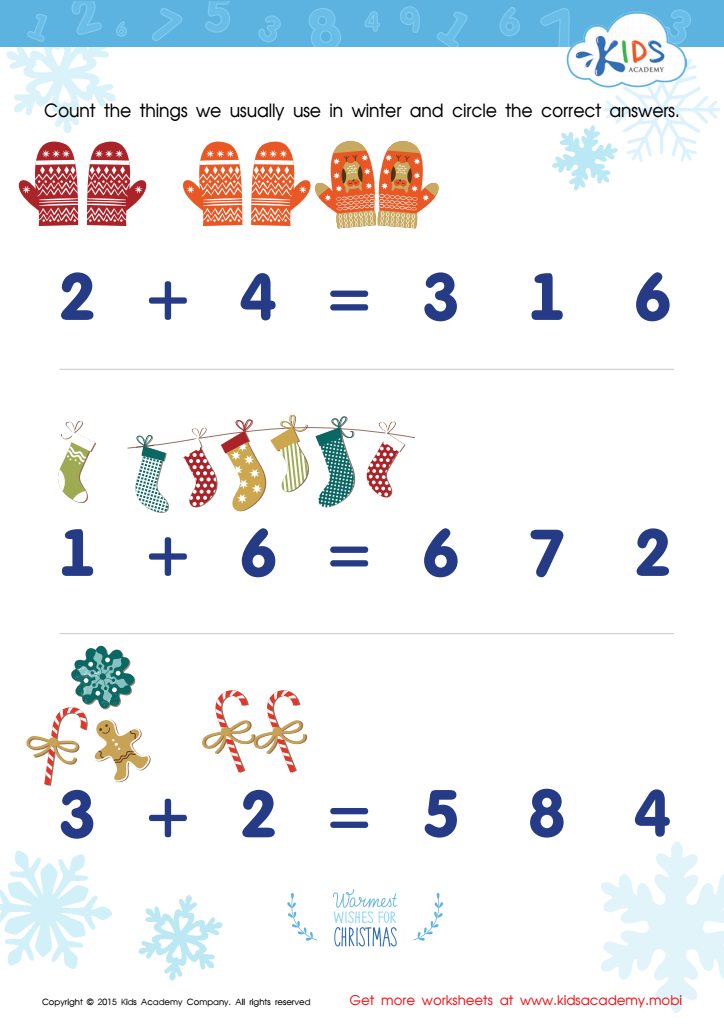
Count Winter Things Worksheet
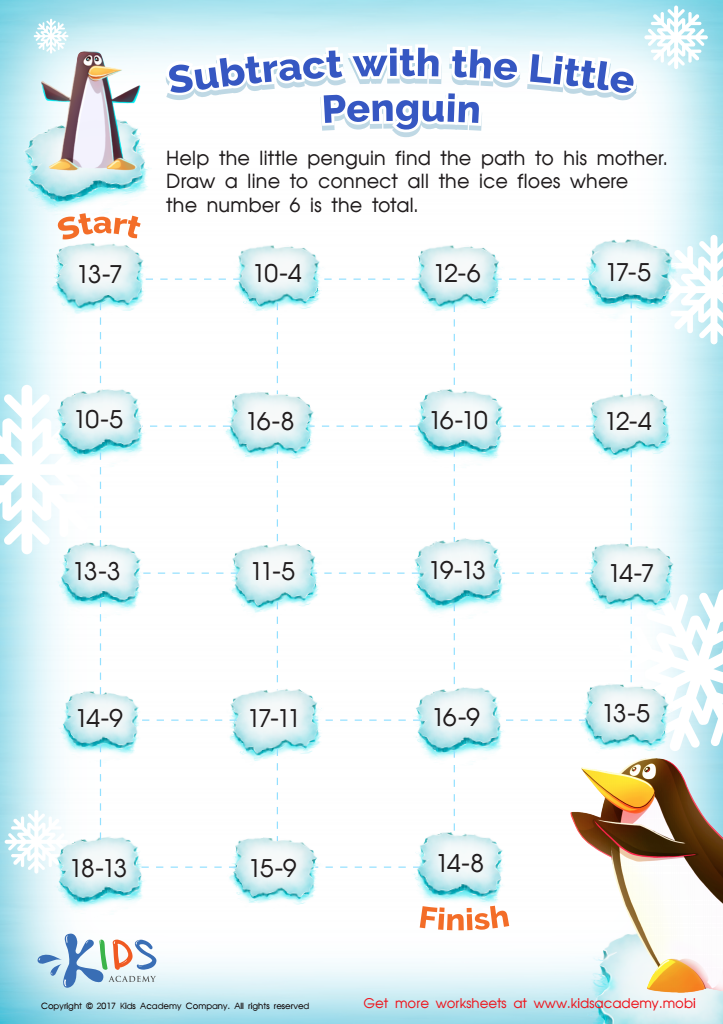
Subtract With The Little Penguin Substraction Worksheet








Cognitive development is crucial during the early years of a child's life, and integrating extra challenges like addition and subtraction exercises for 3-year-olds can have a significant positive impact. At this tender age, young children are in a critical period of brain development when they are highly receptive to new concepts and skills. Engaging them in foundational math activities not only boosts their numerical understanding but also enhances their problem-solving abilities and logical thinking.
Parents and teachers should care about incorporating these challenges as they lay the groundwork for future academic success. Early exposure to addition and subtraction helps children develop a strong sense of number concepts, which is essential for more advanced mathematical learning later on. Moreover, these activities can improve attention span, focus, and perseverance, as young learners practice and refine their skills.
Using playful and interactive methods to teach these concepts keeps children engaged and makes learning enjoyable. Songs, games, and toys that incorporate basic arithmetic can seamlessly blend education and play, capturing toddlers' natural curiosity and enthusiasm. Additionally, fostering a positive attitude towards math from a young age can greatly reduce math anxiety in later years, making children more confident learners overall. Therefore, parents and educators have a pivotal role in nurturing cognitive development through carefully designed extra challenges in math, ensuring children benefit holistically.