
Time reading skills Extra Challenge Math Worksheets for 3-Year-Olds
3 filtered results
Difficulty Level
Grade
Age
-
From - To
Subject
Activity
Standards
Introducing our "Time Reading Skills Extra Challenge Math Worksheets for 3-Year-Olds!" These engaging, printable activities are designed to aid your little one in mastering the fundamentals of telling time. Our worksheets make learning fun and interactive with bright illustrations and easy-to-follow tasks. Tailored specifically for young learners, these resources help develop crucial math and time-reading skills through playful practice. Perfect for preschoolers eager for an extra challenge, these worksheets fortify early childhood education by blending cognitive development with captivating content. Start your child on the path to mastering time and enhancing their early math skills today!
Favorites
With answer key
Interactive
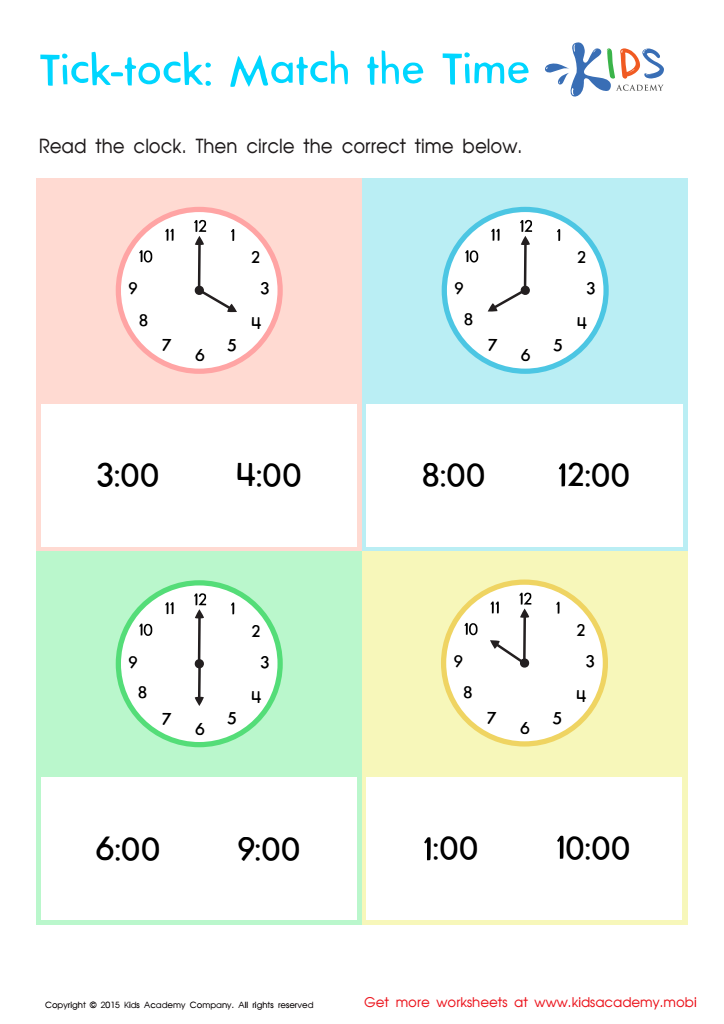
Telling The Time Worksheet: Part 4
Test your skills in telling the time! Circle the right time on 4 analog clock faces.
 Assign to My Students
Telling The Time Worksheet: Part 4
Worksheet
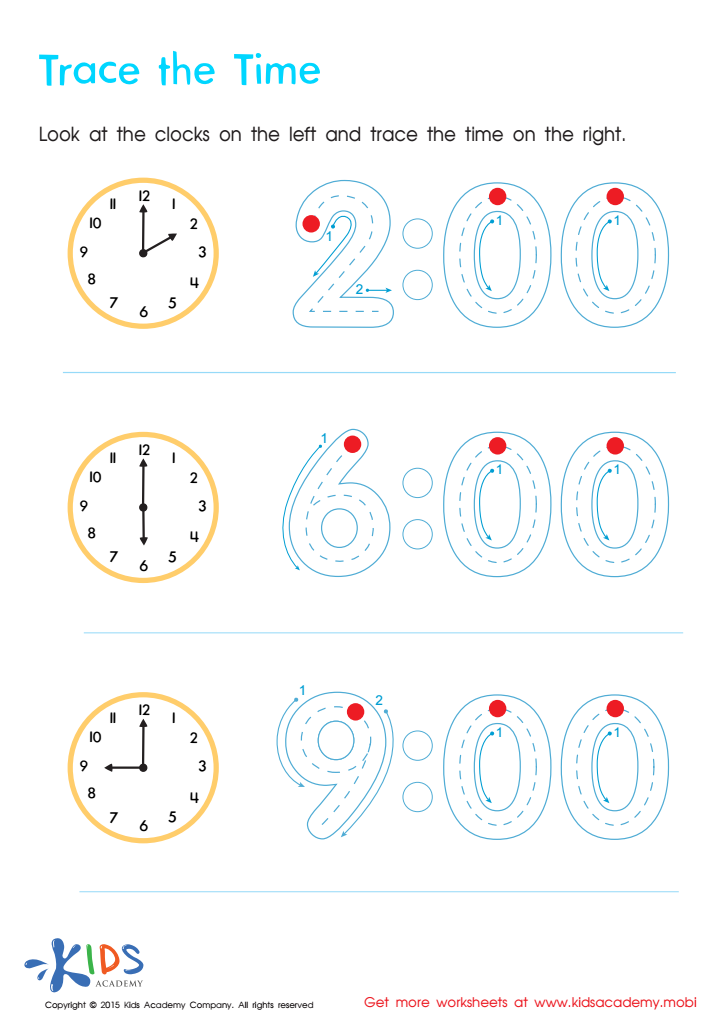
Telling The Time Worksheet: Part 2
Help your kids learn to tell the time with this free math worksheet from Kids Academy. Have them look at the clock faces and trace the time on the right - is it a full hour or half an hour? Get more practice with our wide selection of math worksheets for kindergarten.
Telling The Time Worksheet: Part 2
Worksheet
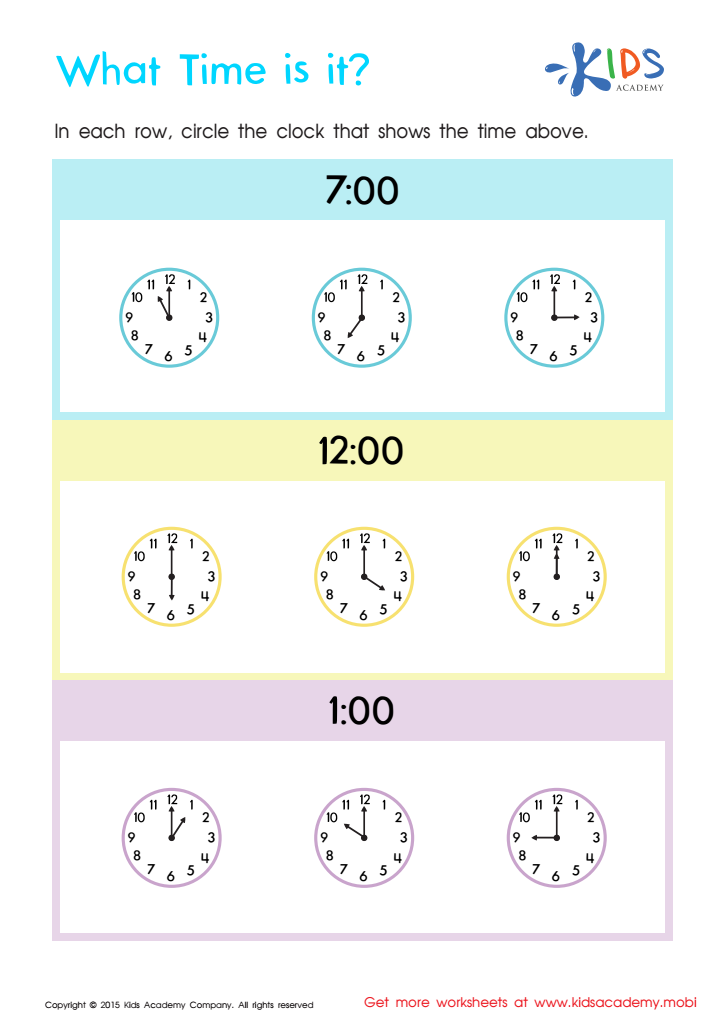
Telling The Time Worksheet: Part 3
Make learning to read clocks fun with our free printable worksheets! Have kids circle the clocks that show the time, remembering that the short hand is for hours and the long one is for minutes. For more worksheets, visit Kids Academy and explore the wonderful world of math with your little learners.
Telling The Time Worksheet: Part 3
Worksheet
Join Kids Academy for Free
Who is primarily going to use this learning content?







At age three, children are at a crucial developmental stage where their brains are rapidly growing, making it an ideal time to nurture important skills. Parents and teachers should care about reading and extra challenge math for 3-year-olds because these early experiences lay a strong foundation for future academic success.
Reading skills at this age contribute significantly to language development. When children are exposed to books and storytelling, they develop vocabulary, comprehension, and listening skills, which are essential for effective communication and later literacy. Reading habits established early on encourage a lifelong love for learning, imagination, and curiosity.
Similarly, introducing math concepts through playful and engaging activities cultivates critical thinking and problem-solving abilities. Though the term "Extra Challenge Math" might sound daunting, it's about making learning fun and accessible through games, puzzles, and everyday tasks like sorting blocks or counting toys. For example, understanding basic concepts like numbers, patterns, and spatial awareness can significantly boost cognitive development and help children see math as an enjoyable part of daily life.
Starting early with these skills not only prepares children for school but also boosts their confidence. It helps them perceive learning as an exciting adventure, making them more likely to engage and thrive academically in the future.








