Logical Reasoning Extra Challenge Matching Worksheets for 3-Year-Olds
3 filtered results
Difficulty Level
Grade
Age
-
From - To
Subject
Activity
Standards
Explore our engaging "Logical Reasoning Extra Challenge Matching Worksheets for 3-Year-Olds"! Designed to enhance cognitive skills, these worksheets encourage young learners to think critically and develop essential problem-solving abilities. Through fun matching activities, kids will recognize patterns, make associations, and strengthen their logical reasoning skills in a playful way. With colorful illustrations and age-appropriate challenges, these worksheets provide an exciting educational experience, fostering both independence and creativity in early learners. Perfect for parents and educators, our resources are aligned with developmental milestones, ensuring that children can grasp concepts while enjoying the learning process. Give your child the gift of learning through play!
Favorites
With answer key
Interactive
 Assign to My Students
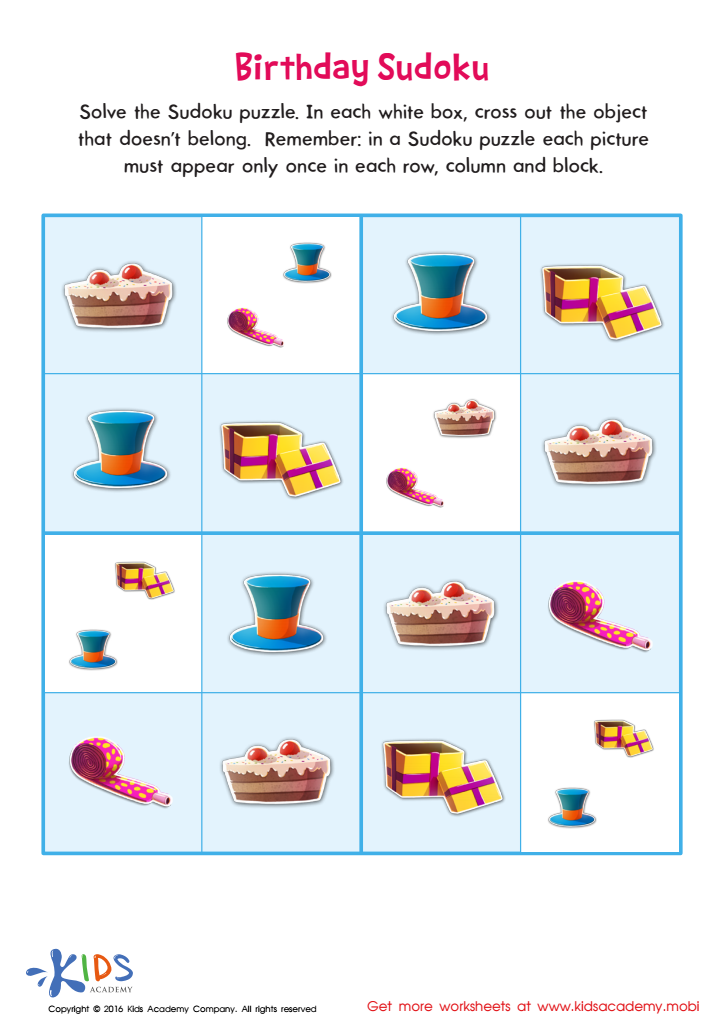
Birthday Sudoku Sorting Worksheet
With this Sudoku printable, your child will have fun and strengthen their problem-solving skills.
Birthday Sudoku Sorting Worksheet
Worksheet
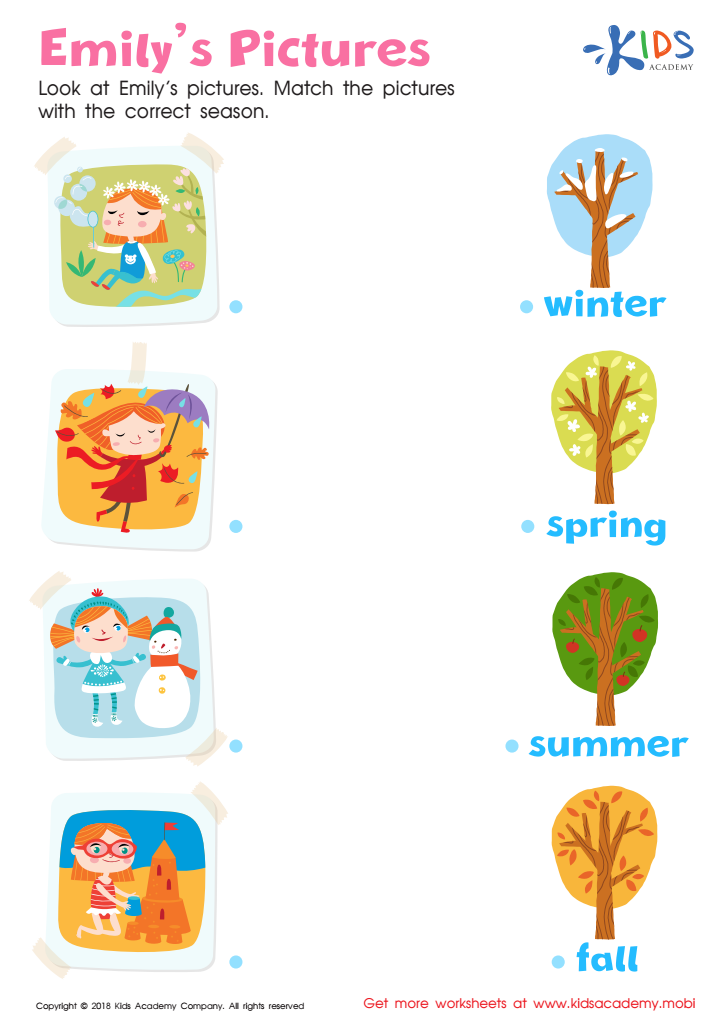
Emily's Pictures Worksheet
Look at the pictures of Emily on the left. Ask your child what she's doing in each one. Then, match the activities to the seasons on the right. Help your kids identify the correct season for each activity. Shorten to 80 words: Look at the pictures of Emily on the left. Ask your child what she's doing in each one, then match the activities to the seasons on the right. Help your kids find the correct season for each activity.
Emily's Pictures Worksheet
Worksheet
Join Kids Academy for Free
Who is primarily going to use this learning content?








Logical reasoning is a foundational skill that profoundly impacts a child's cognitive development. For 3-year-olds, engaging in activities like Logical Reasoning Extra Challenge Matching serves as an excellent introduction to critical thinking. This age is crucial for developing problem-solving abilities, as young children are naturally curious and eager to understand how the world works.
When parents or teachers incorporate logical reasoning activities, they enhance a child's ability to recognize patterns, categorize information, and draw connections between concepts. These skills not only support academic success but also foster resilience and adaptability in real-life situations. Additionally, these activities often promote social interaction, allowing children to collaborate with peers, discuss ideas, and gain confidence in their thought processes.
Moreover, logical reasoning activities can be fun and engaging, making learning enjoyable. They can stimulate cognitive development through games that challenge children to think creatively, enhancing both their focus and concentration. For parents and teachers, emphasizing logical reasoning at this young age paves the way for more complex reasoning skills in the future, setting children up for success in school and beyond. Ultimately, understanding and supporting these early learning experiences enrich the child's development and build a solid foundation for lifelong learning.