Shape identification Extra Challenge Worksheets for Ages 4-5
3 filtered results
-
From - To
Boost your child’s shape recognition skills with our Shape Identification Extra Challenge Worksheets for Ages 4-5! These engaging and interactive worksheets are designed to challenge young minds by going beyond basic shapes. Kids will enjoy connecting dots, matching, and identifying shapes in fun and visually appealing activities. Perfect for preschool and kindergarten-aged children, these worksheets make learning enjoyable while developing critical thinking, pattern recognition, and fine motor skills. Let your kids explore and excel in shape identification through playful and educational exercises available now at Kids Academy. Visit us to download your free worksheets today!
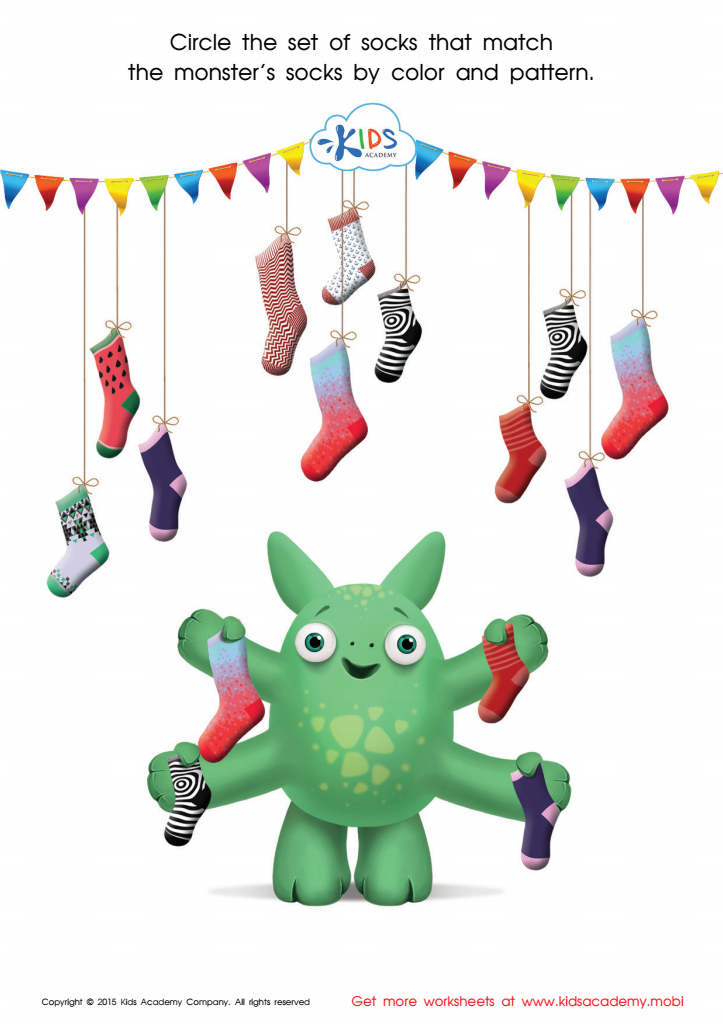
Sort the Monster's Socks Worksheet
 Assign to My Students
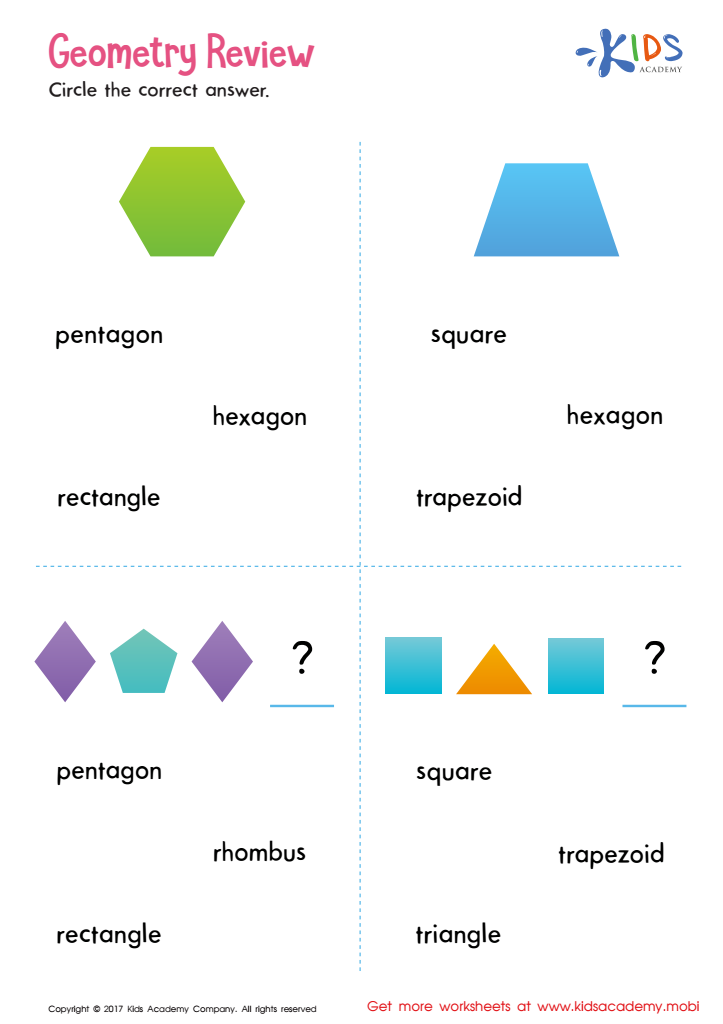
Geometry Review Printable
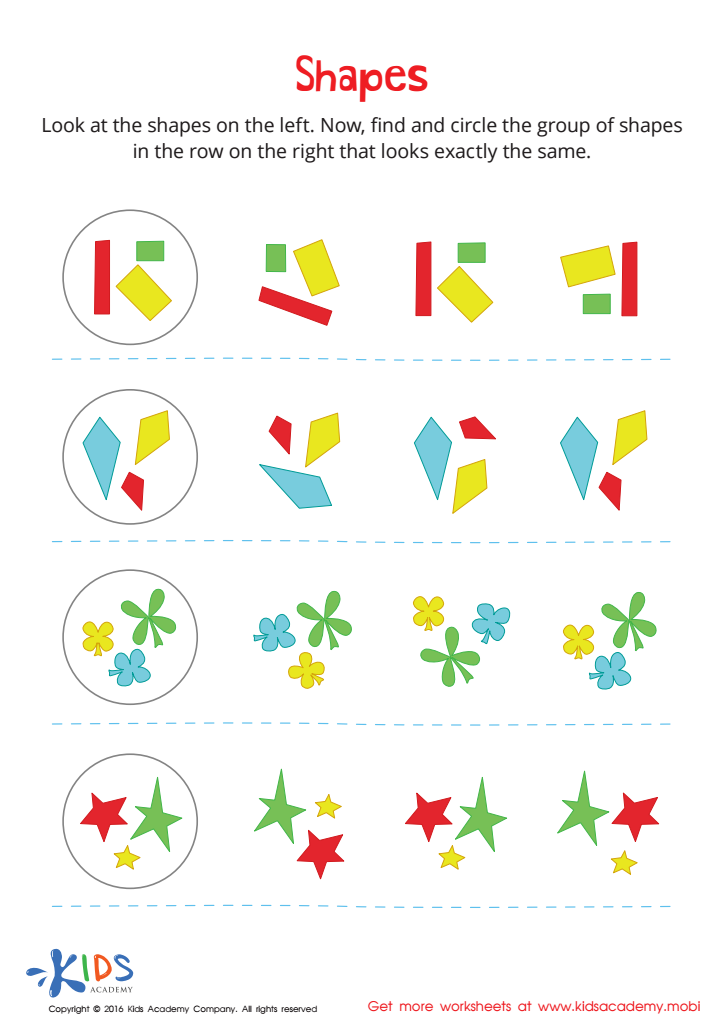
Shapes Worksheet






Introducing a Shape Identification Extra Challenge for children aged 4-5 is essential for their cognitive and developmental growth. Firstly, recognizing shapes helps youngsters develop visual discrimination skills, as they learn to spot differences and similarities between various objects. This skill is foundational not only for mathematics but also for reading and writing, where distinguishing between different letters and symbols is crucial.
Shape identification fosters vocabulary development too; when children learn the names of shapes, they are expanding their language skills. This encourages better communication capabilities and supports early literacy. Moreover, talking about shapes often involves practical lessons on positional words like "above," "below," "next to," which can further augment a child's spatial reasoning skills.
Spatial reasoning is also closely linked to problem-solving abilities. When children engage in activities that challenge them to sort, categorize, and identify shapes, they are essentially learning how to approach and solve problems methodically.
Additionally, identifying shapes can be thrilling and fun, fostering a love for learning. This positive emotional experience helps children develop a positive attitude towards education. It's often in these joyful moments of challenge and discovery that children's confidence grows—laying a significant foundation for future academic and life successes.
Parents and teachers who emphasize shape identification are not just teaching geometry; they are nurturing more rounded, capable, and confident young learners.








