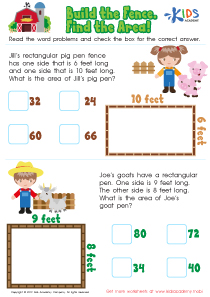
Subtraction practice Extra Challenge Subtraction Worksheets for Ages 4-5
3 filtered results
-
From - To
Discover our engaging Extra Challenge Subtraction Worksheets designed specifically for children ages 4-5! These worksheets provide an excellent opportunity for young learners to strengthen their subtraction skills through fun and interactive activities. Tailored to enhance problem-solving abilities, they feature a variety of challenges that promote cognitive development and boost confidence in math. Each worksheet is crafted to suit the learning pace of preschoolers while making subtraction enjoyable. Encourage your child's mathematical journey with our colorful and captivating resources that make learning subtraction a delightful experience. Unlock a world of learning and watch your little ones thrive with our Extra Challenge Subtraction Worksheets today!
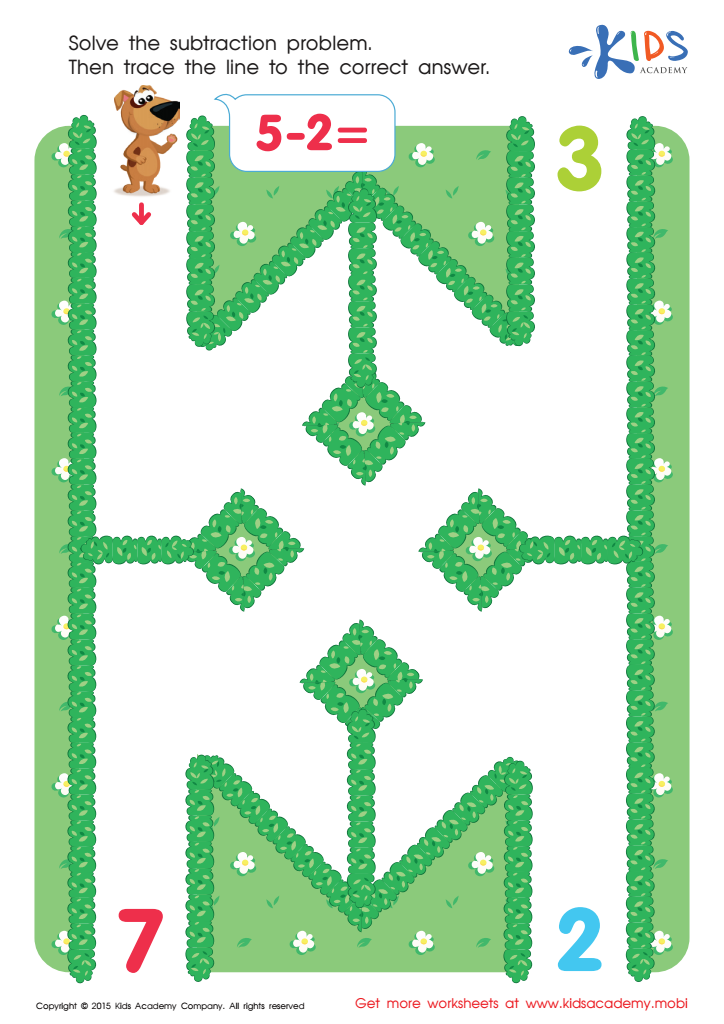
Five Minus Two Worksheet
 Assign to My Students
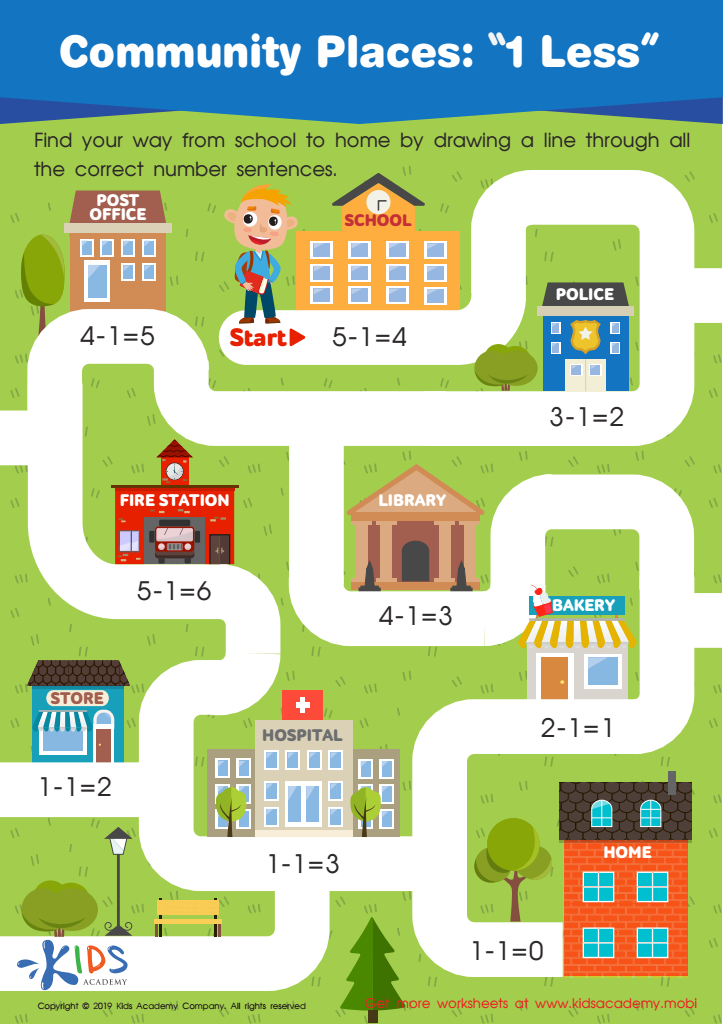
Community Places: 1 Less Worksheet
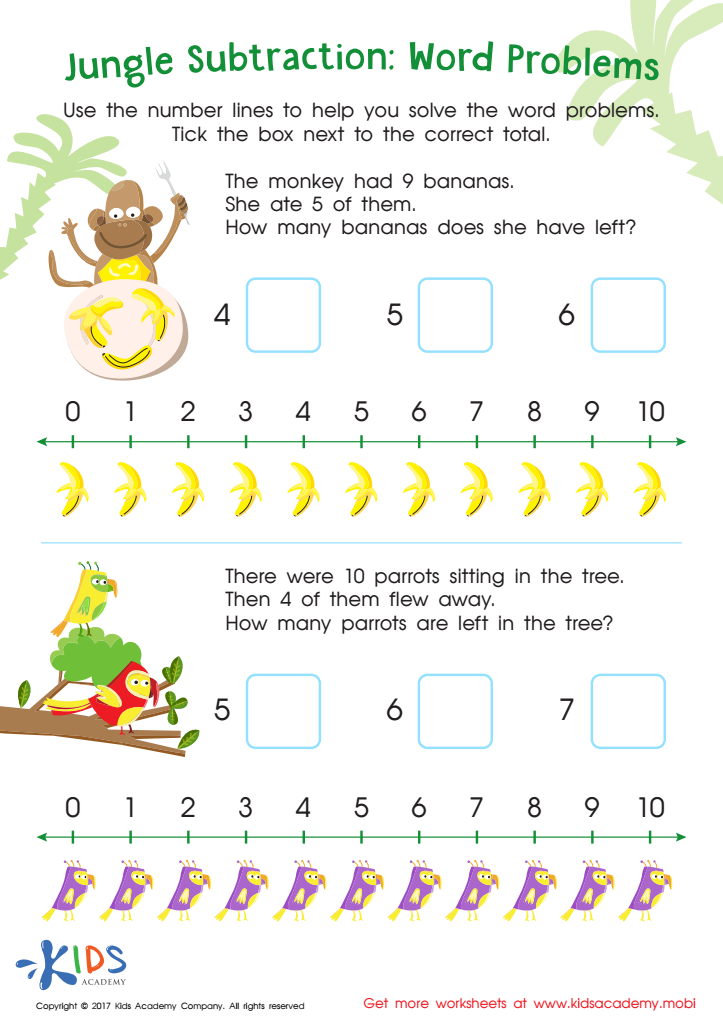
Jungle Subtraction Word Problems Substraction Worksheet








Subtraction practice is a vital component of early childhood education, particularly for children aged 4 to 5. This foundational skill is essential as it helps young learners develop critical thinking and problem-solving abilities. By engaging in Extra Challenge Subtraction activities, children not only enhance their mathematical skills but also build their confidence and perseverance when facing complex tasks.
When parents and teachers prioritize subtraction practice, they nurture a supportive environment that encourages exploration and learning. Mastering subtraction at an early age lays the groundwork for future mathematical concepts, promoting a smooth transition into more advanced arithmetic. Additionally, engaging in these exercises allows children to understand the relationship between quantities, reinforcing their number sense, which is crucial for their overall cognitive development.
Moreover, Extra Challenge Subtraction promotes engagement and motivation among children. These activities often incorporate games and hands-on learning, making math enjoyable and reducing anxiety associated with learning difficult concepts. Parents and teachers can help instill a love for math by making it fun and challenging, which is essential for fostering lifelong learning. Ultimately, nurturing these skills early on can lead to greater academic success and a positive attitude toward mathematics in the future.