Subtraction practice Extra Challenge Word Problems Worksheets for Ages 4-5
4 filtered results
Difficulty Level
Grade
Age
-
From - To
Subject
Activity
Standards
Enhance your young learner's math skills with our Subtraction Practice Extra Challenge Word Problems Worksheets designed specifically for ages 4-5! These engaging worksheets provide challenging scenarios that require children to apply their subtraction skills in real-world contexts. With a mix of fun illustrations and relatable situations, kids will approach math with curiosity and excitement. Each worksheet promotes critical thinking and problem-solving, helping to build a strong foundation in subtraction. Ideal for classroom activities or at-home practice, these worksheets ensure that your child develops confidence and proficiency in subtraction while enjoying the learning process. Print now and turn math challenges into adventures!
Favorites
With answer key
Interactive
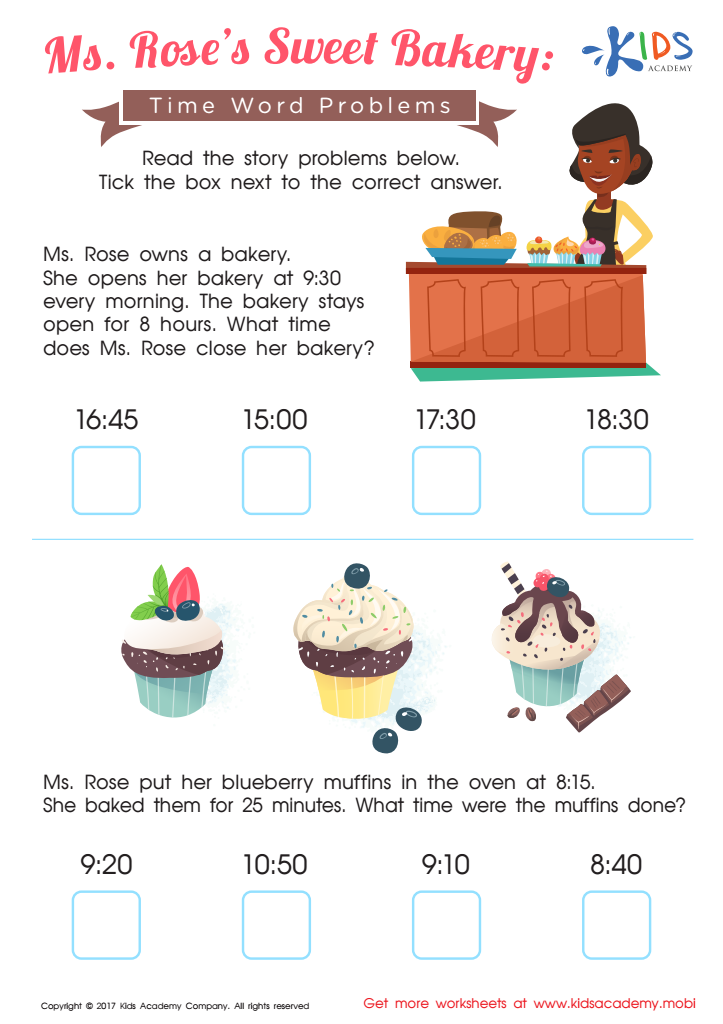
Ms. Roseв's Sweet Bakery Time Worksheet
Help your child understand the 24-hour clock using this fascinating telling time word problems worksheet: Sweet Bakery! Widely known as "military time", this skill isn't taught in school but is important for your kid to master.
 Assign to My Students
Ms. Roseв's Sweet Bakery Time Worksheet
Worksheet
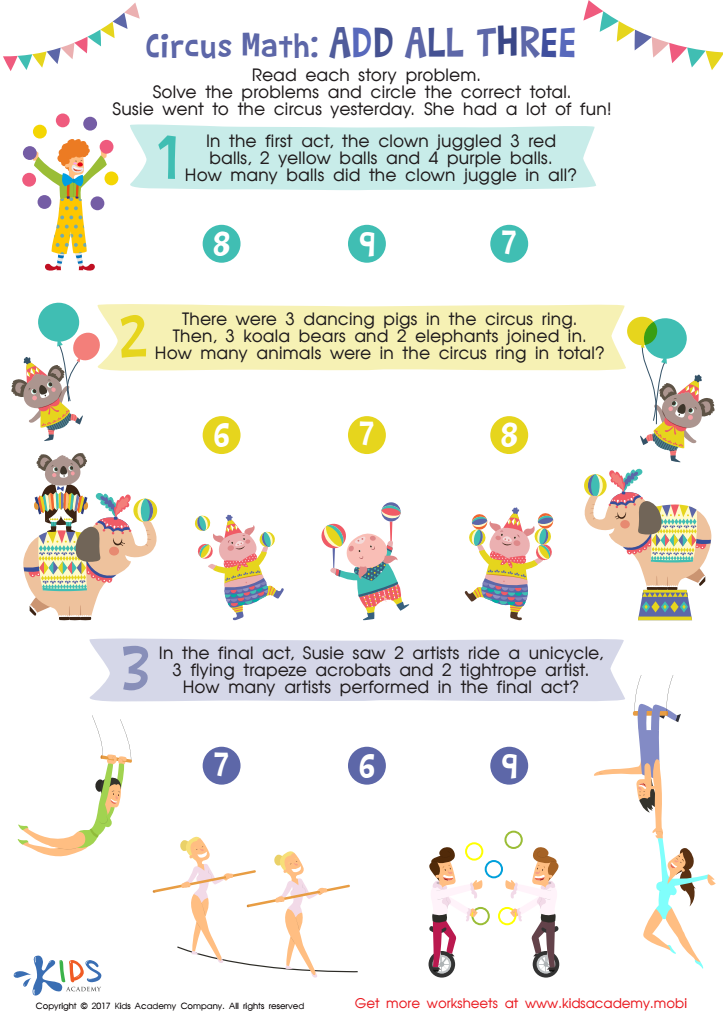
Circus Math Printable
Let's take the kids to the circus and combine literacy and numeracy skills! Our circus math printable worksheet will encourage creativity and higher-order thinking by connecting addition to real-life examples. Kids will learn to love math while they explore the fun, real-life applications of math. Ignite their passion today!
Circus Math Printable
Worksheet
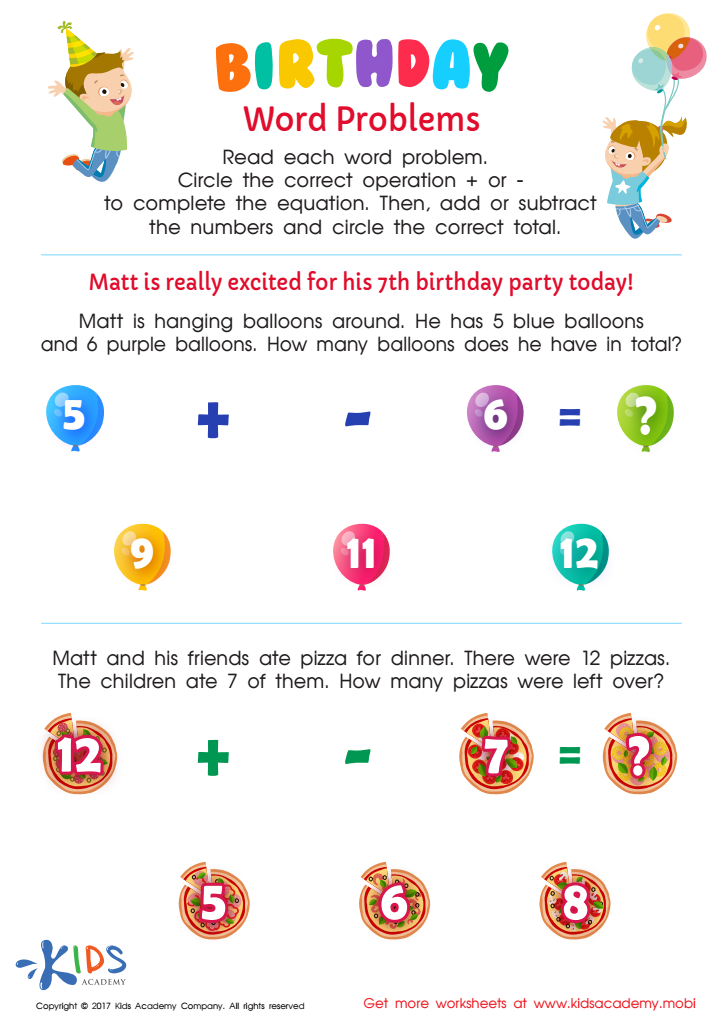
Birthday Word Problems Substraction Worksheet
This worksheet, Birthday Word Problems, is a great way to improve your child's math and literacy skills. It features tricky subtraction equations based on a birthday celebration - perfect for kids who love birthdays!
Birthday Word Problems Substraction Worksheet
Worksheet
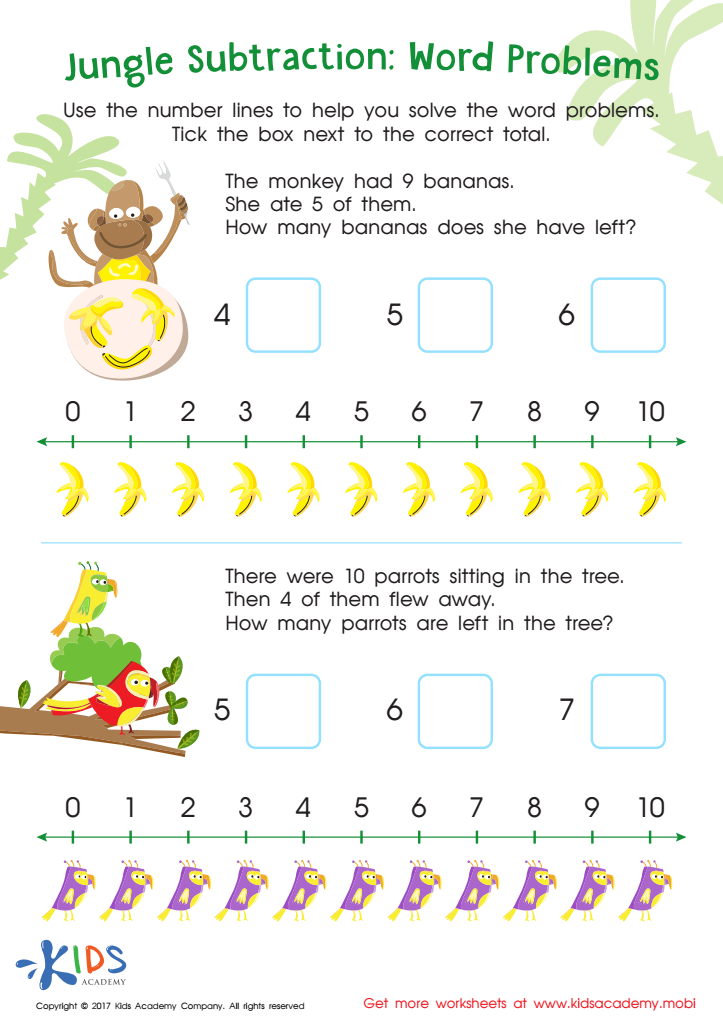
Jungle Subtraction Word Problems Substraction Worksheet
Kids will love this jungle-themed worksheet: subtraction word problems! Help the monkey work out how many bananas he has, using the number line. Encourage your child to use colorful parrots to subtract with ease and make calculations fun!
Jungle Subtraction Word Problems Substraction Worksheet
Worksheet
Join Kids Academy for Free
Who is primarily going to use this learning content?








Parents and teachers should prioritize Subtraction practice Extra Challenge Word Problems for children aged 4-5 for several compelling reasons. First, these activities foster critical thinking and problem-solving skills. Unlike straightforward subtraction exercises, word problems require children to interpret scenarios and extract relevant information, helping them connect math to real-life situations.
Moreover, engaging in these challenges develops not only numerical understanding but also language skills. As children read and decipher questions, they enhance their vocabulary and comprehension, forming a comprehensive skill set that extends beyond math.
Subtraction practice at this age is crucial for building a strong foundation in mathematics. By presenting concepts in a fun and challenging way, word problems keep children motivated and excited about learning. This sense of enjoyment can inspire a lifelong love for math.
Moreover, when children tackle challenging problems with guidance, they learn to approach obstacles positively and gain resilience. For parents and teachers, providing these opportunities encourages a growth mindset. Ultimately, incorporating Extra Challenge Word Problems into lessons prepares young learners for future academic success, equipping them with essential skills for lifelong learning. By recognizing the importance of these practices, adults can significantly influence a child’s educational journey.